
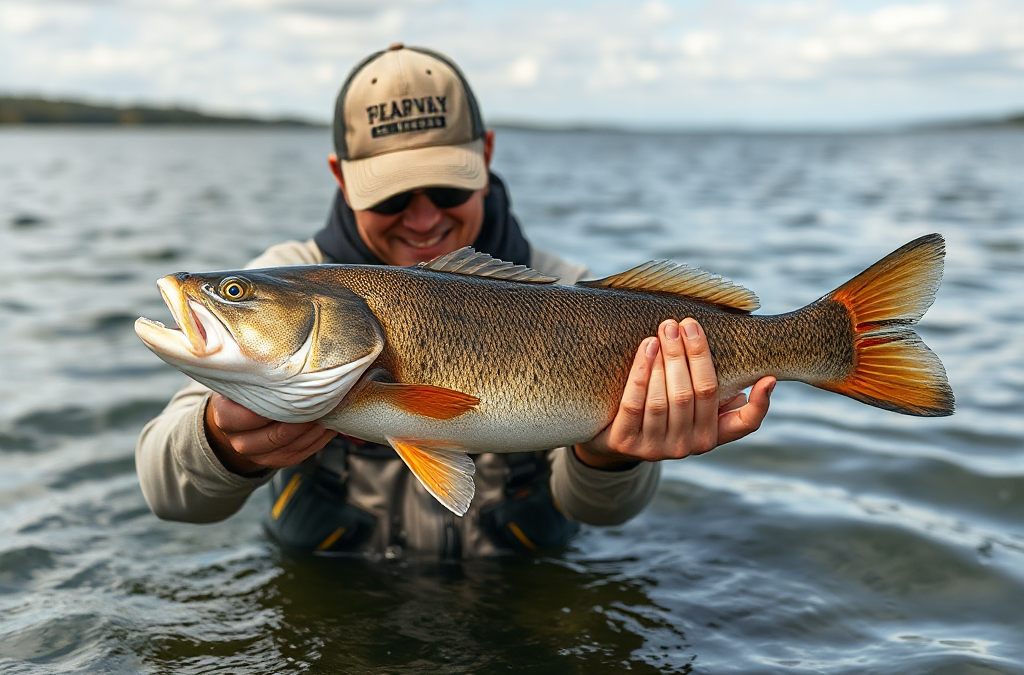
Targeting a specific species in a mixed fishery means separating its habitat, feeding behavior, and preferred presentation from the patterns used by competing fish. Begin by identifying where the species is likely to hold, then choose bait or lures that match its forage, depth, speed, and feeding zone. A narrow location choice usually matters more than simply downsizing or changing colors, because mixed waters often concentrate several species around the same structure. Track which fish are striking, adjust depth and retrieve speed independently, and move when unwanted catches dominate. Check local regulations before fishing, since size limits, seasons, protected species rules, and bait restrictions may differ within the same waterway.
Define the Target Before Choosing Tackle
Species selection should come before lure selection in a mixed fishery. A lake, river, estuary, or coastal area may hold predators, bottom feeders, schooling fish, and seasonal visitors in the same general region, but those fish do not necessarily use the same water. Naming the target forces you to decide which behavior, habitat, and food source deserve priority.

Write down a practical target profile before making the first cast. Include the species’ likely depth, preferred cover, feeding time, water temperature range, and common forage. For instance, a largemouth bass plan may focus on vegetation edges, laydowns, or irregular structure, while a crappie plan on the same reservoir may emphasize suspended fish near brush or standing timber. Both species can occupy a cove, but the useful casting angles and lure actions differ.
The strongest target profile is specific enough to reject unproductive water. “Fish the cove” is weak; “fish the outside weed edge in four to eight feet where bait is present” gives you a testable plan. The same logic supports how to target specific species in a mixed fishery when several fish are visibly feeding together.
A common mistake is choosing equipment based on the largest fish that might bite. Heavy tackle may handle a powerful predator, but it can make a light presentation unnatural and reduce sensitivity. Conversely, ultralight gear can be unsuitable around wood, rocks, current, or toothy fish. Choose line, rod power, hook strength, and leader material for the target’s cover and fighting behavior, not for every possible species in the water.
Separate Species by Habitat and Depth
Location is usually the most reliable way to reduce unwanted catches. Fish distribution reflects oxygen, temperature, current, shelter, bottom composition, and access to food. A mixed fishery is not evenly mixed; species often overlap horizontally while separating vertically or by structure.
Start by identifying the target’s preferred holding feature. Current-oriented fish may face into moving water near seams, eddies, or the downstream side of cover. Fish using submerged vegetation may patrol the outside edge rather than sit deep inside it. Bottom-oriented species may respond better to gravel, shell, sand, mud, or a drop-off than to the same surface activity attracting pelagic feeders.
Depth is a practical filter. If unwanted fish are taking a suspended lure near the surface, running the same lure deeper may reach the intended species, provided its habitat supports that change. In a river, a small adjustment across the current can be more productive than moving a long distance. In a reservoir, the useful distinction may be a channel edge, a point, a submerged hump, or the shaded side of cover.
Consider a situation where bluegill, bass, and catfish are all active near a warm shoreline. A small bait under a float may attract bluegill, a moving lure beside cover may locate bass, and a bottom rig may suit catfish. The shoreline is shared, but the fishing zones are different. Blindly changing bait while remaining in the same zone often produces the same mix of catches.
Weak assumptions can mislead anglers. Visible bait does not prove that the target is feeding on it, and surface activity does not reveal where larger fish are holding between feeding periods. Use sonar, depth changes, current breaks, vegetation lines, bottom transitions, and recent catch observations as separate clues. Choose the most repeatable clue rather than chasing every disturbance.
Match Forage, Presentation, and Retrieve
Presentation should imitate more than the appearance of food. Size, buoyancy, vibration, speed, depth, and angle determine whether a lure or bait enters the target’s feeding window. In a mixed fishery, changing presentation can improve selectivity, but only after the lure is being shown in the right place.
Match the dominant forage when the target is actively feeding, then adjust for the fish’s feeding mechanics. A predator that is chasing small minnows may respond to a compact, fast-moving lure, while a fish picking insects from current seams may prefer a smaller offering drifting naturally. Bottom-feeding species may require the bait to remain near the substrate instead of crossing above it.
Size creates a useful tradeoff. Downsizing can appeal to cautious or juvenile fish, but it may also increase bites from smaller non-target species. Upsizing can reduce incidental catches, yet it may remove the lure from the target’s normal diet or demand deeper water and heavier tackle. The best size is the one that fits both the target’s forage and the available feeding depth.
Retrieve speed is another filter. A slow presentation near cover may favor a fish that waits to ambush, whereas a faster retrieve can keep a lure above nuisance species or trigger a chasing predator. Do not change speed and depth at the same time during every cast; altering one variable makes the response easier to interpret. A useful sequence is to test depth first, then speed, then action or color.
Color is often overemphasized. In clear water, a natural profile and subtle movement may matter more than a dramatic color change. In stained water, vibration, contrast, and the ability to track the lure may become more useful. Color can matter, but it rarely compensates for fishing the wrong depth or speed. Compare a natural baitfish pattern with a contrasting option only after the basic presentation is reaching the target zone.
For a practical test, make several casts that cover the same lane with one controlled change. If a deeper lure produces the target while a shallow version catches only small fish, depth is the meaningful signal. If both catch the same mix, relocate before collecting endless color opinions. Species-specific fishing decisions become clearer when each adjustment has a reason.
Use Catch Feedback to Refine the Plan
Every catch provides information about location, depth, speed, and selectivity, but one fish should not automatically rewrite the entire plan. Record the conditions surrounding the bite: water clarity, depth, cover, current, lure position, retrieve pace, and whether the fish struck on the fall, pause, drift, or forward movement.
Patterns become useful when they repeat. If three target fish strike beside the same type of submerged rock at a consistent depth, prioritize similar rock rather than continuing to fish featureless water. If unwanted fish repeatedly take the offering before it reaches the bottom, use a heavier presentation, change the entry point, or move to a zone where the target is more concentrated.
Keep a short decision log rather than relying on memory. A compact checklist can include:
- Target species and expected holding zone
- Depth and structure where each bite occurred
- Forage size and presentation speed
- Species caught, missed, or following without striking
- Next single adjustment to test
Missed bites deserve careful interpretation. A missed strike may indicate a hook-size mismatch, poor line control, a lure moving too quickly, or a fish contacting the bait from an awkward angle. It does not automatically mean the fish were too cautious. Likewise, a run of non-target catches may mean the lure is effective but positioned in the wrong part of the fishery.

Compare short-term action with the actual objective. Catching many small fish can feel productive, but it may confirm that the presentation is highly visible to the wrong species. Moving to a less active area can be the better decision if it contains the target’s habitat. The tradeoff is fewer immediate bites in exchange for a higher chance of a relevant encounter.
Signs the approach is working include repeated target activity, follows from the intended size class, bites at the predicted depth, and fewer incidental catches after a deliberate adjustment. Signs it is failing include random species changes, no relationship between bites and habitat, and repeated casts to productive-looking water without evidence that the target uses it.
Avoid Bycatch and Fish Within Local Rules
Selective fishing is partly a technical problem and partly a responsibility problem. No bait or lure guarantees a single species, especially where diets overlap or several fish share structure. The aim is to raise the odds of contacting the intended fish while handling unexpected catches safely and releasing them according to local requirements.
Check the current regulations for the exact water before fishing. Rules may address seasons, possession limits, minimum or maximum lengths, protected species, hooks, live bait, artificial lures, or areas closed to fishing. A general rule remembered from another lake or a previous year may not apply. Official state, provincial, territorial, tribal, or national fishery agencies are the appropriate source for current requirements.
Prepare for an incidental catch before the first cast. Keep appropriate tools accessible, wet your hands before handling a fish when practical, support its body, and minimize time out of the water. Tooth protection, a landing net, or a heavier leader may be justified when the target and likely bycatch can cause injury or tackle failure. If a species is difficult to identify, avoid guessing before release or retention.
Do not use increasingly extreme tackle simply to avoid every unwanted fish. A heavy setup may reduce breakoffs around cover, but it can impair the finesse needed for the target. Instead, select the lightest reliable system that handles the structure, current, fish size, and hook style. A controlled presentation in a selective habitat usually outperforms brute force applied across the entire fishery.
The most practical plan combines a target profile, a narrow habitat choice, a forage-matched presentation, and a feedback loop. Target-specific fishing should also include a stopping rule: if several adjustments fail outside the target zone, relocate rather than repeatedly modifying gear.
For current seasons, limits, protected-species rules, and water-specific restrictions, consult the official fish and wildlife agency responsible for the area. University extension programs, fisheries departments, and recognized angling organizations can also provide species biology and habitat information without replacing local regulations.
Frequently Asked Questions
Can one lure target only one species?
No. A lure can favor a species through its size, action, depth, and speed, but overlapping diets and habitats make incidental catches possible.
Should location or bait be changed first?
Check location and depth first. A well-matched bait in the wrong feeding zone usually produces more non-target fish rather than solving the problem.
How can depth reduce unwanted catches?
Different species often occupy separate depth bands. Adjusting sink rate, leader length, float position, or lure running depth can place the offering in the target's zone.
Is matching hatch or forage always necessary?
No. Matching forage is useful when fish are actively feeding, but structure, movement, contrast, and triggering behavior may matter more when feeding is opportunistic.
What should be recorded after a successful catch?
Note the depth, structure, water clarity, current, lure or bait, retrieve speed, and strike moment. Repeated details are more valuable than a single memorable catch.
Further Reading
Authoritative Sources
- Academy of Nutrition and Dietetics
eatright.orgProfessional nutrition guidance, healthy eating resources, and practical dietitian-reviewed advice.
- U.S. Department of Agriculture
usda.govOfficial food, nutrition, agriculture, and consumer guidance from the USDA.
- NIH Office of Dietary Supplements
ods.od.nih.govResearch-based fact sheets on nutrients, supplements, dietary intake, and safety considerations.
- International Society of Sports Nutrition
sportsnutritionsociety.orgEvidence-informed sports nutrition resources and position stands for active people and athletes.
Conclusion
Specific species selection in a mixed fishery improves when the plan is built around habitat before tackle. Identify the target’s likely depth, structure, forage, and feeding behavior, then present an offering that reaches that zone at a believable speed. Treat non-target catches as evidence: they may show that the bait works but is positioned incorrectly, or that the area holds too many competing fish. Change one variable at a time, record repeatable patterns, and relocate when adjustments fail. Keep equipment appropriate for cover and likely bycatch, and verify current local rules before retaining or releasing fish. The next trip should begin with one target profile and two or three testable locations, not a box of unstructured lure changes.

