
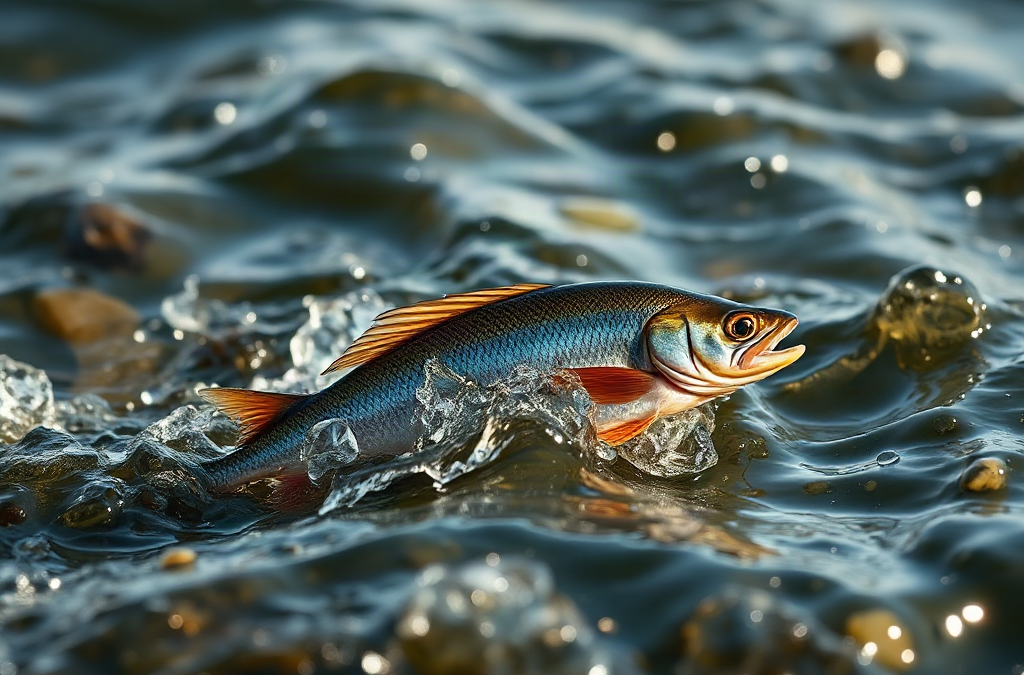
To fish strong tidal flows effectively, position your bait or lure near current seams, eddies, bottom contours, and sheltered structure rather than casting into the fastest water. Use enough sinker weight to maintain controlled bottom contact, but avoid excessive weight that deadens the presentation or wedges into rocks. Work across the flow at an angle, adjust line diameter and lure profile to reduce drag, and concentrate on the slower stages around a tide change when necessary. Keep watching for rapidly rising water, floating debris, slippery access routes, and waves intensified by current because productive tidal water can become unsafe quickly.
Read the Current Before Choosing a Position
Strong tidal water is rarely moving at one uniform speed. Headlands, bridge supports, channel edges, rock ledges, sandbars, harbor walls, and bends divide the flow into fast lanes and slower pockets. Predatory fish often hold near the boundary between them, where they can conserve energy while intercepting bait swept past by the main current. Finding that boundary is usually more valuable than making a longer cast.

Watch the surface for smooth patches beside rippled water, rotating foam, converging debris, and narrow lines where two textures meet. A smooth patch behind a piling may indicate a pressure shadow; a curling line downstream can mark an eddy. Surface clues do not reveal every bottom feature, but they show how structure redirects water. If visible debris races through the middle yet pauses or circles along one side, that slower side deserves careful coverage.
The direction of the cast should reflect the water rather than habit. Casting directly into powerful flow creates maximum drag and can lift a lure or rig away from the target depth. Casting roughly across or slightly uptide allows the presentation to sink before it sweeps through a seam. From shore, that might mean moving 20 yards along a point to obtain a better angle instead of repeatedly adding heavier sinkers from an awkward position.
Depth changes matter because bottom current is affected by contours and friction. Fish may settle along the downstream lip of a channel, inside a depression, or behind a boulder even when the surface appears featureless. A controlled cast with a sinker or jig can help map the area: count it down, note when it touches bottom, and observe where contact becomes shallower, deeper, or turbulent. Do this cautiously around snag-prone structure and retrieve promptly if the rig stops moving naturally.
A common mistake is treating the fastest visible current as the most productive water. Fast flow may carry food, but fish still need a place where the energy cost of holding position is reasonable. Begin with the edges of the hard current, then test the main flow only if birds, bait, strikes, or sonar observations show active feeding there. Readers refining how to fish in areas with strong tidal flows should think in terms of feeding lanes beside resting water, not speed alone.
Match Tackle and Rigging to the Flow
Tackle must provide depth control without making the presentation rigid. The useful amount of sinker or jig weight is the lightest option that reaches the intended zone and remains detectable. If a rig never touches bottom, sweeps out of the strike zone immediately, or leaves a deep bow in the line, add weight in small increments. If it drags lifelessly, repeatedly wedges into structure, or cannot move naturally with the tide, reduce weight or change the casting angle.
Streamlined shapes handle current more predictably than broad profiles. Bank, coin, or similar flattened sinkers may resist rolling on suitable bottoms, while torpedo-style weights pass through the water with less drag. In rocky areas, a rig designed to separate the weight from the hook can limit total tackle loss. Local rules may restrict particular materials or terminal arrangements, so check the regulations for the water before selecting components.
Line choice also changes how much pressure the tide applies. Thinner-diameter line presents less surface area to the flow and usually holds a straighter path to the rig. Braided line offers low diameter and clear feedback, but its limited stretch can transmit sudden loads from surging water or a fish turning broadside. A suitable leader can provide abrasion resistance around shell, rock, pilings, and rough mouths. Strength should match the target species and structure; excessively heavy leader can make small lures behave unnaturally without solving poor positioning.
Rod length and action should suit the location. A longer rod can lift line above a nearshore current seam and improve line management from an open beach or bank. Around low bridges, boats, or confined rocks, a shorter rod may offer safer handling and better leverage. The reel needs a smooth drag because the combined pull of fish and tide can be much greater than the fish alone. Locking the drag to force a quick result often leads to a straightened hook, broken leader, or lost footing.
Before casting, use a compact tackle check:
- Depth: Can the rig reach the target before leaving the useful lane?
- Contact: Can you distinguish bottom, weed, debris, and a bite?
- Snags: Is the weight shape appropriate for sand, mud, shell, or rock?
- Load: Are knots, leader, hook, drag, and rod balanced for current-assisted fish?
The failure sign is not simply movement. A controlled rig may travel because a natural drift can trigger bites. Failure means the angler cannot tell where the presentation is, cannot maintain a repeatable path, or snags on most casts. Correct the angle and line bow before assuming a much heavier weight is the only answer.
Present Baits and Lures Without Losing Control
Presentation in hard tide depends on reaching the feeding level before the rig passes the fish. Start the cast uptide of the target, allow time for the lure or bait to descend, and follow its sweep with the rod. Retrieve only fast enough to maintain contact unless the lure requires extra speed to work correctly. The ideal path often crosses from faster water into a seam, then slows near the edge where a fish can attack without fighting the full current.
With jigs and weighted soft plastics, a compact profile sinks more reliably than a bulky bait of the same weight. Cast diagonally uptide, let the lure descend, then use short lifts while collecting slack. Bottom contact should feel intermittent rather than constant. Repeated heavy impacts suggest too much weight, while no detectable change in tension may mean the lure is riding high. Changing from a wide paddle tail to a slimmer profile can restore depth without immediately increasing jig weight.
Hard lures require a different judgment. Diving plugs, spoons, and metal jigs can wobble or spin excessively if retrieved directly against severe current. Quartering the cast across the flow reduces resistance and lets the lure work through multiple speed zones. Some plugs run well in moderate current but become unstable when the tide accelerates; a smaller lip, tighter action, or heavier sinking lure may remain controllable. Test the lure close enough to see its action before sending it into deeper water.
Natural bait must stay secure without becoming an immobile lump. Tough strips, compact baits, and streamlined hook placement resist spinning and washout. Leave enough hook point exposed for a clean connection, and check the bait after a strong drift or missed bite. A bait that returns twisted, stripped, or wrapped around the leader was not fishing effectively, even if it remained attached.

Boat anglers gain control by adjusting vessel position rather than relying only on terminal weight. A drift that is too fast shortens bottom time and increases snagging as the line trails far behind. Repositioning for a shorter drift, using the motor responsibly to manage speed, or fishing the edge of the main channel can produce a more vertical presentation. Anchoring in strong tide introduces serious hazards and requires appropriate equipment, knowledge, and a safe release method; it should not be improvised.
Repeatability shows that the method is working. Note where the lure touches bottom, where tension changes, and where bites occur, then reproduce the same cast angle and sink time. Randomly changing lure, weight, location, and retrieve after every cast hides the useful evidence. A disciplined approach to how to fish in areas with strong tidal flows changes one variable at a time.
Choose Productive and Safe Tide Windows
Tide stage determines both current speed and access, but the strongest current does not necessarily occur at the published high or low tide. Local channels, inlets, estuaries, wind, runoff, and bottom shape can shift the timing and strength of flow. Tide tables predict water level for a stated location; they do not fully describe the current at every nearby point. Treat the table as a planning reference and compare it with conditions at the actual fishing position.
Beginners often gain better control during the building or easing stages rather than peak flow. Around slack water, fish may reposition from protected pockets toward channel edges as the current begins moving. Later, when the tide reaches full strength, the same presentation may become impossible to hold. The productive window could therefore be the period when water is moving firmly enough to carry prey but not so quickly that the lure races past the structure.
Consider a rocky point that exposes a shallow platform near low water. Early in the flood, an angler may reach the outer edge safely and work a seam. As the tide rises, the return route can disappear before the platform is submerged. A productive bite is never a reason to remain after the planned exit time. Identify a route back, establish a water-level marker, and leave before waves or rising water cut off access.
Strong tidal flow also magnifies ordinary hazards. Floating timber and weed can load the line suddenly. Current pushing against wind may create steep, closely spaced waves. Wet rocks, harbor steps, and mud banks can become difficult to cross while carrying tackle. Wear footwear suited to the surface, keep both hands available when moving, and use an appropriate personal flotation device near deep or turbulent water. Do not wade where the current can destabilize you, and avoid entering unfamiliar tidal channels to retrieve tackle.
A useful session plan pairs the tide forecast with a firm safety limit:
- Check local tide times, weather, wind direction, and any access restrictions.
- Arrive early enough to observe how the current forms around the structure.
- Fish slower margins first, then adjust weight and angle as flow builds.
- Stop if the route changes, waves increase, debris becomes heavy, or footing deteriorates.
The common misconception is that persistence can overcome an unsuitable tide. Sometimes the smarter choice is moving into a sheltered bay, fishing farther inside an estuary, or waiting for the flow to ease. Losing depth control is a performance warning; losing secure footing, visibility, or a dependable exit is a reason to leave.
Frequently Asked Questions
How much weight should I use in strong tidal current?
Use the lightest weight that reaches the intended depth and gives repeatable contact. Increase it gradually if the rig rides high, but first reduce line bow or change the casting angle.
Where do fish hold when the tide is running hard?
Look beside the fastest flow: current seams, eddies, channel lips, depressions, and the downstream sides of rocks, points, or pilings often provide lower-effort feeding positions.
Is incoming or outgoing tide better for fishing?
Neither is universally better. The useful direction depends on local structure, prey movement, water clarity, and access; record where bites occur during each stage at the specific location.
Should I cast up-current or down-current?
A diagonal cast up-current usually gives the presentation time to sink before sweeping across the target. Casting straight against the flow often creates excessive drag.
When is tidal current too strong to fish safely?
Leave or relocate when footing becomes uncertain, an exit route starts flooding, debris threatens the line or boat, waves steepen, or the rig cannot be controlled without unsafe positioning.
Conclusion
Success in powerful tidal water comes from treating current as a map rather than an obstacle. Locate slower water beside the main flow, approach it from an angle that permits the rig to sink, and balance weight, line diameter, lure profile, and drag so each cast remains understandable. Changes in bottom contact, line tension, bait condition, and drift path reveal whether the presentation is working.
Plan the session around a manageable tide stage instead of assuming maximum flow produces maximum opportunity. Check the route, weather, waves, and debris continuously, especially from rocks, channel banks, or small boats. On the next trip, observe one seam through several tide stages and record the cast angle, depth, and point where bites occur. That focused comparison will provide more useful local knowledge than repeatedly changing tackle without a clear reason.

