
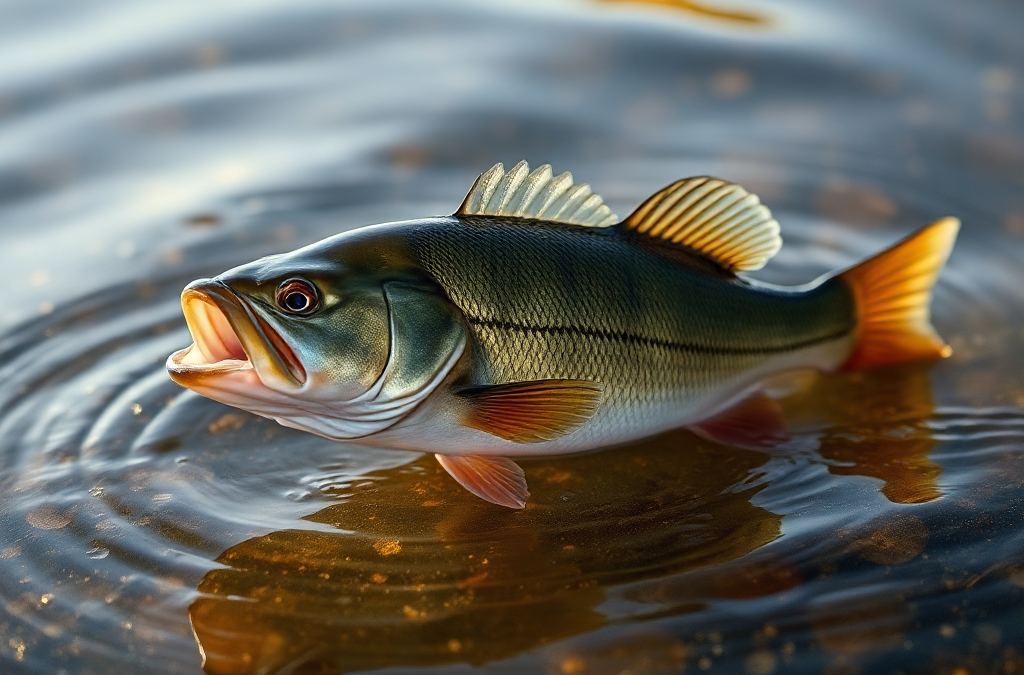
Recognizing different fish species by their habitats means matching a fish’s likely location to water temperature, depth, current, bottom composition, vegetation, and available food. Largemouth bass often favor cover such as weeds, docks, and fallen timber, while trout are more likely in cool, oxygen-rich streams, riffles, pools, and spring-fed water. Catfish commonly use deep holes, soft bottoms, channel edges, and submerged structure, whereas walleye often hold near rocky points, drop-offs, and low-light areas. Treat habitat as a starting prediction rather than proof: confirm it with fish shape, movement, feeding behavior, season, and local regulations before deciding what you have found.
Read Habitat Before You Read the Fish
Habitat recognition works because fish do not distribute themselves randomly. Each species has tolerances for temperature, dissolved oxygen, current, light, depth, and shelter, and those preferences determine where it can feed efficiently while avoiding excessive energy use. A clear, cold stream with gravel and fast riffles suggests a different fish community from a warm, turbid reservoir with flooded timber.

Begin by describing the location rather than naming a fish immediately. Note whether the water is moving or still, shallow or deep, clear or stained, and bordered by rock, sand, mud, vegetation, or wood. A submerged ledge beside a deep channel may attract predators that use the edge as an ambush route, while a shallow weed flat may hold smaller fish and the species that pursue them.
Habitat is a probability clue, not a guarantee. A largemouth bass may leave vegetation during a cold front, and a trout may move from a fast riffle into a deeper pool when water levels change. The mistake is treating one feature as a species label. “Rocky bottom” narrows the possibilities, but it does not distinguish every bass, walleye, perch, or trout that may use it.
Use the same observation process described in how to recognize different fish species by their habitats whenever you arrive at unfamiliar water. Rank the clues: temperature and oxygen usually define what can live there, structure and depth explain where it may hold, and food availability helps predict when it will be active.
Match Common Species to Their Preferred Water
Species identification becomes easier when habitat patterns are compared rather than memorized in isolation. Largemouth bass commonly use warm, relatively quiet areas containing weeds, brush, docks, laydowns, and irregular shorelines. Smallmouth bass are more strongly associated with rock, gravel, current, and clearer water, although they can occupy other environments. The distinction is useful, but overlapping habitat means body shape, jaw position, and markings should still be checked.
Trout generally favor water that remains cool and well oxygenated. In streams, look at riffles, plunge pools, undercut banks, boulder shadows, and the seams where fast water meets slower water. Brook, brown, and rainbow trout may share a river, so habitat alone cannot reliably separate them. Species-specific markings, fin patterns, and local distribution are needed for confirmation.
Catfish often use deep holes, outside bends, channel edges, submerged logs, and soft-bottom areas where food collects. Flathead catfish may be associated with larger cover and live prey, while channel catfish can use broader river and reservoir habitats. A deep hole suggests catfish activity, but sonar returns, baitfish presence, current, and time of day can change the picture.
Walleye frequently relate to rocky points, reefs, drop-offs, current breaks, and deeper water, especially under low-light conditions. Panfish often occupy vegetation, shallow cover, docks, and gentle bottom contours, though larger individuals may move deeper. Saltwater species require the same logic with different features: redfish may use marsh edges and oyster structure, striped bass may follow tidal current and bait, and flounder may lie on sandy or muddy bottoms near channels.
Compare the likely species with the available habitat instead of forcing a match. A fish seen tight to a shaded dock in warm water may be a bass, but a nearby bluegill or crappie could use the same cover. The habitat tells you what to inspect next; it does not replace a physical identification.
Use Season, Depth, and Food to Narrow the Identification
Season changes habitat use because temperature, oxygen, spawning behavior, and prey movement change throughout the year. In spring, many fish move toward warming shallows, protected coves, gravel flats, or tributary mouths. During summer, some species retreat to deeper water or remain near shade and current, while others continue feeding in shallow vegetation during low-light periods.
Depth should be interpreted with temperature and cover. A deep location is not automatically a catfish location, and a shallow flat is not always a panfish location. A cool, deep pool below a riffle may be valuable to trout because it combines oxygenated inflow with resting depth. A reservoir point may hold walleye when it provides a depth transition and access to moving baitfish.
Food provides the missing link between a habitat feature and a species decision. Inspect the area for minnows, crayfish, aquatic insects, freshwater shrimp, mussels, or surface activity. Smallmouth bass around rocky bottom may be hunting crayfish, while trout near a riffle may be positioned to intercept drifting insects. Catfish may use a current seam where organic material and dead prey accumulate.
Weather and water level can temporarily override normal patterns. Rising water may push fish into newly flooded cover, while falling water can concentrate them along remaining channels or drains. Heavy rain may reduce visibility and alter current, making a previously reliable visual clue less useful. An angler who checks only the shoreline and ignores recent conditions may misread an otherwise familiar fishery.
A practical priority order is:
- Check temperature, clarity, current, and oxygen-producing features.
- Locate depth changes, cover, and transitions between bottom types.
- Identify prey or feeding signs in the same zone.
- Adjust the prediction for season, water level, light, and recent weather.
- Confirm the fish with physical traits before recording or keeping it.
This approach is more reliable than assuming every fish follows a fixed seasonal calendar. Habitat explains the opportunity; changing conditions explain the timing.
Avoid Habitat Clues That Lead to Misidentification
The most common mistake is confusing shared habitat with shared identity. Several species may gather around a dock, weed line, rock pile, or creek mouth because the feature provides shade, food, or protection. If the observer decides on a species before checking the fish’s profile, the habitat becomes confirmation bias rather than useful evidence.
Another weak assumption is that a species occupies one habitat type exclusively. Bass can use vegetation, rock, wood, open water, and suspended positions. Trout can move between riffles and pools. Catfish can leave deep holes to feed in shallow flats. Habitat preferences describe recurring choices, not permanent addresses.
Visibility also creates problems. Clear water allows anglers to inspect body shape and markings, but stained water may make color unreliable. Night conditions can hide fins and lateral markings entirely. Do not identify a fish from color alone when light, water stain, handling stress, or camera exposure may have changed its appearance.

Size can mislead as well. Young fish may have less distinct markings and may occupy different water from adults. A small predator can be mistaken for a forage species when viewed briefly, while a large panfish may be confused with a juvenile game fish. Photographing the fish from the side, without squeezing it or placing it on unsafe surfaces, gives a better record for later comparison.
Regulations add a practical constraint. Local rules may distinguish closely related species, populations, or size limits, and a habitat-based guess is not sufficient when harvest decisions are involved. Use an official state or provincial identification resource when the fish cannot be confidently separated. The safer choice is release and verification rather than relying on a convenient assumption.
A Practical Field Method for Confirming Species
A repeatable field check turns habitat observation into a defensible identification. First, record the water setting: lake, river, pond, estuary, or stream; current speed; clarity; approximate depth; and bottom material. Next, note the exact position of the fish, such as beneath a log, beside a drop-off, in a riffle seam, over vegetation, or suspended above open water.
Then examine behavior. A fish holding motionless in current, cruising a weed edge, rooting along mud, or striking bait near the surface is revealing how it uses the habitat. Behavior should support—not replace—physical inspection. Check body depth, mouth position, fin shape, tail form, lateral line, spots, bars, and coloration. Avoid handling a fish longer than necessary, especially in cold-water fisheries.
Use a field notebook or phone record to compare repeated observations. If fish with similar markings repeatedly appear around the same structure during similar conditions, the habitat pattern becomes more useful. If the pattern changes after a storm, temperature shift, or water-level change, update the interpretation rather than treating the first observation as permanent.
For example, suppose a fish is found beside a rocky point in clear water. Walleye becomes a reasonable possibility if the fish is active near low light and close to a depth break, while smallmouth bass becomes more plausible if it is tightly associated with rocks and feeding on crayfish. Neither conclusion should be made from the point alone; mouth shape, body profile, markings, and local species records complete the assessment.
Anglers can use how to recognize different fish species by their habitats as a starting point for selecting an identification reference, not as permission to skip verification. When the habitat clue and physical traits disagree, trust the unresolved uncertainty and seek a local fisheries resource. Accurate identification improves catch records, protects similar-looking species, and leads to better decisions about where to look next.
For dependable identification, compare field observations with official fish profiles from your state or provincial fisheries agency, university extension programs, or recognized conservation organizations. These sources usually show distinguishing markings, distribution, habitat descriptions, and regulations relevant to the local water body. Regional references are preferable to generic photographs because closely related species can vary across drainage systems.
Frequently Asked Questions
Can habitat alone identify a fish species?
No. Habitat narrows the likely choices, but overlapping cover, seasonal movement, and changing water conditions mean physical traits and local distribution should confirm the identification.
Which habitat clues should be checked first?
Check temperature, current, depth, clarity, bottom type, cover, and available prey. Temperature and oxygen limit the broad species group, while structure and food help locate individual fish.
Why do fish leave their usual habitat?
Fish may move because of spawning, temperature changes, falling or rising water, low oxygen, baitfish movement, storms, or changing light. Seasonal preferences are patterns rather than fixed rules.
How can trout be distinguished when several species share a stream?
Use habitat as context, then inspect markings, spotting patterns, fin characteristics, body form, and mouth features with a regional identification reference. Release the fish if uncertainty remains.
Does sonar identify species?
Sonar can reveal depth, structure, baitfish, and fish location, but a typical return does not reliably identify species. Combine sonar with habitat, season, behavior, and direct visual confirmation.
Further Reading
Authoritative Sources
- Academy of Nutrition and Dietetics
eatright.orgProfessional nutrition guidance, healthy eating resources, and practical dietitian-reviewed advice.
- U.S. Department of Agriculture
usda.govOfficial food, nutrition, agriculture, and consumer guidance from the USDA.
- NIH Office of Dietary Supplements
ods.od.nih.govResearch-based fact sheets on nutrients, supplements, dietary intake, and safety considerations.
- International Society of Sports Nutrition
sportsnutritionsociety.orgEvidence-informed sports nutrition resources and position stands for active people and athletes.
Conclusion
Recognizing fish by habitat is a disciplined process of narrowing possibilities, not guessing from a single shoreline feature. Read temperature, oxygen, current, depth, bottom composition, cover, and prey before deciding which species is most likely. Then account for season, water level, light, and recent weather, since those conditions can move fish away from their usual locations. Shared habitat makes physical confirmation essential: inspect body profile, mouth, fins, markings, and size, and consult a local fisheries reference when the decision affects harvest or regulations. Record what you observe so repeated patterns become more reliable over time. The strongest identification combines where the fish was found, why that location would support it, and what the fish itself visibly confirms.

