
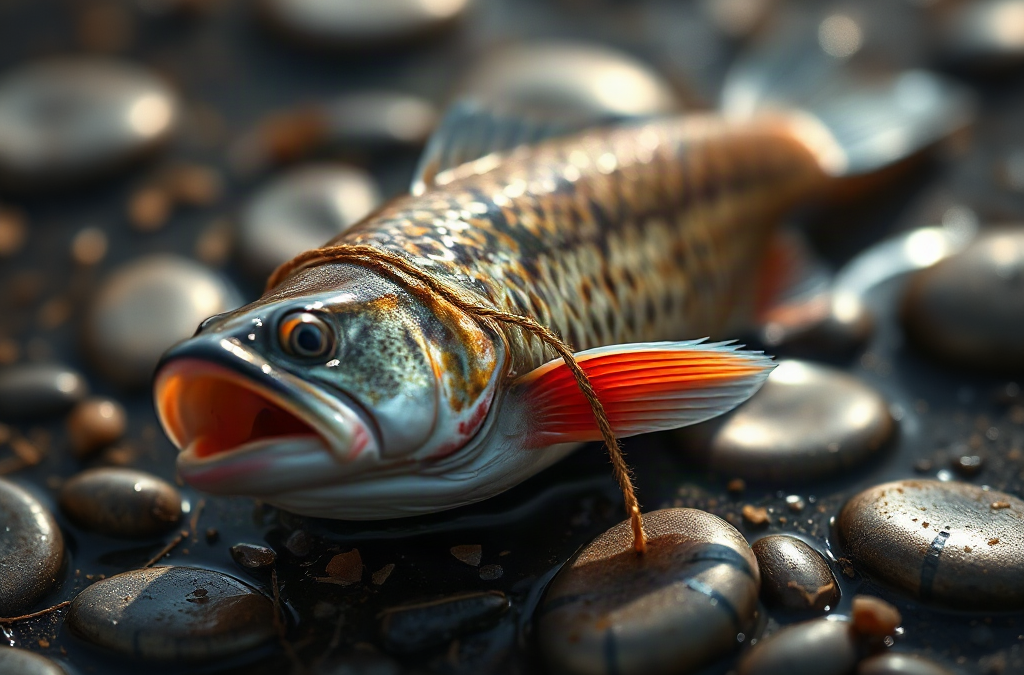
Use natural bait effectively for different species by matching the bait to each fish’s normal food, selecting a hook that leaves the bait exposed, and presenting it at the depth and speed where that species feeds. Worms suit many freshwater fish, minnows appeal to predators, and shrimp or cut bait release scent for coastal species. Keep bait lively or fresh, use only enough weight to maintain control, and replace it when its movement, scent, or texture deteriorates. Check local bait rules and adjust when untouched bait, frequent bait theft, or missed strikes show that the size, rig, or presentation is wrong.
Match Natural Bait to the Species and Its Feeding Habits
Natural bait works best when it resembles food the target species already encounters in that water. Species preference matters, but location and season refine the choice. A largemouth bass holding near shallow cover may respond to a lively shiner, while a bass feeding along a crawfish-rich rocky bank may take a piece of crawfish more readily. A trout in a cold stream might encounter drifting worms after rain, aquatic insects during a hatch, or small baitfish in deeper pools. The useful question is not simply which bait catches a species, but which food is available where that fish is feeding now.

Feeding anatomy offers another practical clue. Bluegill and other panfish have relatively small mouths, so a short worm segment, cricket, maggot, or small grub is usually easier for them to engulf than a large nightcrawler. Catfish locate food partly through scent and commonly investigate worms, fresh cut fish, or other legal local forage presented near the bottom. Walleye often respond to minnows, leeches, and nightcrawlers, but the better option changes with water temperature, forage, depth, and presentation. Coastal species such as redfish, flounder, and spotted seatrout commonly eat shrimp and baitfish, yet each may require a different position in the water column.
Local forage generally gives a stronger starting point than a universal bait chart. Look along the shoreline, around vegetation, beneath safe-to-lift rocks where permitted, or near bait activity on the surface. Match the approximate size rather than trying to create a perfect imitation. If predators are chasing two-inch minnows, an oversized bait can reduce interest or attract a different size class of fish. Conversely, tiny worm pieces may be stripped immediately where larger fish and aggressive nuisance species are mixed together.
Use a simple three-part decision before rigging:
- Species: Is it primarily eating insects, invertebrates, baitfish, or bottom-oriented food?
- Feeding zone: Is it holding near the surface, suspended, beside cover, or on the bottom?
- Current forage: What size, color, and type of prey is visibly abundant or seasonally plausible?
Do not assume that natural automatically means locally legal or environmentally safe. Regulations may restrict live fish, frogs, crayfish, collection methods, transport between waters, or the release of unused bait. Some waters permit only specified bait species or prohibit organic bait entirely. Verify the rules for the exact water before collecting, purchasing, transporting, or discarding bait. For a broader application of how to use natural bait effectively for different species, treat legality and local forage as the first filter, not an afterthought.
Rig Worms, Minnows, Insects, Shrimp, and Cut Bait Correctly
Effective rigging keeps the hook point available while preserving the bait’s movement, scent, or shape. A common failure is burying a large hook inside a ball of bait. Fish can then pull at exposed edges without reaching the point, and the hook may not penetrate cleanly. Choose a hook for the bait and the fish’s mouth rather than selecting it solely by the expected weight of the catch. The bait should stay attached during the cast but should not conceal the point and bend.
Worms and Soft Invertebrates
For panfish, pinch off a worm section and thread it onto a small hook once or twice, leaving a short end free. Repeatedly wrapping the worm into a dense lump reduces natural movement and encourages fish to nibble without taking the hook. For bass, trout, or walleye, a larger portion of nightcrawler can be hooked lightly through the head or threaded partway when casting force is a concern. Leeches are generally hooked near the sucker so they can swim, provided their use is legal.
Live Minnows and Baitfish
Hook placement changes how a minnow behaves. A light hook through both lips suits controlled movement or gentle current, although it can restrict water flow through the mouth if left stationary. Hooking shallowly through the back, below the dorsal fin and above the spine, lets a minnow swim beneath a float. A careful tail-area placement creates active movement but may produce a less controlled presentation. Dead or cut baitfish can be hooked through firm skin so the softer flesh releases scent without flying off during the cast.
Insects, Shrimp, and Cut Bait
Crickets and grasshoppers should be hooked shallowly through the collar area rather than crushed through the abdomen. Thread grubs lightly and keep the hook point clear. Live shrimp may be hooked shallowly near the horn, through the tail, or across a durable shell segment; avoid piercing the dark internal line visible through the upper body. Cut bait should be trimmed into a streamlined piece with some skin attached. Thick cubes can spin in current, twist line, and hide the hook, whereas a tapered strip moves more naturally and leaves a scent trail.
Rig strength should remain proportional. Fine line and a light float allow a cricket or worm to move naturally for bluegill, while stronger leader material may be justified around abrasive structure or toothy saltwater fish. Extra hardware, heavy sinkers, and oversized swivels can make small bait behave unnaturally. The opposite mistake is fishing too lightly to control depth or land a fish safely. Use the least terminal tackle that still maintains contact, survives the habitat, and handles the intended species.
Control Depth, Movement, and Scent
Presentation determines whether a suitable bait enters the fish’s feeding window. Natural scent cannot compensate for a worm suspended several feet above bottom-feeding fish or a live minnow buried in weeds. Begin by identifying the likely holding depth from structure, current, temperature, light, and visible activity. Then choose a float, free-line, split-shot, sliding sinker, or drift rig that keeps the bait in that zone without removing its natural action.
A float is useful when fish are suspended, feeding over vegetation, or holding at a repeatable depth. Set the bait just above the weed tops for crappie or bluegill rather than allowing it to disappear into vegetation. In a stream, a small float and minimal split shot can carry a worm or insect along a current seam. The bait should travel close to the speed of the surrounding water. If it races ahead, drags behind, or repeatedly snags, change weight placement, float depth, or casting angle.
Bottom rigs suit catfish, carp, surf species, and other fish feeding close to the substrate, but “on the bottom” does not mean motionless under excessive weight. A sliding sinker lets a fish move with the bait before feeling full resistance. In current or waves, enough weight is needed to prevent uncontrolled rolling; in quiet water, too much weight dulls bite detection and can make a fish reject the offering. A slowly moved crawler rig may cover water for walleye, while stationary cut bait can be more appropriate when scent is expected to draw fish through an area.
Freshness affects both scent and physical performance. Live bait that has become weak, pale, or unresponsive loses much of the movement that attracts predators. Cut bait that is mushy, repeatedly thawed, or washed free of oils may stay on the hook poorly. Keep worms cool and shaded, maintain suitable water conditions for minnows, and protect shrimp or cut bait from heat. Do not release leftover live bait into the water; dispose of it according to local instructions.

Make one controlled adjustment at a time. Move the bait shallower or deeper, reduce sinker weight, shorten a leader, or replace a tired bait before changing every part of the rig. This makes the fish’s response interpretable. Signs of a productive setup include bait reaching the intended zone, occasional contact with structure rather than constant snagging, visible bait movement, and bites occurring at a repeatable depth. The methods covered in how to use natural bait effectively for different species become far more reliable when depth and drift are treated as measurable variables.
Diagnose Bait Theft, Missed Strikes, and Unproductive Water
The condition of the retrieved bait reveals what happened below the surface. A bare hook after quick taps often means small fish are pulling loose edges, the bait is too soft, or the hook point sits too far from the portion being eaten. Shorten the bait, hook it through firmer material, or reduce hook size if the target has a small mouth. If larger fish are intended, moving away from bait-stealing panfish may be better than downsizing into them.
Repeated missed strikes can also result from poor timing. With small panfish nibbling a worm, a controlled lift may set the hook once steady pressure develops. Predators taking a live minnow may initially grip it before turning or swallowing it, but waiting too long increases the chance of deep hooking. Circle hooks, where appropriate and legal, are generally fished with steady pressure rather than a sharp, sweeping hook-set. Watch the line and float: sideways travel, sustained submergence, or increasing weight is more meaningful than every brief twitch.
Untouched bait points to a different problem. First confirm that the bait is still alive or fresh and has not become tangled around the leader. Then check whether it is actually reaching the chosen depth. If both are correct, relocate along a depth change, current edge, shade line, dock, rock transition, or vegetation boundary. Changing from a worm to a minnow will not help if no fish are present or if the rig is several feet outside their feeding lane.
Use this compact troubleshooting sequence:
- Inspect the bait: Missing edges suggest nibblers; crushed or lifeless bait suggests poor handling or rough casting.
- Expose the point: Clear scales, skin, worm tissue, or weed fragments from the hook.
- Verify depth: Adjust the float stop, leader, or sinker until the bait consistently reaches the intended zone.
- Change size before species: A smaller or fresher portion often solves weak bites without requiring a completely different bait.
- Move when evidence stays absent: Several clean retrieves without taps, scent marks, or disturbed bait often justify a location change.
Natural bait is not maintenance-free. Check it after a missed strike, snag, hard cast, or long soak. Minnows can wrap a leader, shrimp can lose their tails, and cut bait can rotate until skin blocks the point. Frequent inspection costs fishing time, but leaving damaged bait in unproductive water costs more. Handle fish with wet hands, remove hooks promptly, and consider barbless hooks or approved circle hooks when release survival is a priority. Stop using a tactic that produces repeated deep hooking; reducing bait size, setting sooner, or changing hook style may provide better control.
Frequently Asked Questions
What natural bait catches the widest range of freshwater species?
Earthworms and nightcrawlers catch many panfish, trout, bass, catfish, and walleye. Adjust the portion and hook size to the fish’s mouth instead of presenting a whole large worm to every species.
Should the hook point remain exposed when using natural bait?
Yes. Secure the bait through firm tissue while keeping the point and most of the bend clear. A hidden point contributes to bait theft and weak hook penetration.
How often should natural bait be replaced?
Replace it after it loses movement, scent, firmness, or its intended shape. Inspect it after every strike, snag, forceful cast, or extended period without activity.
Is live bait always more effective than cut or dead bait?
No. Live bait adds movement, while fresh cut bait can release a stronger scent and remain near the bottom. Species behavior, current, temperature, forage, and local rules determine the better option.
Why do fish keep stealing my bait without getting hooked?
The bait may be too large, loosely attached, or positioned away from the hook point. Use a smaller portion, hook it through tougher tissue, and confirm that the hook matches the likely fish.
Conclusion
Successful natural-bait fishing comes from making the bait believable, reachable, and easy to hook. Identify what the target species is likely eating, place that food in its actual feeding zone, and preserve the feature that makes it attractive—movement for a minnow, scent for cut bait, or a natural drift for a worm or insect. Keep the hook point clear and avoid adding more weight or hardware than conditions require.
Let each retrieve guide the next adjustment. Stolen bait calls for a change in size or attachment; untouched bait calls for a depth, location, or freshness check; repeated deep hooking calls for earlier response or a different hook setup. Confirm local bait and transport rules before the trip, carry only what can be kept in good condition, and never release unused bait. Those habits produce more controlled presentations while reducing waste, avoidable fish injury, and guesswork.

