
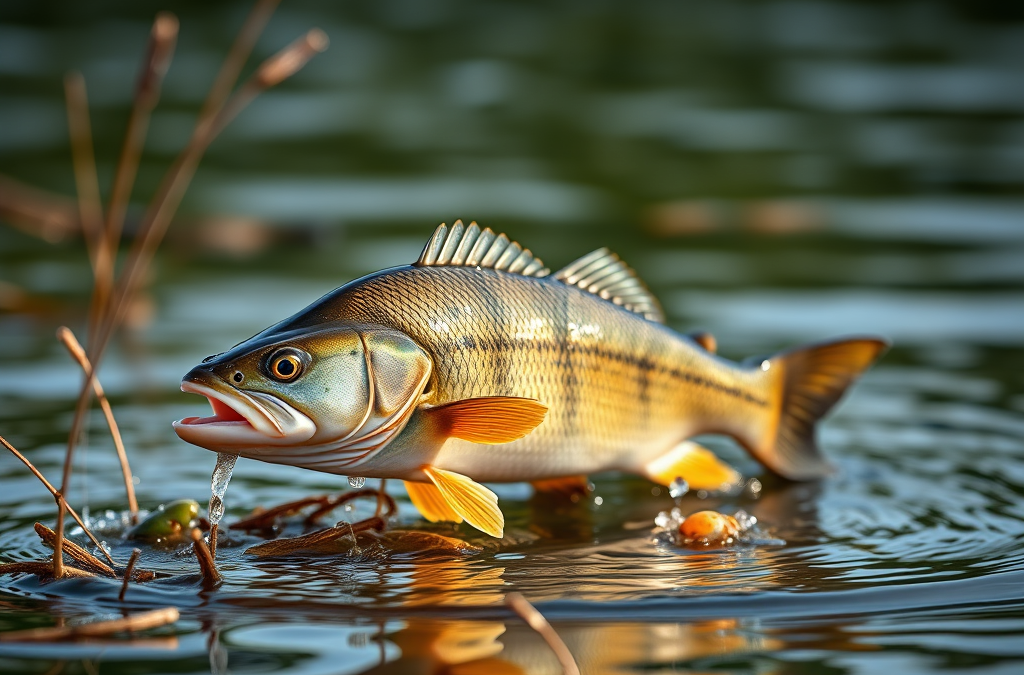
How to fish in different types of water bodies depends on reading habitat first, then matching depth, current, clarity, and forage with your rig and retrieve. In ponds and lakes, probe weed edges, drop-offs, points, and submerged cover; in rivers and streams, concentrate on current breaks, seams, pools, and undercut banks. Clear water usually calls for smaller, natural presentations and longer casts, while stained water favors vibration, contrast, and scent. Start with a simple search pattern, change one variable at a time, and move when several casts produce no response. A common mistake is using the same lure speed and depth everywhere instead of adapting to how water movement positions fish.
Reading Water Before Choosing Tackle
Successful fishing begins with identifying how a water body creates feeding opportunities. Fish are not distributed evenly: they often gather where food concentrates, shelter is available, oxygen levels are favorable, or current delivers prey. Before tying on a lure, observe wind direction, water color, surface activity, shoreline cover, depth changes, and visible structure. A feature that looks attractive from shore may be unproductive if it lacks access to food or a comfortable escape route.

Water movement is the first major dividing line. Still water allows fish to spread across vegetation, flats, docks, points, and depth transitions. Moving water compresses fish into seams, eddies, pools, and protected edges because holding in strong current costs energy. That difference affects both location and presentation. A soft-plastic lure crawled beside a weed line may work in a pond, while the same lure needs to be held near the bottom or swept through a seam in a river.
Clarity changes how fish detect a presentation. In clear water, fish may inspect line, hardware, and unnatural movement, so lighter leaders, smaller profiles, and natural colors can be useful. In muddy or heavily stained water, visibility is limited; vibration, flash, silhouette, and slower movement may give fish more time to locate the offering. Neither approach is universally superior. A bright lure in clear water can look excessive, while a subtle bait in muddy water may pass unnoticed.
Use a simple observation sequence before casting:
- Mark obvious depth changes, current breaks, vegetation, rocks, wood, and overhead shade.
- Look for baitfish, insects, birds, surface disturbances, or fish moving along edges.
- Choose a lure or bait that reaches the likely depth without constantly snagging.
- Make several controlled casts from different angles before abandoning a promising feature.
The common mistake is changing lures repeatedly without changing location or depth. If fish are holding three feet below the surface, a perfect color fished above them will still fail. A useful how to fish in different types of water bodies plan treats location, depth, speed, and profile as separate variables.
Fishing Ponds and Natural Lakes
Ponds reward close attention to edges and cover because their relatively small size makes fish movement easier to predict. Start with the shoreline, especially where grass, reeds, lily pads, fallen branches, docks, or shade meet open water. These areas provide ambush points and may collect insects, frogs, and small fish. Cast parallel to the edge rather than always casting straight toward the middle; keeping the lure in the strike zone longer often produces more useful information.
Natural lakes usually require a broader search. Fish may move between shallow feeding areas and deeper refuge as light, wind, temperature, and forage change. Points, saddles, creek mouths, submerged vegetation, rock transitions, and drop-offs are valuable because they connect different habitats. A windy bank can be better than a calm bank when wind pushes plankton and baitfish toward shore, but excessive wave action can make a light presentation difficult to control.
Match the method to the cover. Weedless soft plastics are practical around vegetation and wood, while crankbaits or spinnerbaits can search open edges more quickly. Live bait suspended beneath a float can be effective when fish are holding at a consistent depth, but a float set too shallow may keep the bait above the fish. In clear lakes, long casts and natural movement reduce disturbance. In murky ponds, a lure with vibration or a larger silhouette may be easier for fish to track.
Consider this common scenario: a bass angler fishes a sunny pond at midday and works only the visible bank. The shallow edge may have warmed and lost activity, while bass have moved to the first drop-off or the shaded side of a dock. Moving slightly deeper and slowing the retrieve is more logical than cycling through five colors. Conversely, after rain or during low light, shallow cover may become productive again as prey moves into the margins.
Do not assume the deepest water always holds fish. Deep areas offer refuge, but fish still need food and suitable oxygen. A shallow flat beside a channel can outperform the deepest hole if bait is present. For more detail on applying these decisions, use the site’s water-body fishing recommendations as a starting point, then let visible conditions determine your next cast.
Fishing Rivers, Streams, and Moving Water
Rivers and streams require anglers to read current rather than simply search for depth. Fish commonly conserve energy behind boulders, bridge pilings, logjams, undercut banks, and abrupt depth changes. The boundary between fast and slow water, called a seam, can carry insects and small prey while giving fish a lower-energy holding position. Cast upstream or across the current when appropriate, allowing the presentation to enter the feeding lane naturally.
Current speed determines how a bait behaves. A lure retrieved directly against strong flow may rise, spin, or move too quickly. A bait drifted with the current can look more natural, but it must remain near the depth where fish are holding. In shallow riffles, trout may feed actively where water breaks over gravel and adds oxygen. In a deeper pool, they may sit near the head, tail, or a protected edge rather than occupying the entire basin.
Approach matters more in narrow water. Fish in clear streams can see movement on the bank, so walk quietly, keep a low profile, and cast from downstream when the situation allows. Longer leaders and smaller presentations may reduce disturbance, but they are harder to control in wind or heavy current. A beginner may be better served by a slightly heavier setup that maintains contact with the bottom than by an ultralight rig that drifts out of the strike zone.
River fishing often fails when anglers cast only to the fastest water. Strong current can be difficult for fish to hold in and may sweep a lure past before they can react. Instead, target the soft water immediately beside the flow. For example, a smallmouth bass may sit behind a rock, facing into the current, while a trout may hold along the edge of a deep run. The exact species changes, but the energy-saving principle remains useful.
After a cast, watch the line and feel for bottom contact without dragging constantly. If the bait never reaches depth, add weight or choose a denser lure; if it hangs on every cast, reduce weight or angle the presentation differently. A good approach to fishing varied water changes with current strength rather than treating a river like a long pond.
Reservoirs, Brackish Water, and Changing Conditions
Reservoirs combine lake-like open water with river-influenced structure, so fish location can change dramatically along the same shoreline. Old creek channels, submerged roadbeds, flooded timber, rocky points, dams, and tributary arms create different depth and current patterns. Begin by identifying whether you are fishing a flat, a channel edge, a steep bank, or a transition. A lure selected for shallow brush is unlikely to be useful when fish are suspended over a channel.
Water level is a major constraint. Falling water can pull fish away from flooded cover and toward remaining channel edges, while rising water may open newly flooded shoreline habitat and bring insects or terrestrial prey into reach. Reservoirs also tend to have large expanses with few obvious clues. A depth map, local access information, or sonar can reduce unproductive searching, but electronics do not replace interpreting what the fish are doing.
Brackish water requires attention to salinity changes, tides, inlets, marsh drains, oyster edges, grass flats, and bait movement. Fish may use a creek mouth differently on an incoming tide than on a slack tide because current changes where prey travels. Artificial lures should match local forage in size and movement, while natural bait must remain fresh and be presented at the depth of the feeding fish. Salt or mixed water also increases equipment maintenance demands; rinse reels, hooks, pliers, and guides with fresh water after use.

A frequent mistake is assuming a visible change in water color automatically identifies the best spot. A muddy inflow may carry food, but it can also be too turbulent or low in visibility. The productive area may be the clearer water just outside the plume. Likewise, a tidal flat may look ideal but produce little during slack water. Compare location with movement: if bait is absent and the water is static, try a nearby current line rather than staying because the scenery appears promising.
Choose a method according to the available information. Bank anglers should prioritize accessible transitions and repeatable casting angles. Boat anglers can widen the search across contours, but should still verify depth and forage before committing to a large area. The goal is not to cover every habitat; it is to find a feature where conditions place fish within reach.
A Practical Adjustment Plan
When the first approach fails, make one deliberate change at a time. Random switching makes it impossible to know whether the improvement came from a new depth, color, speed, or location. A structured sequence is more efficient: test the likely depth, then alter retrieve speed, then change profile or vibration, and finally move to a comparable feature. This keeps the search logical while respecting limited fishing time.
Use the species and water body to set reasonable expectations. A clear mountain stream may demand stealth and precise drifts, whereas a stained farm pond may reward repeated casts around cover. A broad reservoir may require patience while locating a productive contour, and tidal water may make the same place fish differently within a short period. The best method is the one that keeps the offering in a plausible feeding zone long enough to be noticed.
Signs the approach is working include follows, missed strikes, bait activity, bottom composition changes, or repeated marks at one depth. A complete lack of life after covering several angles is stronger evidence for moving than one quiet cast. Weather shifts, water releases, boat traffic, and rising wind can also change conditions during the session, so reassess rather than assuming the morning pattern will last.
Keep a short record after each trip: water type, clarity, approximate depth, cover, weather, lure or bait, retrieve, and where fish were contacted. Over time, these notes reveal patterns that memory often loses. Avoid treating them as permanent rules; a successful lure in a lake may fail when forage, water level, or current changes. Local regulations, access restrictions, seasonal closures, and species limits should always be checked before fishing.
The practical priority is simple: locate the habitat, reach the correct depth, present naturally, and adjust based on evidence. Tackle matters, but changing from a medium-profile lure to a tiny one cannot compensate for fishing empty water. Deliberate observation turns different water bodies from separate mysteries into readable combinations of cover, movement, depth, and available food.
For location-specific regulations, access rules, seasons, and species information, consult the wildlife agency responsible for the water you plan to fish. State and provincial fisheries agencies commonly publish regulations, stocking information, access maps, and habitat reports that are more reliable than generalized online advice.
Frequently Asked Questions
What is the first thing to look for in any water body?
Look for a combination of food, cover, and manageable depth. In moving water, add a current break; in still water, prioritize edges, transitions, and structure.
How should lure choice change between clear and muddy water?
Use smaller, natural-looking presentations and quieter movement in clear water. In muddy water, vibration, contrast, flash, or scent can help fish locate the offering.
Where should beginners fish in a river?
Start at current seams, the slower water behind rocks, pool edges, and undercut banks. These areas often let fish feed while using less energy than the fastest current.
Is deep water always the best place to fish?
No. Deep water offers refuge, but fish still need food and suitable conditions. A shallow flat beside a drop-off, vegetation edge, or channel may be more productive.
How can anglers tell whether to change lures or move?
Change depth or retrieve first if the location has strong habitat clues. Move when several casts from different angles show no bait, activity, contact, or evidence that fish are present.
Further Reading
Authoritative Sources
- Academy of Nutrition and Dietetics
eatright.orgProfessional nutrition guidance, healthy eating resources, and practical dietitian-reviewed advice.
- U.S. Department of Agriculture
usda.govOfficial food, nutrition, agriculture, and consumer guidance from the USDA.
- NIH Office of Dietary Supplements
ods.od.nih.govResearch-based fact sheets on nutrients, supplements, dietary intake, and safety considerations.
- International Society of Sports Nutrition
sportsnutritionsociety.orgEvidence-informed sports nutrition resources and position stands for active people and athletes.
Conclusion
Fishing different water bodies becomes more predictable when you read the environment before selecting a presentation. Ponds and lakes call for attention to cover, edges, points, and depth transitions; rivers and streams concentrate fish around current breaks and feeding seams; reservoirs and brackish areas demand closer attention to water level, channels, tides, and moving forage. Start with the most likely habitat, reach its depth, and change only one variable when the result is poor. Keep notes on conditions and verify local rules before returning. The next trip should not be an exercise in trying every lure in the tackle box. Choose one productive-looking feature, fish it methodically, and let evidence from the water determine where and how you adjust.

