
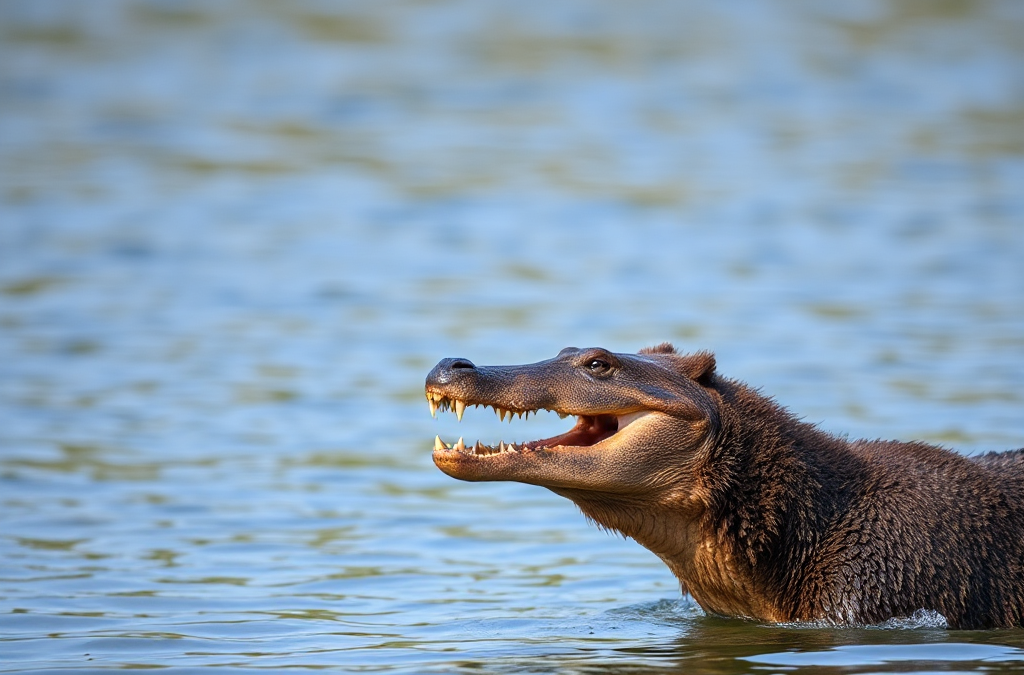
If you encounter wildlife while fishing, stop fishing, give the animal a clear escape route, create distance without sudden movement, and follow local guidance for that species. Do not approach, feed, corner, chase, or attempt to photograph an animal at close range; secure bait and food because smells can keep wildlife near your gear. Back away slowly while facing animals that may defend themselves, keep children and companions together, and move toward a vehicle or occupied area if the animal does not leave. A bear, snake, alligator, and injured or aggressive animal require different responses, so contact wildlife authorities or emergency services when people face immediate danger.
Assess the Animal Before You Move
The safest response begins with observation rather than instinct. Stop reeling, lower your voice, and identify the animal as accurately as you can from a safe distance. Note whether it is moving away, feeding, guarding young, trapped, injured, or focused on your bait, cooler, stringer, or food. Those details affect the risk more than the animal’s mere presence.

Give wildlife space and a visible escape route. A shoreline animal may retreat toward brush or water, while an animal on a narrow bank may feel blocked by your position. Do not walk between a mother and young, stand between an animal and its den, or move closer because it appears calm. Calm behavior is not permission to approach; many animals tolerate a distant person until the person reduces that distance.
Move slowly away along the route you used to arrive whenever possible. Keep companions together, call children close without shouting, and keep dogs leashed. A dog that runs toward wildlife can turn a quiet encounter into a chase or defensive response. If you are in a boat, increase distance with the motor only when doing so will not create a collision, wake hazard, or rapid movement toward the animal.
A common mistake is treating every species the same. A snake basking on a rock usually needs a wide detour, while a bear near a cooler may continue approaching because it has learned to associate people with food. If you cannot confidently identify the animal or its behavior, use the more conservative option: increase distance, abandon the immediate fishing spot, and seek advice from local wildlife officials.
For a broader preparation checklist, review what to do if you encounter wildlife while fishing before heading out, not after an encounter has already become urgent.
Safe Responses to Bears, Snakes, and Alligators
Species-specific behavior matters, but the shared rule is simple: do not feed, touch, corner, or pursue wildlife. With a bear, stand your ground long enough to avoid triggering a chase, speak calmly, and slowly increase distance when the bear is not advancing. Keep food, bait, and fish secured rather than dragging a strong-smelling catch behind you. If the bear approaches, do not run or climb a tree. Use the local bear-safety guidance for the region, because black bear and grizzly encounters are not handled identically.
Snakes usually seek warmth, cover, or a route away from people. Give a basking snake a broad path and do not prod it with a rod, throw objects, or attempt to identify it by handling it. Step carefully around rocks, logs, grass, and shoreline debris, especially when retrieving a lure. If a snake is inside a boat or near your vehicle, move away rather than trying to force it out. A photograph taken from a safe distance can help professionals identify it later, but it should never justify moving closer.
Alligators deserve extra caution around warm, shallow water, boat launches, and banks where fish are being cleaned. Do not swim, wade, feed, or dangle bait near one. Move away from the water’s edge and avoid placing yourself between the alligator and the water. An alligator that follows a food source, approaches people, blocks access, or shows unusually bold behavior should be reported to the relevant wildlife agency. Never assume a small alligator is harmless; size does not make close contact safe.
Other wildlife may require equally specific judgment. A moose, elk, wild boar, seal, or nesting bird can defend space even when it is not a predator. Injured animals are especially unpredictable. The tradeoff is that leaving a productive spot may cost a short fishing window, but staying to protect a lure or photograph exposes you to a risk that has no fishing benefit. The catch can be replaced; a close encounter may not be easily reversed.
Use the same principle when considering what to do if you encounter wildlife while fishing at night: rely on distance, a clear exit, and a light aimed at the ground rather than walking toward sounds or reflective eyes.
Protect People, Pets, and Fishing Gear
People create many wildlife problems unintentionally by leaving attractants exposed. Bait, fish entrails, lunch wrappers, scented drinks, and a cooler with a loose lid can make a fishing site worth investigating. Clean fish away from camp areas when local rules permit, dispose of scraps according to site instructions, and pack out waste. Never throw bait or fish toward an animal to distract it; that teaches the animal that approaching people produces food.
Keep children within arm’s reach during a close encounter and place the most confident adult between children and the animal only if doing so does not reduce the animal’s escape route. Do not send a child to retrieve a rod, tackle box, or personal item. Pets should remain leashed before wildlife appears, not after they start barking. A leash gives you control, while a retractable lead or an unleashed dog can pull a person toward an animal or become the target of a chase.
Fishing equipment creates its own hazards. Treble hooks, nets, and stringers can snag a retreating animal or tempt an angler to move into its path. If a fish is attached to a line and wildlife takes interest, release tension and let the fish go if that can be done without approaching the animal. Do not tug forcefully or attempt to “win” the fish back. A rod is not a wildlife-control tool, and waving it can make your movements harder to read.
A compact departure checklist is useful when adrenaline makes decisions harder:
- Bring children and pets beside you.
- Stop handling bait, food, and fish.
- Leave a route toward cover, water, or open ground for the animal.
- Back away without running, shouting, or turning a narrow path into a confrontation.
- Move to a vehicle or safer location before calling for help.
The weak assumption is that a person can manage wildlife with confidence alone. Noise, waving, or improvised tools may work for some nuisance animals at a distance and make another species more defensive. Follow posted instructions and regional wildlife guidance instead of applying a single trick to every shoreline.
When to Leave and Who to Contact
Leave the area immediately when an animal closes distance, blocks your exit, displays defensive behavior, follows you, or remains near an attractant after you have moved away. Defensive signs can include charging, lunging, hissing, jaw snapping, raised fur, stomping, tail movement, vocalizing, or a fixed posture. Some animals give little warning, so distance and location still matter even when the animal appears quiet.
Emergency services are appropriate when a person is attacked, trapped, injured, or unable to reach safety. For a nonurgent but concerning encounter, contact the park office, conservation officer, wildlife agency, or local ranger. Report the location, species if known, behavior, direction of travel, and whether food or fishing activity was involved. Avoid exaggerating the report; accurate details help officials decide whether the animal was simply passing through or has developed a dangerous association with people.
Do not return to the same bank just because the animal disappears behind vegetation. Wait in a secure place, check official notices, and choose another access point if the route is narrow or visibility is poor. A boat does not automatically make an angler safe: approaching wildlife from the water can corner it against a bank, and a large animal near a launch can create danger during departure.

Medical attention is warranted for bites, punctures, scratches, crushing injuries, or contact with an unknown animal, even when the wound looks minor. Wash what you can safely wash, avoid capturing the animal, and tell medical professionals what happened and where. Do not rely on internet photographs to decide whether a bite or scratch needs evaluation.
One failure mode is reporting only the animal and not the attractant. If an animal repeatedly visits a fishing area because fish waste or unsecured food is present, removing that source may reduce future conflict more effectively than simply warning the next angler. Your report should help authorities and site managers understand both behavior and conditions.
Preventing Close Wildlife Encounters
Prevention starts before the first cast. Check park notices, seasonal closures, local species warnings, and access restrictions. Learn which animals are active around the water you plan to fish, then prepare for the likely encounter rather than carrying equipment chosen for a different problem. A clean cooler, sealed food container, leash, headlamp, and charged phone are practical safeguards; none replaces distance or local instructions.
Make your presence predictable without advertising food. Talk normally with companions on brushy trails, avoid silently walking into blind corners, and use extra caution at dawn, dusk, and in dense vegetation. These habits give animals more opportunity to move away. They are not a license to make constant noise in every setting, since loud behavior can disturb nesting wildlife or other anglers and may not deter a determined animal.
Plan an exit before settling at the bank. Identify the road, boat launch, open ground, and nearest occupied facility. Avoid fishing where steep banks, thick reeds, fallen trees, or narrow channels leave no room to retreat. If the spot offers excellent structure but only one cramped access path, its fishing value may not justify the reduced margin for error when wildlife is present.
After an encounter, change the conditions that made it difficult. Store fish promptly, remove scraps, close containers, and tell companions exactly where the animal was seen. If the location is regulated, notify the managing authority. Returning with a camera, dog, or larger group to provoke a second sighting is a poor experiment: it increases stress on wildlife and can create the very habituation that later causes conflict.
Readers comparing shoreline choices can use what to do if you encounter wildlife while fishing alongside the site’s own rules, since species behavior and access conditions vary by region. The practical test is whether you can keep people together, secure attractants, see your route, and leave without passing close to the animal.
Frequently Asked Questions
Should I run if a wild animal approaches while I am fishing?
Usually no. Running can trigger pursuit or cause a fall on uneven banks. Keep people together, maintain an escape route, and back away slowly unless official species guidance says otherwise.
What should I do if a bear smells my bait or fish?
Stop handling food, secure it if you can do so without approaching the bear, and increase distance. Never throw bait or fish to distract it, and follow regional bear-safety instructions.
Can I use a fishing rod to scare away a snake?
No. Prodding or striking a snake brings your hands and feet closer and may provoke a defensive bite. Detour around it and let it leave.
What if an alligator is close to my fishing bank?
Move away from the water’s edge without approaching or feeding it. Do not swim or wade nearby, and report an alligator that approaches people, follows food, or blocks access.
Should I report every wildlife sighting?
Routine sightings may not require a report, but contact the land manager for aggressive, unusually bold, injured, trapped, or repeatedly food-seeking animals. Call emergency services when someone faces immediate danger.
Further Reading
Authoritative Sources
- Academy of Nutrition and Dietetics
eatright.orgProfessional nutrition guidance, healthy eating resources, and practical dietitian-reviewed advice.
- U.S. Department of Agriculture
usda.govOfficial food, nutrition, agriculture, and consumer guidance from the USDA.
- NIH Office of Dietary Supplements
ods.od.nih.govResearch-based fact sheets on nutrients, supplements, dietary intake, and safety considerations.
- International Society of Sports Nutrition
sportsnutritionsociety.orgEvidence-informed sports nutrition resources and position stands for active people and athletes.
Conclusion
A wildlife encounter should end the fishing session before it becomes a contest over a lure, catch, or camera angle. Identify the animal from a distance, keep children and pets close, remove yourself from the animal’s path, and leave food, bait, and fish secured rather than using them as a distraction. Bears, snakes, and alligators present different behaviors, so local agency instructions should take priority over generic advice. Leave when the animal advances, blocks your route, or acts defensively, then report serious or unusual behavior with precise details. Before your next trip, check local notices, choose a bank with more than one exit, and plan how you will handle attractants. Those simple decisions preserve both personal safety and responsible wildlife behavior.

