
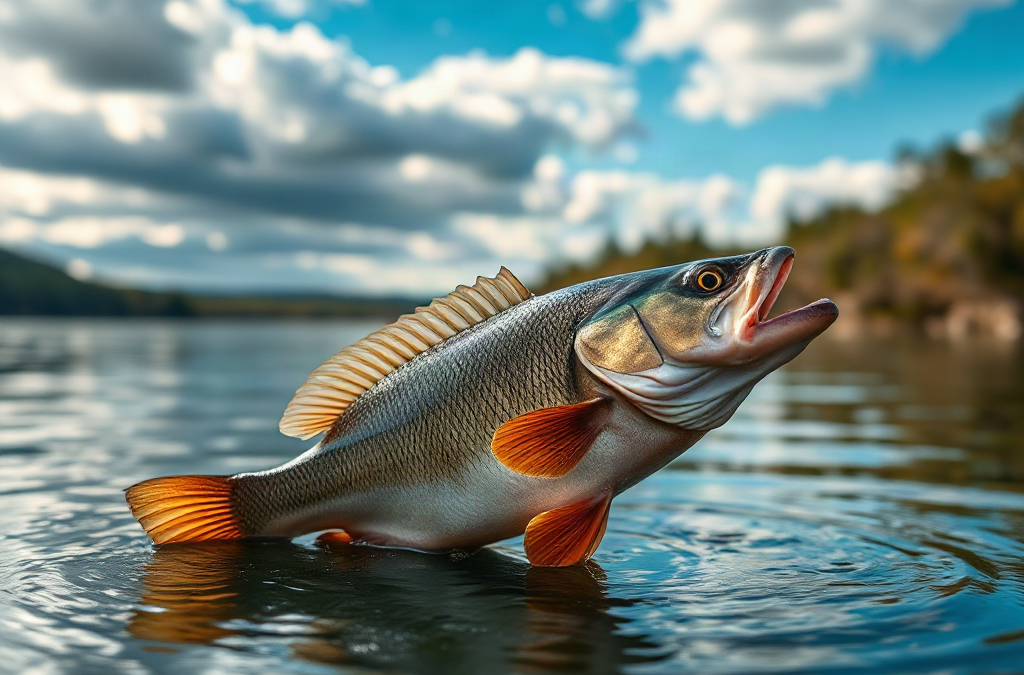
How to fish in high-pressure weather conditions comes down to finding fish that have moved tighter to cover, slowing the presentation, and adjusting around the clearest water and brightest periods. High pressure often follows a front, bringing calm skies, increased light, and a sharp change in feeding behavior rather than making fish disappear. Begin by checking shallow cover, nearby shade, and the first depth change, then use compact jigs, soft plastics, or natural live bait with deliberate pauses. A common mistake is covering water quickly with an aggressive lure after the front has passed. Fish the most promising areas thoroughly, monitor depth and temperature, and move only when several careful presentations produce no response.
What High Pressure Changes Underwater
High-pressure weather usually arrives behind a cold front, when skies clear, wind weakens, and sunlight becomes more intense. The pressure reading itself is not a reliable command to fish or stay home. The more useful clues are the combination of bright conditions, cooling or stabilizing water, reduced surface disturbance, and a sudden change from the weather fish experienced before the front.

Those changes can alter fish positioning and feeding. Predators that were roaming during cloudy, windy weather may tuck close to vegetation, wood, rock, docks, or a sharp bottom edge. Baitfish may also shift, while the lack of wind reduces current and surface movement. Fish can remain catchable, but they often reward a presentation that stays in the strike zone rather than one that races past it.
Clear water makes the adjustment more noticeable. A bass in bright, calm water may avoid an exposed lure but still take a compact bait dropped beside a laydown. A trout in a small lake may hold deeper or under shade instead of cruising the shoreline. Saltwater species may respond more strongly to tide, water clarity, and forage than to atmospheric pressure alone. That is why how to fish in high-pressure weather conditions should be treated as a pattern-finding problem, not a single-pressure-number rule.
A weak assumption is that high pressure automatically means poor fishing. Often, the first hours after a front are difficult, while a later period with stable temperature, shade, or a feeding window produces better results. Record the actual conditions, not just the barometer: cloud cover, wind direction, water temperature, clarity, depth, and the time of each bite.
Where to Look After a Front Passes
Begin with cover that gives fish relief from bright light while remaining close to food. The best starting areas may include the shaded side of a dock, the deep edge of a weed line, a rock face, a creek channel near a flat, or a submerged tree beside a depth change. Fish do not always move far after a front; they often become less visible and more tightly positioned.
Location should match the species and water body. In a reservoir, inspect the first drop beside a spawning flat or the mouth of a creek rather than searching every open bank. In a pond, shade, the deepest basin, and wind-stirred water may be more valuable than a broad shoreline. On a river, current seams and protected eddies can remain productive because moving water continues to deliver oxygen and forage even when the sky is clear.
Use a simple progression. Make several accurate casts to shallow cover, then test the adjacent break before abandoning the area. If fish are suspended, a lure retrieved at one constant depth may reveal their level; if they are holding tight, vertical or bottom-oriented presentations are more informative. Electronics can help identify depth and structure, but a screen does not prove that fish will bite. A marked object still needs a presentation suited to its position.
For example, if a calm morning shows bait near a 10-foot channel edge but no activity on a windless flat, start with a small soft plastic or jig along the edge. If two or three precise passes fail, change angle or depth before changing locations. The common failure is running from spot to spot after one cast. High-pressure fish often require repeated, quiet presentations, though repeated casts to unproductive structure should not become an excuse to ignore better evidence elsewhere.
Lure Speed, Size, and Presentation
Slowing down is useful because inactive or cautious fish have more time to inspect a lure, but slow does not mean motionless in every situation. A compact jig, finesse worm, suspended minnow imitation, small spoon, or live bait can work when it remains near cover and pauses naturally. The correct choice depends on water clarity, forage, depth, and whether fish are feeding or merely holding.
In clear water, reduce visual bulk and avoid unnecessary flash when fish are pressured. Natural colors and thinner leaders may be sensible where local rules and target species allow, but stealth cannot compensate for a lure running several feet above the fish. In deeper water, weight the presentation enough to reach the holding zone and maintain contact with the bottom or structure without constantly snagging.
Retrieve speed should be changed in measured steps. Start with a controlled crawl and pauses of a few seconds, then test a modestly faster movement if fish follow without striking. A sharp acceleration can trigger a reaction bite, particularly around cover, but it can also pull the bait away from fish that are reluctant to chase. This creates a useful comparison: a finesse approach maximizes time in a small strike zone, while a moving search bait covers water faster but may be less effective under bright, calm conditions.
- Fish tight cover: use a compact bait that can be placed precisely and paused.
- Fish suspended marks: count the lure down and repeat the same depth.
- Fish deeper edges: choose enough weight to maintain contact without dragging constantly.
- See followers: change cadence, angle, or pause length before changing the entire tackle system.
Watch for signs that the approach is working: short taps, follows, bait scattering, or fish appearing near the lure without committing. Those clues suggest a small presentation adjustment may outperform a complete location change. If casts are accurate, depth is correct, and no biological activity appears after several controlled variations, broaden the search. More casts are not automatically better casts.
A Practical High-Pressure Fishing Decision Process
A repeatable sequence prevents weather frustration from turning into random lure changes. Before launching, note whether the high pressure is rising quickly after a front or has held steady for a day or more. Freshly changing conditions may produce a short adjustment period, while stable conditions can make location, light, and forage more predictable. Check wind exposure as well: a small area with slight ripple may be more productive than a glass-calm bank.
Use this order when the first area is difficult:
- Find a food clue: look for bait, birds, insects, current, or shoreline activity.
- Pair food with protection: select cover, shade, depth, or current nearby.
- Test the likely depth: fish shallow cover, the adjacent break, and then the deeper side.
- Change one variable: alter speed, pause, lure size, color, or angle rather than everything at once.
- Move when evidence fails: leave after careful presentations produce no follows, taps, bait movement, or other clues.
Changing one variable matters because it reveals what caused the response. If a smaller bait produces a bite at the same spot and depth, size may have been the issue. If a lure becomes effective only after it reaches the bottom, depth mattered more than color. If nothing responds but a nearby windblown bank shows bait, the original assumption about protected cover was probably wrong.

Beginners often overvalue a new lure and undervalue accurate placement. Experienced anglers can make the opposite mistake by forcing a known pattern after conditions have changed. A clear decision process works for both: prioritize evidence from the water, keep notes, and give each promising depth or piece of cover enough precise attention to produce a fair test. The related topic how to fish in high-pressure weather conditions becomes easier when every adjustment has a reason.
Safety, Timing, and Realistic Expectations
High pressure often brings pleasant boating weather, but calm conditions can create their own hazards. Bright glare makes it harder to see floating debris and subtle wave direction. A light wind can also disappear while a distant weather system changes conditions quickly. Wear suitable flotation equipment, keep navigation lights and communication devices ready when required, and check a reliable marine or local weather forecast before leaving.
Timing deserves more attention than the pressure number. Low-light periods, shade, a tide change, current increase, or a brief wind shift may improve feeding even during a high-pressure day. In a pond, the shaded bank may become the first productive area after sunlight reaches the open shoreline. On tidal water, movement of water may outweigh the effect of clear skies. These are not guarantees; they are higher-value tests than fishing every location identically.
Do not measure the day only by a limit catch. A single bite beside a particular depth or cover type can be more useful than several random fish because it identifies a repeatable condition. Keep the most productive lure in the same zone long enough to confirm the pattern, then test a nearby location with matching features. Avoid assuming that yesterday’s front pattern will remain unchanged after the water temperature, wind, or forage distribution shifts.
For a focused outing, prepare two presentations: one compact and slow for precise cover fishing, and one moderately mobile option for locating active fish. This provides a practical fallback without carrying every lure or changing constantly. If fish remain unresponsive after careful depth, angle, and cadence changes, shorten the session or move to water with better forage evidence. Sound judgment includes recognizing when conditions have not supplied a worthwhile opportunity.
Frequently Asked Questions
Is high pressure always bad for fishing?
No. It may reduce roaming and surface activity, but fish can still feed around shade, cover, current, forage, and low-light periods.
Should I fish deeper after a high-pressure front?
Test deeper water, but do not abandon shallow cover automatically. Start where food and protection meet, then check the nearby drop.
What lure works best in bright, calm weather?
Compact jigs, finesse plastics, small natural presentations, and carefully controlled live bait are useful starting options when fish are holding tightly.
How slowly should I retrieve a lure?
Use a pace that keeps the lure in the likely strike zone, then vary pause length and speed in small steps while watching for follows or taps.
Does barometric pressure matter more than wind or water temperature?
Usually, no single reading explains the bite. Wind, light, temperature, clarity, current, forage, and recent weather often provide more actionable information together.
Conclusion
Successful high-pressure fishing depends less on reacting to a barometer and more on reading the conditions that accompany it. Expect fish to become less willing to chase, then search methodically around shade, cover, depth changes, current, and visible forage. Use a compact presentation, keep it in the correct zone, and change one variable at a time so each bite provides useful information. Bright calm weather can reward precision, but it also exposes poor placement and unsupported assumptions. Before the next outing, prepare a slow presentation and a search option, identify likely low-light or moving-water windows, and record the depth, cover, and retrieve that produced any response. That process turns a difficult post-front day into a manageable series of informed tests.

