
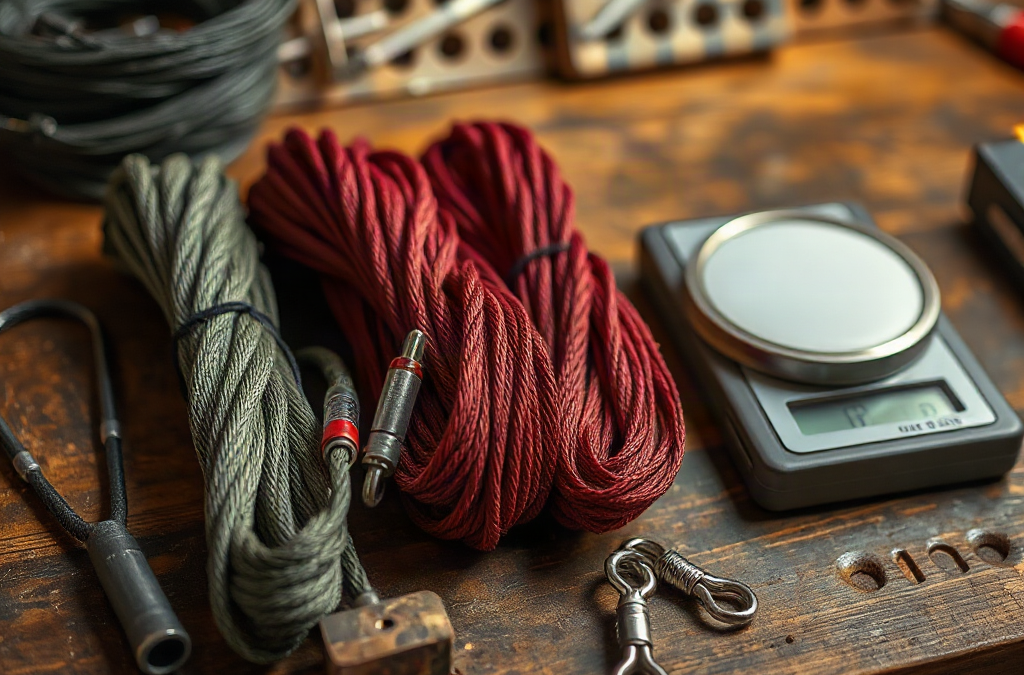
The best braided fishing line for knot strength is a round, tightly woven braid that matches the knot, leader material, and actual line diameter used on the reel. Eight- or nine-carrier braid often cinches more evenly than coarse four-carrier line, while a stable coating reduces strand separation during tightening. Reliable choices to test include Sufix 832, PowerPro, Daiwa J-Braid x8, and Berkley X9, but no model wins across every pound test and knot. Compare candidates with repeated Palomar, doubled-uni, or FG-knot pulls, lubricate each knot, and reject any line that slips, frays, or breaks inconsistently.
What you’ll learn
This guide covers the following practical points:
- What Determines Braid Knot Strength — Braided line usually fails at a knot because its slick fibers slip, cut across one another, or receive uneven pressure as the knot tightens.
- Strong Braid Options to Compare — Several established braids belong on a knot-strength shortlist, but the final choice should be based on the exact diameter and connection used in your fishing.
- Best Knots for Braided Line — The strongest braid is ineffective when paired with a knot that does not generate enough friction.
- How to Test Line Before Fishing — A repeatable home test reveals more than one unusually strong pull.
What Determines Braid Knot Strength
Braided line usually fails at a knot because its slick fibers slip, cut across one another, or receive uneven pressure as the knot tightens. The printed breaking strain alone does not reveal how much strength the finished connection will retain. Construction, diameter, surface treatment, knot geometry, and tying technique all influence the result.
A round, compact weave tends to distribute pressure more evenly than a loose or flattened braid. Higher carrier counts commonly produce a smoother profile, which can help a knot seat cleanly, but carrier count is not a guarantee of strength. A thin eight-carrier braid may still be less forgiving than a thicker four-carrier line when both carry the same label rating.
Diameter deserves more attention than nominal pound test. Two products marked 20-pound test may have different actual diameters, and the thicker one may appear stronger simply because more fiber is present. Compare stated diameter where manufacturers provide it, then judge abrasion resistance, casting behavior, and knot performance as separate qualities.

Coating creates another tradeoff. A firm coating can keep fibers together and make new line easier to handle, but a very slick finish may encourage a poorly tied knot to creep. Check the tag end after several hard pulls. Movement, glazing, fuzzing near the knot, or an abrupt break at the first turn indicates that the connection needs to be retied or changed.
Strong Braid Options to Compare
Several established braids belong on a knot-strength shortlist, but the final choice should be based on the exact diameter and connection used in your fishing. Product construction can vary by test rating, and manufacturing specifications may change, so a brand-level reputation should not replace a spool-level test.
| Line | Construction to Evaluate | Useful Starting Application | Primary Tradeoff to Check |
|---|---|---|---|
| Sufix 832 | Eight-fiber construction | General-purpose main line and leader connections | Confirm knot behavior at the chosen diameter |
| PowerPro | Traditional four-carrier braid | Cover, utility setups, and direct terminal knots | Coarser texture and knot bulk |
| Daiwa J-Braid x8 | Eight-carrier weave | Smooth casting and compact connection knots | Thin sizes require careful tightening |
| Berkley X9 | Nine-carrier construction | Round profile and smooth line handling | Slick surface demands secure wraps |
Sufix 832 and conventional PowerPro represent two useful starting points: a smoother multi-fiber construction versus a coarser four-carrier design. Daiwa J-Braid x8 and Berkley X9 provide additional high-carrier alternatives. Rather than assuming the smoothest line must tie the strongest knot, test each with the same knot, leader, scale, and number of samples.
Choose by use case as well as pull strength. A smooth braid may suit long casts and compact leader knots, while a coarser braid may be easier to grip and inspect around vegetation or heavy cover. Color retention and quiet guide travel are secondary if the connection slips under a controlled load.
Best Knots for Braided Line
The strongest braid is ineffective when paired with a knot that does not generate enough friction. For direct attachment to a hook, lure, or swivel, a carefully tied Palomar is a practical baseline. Make sure the loop passes over the terminal item without twisting and that all strands draw down together.
For braid-to-monofilament or braid-to-fluorocarbon connections, the FG knot creates a slim connection by gripping the leader with alternating braid wraps. It performs well when tied correctly but is sensitive to poor tension and an incomplete finish. A doubled-uni connection is bulkier and may pass through guides less cleanly, yet many anglers find it easier to reproduce away from a workbench.
Whatever knot is selected, use enough wraps for the braid’s diameter, moisten the connection, and tighten gradually from the standing lines. Do not pull only on the tag ends. Very thin braid generally needs more friction-producing contact than heavier braid, while excessively stacked wraps can cross over and cut into each other.

- Direct to hardware: Begin testing with a Palomar.
- Compact leader connection: Use an FG knot if it can be tied consistently.
- Easier field connection: Compare a doubled-uni with sufficient braid wraps.
A common mistake is trimming the braid tag flush before the knot has been loaded. Leave a short tag, pull-test the connection, and inspect it again after fishing through weeds, rocks, shell, or repeated guide contact.
How to Test Line Before Fishing
A repeatable home test reveals more than one unusually strong pull. Tie at least five samples of each candidate using identical lengths, hardware, and knot procedures. Pull steadily with a suitable scale or controlled weight rather than jerking the line, then record both the failure load and where the break occurred.
- Inspect several feet of unused line for flattened sections, fuzzing, or inconsistent weave.
- Tie the same knot with the same wrap count for every sample.
- Lubricate and seat each connection slowly.
- Apply increasing pressure while keeping hands clear of hooks and weights.
- Record slipping, knot breaks, line breaks, and inconsistent results separately.
Consistency matters more than the highest single result. If four knots hold similarly and one slips badly, technique may be the cause. If failures repeatedly occur at the same turn or at widely scattered loads, change the knot, add appropriate wraps, or compare another line.
Testing should resemble the intended setup. A line used with a fluorocarbon leader must be evaluated with that leader’s actual diameter and stiffness. Direct-to-lure testing does not predict leader-knot behavior. Replace any test section before fishing because hard loading can damage fibers even when the line does not visibly break.
Frequently Asked Questions
Is eight-strand braid stronger at the knot than four-strand braid?
Not automatically. Eight-carrier braid is often rounder and smoother, which may help it seat evenly, while four-carrier braid can offer a coarser surface with useful grip. Diameter, coating, knot selection, and tying consistency may matter more than carrier count alone.
Which knot should I test first with braided line?
Use a Palomar as a baseline for tying directly to hardware. For a leader, compare a correctly tied FG knot with a doubled-uni or another connection you can reproduce reliably under fishing conditions.
Why does braided line slip out of a knot?
Braid has a low-friction surface, and thin strands may not grip with too few wraps. Crossed turns, abrupt tightening, inadequate finishing knots, or trimming the tag too closely can also allow movement.
Should I choose braid by pound test or diameter?
Consider both, but use diameter when making close product comparisons. Lines carrying the same pound-test label can differ in thickness, affecting knot bulk, casting, spool capacity, abrasion tolerance, and measured breaking load.
How can I tell that a braid knot is failing?
Watch for a shortening tag end, separated fibers, a glazed surface, visible knot movement, or repeat breaks at the same turn. Retie after any sign of slippage or fiber damage rather than relying on the connection.
Conclusion
Prioritize repeatable connections rather than selecting braid from carrier count or advertised strength alone. Shortlist proven four-, eight-, and nine-carrier lines, compare actual diameters, and test several identical knots with the leader or terminal hardware you use. The best choice is the braid that seats without slipping, withstands repeated pulls consistently, and still meets your casting, cover, and abrasion needs.

