
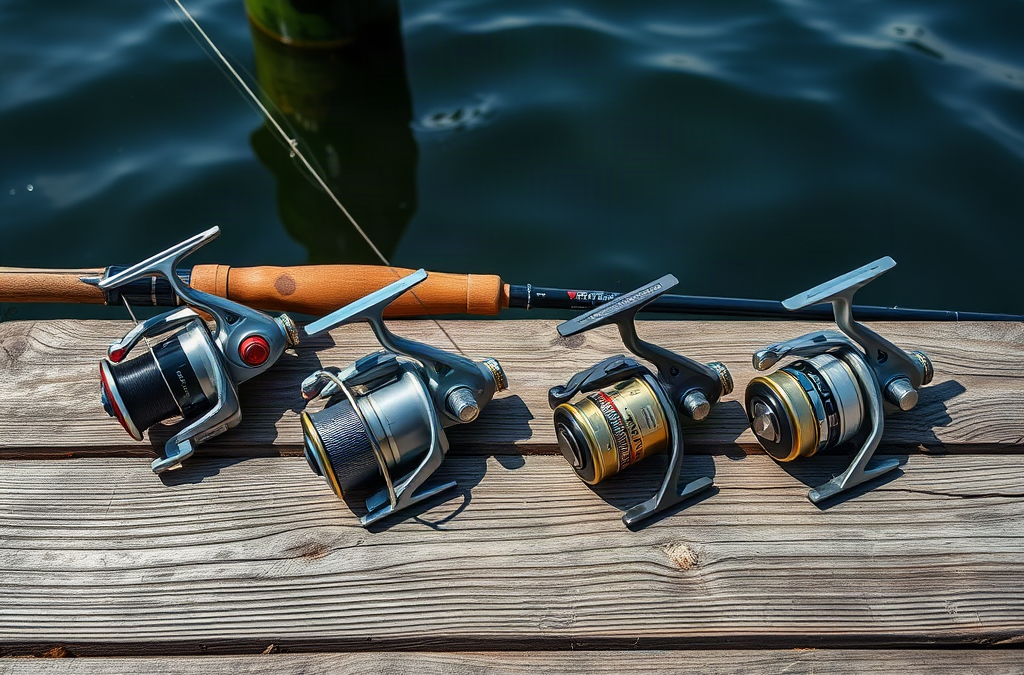
Types of fishing reels are best matched to technique by considering casting distance, lure weight, line control, drag demand, and retrieval style. Spinning reels suit light lures and versatile casting, while baitcasting reels provide accurate placement and leverage with heavier tackle. Spincast reels simplify basic casting, fly reels manage specialized fly line, trolling reels control moving baits at measured depths, and conventional reels handle demanding offshore or bottom-fishing loads. The smartest choice fits the rod, line, target species, and water rather than simply having the highest bearing count or largest spool.
What you’ll learn
This guide covers the following practical points:
- Reel and Technique Comparison — Reel design determines how line leaves the spool, how precisely an angler can control a cast, and how much pressure the system can manage during a retrieve.
- Spinning, Spincast, and Baitcasting Reels — Spinning reels are the practical default for light lures, thin line, and techniques that demand easy casting.
- Fly, Trolling, and Conventional Reels — Fly casting uses the mass of the fly line to deliver a nearly weightless fly, so the reel mainly stores line, balances the rod, and applies drag when a fish runs.
- Matching a Reel to Rod, Line, and Water — A reel performs properly only when the entire outfit is compatible.
Reel and Technique Comparison
Reel design determines how line leaves the spool, how precisely an angler can control a cast, and how much pressure the system can manage during a retrieve. A fixed-spool spinning reel releases line in coils without rotating the spool, making it forgiving with light tackle. Baitcasting and conventional spools rotate, creating efficient line flow and direct cranking power but requiring better spool control.
The technique should define the reel choice. An angler casting a small jig for crappie needs easy line release and sensitivity, whereas someone pitching a compact bass lure beside dock posts benefits from accuracy and immediate control. Offshore trolling adds different demands: high line capacity, dependable drag, and a frame built to withstand sustained loading matter more than effortless casting.
| Reel type | Best-matched techniques | Main advantage | Primary limitation |
|---|---|---|---|
| Spinning | Finesse casting, live bait, inshore casting | Handles light line and lures well | Less efficient with very heavy tackle |
| Spincast | Basic casting, panfish, casual bank fishing | Simple push-button operation | Limited capacity and casting control |
| Baitcasting | Pitching, flipping, power casting, lure fishing | Accuracy and direct spool control | Backlashes when poorly adjusted |
| Fly | Presenting artificial flies | Stores and manages fly line | Requires a complete fly-specific outfit |
| Trolling | Pulling lures or bait behind a boat | Capacity and controlled deployment | Generally unsuitable for casting |
| Conventional | Bottom fishing, jigging, offshore bait fishing | Leverage and heavy-line capacity | Steeper handling curve |
A common mistake is buying according to species alone. The same species may be pursued with several techniques: bass can be caught with a finesse spinning outfit, a baitcaster used around cover, or a fly reel carrying a bass taper line. Define lure weight, presentation, cover, depth, and expected fish size before comparing models.

Spinning, Spincast, and Baitcasting Reels
Spinning reels for light and adaptable presentations
Spinning reels are the practical default for light lures, thin line, and techniques that demand easy casting. The stationary spool and moving bail let line peel away with little startup resistance. That makes a spinning outfit effective for small soft plastics, lightweight floats, trout spinners, drop-shot rigs, and many shore-based saltwater presentations.
The tradeoff appears as tackle gets heavier. Large spinning equipment can handle strong fish, but repeatedly retrieving high-resistance lures may feel less natural than using a baitcaster or conventional reel with a rotating spool. Line twist can also accumulate when the line is spooled incorrectly, the drag spins repeatedly, or an angler cranks while a fish takes line. Closing the bail by hand and avoiding loose loops reduces preventable tangles.
Spincast reels for uncomplicated casting
A spincast reel encloses its spool beneath a cover and releases line through a front opening when the push button is operated. It works well for new anglers, children, and occasional fishing with moderate-size floats, sinkers, or lures. The enclosed design reduces the need to manage a bail or thumb a rotating spool.
Simplicity comes with reduced line capacity, shorter casting potential, and less precise drag and line management on many models. A spincast reel is a sensible learning tool, but it should not be mistaken for the easiest solution to every technique. Heavy vegetation, long casts, and strong fish can expose its limits quickly.
Baitcasting reels for control and power
Baitcasting reels excel when lure placement, retrieve power, and fast engagement matter. The angler can stop the spool with a thumb, making it easier to place a jig beside a stump or slow a lure before it lands. Common uses include pitching, flipping, casting crankbaits, working topwater lures, and retrieving spinnerbaits or other resistance-producing baits.
Backlashes occur when the spool rotates faster than line can leave it. Set spool tension and braking for the lure being used, begin with controlled casts, and adjust as skill improves. Filling the reel with an unusually light lure because the package lists a broad weight range often produces frustration; spinning tackle is usually more efficient at the light end.
Fly, Trolling, and Conventional Reels
Fly reels manage line rather than propel the lure
Fly casting uses the mass of the fly line to deliver a nearly weightless fly, so the reel mainly stores line, balances the rod, and applies drag when a fish runs. Reel size must correspond to the fly rod and line designation, with enough room for the fly line and appropriate backing. Trout fishing in small streams may place modest demands on drag, while saltwater fly fishing requires greater capacity and resistance to corrosive conditions.
Buying a large, powerful fly reel cannot compensate for a mismatched rod and line. The outfit functions as a system, and an improperly matched line can impair loading and casting. After saltwater exposure, rinsing according to the manufacturer’s care instructions is more useful than assuming a sealed drag makes the reel maintenance-free.
Trolling reels control deployed line
Trolling reels are designed to release and retrieve line while a boat moves a lure or bait through the water. Many use a levelwind to distribute line across the spool, while some models include a line counter for repeatable deployment. A line counter measures line leaving the reel, not exact lure depth; speed, line diameter, lure design, added weight, and current all alter the running depth.
Capacity and drag consistency deserve priority because a trolled bait may be set far behind the boat and struck at speed. The frequent mistake is treating the counter reading as a universal depth measurement. Record the combination of lure, line, speed, and productive counter setting instead.
Conventional reels provide leverage for heavy work
Conventional reels share the rotating-spool principle but are commonly configured for bottom fishing, offshore jigging, drifting bait, and fighting powerful fish. Star-drag models allow incremental drag adjustment, while lever-drag reels make preset strike and higher drag positions easy to locate. Both can work well when matched to the application.

Frame strength, usable line capacity, gear ratio, and drag behavior under load matter more than cosmetic size. Oversizing adds weight and can make hours of jigging tiring; undersizing may leave too little capacity after accounting for depth, current-induced scope, and a running fish. Choose around realistic line requirements rather than the largest fish imaginable.
Matching a Reel to Rod, Line, and Water
A reel performs properly only when the entire outfit is compatible. Start with the technique and typical lure or sinker weight, then select a rod rated for that load. Match the reel’s intended line range to the rod and leave enough capacity for normal casting, working depth, and a reasonable reserve. The rod should bend and absorb pressure; the reel should retrieve line smoothly without making the outfit awkwardly front- or rear-heavy.
Use the following order when narrowing the choice:
- Define the presentation: casting, pitching, fly casting, jigging, bottom fishing, or trolling.
- Estimate the working load: include lure, sinker, current, vegetation, and likely fish size.
- Choose the line: consider diameter, abrasion exposure, stretch, and capacity needs.
- Match reel and rod: confirm reel style, physical fit, ratings, and comfortable balance.
- Account for the environment: saltwater, sand, spray, and repeated heavy loading raise durability and maintenance demands.
A surf angler throwing a substantial sinker needs spool capacity and a rod built for that casting load, while a creek angler presenting a tiny lure benefits from a compact spinning reel and light rod. Neither outfit is inherently better; each transfers energy and manages line for a different job.
Signs of a poor match include repeated line overruns, inadequate casting distance despite sound technique, a rod loaded beyond its rating, a reel that flexes under normal pressure, or an outfit that causes fatigue. Before replacing the reel, check spool fill, line diameter, lure weight, brake settings, and rod compatibility. Setup errors often imitate equipment limitations.
Reel Features That Affect Performance
Drag quality, spool capacity, gear ratio, retrieve rate, and construction affect technique more directly than a long feature list. Drag should release line smoothly at the pressure required for the chosen line and hook style. Setting it excessively tight can break line, straighten light hooks, or remove the rod’s ability to cushion sudden movement.
Gear ratio describes spool or rotor rotations per handle turn, but line retrieved per turn also changes with spool diameter and fill level. A faster retrieve can gather slack quickly when working a lure toward the angler or moving a fish away from cover. A lower ratio may feel more controlled with deep-diving plugs, heavy jigs, or other high-resistance loads. Compare actual line pickup where manufacturers provide it rather than relying on ratio alone.
Bearing count is frequently overvalued. Bearing placement, corrosion resistance, tolerances, lubrication, gear support, and frame rigidity can matter more than the raw number. A reel with fewer well-placed bearings may remain smoother under load than one advertised around a larger count.
Saltwater use calls for materials and care suited to spray and corrosion, but no reel should be assumed impervious. Avoid forcing water into the body with high pressure, follow the maker’s cleaning instructions, and inspect the line roller, levelwind, handle, and drag after hard use. Grinding, uneven drag, spool wobble, or a rough handle under moderate load signals a need for cleaning, inspection, or service rather than more lubricant applied indiscriminately.
Frequently Asked Questions
Which fishing reel is easiest for a beginner?
A spincast reel offers the simplest controls, while a spinning reel provides more room to develop casting and line-management skills. Spinning gear is often the more versatile long-term choice.
Is a spinning reel or baitcaster better for bass fishing?
Spinning reels suit finesse lures and light line; baitcasters favor accurate placement, heavier lures, and fishing around cover. Many bass anglers use both because the techniques overlap poorly at their extremes.
Can a trolling reel be used for casting?
Some compact conventional designs can cast, but dedicated trolling reels are generally optimized for controlled line deployment, capacity, and pulling power rather than repeated casting.
Does a fly reel need a powerful drag?
That depends on the target and water. Small-stream trout may require little drag performance, while strong freshwater or saltwater fish can demand smooth pressure, adequate backing capacity, and durable construction.
How should reel size be selected?
Choose a size that holds enough of the intended line, balances the rod, and supports the expected drag load. Avoid adding capacity and weight that the technique will never use.
Conclusion
Select the reel after defining how the bait or lure will be presented. Spinning equipment covers light, adaptable casting; baitcasters reward practiced control; and fly, trolling, and conventional reels solve more specialized line-management problems. Check rod compatibility, working load, capacity, retrieve rate, and environmental exposure before comparing secondary features. If an existing outfit performs poorly, inspect line choice, spool fill, balance, and adjustments before assuming a new reel is necessary.

