
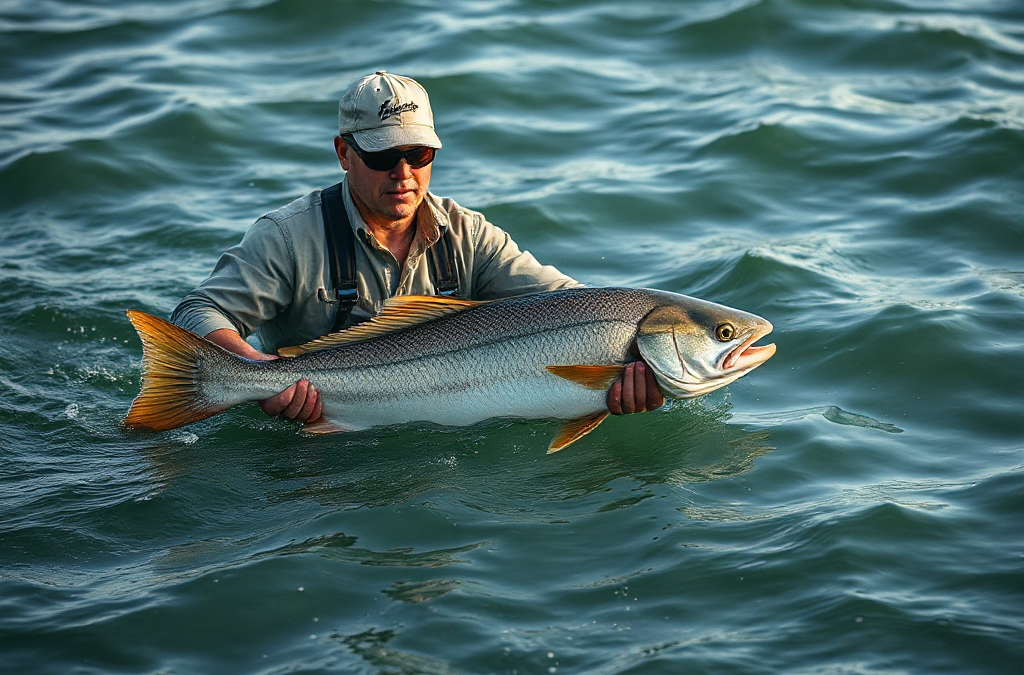
To fish effectively in saltwater, match your rig and retrieve to tidal movement, underwater structure, available forage, and the target species’ feeding depth. Begin by locating current seams, points, troughs, jetties, grass edges, or reef contours where moving water concentrates prey. Use natural bait when conditions are uncertain, or choose a lure that resembles the local forage and can reach the productive depth. Check knots, leader abrasion, drag pressure, and hook sharpness before casting because saltwater fish and structure quickly expose weak tackle. Adjust when the tide, wind, clarity, or bait activity changes instead of repeating an unproductive presentation.
Read Tides, Current, and Saltwater Habitat
Effective saltwater fishing begins with finding places where water movement makes feeding easier for fish. Tides push baitfish, shrimp, crabs, and other prey past points, channels, oyster edges, rock piles, bridge pilings, jetties, and drop-offs. Rather than casting randomly across a large bay or shoreline, identify where current meets an obstruction or changes speed. A current seam behind a piling, for instance, may give a predatory fish a low-effort position from which to intercept prey.

Use the tide as a positioning tool, not as a guarantee. A rising tide may move forage onto shallow flats, marsh drains, or grass edges, while an outgoing tide can pull food from those areas into deeper channels. The most productive period depends on local depth, water temperature, wind, and species behavior. A shallow flat with little current may be quiet on one tide but active when water drains through a narrow creek mouth.
Look for physical evidence before choosing a presentation. Bait dimpling on the surface, diving birds, nervous water, current lines, and fresh predatory strikes all deserve more attention than an attractive but empty shoreline. Clear water can make fish cautious, so a longer cast and lighter leader may help. Murky water often favors vibration, scent, or a larger profile that fish can detect at close range.
Land-based anglers should prioritize access, safety, and repeatable casting angles. A jetty may offer excellent current, but slippery rocks, surge, and snagging hazards can outweigh its fishing advantage without appropriate footwear and a safe position. Boat anglers can use charts or sonar to confirm depth changes, but electronics should support observations rather than replace them. A mark on the screen is more useful when it corresponds with current, bait, or a structure edge.
A useful first pass is to fish the up-current side, the current seam, and the downstream holding area with the same lure or bait. If one zone produces a strike, repeat that angle before changing everything. An unproductive approach often comes from moving constantly without learning which part of the habitat actually holds fish. For broader guidance on how to fish effectively in saltwater, treat water movement and fish position as connected decisions rather than separate variables.
Match Tackle, Bait, and Lure Presentation
The most effective saltwater setup is the one that reaches the target depth, handles the expected fish, and remains manageable in wind and current. A light inshore outfit may be ideal for casting soft plastics around grass or docks, but it is a poor choice for heavy surf, strong structure, or large fish that can reach pilings. Conversely, oversized tackle can reduce casting distance and make small lures look unnatural.
Choose line and leader based on abrasion risk as well as fish size. Braided main line offers sensitivity and manageable diameter, while a fluorocarbon or monofilament leader can provide abrasion resistance around rocks, shells, and structure. The leader should be inspected after contact with rough cover or a hard-running fish. A small nick can become a failure point during the next surge. Strong knots matter, but a clean, well-tied knot is more valuable than simply selecting the heaviest line.
Natural bait is often the practical choice when fish are scattered, feeding cautiously, or responding to local forage that is difficult to imitate. Shrimp, cut bait, small live baitfish, and crab can each suit different environments, but bait must be presented at the depth where fish are holding. A stationary bait above a deep channel may be ignored if current is carrying food along the bottom. A sliding sinker or float can make the bait more natural, depending on depth and snags.
Lures are useful when you need to search water efficiently or cover multiple depths. Soft plastics can probe grass edges and channels, jigs reach current-swept structure, and plugs can imitate injured or fleeing baitfish near the surface. Retrieve speed should reflect water temperature, current, visibility, and fish activity. A fast retrieve may trigger an aggressive fish in clear water, while a slower lift-and-fall presentation may keep a lure in the strike zone when fish are holding deep.
Do not change lure color before checking depth and speed. If fish are visibly feeding but ignoring a lure, first test whether the presentation is too high, too fast, or outside the feeding lane. A beginner may benefit from one versatile jig or soft plastic and several weights; an advanced angler may carry specialized plugs for precise conditions. The tradeoff is simple: more options can solve specific problems, but too many choices can prevent careful observation.
Build a Repeatable Saltwater Fishing Process
A repeatable process turns a short saltwater trip into a series of informed tests. Before casting, check the tide stage, wind direction, water clarity, expected depth, and target species. Then select one likely holding area and decide how the bait or lure will travel through it. This prevents aimless casting and gives each change a clear purpose.
Start with the highest-probability water: a current break, a channel edge, a bait concentration, or a structure transition. Make several casts at different angles because current can change the path and depth of a lure. Work close water before making long casts when fishing from shore; fish may hold beside a seawall, under a dock, or at the near edge of a trough. Boat anglers should avoid running directly over shallow fish or repeatedly passing through the same zone with the engine.
After each short series of casts, evaluate evidence rather than guessing. A strike, follow, bait reaction, snag pattern, or change in lure contact tells you something about depth and position. If the lure never reaches bottom near a deep channel, add weight or reduce the retrieve speed. If it hangs in grass, use a lighter head or a higher retrieve. When bait suddenly disappears from an area, that may signal a change in current or predator movement.
A compact on-water checklist keeps adjustments orderly:
- Confirm the tide direction and identify the strongest usable current.
- Check leader, knot, hook point, drag, and lure or bait condition.
- Probe shallow, middle, and deep portions of the same feature.
- Change one variable at a time: location, depth, speed, size, or color.
- Record the tide, habitat, presentation, and result after a productive trip.
Suppose a lure produces one redfish beside a marsh drain on an outgoing tide. The useful lesson is not simply the lure color. It may be the combination of falling water, bait leaving the marsh, a narrow exit, and a retrieve that stayed near the bottom. Repeating those conditions later is more reliable than copying one isolated tackle choice. Keep notes through changing seasons, but expect the exact location and depth to shift with weather and water temperature.
Avoid Common Saltwater Fishing Mistakes
Many poor results come from fishing attractive water without identifying a feeding opportunity. A wide beach, expansive flat, or open bay may look promising, yet fish commonly use only a small depth change, current edge, or cover line within it. Search for transitions: sand beside shell, shallow water beside a channel, clean water beside runoff, or moving water beside a calm pocket.

Another common mistake is treating a tide prediction as a complete fishing plan. Tide tables show expected movement, but wind can delay, strengthen, weaken, or redirect water in shallow areas. Heavy rain can alter salinity and clarity near inlets and creeks. Fish may respond to the actual flow rather than the printed tide stage. Watch the water at the location and adjust your plan if the current is weaker or stronger than expected.
Weak tackle preparation also causes avoidable failures. Salt spray and grit can affect reels, guides, hooks, and terminal connections. Rinse equipment with fresh water after the trip without forcing water into sealed components, dry it thoroughly, and inspect hooks for corrosion. Replace damaged leader instead of hoping it will survive another powerful run. Set the drag before the first cast and leave enough spool capacity for a long run.
Overworking a lure is a frequent presentation error. A fish following but not striking may be telling you that the profile is acceptable while the speed or depth is wrong. Try pausing near structure, shortening the retrieve, or allowing the lure to sweep naturally with current. If bait is being stolen without solid hookups, a smaller hook or a different bait placement may be appropriate, but reducing tackle too far can create unacceptable abrasion risk.
Keep fish handling and local rules in the plan. Species limits, seasons, gear restrictions, protected areas, and handling requirements vary by location and change over time, so consult the relevant state, territorial, or national fisheries authority before fishing. Use a landing method suited to the fish, minimize air exposure, and release unwanted fish promptly when conditions allow. Responsible decisions protect the fishery and prevent a successful catch from becoming an avoidable loss.
When results are poor, diagnose in order: fish location, depth, current, presentation, then tackle. Changing lures repeatedly while remaining in empty water rarely solves the real problem. The same principle applies to how to fish effectively in saltwater from a pier, beach, kayak, or boat: read the immediate environment, test a logical presentation, and let evidence guide the next adjustment.
For location-specific seasons, size limits, protected areas, and handling requirements, consult the official fisheries agency serving the coast where you plan to fish. Regional marine-extension programs and recognized angling organizations can also provide local information on tides, habitat, species identification, and responsible release practices.
Frequently Asked Questions
What is the best time to fish in saltwater?
The most useful periods often occur when moving water concentrates bait near structure, but the productive tide stage varies by location. Check current strength, bait activity, wind, and water clarity rather than relying on a clock time alone.
Should beginners use live bait or lures?
Live or natural bait can simplify fish-finding when the local forage is known, while lures cover water faster and teach depth and retrieve control. Choose based on current, snags, target species, and how actively you want to search.
How do you find saltwater fish from shore?
Look for troughs, cuts, points, jetties, creek mouths, pilings, rocks, grass edges, and visible bait. Cast along depth changes and current seams before spending time on featureless water.
Why do saltwater fish keep stealing bait?
The bait may be too large, poorly hooked, positioned outside the feeding depth, or exposed to small fish. Check hook placement, shorten the bait, adjust the rig, and inspect whether current is dragging it unnaturally.
What should you rinse after saltwater fishing?
Rinse rods, reels, guides, lures, pliers, hooks, and other exposed equipment with gentle fresh water, then dry them. Inspect leader and terminal connections immediately because corrosion and abrasion can weaken the next trip’s setup.
Further Reading
Authoritative Sources
- Academy of Nutrition and Dietetics
eatright.orgProfessional nutrition guidance, healthy eating resources, and practical dietitian-reviewed advice.
- U.S. Department of Agriculture
usda.govOfficial food, nutrition, agriculture, and consumer guidance from the USDA.
- NIH Office of Dietary Supplements
ods.od.nih.govResearch-based fact sheets on nutrients, supplements, dietary intake, and safety considerations.
- International Society of Sports Nutrition
sportsnutritionsociety.orgEvidence-informed sports nutrition resources and position stands for active people and athletes.
Conclusion
Successful saltwater fishing comes from connecting fish location with current, depth, forage, and presentation. Start with a habitat feature that gives fish an efficient feeding position, then test the water at more than one angle and depth. Choose tackle that balances casting control, abrasion resistance, and the size of fish you may encounter. When a method fails, change one meaningful variable and watch for evidence such as bait movement, lure contact, follows, or strikes. Tide predictions are useful, but actual water movement and weather can change the plan. Before leaving, record the conditions that produced results and service exposed equipment. That combination of observation, controlled adjustments, and careful preparation gives each trip a clearer purpose without promising that one bait or tide will work everywhere.

