
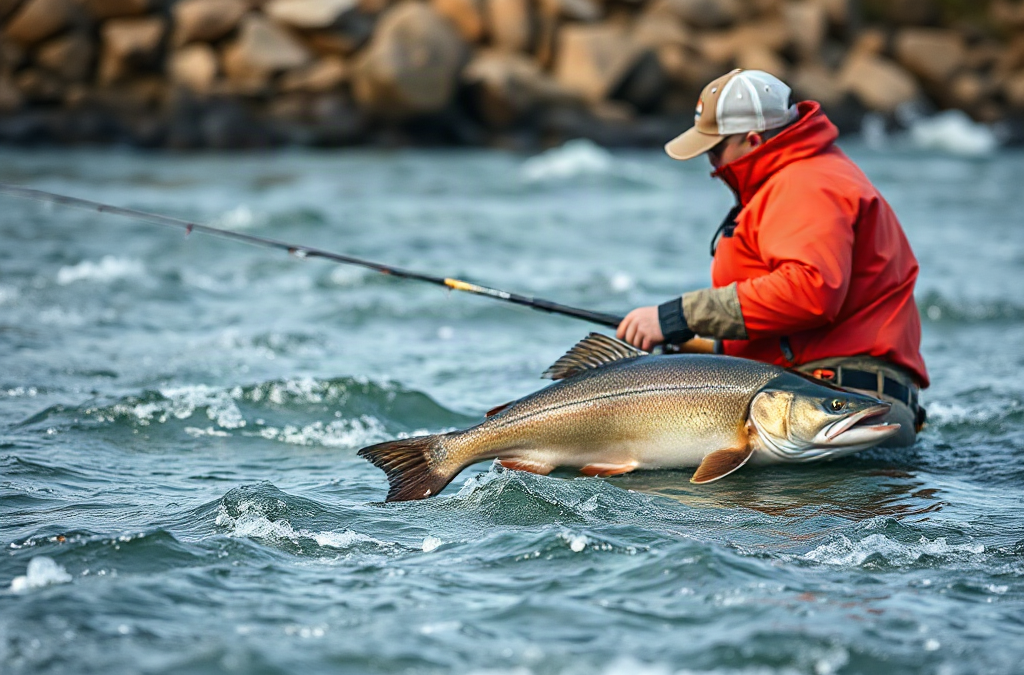
Fish effectively during changing tides by locating where moving water concentrates prey, then adjusting depth, lure speed, and position as the current strengthens or slackens. Focus on points, channels, creek mouths, seams, and submerged structure where bait is swept past waiting predators. During an incoming tide, check newly flooded edges and shallow feeding areas; during an outgoing tide, work drains and channel mouths where water funnels away. Begin with a presentation that reaches the active depth, then change retrieve speed before changing lures. Avoid anchoring to one spot or assuming the strongest current is always best, because fish often hold just outside it to conserve energy.
How Tidal Movement Changes Fish Location
Tidal fishing becomes more predictable when you treat the tide as a moving food-delivery system rather than simply a clock. Rising or falling water shifts baitfish, shrimp, crabs, and other forage across flats, through cuts, and along marsh edges. Predatory fish often position near that movement, but they do not necessarily sit in the fastest water. They commonly hold beside a current seam, behind a point, or along the down-current side of structure where they can intercept food without spending unnecessary energy.

Structure matters because it changes the flow. A narrow creek mouth may accelerate water, while a broad flat spreads it thinly. A bridge piling creates an eddy, and a submerged bar can divide the current into separate lanes. These differences create feeding stations. If a location looks attractive but has no visible flow, it may be less productive than a plain-looking edge where water is visibly pushing past cover.
For example, on a shallow estuary flat, bait may move onto the flat with the incoming tide. Predators can feed along the first flooded grass edge rather than in the deepest nearby channel. As the tide turns and begins falling, the same fish may shift toward a small drain because forage leaving the flat is concentrated there. The location has not become productive because of a label such as “high tide” or “low tide”; it becomes productive because the direction and concentration of food movement have changed.
A common mistake is fishing the same depth and casting angle throughout the tide. That approach ignores the fact that a lure passing above the fish during one phase may be perfect during another. Watch for bait activity, surface disturbance, floating debris, and changes in water color. Those observations can reveal where the current is carrying food. The linked resource how to fish effectively during changing tides is most useful when applied to the specific structure and flow in front of you, not as a fixed schedule.
Reading Incoming, Outgoing, And Slack Water
An incoming tide usually expands access to shallow habitat. Water reaches oyster edges, grass, mangrove roots, shoreline pockets, and mud flats that may have been exposed earlier. Fish may move shallower to feed, especially where the rising water lets bait approach cover safely. Work the edge first rather than immediately casting into the deepest water. A lure retrieved parallel to the shoreline often remains in the feeding zone longer than one thrown straight toward land.
An outgoing tide reverses that pattern. Water drains from flats and small creeks into larger channels, and forage may be forced through restricted exits. Creek mouths, culverts, cuts, and the down-current side of points deserve attention. Position so the lure moves with or across the flow in a controlled way. Casting directly against a strong current can make a light lure rise or spin, while casting too far down-current may pull it through the strike zone too quickly.
Slack water is not automatically a dead period. The reduced current can make fish less scattered and can give you time to inspect depth, change rigs, or target structure that was difficult to fish during the peak flow. The tradeoff is that the feeding conveyor belt weakens. Fish may stop actively intercepting drifting prey and become more selective. Smaller presentations, slower retrieves, or precise casts beside cover can outperform a fast search pattern.
Use the tide phase as a starting hypothesis, then test whether fish are responding. If several casts produce no signs of life, check whether the bait is present and whether your lure is actually reaching the depth where fish are holding. Strong current is another frequent misconception: more flow can improve oxygen and food movement, but excessive flow may push fish into protected pockets. how to fish effectively during changing tides means finding the comfortable edge of the current, not automatically choosing its center.
Choosing Depth, Bait, And Presentation
Depth should follow the fish’s relationship with the current. Start by identifying where the water is moving past a resting area, then select a bait or lure that can stay there long enough to be noticed. A jig, weighted soft plastic, sinking plug, or natural bait rig may be appropriate when fish are holding below the surface. A shallow plug or weedless soft plastic makes more sense when the incoming tide pushes predators onto a flooded edge.
Retrieve speed should match how quickly food is moving, but the fish’s position is equally important. A lure swept naturally along a seam can look convincing even at a modest pace. In turbulent water, a slight pause behind a piling or point may allow the lure to enter an eddy where fish are waiting. In weaker flow, a faster retrieve can create enough movement to attract attention, although aggressive speed is not a universal solution.
Natural bait has a different advantage: it can remain in the feeding lane while scent and movement do the work. Shrimp, small baitfish, or locally available forage can be effective when presented legally and safely, but the rig must avoid dragging on the bottom or being lifted above the fish by the current. Artificial lures offer more control and allow you to cover water, yet they demand closer attention to depth and speed. Neither option is automatically superior; the better choice depends on water clarity, current strength, target species, and how precisely you can present it.
Change one variable at a time. If the lure is repeatedly swept past the strike zone, add weight or choose a deeper model before abandoning the area. If fish follow without striking, slow the retrieve, reduce profile, or alter the angle so the lure crosses the current naturally. A common failure is changing lures repeatedly while never correcting depth. Mark where bites, follows, or bait sightings occur, then repeat that depth and path on the next cast.
A Practical Tide-Based Fishing Plan
A productive tide plan begins before the first cast. Check the predicted tide times, but do not treat them as an exact promise of fish activity. Wind, rainfall, water temperature, boat traffic, and local geography can delay or intensify the water movement. A tide prediction may say the water is rising while strong wind temporarily pushes water in the opposite direction. On arrival, compare the forecast with what you can see at the bank or from the boat.
Use the first phase to locate signs rather than spending too long proving one theory. Check the up-current and down-current sides of points, the mouths of drains, and the edge of visible bait. Make a few casts at different angles and count the lure down so you know whether it is passing above, beside, or below the likely holding area. If the water is clear enough, watch the lure and floating particles to identify the actual current lane.

A simple decision sequence keeps adjustments logical:
- Find movement: identify a seam, drain, point, eddy, or flooded edge carrying food.
- Match depth: start shallow on a rising tide and near drains or channels as water falls, then verify rather than assume.
- Control speed: let the current move the presentation when possible; speed it up only if fish are active or the lure is being ignored.
- Repeat evidence: return to the depth, angle, and current position that produced a bite or bait response.
Suppose you find no bites near a creek mouth on the first hour of an outgoing tide. Before leaving, check whether the lure is crossing the mouth too high, whether fish are tucked behind the bank-side edge, and whether the strongest water is actually bypassing the spot. Moving a short distance to the first deeper bend may be more useful than changing to a dramatically different lure. Conversely, if bait is visibly pouring from the creek but predators are absent, the fish may have moved to the receiving channel or a nearby eddy.
Safety and access also limit the plan. Rising water can cover unstable banks, while falling water can leave a boat or wading route difficult to exit. Wear suitable flotation when boating, avoid wading where the bottom or current is uncertain, and follow local rules for seasons, licenses, closures, and bait. The best tactical decision is sometimes leaving a productive-looking area when the flow becomes unsafe or the return route is compromised.
Frequently Asked Questions
Is incoming or outgoing tide better for fishing?
Neither is universally better. Incoming water may move fish onto shallow feeding areas, while outgoing water often concentrates forage at drains, creek mouths, and channel edges.
Where should I cast during a strong tide?
Target the softer water beside the strongest flow, including eddies, current seams, points, and the protected side of pilings or rocks.
Should lures be retrieved with or against the current?
A natural presentation usually comes from allowing the lure to move with the current or across its edge, but the best angle depends on depth, lure design, and fish position.
What should I do if the tide changes and bites stop?
Recheck depth and location before changing tackle. Fish may have moved from a flooded edge to a drain, channel, or nearby eddy as the direction or speed of flow changed.
Does slack tide mean fish will not bite?
No. Slack water can reduce active drift but may make fish holding near cover easier to target with slower, more precise presentations.
Further Reading
Authoritative Sources
- Academy of Nutrition and Dietetics
eatright.orgProfessional nutrition guidance, healthy eating resources, and practical dietitian-reviewed advice.
- U.S. Department of Agriculture
usda.govOfficial food, nutrition, agriculture, and consumer guidance from the USDA.
- NIH Office of Dietary Supplements
ods.od.nih.govResearch-based fact sheets on nutrients, supplements, dietary intake, and safety considerations.
- International Society of Sports Nutrition
sportsnutritionsociety.orgEvidence-informed sports nutrition resources and position stands for active people and athletes.
Conclusion
Effective tidal fishing comes from tracking where water carries food and where fish can hold with little effort. Use the tide phase to choose likely habitat, then confirm the choice by watching bait, current seams, depth, and structure. Rising water often rewards shallow edges and newly flooded cover; falling water commonly directs attention toward drains and channel mouths. Adjust depth before cycling through lures, and change retrieve speed only after considering how quickly the current is moving your presentation. Keep notes on the tide stage, location, casting angle, and successful depth so each trip produces useful evidence. Check local conditions and access risks as the water changes, because a sound tactical plan must remain safe as well as productive.

