
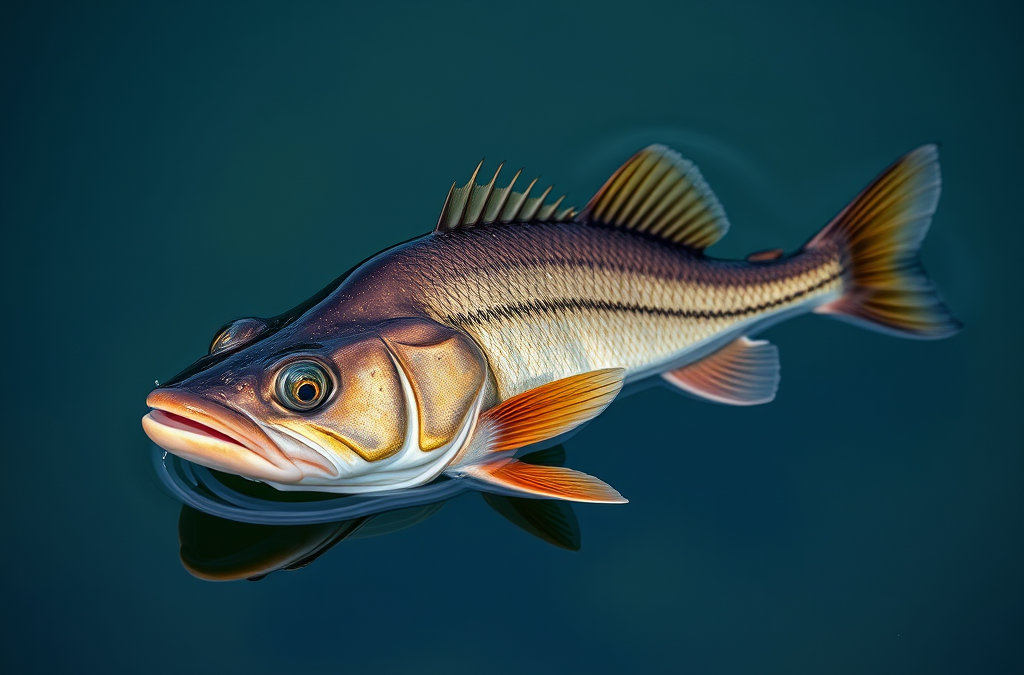
Find catfish in deep water by locating submerged structure, channel edges, holes, and current seams with a lake map or sonar, then verify the depth with a controlled drift or anchored presentation. Blue, channel, and flathead catfish may use deep areas for different reasons: current brings food, steep breaks provide travel routes, and stable holes offer refuge from changing conditions. Mark fish near the bottom, but do not assume every sonar arch is a catfish; bait clouds, cover, and repeatable readings matter more than a single mark. Present fresh bait just above the bottom, adjust for current, and move when bites, bait, or useful structure fail to appear.
Read Deep-Water Habitat Before Dropping Bait
Deep water alone does not make a productive catfish spot. Catfish usually become easier to locate when depth is connected to something useful, such as a channel edge, submerged timber, a sharp ledge, a creek mouth, a rock pile, or a current break. These features concentrate food or give fish a predictable route between shallow feeding areas and deeper refuge. A featureless basin may hold catfish, but it generally gives an angler fewer clues and a larger area to search.

Begin with a bathymetric map and look for contour lines that bunch tightly together. Tight lines indicate a steep drop, while wider spacing suggests a gradual slope. A deep hole beside a flat is especially worth checking because catfish can move between resting depth and feeding water without traveling far. On a river, focus on outside bends, scour holes below dams or tributary mouths, and the slower water beside a strong seam. In a reservoir, creek channels, submerged roadbeds, and old river bends often remain useful even when the original shoreline is far above the water.
The best location also depends on species. Flatheads often favor heavy cover and ambush positions, so a deep log, root mass, or rock edge deserves attention even if it is not the deepest point. Blue catfish commonly use channel contours and current-influenced areas, while channel catfish may gather near softer-bottom depressions, inflows, and food-rich transitions. These tendencies are not guarantees. Water temperature, flow, forage, fishing pressure, and local habitat can shift the pattern.
A common mistake is choosing the deepest available point and waiting there all day. A 40-foot hole with no cover, bait, or nearby feeding route may be less useful than a 25-foot channel edge with visible forage. Treat depth as one part of the location rather than the answer itself. If a spot has depth but no connection to food or movement, check the nearest break, current seam, or structure before committing.
Useful clues to mark before launching include:
- The deepest section near a shallow flat or spawning area.
- Points where a creek channel meets the main river channel.
- Sharp contour changes, submerged timber, riprap, and bridge crossings.
- Current seams where fast water meets a slower eddy.
For broader location ideas, compare these habitat clues with how to find catfish in deep water on nearby lakes and rivers rather than assuming one successful spot will transfer unchanged.
Use Maps and Sonar to Confirm Catfish Location
Maps narrow the search, but sonar confirms whether the selected structure is present and whether bait or fish are using it. Run across a promising area at a controlled speed and watch for changes in bottom hardness, depth, cover, and suspended forage. A steep edge may appear on the map, yet silt, debris, or changing water levels can make the actual feature different from the chart.
On traditional 2D sonar, catfish may appear as arches, elongated marks, or tight groups near the bottom. Large fish can also blend into a thick bottom return, especially over hard substrate or beside timber. Down imaging can separate individual branches, rocks, and fish more clearly in some conditions, while side imaging helps reveal cover to either side of the boat. Each technology has limits: a narrow beam may miss fish beside the boat, suspended clutter can obscure targets, and a screen cannot reliably identify species by shape alone.
Look for repeatability. If marks appear on one pass but vanish when the boat crosses from another direction, they may be suspended debris, interference, or a narrow beam effect. Make several passes over the contour and note whether fish remain near the same depth. Bait clouds close to the bottom, a hard edge beside softer sediment, and several returns gathered around a feature provide stronger evidence than one isolated mark.
Depth readings also need interpretation. A fish shown two feet above bottom may actually be close to the substrate, especially when the boat is moving over a slope. In current, the bait may swing well away from the sonar cone, so a blank screen does not prove the area is empty. Anchoring directly on top of a marked fish can scatter them with motor noise and dropped anchors. Positioning slightly up-current or above the structure often allows the bait to reach the target zone more quietly.
Use a simple confirmation sequence:
- Scan the contour from multiple directions and record the exact depth.
- Identify bait, cover, bottom changes, and fish marks together.
- Mark the most repeatable target, not merely the deepest reading.
- Fish it long enough to account for bait movement and current.
- Move if several presentations produce no bites and no fresh sonar activity.
Sonar is most valuable when it changes a decision. If the screen shows an empty, uniform bottom, stop waiting out of habit and search the next break. If it shows bait but no larger marks, try the edge or down-current side instead of abandoning the entire area.
Match Bait and Presentation to Depth and Current
Deep-water catfish respond to a presentation that places scent and food where fish can find it without excessive movement. Fresh cut bait is a common choice for blue and channel catfish, while live bait may be more appropriate for flatheads where regulations permit it. Local forage matters more than a universal bait claim. Shad, bream, skipjack, perch, or other legal species may work differently depending on what catfish encounter in that water.
Use a weight heavy enough to hold the bait near the selected depth, but not so heavy that it buries the hook in soft mud or prevents a fish from moving naturally. A slip-sinker rig allows the line to pass through the weight, while a three-way or controlled drifting rig can keep bait separated from the bottom. In current, place the bait near a seam or the downstream side of structure rather than dragging it through the strongest flow. Fish often spend less energy in slower water while intercepting food carried past them.
For anchored fishing, cast or lower the bait so it rests just above the bottom or beside the cover. A leader that is too short can leave the hook buried in sediment; one that is too long may swing into branches or drift out of the target zone. When drifting, keep enough contact to know the rig is working, but avoid continually plowing the sinker across the bottom. The objective is controlled movement, not random travel.
Freshness and hook placement affect deep-water results. A soft, damaged bait may lose its scent trail before it reaches the fish, while an oversized piece can be difficult for smaller channel catfish to handle. Match bait size to the fish being targeted and the current speed. A large cut section may make sense for trophy blues, but a smaller portion can produce more consistent action when the area holds average-sized channel cats.
Watch for signs that the presentation is wrong. Repeated snags suggest the rig is entering cover rather than fishing its edge. A slack line may mean the bait has drifted away from the mark. Short taps without a solid run can indicate small fish, excessive bait, or a hook point blocked by skin. Change one variable at a time—leader length, bait size, weight, or position—so the result tells you something useful.
When a productive contour needs more exploration, a how to find catfish in deep water approach based on controlled drifts can cover several depths faster than anchoring randomly, though anchoring is usually better for holding a precise piece of structure.
Adjust for Season, Weather, and Fish Behavior
Catfish use deep water differently as conditions change. During hot weather, a deep channel or hole may offer cooler, more stable water, but feeding fish can still move shallow during low-light periods or when bait concentrates along a flat. In cold water, catfish often become less mobile and may group near stable depth changes, making a precise presentation more valuable than covering a wide area.
Spring can produce movement toward tributaries, flats, and warming shorelines, while summer patterns often involve a split between daytime refuge and nighttime feeding. During fall, forage movement may pull catfish toward channel intersections and points. Spawning periods can push fish into shallower cover, and the deepest location may temporarily lose importance. Local regulations and species behavior should guide any seasonal assumption; a calendar pattern is only a starting hypothesis.

Weather and flow can relocate the useful section of a deep area. Rising river levels may push food and fish toward banks, eddies, and newly flooded cover. Falling water can concentrate movement along remaining channels and current edges. Wind may gather plankton and bait on one side of a reservoir, while heavy rain can create a temporary inflow opportunity. In clear, calm conditions, fish may be less tolerant of boat noise over shallow structure, making a deeper or more distant setup worthwhile.
Do not confuse a seasonal pattern with a permanent rule. If a deep hole produced fish last month but the water level, current, or forage has changed, inspect the adjacent transition again. A fish that was resting at the bottom may now be suspended over the channel or positioned on the down-current side of a new debris line. The practical response is to test depth bands rather than repeatedly dropping into one old waypoint.
Keep notes about date, water level, temperature trend, current, depth, bait, and exact structure. A short log can reveal that the location works only after a rise, at night, or when bait is present on a particular contour. Those details are more useful than recording only the name of the lake or the depth of the catch.
A Practical Search Plan for Deep Holes
A disciplined search prevents deep-water fishing from becoming an endurance test. Select three to five candidate areas before launching: one channel edge, one isolated structure, one inflow or current seam, and one deep hole near feeding habitat. Scan each area before setting out rods. The first objective is not to catch immediately; it is to identify which location offers the strongest combination of depth, cover, forage, and manageable presentation.
Start with the most defined feature. Fish one side of the break, then the top or bottom of the contour if the screen suggests movement between levels. Give the bait enough time to settle and account for current, but do not let an unproductive set consume the day. A spot with no bites, no bait, and no convincing structure should receive less attention than a place showing repeated life, even if the latter is shallower.
For a beginner, anchoring on a clear edge and using two rods at slightly different depths is easier to interpret than drifting an entire basin. An experienced angler may use controlled drifting to locate an active depth, then anchor once bites cluster around a repeatable contour. Neither method is automatically better. Drifting covers water but can move bait away from structure; anchoring creates precision but can miss fish that are traveling.
Use this decision order when the first setup fails:
- Check whether the bait is still fresh and the hook is exposed.
- Confirm the rig is actually near the marked depth.
- Move from the center of a hole to its edge, or from the edge to nearby cover.
- Test a different depth band before changing every piece of tackle.
- Leave when the area lacks both fish activity and a credible feeding feature.
Boat control and safety matter in deep water. Wear appropriate flotation, account for wind and current before anchoring, and avoid placing the boat where a sudden flow change could create a hazardous angle. Keep a clear plan for retrieving snagged rigs; cutting line is preferable to reaching overboard or taking unsafe risks. The most effective search is one that gathers information while preserving time, tackle, and control.
For a focused follow-up, use how to find catfish in deep water as a checklist for comparing your next waypoint, sonar pass, and presentation rather than treating any single depth as a guarantee.
Regional fisheries agencies, state wildlife departments, and university extension programs are useful places to verify species identification, legal bait rules, seasonal closures, boating requirements, and habitat information for the specific lake or river you plan to fish.
Frequently Asked Questions
What depth do catfish prefer?
There is no universal depth. Productive water may be a deep hole, channel edge, or structure near a feeding area; bait and cover matter as much as the depth reading.
Should bait rest directly on the bottom?
Often it should fish close to the bottom, but not necessarily buried in it. Adjust leader length and weight so the hook remains exposed over mud, rock, or light current.
Can sonar identify catfish?
Sonar can show likely fish marks, but it rarely confirms species by itself. Repeated returns near structure, bait, and a consistent depth provide better evidence than one arch.
Is drifting or anchoring better in deep water?
Drifting covers water and can reveal an active depth; anchoring keeps bait beside a precise feature. Use drifting to search and anchoring when fish concentrate on a known edge or piece of cover.
Why are deep-water catfish not biting?
The bait may be away from the fish, buried, stale, or positioned in unproductive water. Check bait condition, depth, current, and nearby forage before changing tackle repeatedly.
Further Reading
Authoritative Sources
- Academy of Nutrition and Dietetics
eatright.orgProfessional nutrition guidance, healthy eating resources, and practical dietitian-reviewed advice.
- U.S. Department of Agriculture
usda.govOfficial food, nutrition, agriculture, and consumer guidance from the USDA.
- NIH Office of Dietary Supplements
ods.od.nih.govResearch-based fact sheets on nutrients, supplements, dietary intake, and safety considerations.
- International Society of Sports Nutrition
sportsnutritionsociety.orgEvidence-informed sports nutrition resources and position stands for active people and athletes.
Conclusion
Finding catfish in deep water is mainly a process of narrowing habitat, confirming activity, and presenting bait where fish can reach it. Prioritize channel edges, steep breaks, current seams, isolated cover, and deep holes connected to feeding routes rather than choosing the deepest number on the map. Use sonar to compare repeated marks with bait and structure, then adjust for current, water level, season, and species behavior. If a setup produces no bites and no useful signs, change location or depth before waiting indefinitely. Record the conditions that produce results, including the contour, depth, bait, and flow. Over time, those notes turn scattered catches into a reliable search pattern for the waters you fish.

