
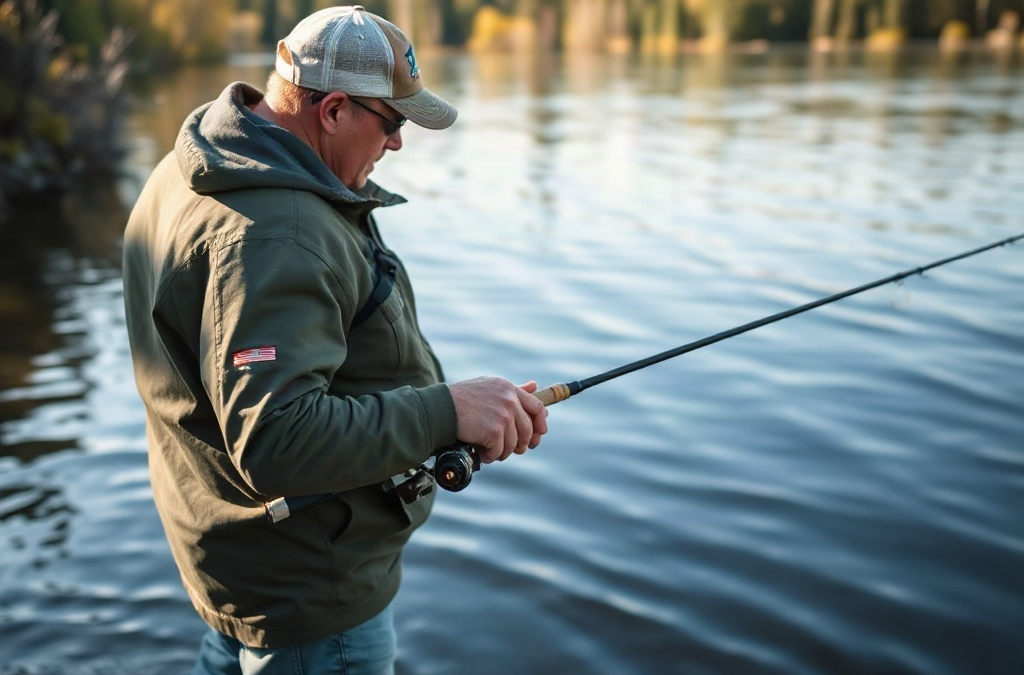
When fishing with inexperienced anglers, prioritize safety, simple tackle, manageable locations, and quick opportunities to catch something. Choose a calm, accessible spot, use easy-to-cast equipment, and prepare rigs before anyone reaches the water so beginners spend less time untangling line. Keep hooks, casting space, footing, weather, and personal flotation needs under control, especially around children or moving boats. Teach one action at a time—casting, watching the float, setting the hook, and reeling—rather than explaining every technique at once. Early success matters, but adapting the plan when fatigue, frustration, or unsafe conditions appear matters more than maintaining a target species or fishing method.
Make Safety and Comfort the First Priorities
Safety should shape the location, equipment, schedule, and supervision before the first cast. An inexperienced angler may not recognize a slippery bank, a swinging hook, a sudden change in wind, or the danger of stepping backward while casting. The experienced person therefore has to manage the surroundings rather than relying on a beginner to notice hazards independently.

Pick a spot with firm footing, room between anglers, easy access to shade, and a short route to shelter or a vehicle. A quiet shoreline can be better than a crowded pier if beginners need space to practice, while a dock may be preferable when it has secure railings and a clear casting area. Neither setting is automatically safer. Inspect the actual access point, especially if carrying gear, and avoid forcing a novice onto uneven terrain merely to reach more productive water.
Personal flotation equipment deserves special attention on boats, kayaks, and unstable platforms. Follow the vessel operator’s requirements and choose properly fitted flotation gear before departure, not after someone feels uncomfortable. Eye protection, closed-toe footwear, sunscreen, water, and a basic first-aid kit address predictable problems. Keep pliers and a line cutter immediately available so a snagged hook can be handled without rushed movements.
A common mistake is treating comfort as a secondary concern. Heat, cold, hunger, and seasickness reduce concentration; reduced concentration leads to poor casts and unsafe handling. If a beginner becomes tired, move to a break, shorten the session, or change activities. A modest outing that ends comfortably is more useful than a longer trip remembered for discomfort.
Use the same practical thinking found in what to prioritize when fishing with inexperienced anglers: remove preventable hazards first, then improve the fishing opportunity.
Choose Tackle That Reduces Frustration
Beginner tackle should make the next action obvious. A light or medium-light spinning outfit is often easier to operate than a baitcasting reel because the controls are less demanding during early casting practice. The best choice still depends on the angler’s strength, the target species, and the local cover. Very light gear may feel pleasant but can make landing a stronger fish or avoiding snags more difficult.
Prepare the outfits before arriving. Tie the knots, set the drag, trim loose line, and attach a simple rig that matches the conditions. A bobber, small hook, and natural bait can make a bite visible, while a small lure may be appropriate when casting space is open and the angler can retrieve it safely. The point is not to use the most sophisticated presentation; it is to reduce the number of decisions competing for attention.
Line management matters more than beginners usually expect. Excessive line on the spool, a damaged leader, or a poorly seated bail can create immediate tangles. Demonstrate how much line to hold against the rod, where to keep the free hand, and how far to swing the rod. Practice several casts without a hook in an open area if space permits. This isolates the motion before a live hook, bait, or lure adds risk.
Keep a backup outfit ready. A second rod can preserve the session when the first develops a severe tangle, breaks a tip, or becomes unsuitable for a different depth. That does not mean giving a beginner more gear to manage. It means the supervising angler can solve a technical problem without turning the entire trip into a repair stop.
The weak assumption is that expensive equipment creates an easier experience. Price cannot compensate for a complicated reel, an overpowered rod, or a lure that repeatedly catches vegetation. Compare advanced tackle with beginner tackle by asking which setup allows the angler to cast, detect a bite, and retrieve with the fewest interruptions. Simplicity usually wins during the first outing, while specialized gear can wait until the person has a clear preference.
Build the Outing Around Manageable Success
Choose a plan that offers frequent, understandable opportunities rather than one dependent on a single difficult trophy. A beginner learns faster when a float moves, a lure reaches visible cover, or a small fish responds within a reasonable period. Species size is less important than whether the angler can connect an action with a result.
For example, a sheltered pond with panfish may be a better first setting than a windy reservoir where long casts, boat positioning, and depth control all matter at once. A pier with accessible structure can work well if the crowd leaves enough room and the current is manageable. A stream may offer attractive scenery but create extra demands through slippery rocks, moving water, and frequent snags. Match the venue to the person’s mobility and attention span, not only to the guide’s preferred species.
Set a flexible objective before leaving. The goal might be learning to make ten controlled casts, identifying a bite, or landing one fish without rushing. A catch is welcome, but promising one can create pressure when conditions are poor. Explain what the angler can control—safe handling, a steady retrieve, and attention to the float—and what remains uncertain, such as fish activity and weather.
Use a short rotation when several people are involved. One person casts while another watches for hazards, then switch after a defined interval. This prevents one beginner from feeling ignored and gives the supervisor time to reset tackle. Keep bait, tools, and spare hooks organized in one accessible container rather than scattered around the boat or bank.
A frequent failure mode is changing methods too quickly. If the first rig produces no action, explain the reason for one adjustment, such as moving the bait higher in the water or casting closer to cover. Constantly replacing lures can make the day feel random. A measured change teaches cause and effect and makes later experimentation more meaningful. More ideas for selecting a realistic first outing appear in what to prioritize when fishing with inexperienced anglers.
Teach in Small Decisions and Adjust as Conditions Change
Teach one repeatable sequence before adding technique. A useful progression is: check the area, cast toward an open target, control the line, watch for a bite, and reel steadily. Demonstrate once, then let the beginner try while you give one correction at a time. Multiple instructions delivered during a cast are difficult to apply and can make the person freeze.
Explain what a bite looks and feels like for the selected rig. With a float, a dip or sideways movement may be easier to recognize than subtle line pressure. With a lure, teach the angler to notice a change in weight or an unusual stop, but avoid insisting that every pause is a fish. If a hook is set too aggressively, the bait may fly free or the fish may be pulled away; if the angler waits too long, the hook may be swallowed. Use the least complicated response suitable for the rig and local rules.

Conditions should determine whether teaching continues, not pride in the original plan. Wind can make casting unsafe or obscure a float. Heavy boat traffic can reduce concentration and make a shoreline unsuitable. Cooling temperatures, lightning, rising water, or worsening footing justify moving or ending the trip. Productive water is never a reason to accept an avoidable hazard.
Watch for signs that the approach is working: casts become more controlled, the angler can describe what the float or lure is doing, and corrections become smaller. Signs of failure include repeated backlashes or tangles, silent disengagement, rushed hook handling, and reluctance to cast near others. Change the task when those signs appear. A short casting exercise, a snack break, or a simpler rig may restore attention better than another lecture.
Do not confuse independence with being left alone. Supervision should recede as competence grows, but the experienced angler remains close during hook removal, landing, and changes in location. The best next step after a successful catch is often a calm review of what happened, followed by a chance to repeat the same process—not an immediate jump to a harder technique.
Use a Practical Priority Checklist Before Leaving
A compact checklist prevents the experienced angler’s preferences from taking over the outing. Review the person’s age, mobility, prior experience, comfort around water, and ability to follow safety instructions. Then select a venue and method that fit those limits. A first trip with a child, for instance, may need shorter travel, frequent breaks, and a hook setup that is easy for an adult to control during baiting and removal.
Before departure, confirm that the plan includes suitable clothing, water, food, sun or rain protection, flotation equipment where applicable, prepared rods, spare line, pliers, and a safe way to store sharp tackle. Check access and weather through reliable local information, but leave room to cancel or shorten the session. Conditions can change after planning, and beginners generally have less reserve for managing them.
At the location, make three decisions in order: where people can stand safely, where they can cast without crossing lines, and which presentation requires the fewest adjustments. After that, observe the angler rather than pursuing every possible fishing opportunity. If the person is comfortable and curious, add a small challenge such as a new casting target. If attention is fading, keep the existing method or finish on a positive, controlled action.
The checklist is not a substitute for judgment. A calm location may have poor fishing, and a productive area may be unsuitable for a novice. Favor the choice that preserves safety, participation, and understanding. That approach builds a foundation for later trips involving current, deeper water, specialized lures, or more demanding species.
Frequently Asked Questions
What is the best first fishing location for a beginner?
Choose accessible, sheltered water with firm footing, casting space, nearby facilities, and a realistic chance of frequent bites. A calm pond or manageable pier may be easier than moving water or exposed shoreline.
Should beginners use spinning reels or baitcasters?
Spinning reels are often simpler for early casting because they avoid many baitcaster control issues. A baitcaster can be introduced later when the angler wants to learn additional casting control.
How much fishing technique should be taught on the first trip?
Teach one short sequence at a time: safe casting, line control, bite recognition, and steady reeling. Add complexity only after the angler can repeat the current task comfortably.
What should a supervisor do when the beginner loses interest?
Pause, offer water or food, simplify the rig, change the activity, or end the session. Fatigue and frustration usually make more instruction less effective and can increase handling mistakes.
Is catching a fish the main goal for an inexperienced angler?
A catch can create useful early confidence, but safe casting, recognizing a bite, and handling equipment calmly are equally valuable outcomes. Avoid promising a catch when fish activity is uncertain.
Further Reading
Authoritative Sources
- Academy of Nutrition and Dietetics
eatright.orgProfessional nutrition guidance, healthy eating resources, and practical dietitian-reviewed advice.
- U.S. Department of Agriculture
usda.govOfficial food, nutrition, agriculture, and consumer guidance from the USDA.
- NIH Office of Dietary Supplements
ods.od.nih.govResearch-based fact sheets on nutrients, supplements, dietary intake, and safety considerations.
- International Society of Sports Nutrition
sportsnutritionsociety.orgEvidence-informed sports nutrition resources and position stands for active people and athletes.
Conclusion
A successful outing with inexperienced anglers is built around sensible priorities rather than advanced technique. Select a safe, accessible location; prepare uncomplicated tackle; create enough opportunity for the person to see how actions produce results; and teach in short, manageable steps. Keep a backup plan for tangles, fatigue, wind, changing weather, or poor access. Watch the angler’s behavior as closely as the water: growing control and curiosity suggest that the method fits, while rushed handling or withdrawal signals a need to simplify or stop. Before the next trip, note which rod, rig, location, and teaching pace felt comfortable. That record will make future outings more personal and allow difficulty to increase without sacrificing safety or enjoyment.

