
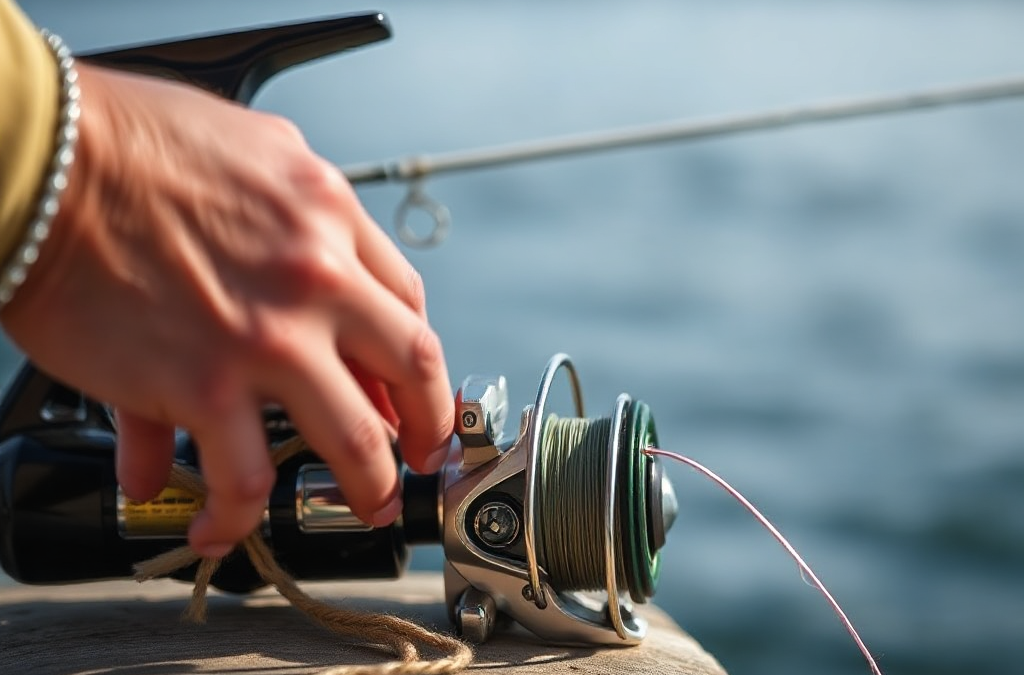
When your fishing line keeps tangling, stop casting, remove the loose coils, and check whether line twist, excess slack, an overfilled spool, or a damaged guide is creating the problem. On spinning gear, open the bail and pull line off under light tension before trimming damaged sections; then inspect the lure, knot, and spool for causes of uneven line lay. Reduce slack during the retrieve, avoid reeling against a loose or spinning lure, and replace badly kinked monofilament or fluorocarbon rather than forcing it straight. A short controlled cast after each adjustment shows whether the repair worked, while repeated tangles usually indicate a setup or component fault.
Identify the Tangle Before Pulling It Apart
A fishing-line tangle is easier to fix when you identify where the line first lost control. A loose loop around the spool, a wind knot near the rod tip, and a deep bird’s nest inside a baitcasting reel may look similar from a distance, but they require different responses. Pulling hard on the first visible loop often drives the knot tighter and damages the line.

For a spinning reel, place the rod down with the lure secured, open the bail, and expose the line around the spool. Follow the line from the lure toward the reel rather than tugging randomly. If the line has crossed over itself in soft loops, ease those loops free with your fingers or a blunt pick. Keep modest tension on the standing line; excessive tension can bury a loop beneath the coils and make the obstruction worse.
Pay attention to when the problem appears. A tangle during the cast commonly points to slack line, a lure that catches air, poor line lay, or line twist. A tangle that appears while retrieving may involve a rotating lure, a bail that fails to close cleanly, or line being wound onto the spool without enough tension. A baitcaster that produces a compact mass of line at the spool is usually reacting to spool overrun, braking settings, lure weight, or thumb-control timing rather than ordinary spinning-reel twist.
Before making a change, inspect the affected section for flattened coils, white stress marks, roughness, and small loops that refuse to relax. A minor loose loop may be recoverable. A tight knot with visible abrasion is a weak point, even if it appears usable. The practical mistake is treating every tangle as a casting problem; the pattern and location usually reveal whether the cause is the line, reel, terminal tackle, or technique.
Remove Line Twist and Correct Spool Problems
Line twist is a leading cause of recurring tangles on spinning tackle. The line twists whenever the lure or terminal rig rotates while the reel winds line onto the spool. The twist accumulates, then escapes as spring-like loops when the bail opens for a cast. Small swivels may reduce twist from some rigs, but they cannot correct a lure that spins continuously or line that was already wound under twisted conditions.
To remove manageable twist, disconnect the lure in a safe place and let the line trail behind a slowly moving boat or along an open bank while keeping it away from vegetation, rocks, and other anglers. Allow the line to straighten under light tension, then reel it back while pinching it between your fingers or a clean cloth. On shore, pull a useful length through grass-free open space and wind it back steadily. Do not drag line across abrasive ground.
Check the spool fill as well. A spinning spool filled almost to its rim releases large coils that can leap off during the cast. A visibly underfilled spool casts less efficiently and may encourage the angler to compensate with force, but a slight gap below the lip is generally easier to control than an overfilled spool. The exact fill depends on spool design and line diameter, so use the reel’s instructions where available rather than copying a measurement from a different model.
Uneven line lay creates another failure point. If coils pile heavily at the front or rear of the spool, inspect the reel for a misplaced washer, an incorrect spool assembly, or a mechanical issue. A simple respool may help when the line was installed backward or without tension; it will not fix a damaged oscillation mechanism. Compare a freshly wound section with the old line. If the new line immediately stacks unevenly, stop fishing and inspect the reel instead of repeatedly cutting tangles.
These checks also apply to the related problem described in what to do when your fishing line keeps tangling when it happens only after changing line size. Heavier line may not seat properly on a spool designed for a thinner diameter, while very limp line can form loose coils that are difficult for a beginner to manage.
Fix Slack, Lures, Knots, and Casting Habits
Slack line is often the immediate trigger for a wind knot. When a spinning-reel cast sends a lure forward while loose coils remain near the spool, several loops can leave together and cross in midair. Closing the bail by turning the handle may leave an extra loop trapped beneath the next wrap. Closing the bail manually and guiding the line onto the roller gives better control, particularly with light lures and soft monofilament.
Retrieve with enough tension to keep the line laying firmly against the spool. A lure that stops, sinks, or moves through heavy current can create slack faster than the angler notices. Rather than continuing to reel through loose line, pause, point the rod toward the lure, and remove the slack before resuming. This small adjustment is more useful than simply increasing casting force, which can make a loose coil leave the spool faster and tighten into a knot.
Terminal tackle can generate twist even when the reel is functioning correctly. Inline spinners, spoons that wobble unpredictably, poorly balanced soft-plastic rigs, and hooks that catch the leader can rotate during the retrieve. Watch the lure in clear shallow water or beside the boat. If it spins instead of tracking steadily, correct its attachment, change the rig, or add a suitable swivel where the presentation allows it. A swivel is not a cure for every rotation problem, and adding one may alter the lure’s action or create another weak connection.
Knots deserve close attention. A tag end that is too long can catch line during a cast, while a knot tightened against a rough eyelet can develop a small loop that repeatedly snags. Seat the knot neatly, trim the tag end close enough to avoid catching but not so close that the knot can slip, and retie after a hard snag or contact with structure. Fluorocarbon’s stiffness may make certain knots and small-diameter spools less forgiving than monofilament; it can be useful for abrasion resistance, but it is not automatically the easiest casting choice.
A practical test is to make a gentle cast with a familiar lure after each correction. If the line leaves in orderly coils and the spool stays quiet, the adjustment addressed the trigger. If the tangle returns only with one lure, investigate that lure or leader. If it returns with every lure, focus on spool fill, line condition, bail operation, and line lay before changing casting style.
Know When to Retie, Respool, or Replace Gear
Retie when the tangle has damaged only the terminal section, and cut back until the line feels smooth between your fingers. Respool when twist and repeated knots extend through much of the working line or when old line has taken a permanent coil. Replace the line sooner if it has deep kinks, abrasion, cracking, or flattened sections. Straightening a visibly damaged strand may make it look better without restoring its original strength or handling.
Line choice involves a tradeoff rather than a universal winner. Monofilament is generally forgiving and inexpensive, but it can retain memory and spring from a small spinning spool. Fluorocarbon may resist abrasion in some situations, yet its stiffness can increase casting problems when used in a diameter or length that does not suit the reel. Braided line has little memory and casts efficiently, but loose braid can dig into lower wraps and form difficult loops if it is wound without firm tension or used with an unsuitable leader connection.

Inspect the reel before blaming the line. Run a cotton swab around the line roller and rod guides; fibers catching on a rough spot can indicate damage that needs closer examination. Check that the bail closes fully, the roller turns, and the spool rotates without unusual wobble. On a baitcaster, confirm that the spool tension and braking system are not allowing uncontrolled overrun. Thumb pressure should slow the spool as the lure decelerates, especially near the end of the cast. A heavier lure may require different control than a light lure, so settings copied from another setup may be misleading.
Use this short priority order when the problem repeats:
- Remove the tangle without pulling tight on visible knots.
- Cut away rough or permanently kinked line.
- Check for lure rotation, loose retrieve slack, and a closed bail.
- Inspect spool fill, line lay, guides, and the line roller.
- Respool or service the reel if the same fault appears across multiple rigs.
Keeping a small amount of spare line and tying materials is more practical than trying to preserve every damaged section. The common misconception is that a new reel will solve persistent tangling automatically. A new reel can still tangle when overfilled, badly spooled, or paired with a rotating lure. Conversely, an older reel may remain serviceable if its line roller, bail, spool, and guides are clean and functioning normally.
For more setup-specific troubleshooting, use what to do when your fishing line keeps tangling as a checkpoint after changing line type, lure weight, or reel configuration. Record which combination causes the fault. That simple comparison separates a gear problem from a technique problem much faster than making several changes at once.
For equipment-specific spool-fill, braking, and maintenance instructions, consult the reel manufacturer’s manual first. Manufacturer documentation is more reliable than a generic setting because spool geometry, line capacity, and braking systems vary substantially between models.
Frequently Asked Questions
Why does my spinning reel keep making wind knots?
Loose line, excessive spool fill, line twist, and poor line lay are common causes. Close the bail manually, retrieve with steady tension, and inspect the lure for rotation.
Should I cut out every fishing-line tangle?
No. Release loose loops carefully, but cut out tight knots, rough sections, and flattened coils that may have lost strength.
Can a swivel stop fishing line from tangling?
A suitable swivel may reduce twist from some rotating rigs, but it cannot correct overfilled spools, loose line, damaged guides, or a lure that spins excessively.
How full should a spinning reel spool be?
Fill it close to the manufacturer’s recommended level without packing line over the rim. An overfilled spool commonly releases large loops and worsens tangles.
When should I replace fishing line instead of fixing it?
Replace it when repeated tangles have created permanent kinks, abrasion, cracking, or widespread twist. Retie only when the damage is limited to the terminal section.
Further Reading
Authoritative Sources
- Investor.gov
investor.govSEC investor education resources for evaluating financial products and risk.
- FINRA Investor Insights
finra.orgInvestor education, broker-check tools, and financial decision resources.
- Consumer Financial Protection Bureau
consumerfinance.govConsumer guidance on credit, debt, lending, and financial products.
- Internal Revenue Service
irs.govOfficial tax guidance, forms, and compliance information.
Conclusion
Recurring tangles are usually a symptom of a specific mismatch: twisted line, loose coils, excessive spool fill, lure rotation, damaged hardware, or uncontrolled spool speed. Treat the location and timing of the tangle as evidence, then make one correction at a time. Remove loose loops gently, discard compromised line, and test the setup with a controlled cast rather than forcing a full-power throw. A spinning reel needs firm line tension and orderly spool lay; a baitcaster needs spool control that matches the lure’s weight and speed. If the same problem follows every lure and cast, inspect the reel, guides, and line roller or respool with suitable line. A short pre-cast check can prevent a small loop from becoming a lost fishing session.

