
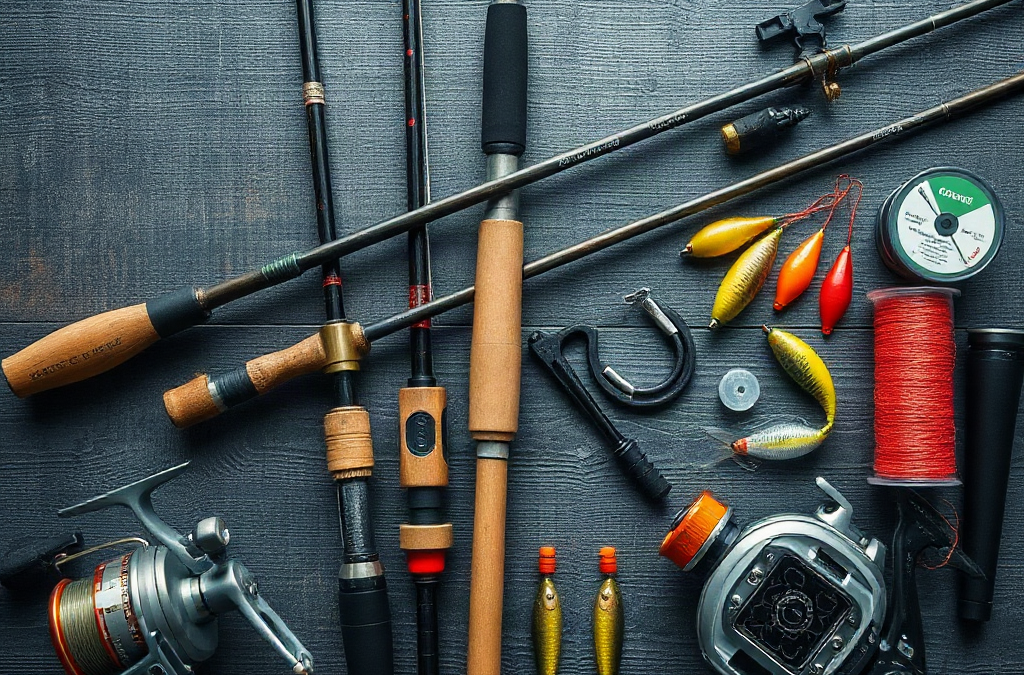
Types of fishing rods by action and power describe two separate performance traits: action identifies where a rod bends, while power indicates how much force is needed to bend it. Fast-action rods concentrate flex near the tip for crisp lure control and quick hooksets; moderate rods load deeper for moving baits and better shock absorption. Light power suits small lures, thin line, and modest fish, whereas heavy power handles weightier rigs, thicker hooks, and demanding cover. Choose the combination from lure weight, line strength, hook design, cover density, and target size rather than assuming one label determines the rod’s purpose.
What you’ll learn
This guide covers the following practical points:
- How Rod Action Changes Flex and Lure Control — Rod action identifies the section of the blank that flexes most readily under load.
- How Rod Power Affects Load Capacity — Rod power describes the resistance a blank provides as it bends.
- Action and Power Selection Chart — The best combination keeps the lure within the rod’s working range while giving the hook enough driving force and the fish enough cushioning.
- Matching a Rod to the Technique and Conditions — Technique selection should begin with the lure’s actual weight, including the hook, trailer, sinker, and added hardware.
How Rod Action Changes Flex and Lure Control
Rod action identifies the section of the blank that flexes most readily under load. A fast-action blank bends primarily in its upper portion, a moderate-action blank flexes farther toward the middle, and a slow-action blank develops a broad curve through much of its length. Action does not tell you how strong the rod is; a fast rod may be light, medium, or heavy power.
Extra-fast and fast action provide a responsive tip followed quickly by a firmer backbone. That transition makes small changes at the lure easier to detect and directs hook-setting force rapidly to the hook. These actions commonly fit jigs, worms, and other presentations where the angler must move a single hook through a fish’s mouth. The tradeoff is limited cushioning. A stiff, rapid response can pull small treble hooks free if the drag is tight or the angler keeps excessive pressure on a surging fish.
Moderate-fast and moderate action load more progressively. Their deeper bend keeps tension on fish that shake or change direction, while also allowing many moving lures to travel without being jerked away at the first contact. Crankbaits and some bladed lures often pair well with this response. Moderate-fast action is a useful compromise when one rod must cast several lure styles.

Slow action spreads the bend across most of the blank. It can cast very light offerings smoothly and protect delicate line, but it responds less sharply when driving a thick hook or pulling a fish from cover. A common mistake is treating fast action as automatically more sensitive. Blank material, construction, guides, handle design, line stretch, and lure weight all affect what reaches the angler’s hand.
How Rod Power Affects Load Capacity
Rod power describes the resistance a blank provides as it bends. Common ratings run from ultralight and light through medium-light, medium, medium-heavy, heavy, and extra-heavy. Higher power does not mean better quality or greater sensitivity; it means the rod is intended to work within a heavier range of lures, line, hooks, and applied pressure.
Ultralight and light rods make small fish lively and load effectively with tiny lures. They suit small jigs, compact spinners, and light line in relatively open water. Their limitation appears around vegetation, timber, current, or fish that must be controlled quickly. Increasing drag beyond what the line, hook, and rod can tolerate does not turn a light setup into a heavy one.
Medium-light and medium power cover many open-water applications. They can cast moderate lure weights without making the tackle feel unresponsive. Medium-heavy and heavy rods are better suited to substantial sinkers, bulky lures, stout single hooks, and situations where fish must be turned away from cover. Yet an unnecessarily powerful blank may cast a light lure poorly, reduce enjoyment with smaller fish, and straighten fine-wire hooks.
The printed lure and line ranges are more useful than the power word alone. Manufacturers do not apply power labels to one universal standard, so one company’s medium may feel close to another company’s medium-heavy. Loading a rod far outside its marked lure range can impair casting and increase breakage risk, especially if the blank is bent sharply at a steep angle near the tip.
Action and Power Selection Chart
The best combination keeps the lure within the rod’s working range while giving the hook enough driving force and the fish enough cushioning. The chart below offers practical starting points rather than fixed rules; actual lure weight, blank design, line choice, and surrounding cover should refine the decision.
| Typical Use | Suggested Power | Suggested Action | Why It Fits |
|---|---|---|---|
| Tiny jigs or small spinners in open water | Ultralight to light | Fast or moderate-fast | Loads with low lure weight while retaining useful control |
| Light finesse rigs with exposed hooks | Medium-light | Fast | Provides tip response without overpowering thin line |
| General-purpose single-hook lures | Medium | Fast or moderate-fast | Balances hook-setting force, casting, and fish control |
| Crankbaits and other treble-hook moving lures | Medium | Moderate | Deeper flex cushions small hooks and maintains tension |
| Jigs or soft plastics around moderate cover | Medium-heavy | Fast | Transfers force quickly and helps steer fish from obstacles |
| Heavy vegetation, large rigs, or stout hooks | Heavy | Fast | Handles greater load and stronger pulling pressure |
A medium-power, moderate rod and a medium-power, fast rod may share a lure rating but behave differently after a fish strikes. The moderate rod bends farther and absorbs abrupt movement; the fast rod reaches its firmer lower section sooner. Choose according to how the lure is hooked and retrieved, not merely according to the expected fish species.
Matching a Rod to the Technique and Conditions
Technique selection should begin with the lure’s actual weight, including the hook, trailer, sinker, and added hardware. A nominally light soft-plastic rig may become a medium-heavy load after a substantial sinker is attached. Staying near the middle of the printed lure range usually gives a more predictable cast than working at either extreme.
Next, consider the hook. A thick single hook generally needs more force than a fine-wire or small treble hook. Fast action and sufficient power help apply that force, particularly at distance. Small trebles benefit from a deeper-loading rod that reduces sudden pressure at each hook point. Using a heavy, extra-fast rod for a small treble-hook lure can lead to pulled hooks unless line stretch and drag compensate.

Cover changes the amount of control required. Open water permits lighter power because a fish can run without immediately reaching branches or dense plants. Thick vegetation may call for stronger line and a higher-power rod so the fish can be moved promptly. Current, deep water, and long casts can also increase the need for control, although simply choosing the stiffest blank may sacrifice casting performance and shock absorption.
Use this priority order when narrowing the choice:
- Match the complete lure weight to the rating printed on the blank.
- Match the action to the hook and retrieve: faster for direct single-hook contact, more moderate for many moving treble-hook lures.
- Adjust power for cover and required pressure without overpowering the line or hook.
- Confirm comfort and balance with the reel installed, because fatigue can undermine accurate casting and lure control.
A suitable setup loads smoothly during the cast, keeps the lure controllable, and maintains steady pressure after hookup. Warning signs include a tip that barely flexes with the lure, a blank that feels overloaded during an ordinary cast, hooks that repeatedly tear free, or an inability to steer fish before they reach cover.
Checking Rod Labels Before Buying
Rod labels should be treated as manufacturer-specific operating guidance, not universal measurements. Read the model’s power, action, lure range, and line range together. For example, “medium-heavy fast” offers less useful buying information than the same label paired with a lure range that includes the assembled rigs you actually cast.
If possible, mount the intended reel and check the completed outfit. The rod should feel manageable at the grip rather than excessively tip-heavy. Apply only gentle pressure to observe where the blank begins to flex; do not pull the tip sharply downward or bend an unrigged display rod against the floor. A rod can be damaged by high-sticking even when its power rating sounds substantial.
Compare candidates within the same intended rod family before comparing labels across brands. Blank length and taper alter behavior: a longer rod may cast farther and move more line, while a shorter one can offer precise handling in confined spaces. Handle length also affects leverage and casting motion. The common buying error is selecting by fish size alone. Lure weight, hook type, line, cover, and casting space usually reveal more about the required action and power than a species name does.
Frequently Asked Questions
What is the difference between rod action and rod power?
Action describes where the blank bends, while power describes how much force is required to bend it. A rod can therefore be medium power with fast, moderate, or another action.
Which action is best for a general-purpose rod?
Moderate-fast often provides a versatile compromise between lure control and shock absorption. Fast action may be preferable when the rod will mainly fish single-hook jigs or soft plastics.
Does heavy power mean a rod can catch larger fish?
Heavy power permits more load and pulling pressure, but the line, reel drag, hook, knots, and blank rating remain limiting factors. Fish size alone should not determine power.
Is fast action always more sensitive?
No. Fast action can transmit changes quickly, but sensitivity also depends on blank construction, total rod weight, guides, handle, line stretch, lure contact, and the angler’s grip.
Can a lure be used outside the rod's printed weight range?
A slight difference may be workable on some rods, but casting outside the marked range can reduce control and overload the blank. Choose a rod whose rating includes the complete rig whenever possible.
Conclusion
Action and power become useful buying tools only when connected to the complete rig. Check the assembled lure weight first, then choose an action that suits the hook and retrieve, and finally adjust power for cover, line, and the pressure needed to control a fish. Compare printed ranges rather than relying on brand-specific labels. A well-matched rod should load cleanly, cast predictably, protect the hook connection, and provide enough authority for the water being fished.

