
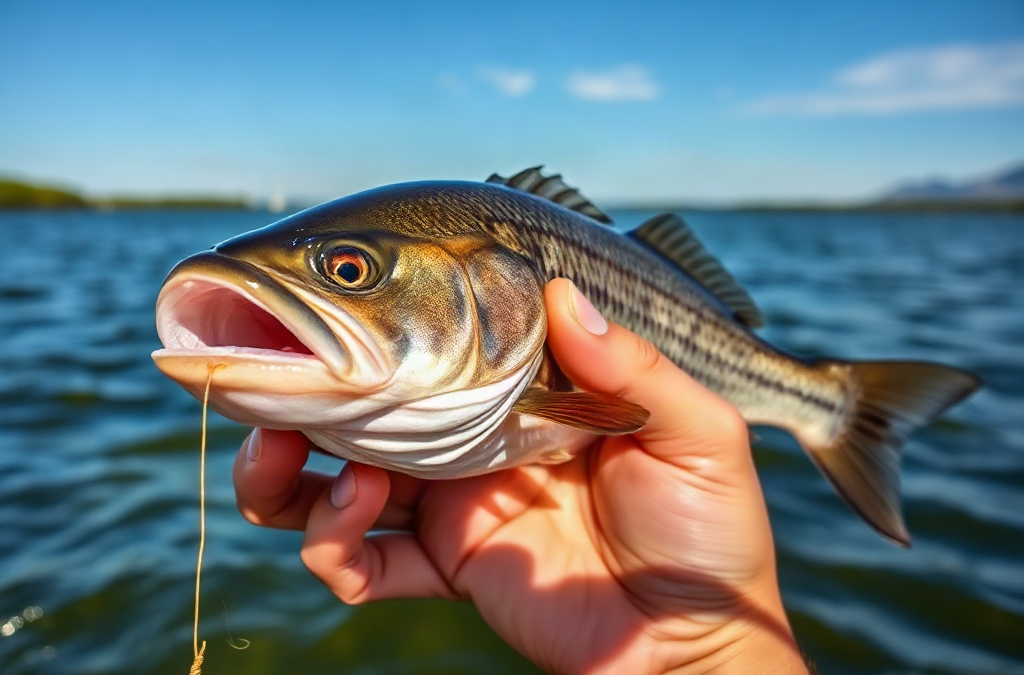
If fish are biting but not hitting the hook, pause before setting, confirm that the bites are actually from your target species, and adjust the bait so the hook point remains exposed. Shorten oversized bait, downsize the hook when fish are taking only the edges, and reduce slack so you can distinguish a firm pickup from a peck. With soft bait, wait for steady weight or movement before setting; with lures, keep enough tension to feel contact and sweep the rod rather than jerking immediately. Repeated taps without hookups often indicate bait-stealing fish, an obstructed hook point, or a presentation moving too quickly.
What you’ll learn
This guide covers the following practical points:
- Identify What the Bite Is Telling You — Not every tap on the line represents a fish taking the bait deeply enough to be hooked.
- Match the Hook and Bait to the Fish — A hook can only work when the fish gets the hook bend or point into its mouth.
- Change the Hook-Set Timing and Line Control — Hook-set timing should match how the fish takes the presentation.
- Use a Systematic On-the-Water Troubleshooting Sequence — A short diagnostic sequence is more reliable than replacing the entire rig after every missed bite.
Identify What the Bite Is Telling You
Not every tap on the line represents a fish taking the bait deeply enough to be hooked. Small fish may nip an exposed tail, panfish may peck at bait intended for a larger species, and crayfish can create slow pulls that resemble cautious bites. Current, weeds, rocks, and a sinker rolling across the bottom can produce additional false signals. Before changing tackle, watch for a repeatable pattern in the rod tip, float, or line.
A series of rapid, light taps followed by untouched line tension usually suggests edge-feeding or bait stealing. A float that trembles without traveling may mean a small fish is working on the bait below. By contrast, a float moving sideways, a line steadily tightening, or a rod tip loading under sustained pressure is stronger evidence that the fish has control of the offering. The distinction matters because striking at every vibration pulls the bait away before a hook can enter the mouth.
Check the bait after two or three missed contacts. Tooth marks, clipped worm ends, crushed insects, or an empty hook provide useful evidence. If only the end of a nightcrawler is damaged, the fish probably never reached the hook. If the bait is intact but has slid over the point, the hook may have been unable to penetrate. When nothing has changed, investigate bottom contact, vegetation, or current before assuming that fish are responsible.
Species behavior changes the meaning of a bite as well. Bluegill commonly grab the loose end of a worm, while catfish may mouth bait and move away under steadily increasing pressure. A bass striking a moving lure can create a sharp impact without immediately loading the rod, especially if it swipes at the lure from the side. An angler applying the same hook-set response to all three situations will miss fish for different reasons.

Position can clarify the diagnosis. Cast the same rig a few feet away from thick cover or raise it slightly above the bottom. If the tapping stops, vegetation or structure may have caused the original signals. If it continues and the bait returns damaged, fish are present but the presentation needs refinement. Treat the bite as information rather than an automatic command to jerk the rod. That shift prevents random tackle changes and makes each adjustment easier to evaluate.
Match the Hook and Bait to the Fish
A hook can only work when the fish gets the hook bend or point into its mouth. A large bait may attract attention while leaving the hook beyond the portion being bitten. Long worm tails, oversized strips of cut bait, and soft-plastic appendages are common examples. Shorten the bait so its edible or moving portion sits close to the hook gap, but do not compress so much material onto the hook that it blocks the point.
Hook size should follow the fish’s mouth and the bait’s bulk rather than the hoped-for size of the catch. Downsizing can help when small-mouthed fish repeatedly steal bait, provided the smaller hook remains strong enough for the target and has enough gap to clear the bait. Upsizing may be appropriate when thick bait fills the gap or when fish swallow a tiny hook too deeply. The useful comparison is not simply small versus large; it is whether the hook gap remains open after the bait is attached.
Run a fingertip carefully across the point or lightly touch it to a fingernail. A sharp point should catch with minimal pressure. Replace or sharpen a rolled point after contact with rocks, shell, wood, or multiple fish. Also inspect knots and hook orientation. A poorly seated knot can make some hook styles pull at an inefficient angle, while a soft plastic rigged crooked may rotate or bunch up during the strike.
Presentation matters as much as dimensions. Thread a worm onto the hook in several places when small fish are stripping it, leaving only a short natural end. For a minnow, use a placement that keeps it alive and mobile without burying the point in hard tissue. With soft plastics, make sure the point can clear the body during compression. Weedless rigging reduces snagging, but hiding the point too deeply can trade fewer snags for failed hookups.
When working through what to do if fish are biting but not hitting the hook, change either the bait profile or hook size first—not both simultaneously. For example, trim a long worm to place the bites nearer the existing hook, then fish several casts. If misses continue, move down one hook size while preserving an open gap. One-variable adjustments reveal whether fish are reaching the hook and prevent a productive presentation from being dismantled unnecessarily.
Change the Hook-Set Timing and Line Control
Hook-set timing should match how the fish takes the presentation. Striking instantly at a light peck often removes stationary bait from a fish that has only grabbed the edge. Waiting too long creates the opposite problem: the fish may spit the bait, reach cover, or swallow a natural bait deeply. The goal is to respond when the fish has control of the hook area, not merely when first contact occurs.
With a float rig, watch for committed movement rather than a single bob. A float traveling sideways, remaining submerged, or accelerating usually provides a better cue than a brief dip. Reel down enough to remove excess slack, then lift the rod firmly. When bottom fishing with natural bait, keep the line controlled and look for increasing weight or consistent travel. Excessively slack line delays detection; a line pulled tight against the bait may make a cautious fish release it.
Moving lures require a different response. Maintain contact so the rod begins to load when a fish takes. On single-hook lures, a controlled sweep after feeling weight is often more effective than a reflexive upward snap at the first knock. Treble-hook lures generally benefit from steady pressure because a violent strike can tear small points free or move the lure before the fish closes its mouth. Rod power, line stretch, lure weight, and distance all affect how much force reaches the hook.
Consider a common shoreline scenario: an angler casts a worm beneath a float, sees repeated quick dips, and immediately swings on each one. Shortening the worm may put bites closer to the hook, but the misses can continue if the strike still comes during the first peck. Waiting for the float to move decisively, reeling to remove the bow in the line, and then lifting smoothly addresses both timing and slack. If the fish are small, this may still produce modest hookups rather than the larger target species.

Circle hooks deserve special treatment. They are designed to move toward the corner of a fish’s mouth under steady tension, so a hard conventional hook set can pull them free before they rotate. When using an appropriate circle-hook rig, allow the line to tighten and reel while raising the rod gradually. Conventional J-hooks usually call for a more deliberate set once firm weight is detected.
A successful timing change produces fewer empty swings and more moments when the rod loads before the fish is lost. If the bait keeps returning bitten below the hook, timing is not the main limitation; return to bait length and hook placement. If solid weight is felt but fish come free during the fight, inspect hook sharpness, drag, rod angle, and pressure instead of waiting even longer.
Use a Systematic On-the-Water Troubleshooting Sequence
A short diagnostic sequence is more reliable than replacing the entire rig after every missed bite. Begin with observations that cost no fishing time, then make the smallest reversible adjustment. Water clarity, current, depth, target species, and bait type all influence the final choice, but the order below isolates the most common causes efficiently.
- Verify the signal: Look for sustained line, float, or rod movement and rule out weeds, rocks, current, and bottom-dwelling bait thieves.
- Inspect the bait and point: Note where the bait is damaged, expose the point, confirm an open gap, and replace a dull hook.
- Shorten the vulnerable bait: Bring the portion being nipped closer to the bend without turning the bait into a rigid lump.
- Control slack and alter timing: Wait for steady weight with stationary bait; maintain contact and sweep with moving single-hook presentations.
- Change one tackle element: Adjust hook size, rigging, depth, or retrieve speed, then give the change several comparable presentations.
Retrieve speed deserves attention when fish follow or bump a lure but fail to connect. Slowing down can let a hesitant fish capture it, while a brief pause may trigger a following predator. Yet slowing is not universally better. A lure crawling through cover can collect weeds and hide its hooks, and some active fish react more decisively to a faster retrieve. Watch whether strikes occur during motion, immediately after a pause, or as the lure changes direction beside the boat or bank.
Depth can create an apparent hooking problem when the offering only brushes the edge of the feeding zone. If a float repeatedly twitches but the bait is untouched, raise or lower it in small increments. When using a bottom rig, a lighter sinker may allow a more natural pickup, but too little weight in current reduces control and makes bite detection vague. The correct balance keeps the bait where fish are feeding without creating unnatural resistance.
Set a practical limit for each experiment. Three to five similar casts or drops are often enough to reveal whether bite quality changes, provided fish remain active. More decisive float movement, bites closer to the hook, or sustained pressure are signs that the adjustment is improving the presentation even before every fish is landed. Fewer contacts, fouled hooks, or bait spinning unnaturally indicate that the change has introduced a new problem.
The broader lesson behind what to do if fish are biting but not hitting the hook is to diagnose before escalating. Switching locations immediately may abandon active fish, while repeatedly casting the same oversized, point-covered bait wastes a useful opportunity. Confirm the source, inspect the evidence, and make a controlled change. If several careful adjustments still produce only tiny nips, the honest conclusion may be that small non-target fish are present and a move—or a switch in target species—is more productive than further refinement.
Frequently Asked Questions
Should I set the hook as soon as I feel a bite?
Not for every presentation. With stationary natural bait, wait for steady weight or purposeful line movement. With a moving single-hook lure, maintain contact and set after the rod begins to load.
Does a smaller hook improve missed bites?
It can when fish have small mouths or are only nipping the bait. The smaller hook must still leave an open gap around the bait and have enough strength for the likely catch.
Why is my bait gone without a hooked fish?
Small fish, crayfish, weak bait attachment, or an overly long bait can let the edible portion be removed without the fish reaching the hook. Shorten and secure the bait near the bend.
Why do fish hit my lure but not get hooked?
Fish may be swiping at the lure, the hooks may be dull or fouled, or slack may prevent penetration. Check the points, clear debris, vary the retrieve, and wait for weight before sweeping the rod.
How can I tell a bite from weeds or rocks?
A fish often produces repeated taps, acceleration, sideways travel, or sustained pressure. Structure usually feels fixed or follows the same pattern at the same location on repeated retrieves.
Conclusion
Missed bites become easier to solve when each contact is treated as evidence. Inspect where the bait was damaged, confirm that the hook point and gap are clear, and identify whether the signal shows a committed pickup or only a brief nip. Match bait length and hook size to the fish actually feeding, then adjust slack and hook-set timing for the rig in use.
Make only one meaningful change at a time and compare several similar presentations. Better line movement, firmer pressure, and damage closer to the hook show that the setup is moving in the right direction. Continued edge bites usually call for a shorter bait or smaller hook; solid hookups followed by lost fish point instead to sharpness, drag, or fighting pressure. If careful adjustments reveal only small bait thieves, changing depth, location, or target species may be the most efficient next move.

