
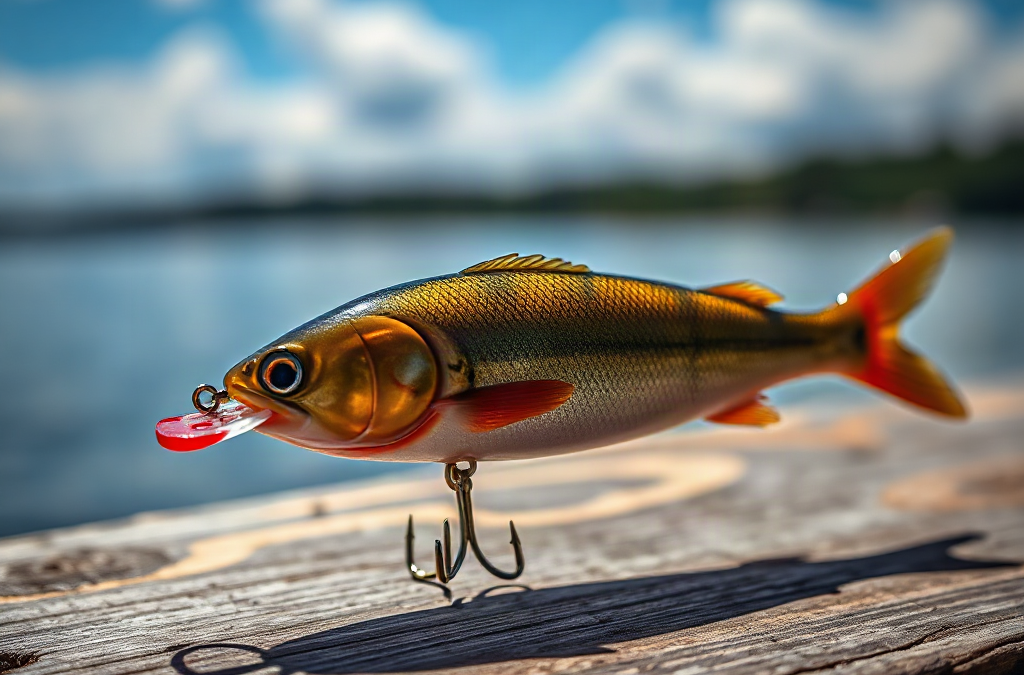
Troubleshoot problems with fishing lures by first observing the lure beside the boat or bank, then isolating its knot, hardware, body alignment, hook position, and retrieve speed one variable at a time. A lure that rolls may have a bent line tie, excessive speed, or an off-center soft-plastic body, while poor hookups often point to dull hooks, obstructed hook gaps, or mismatched tackle. Remove weeds and damaged line before changing the lure itself. Test each adjustment with a short cast in visible water; a stable track, intended action, and clean hook exposure confirm that the correction is working.
What you’ll learn
This guide covers the following practical points:
- Diagnose the Problem Before Changing the Lure — A useful diagnosis begins with the exact failure you can observe, not an assumption that the lure is defective.
- Correct Lures That Spin, Roll, or Track Sideways — Sideways tracking usually results from unequal water pressure across the lure, while continuous spinning points more often to rigging, excessive retrieve speed, or a component that cannot rotate freely.
- Restore Missing or Weak Lure Action — Weak action often comes from restricted moving parts, incompatible additions, or a retrieve that falls outside the lure's working range.
- Fix Snags, Fouling, and Missed Hookups — Frequent snags and missed strikes require opposite kinds of restraint: reduce unnecessary hook exposure around cover without making the lure so guarded that fish cannot be hooked.
Diagnose the Problem Before Changing the Lure
A useful diagnosis begins with the exact failure you can observe, not an assumption that the lure is defective. A lure may run sideways, spin the line, lose its vibration, collect weeds, snag bottom, or draw strikes without hooking fish. Those symptoms come from different causes, so replacing hooks when the real problem is retrieve speed wastes time and may create a second problem.
Inspect the entire connection from the main line to the lure. Look for frayed line, a knot that has slipped to one side of the eye, an incompletely closed snap, split rings that no longer meet cleanly, bent hook hangers, damaged diving lips, torn skirts, and soft-plastic bodies rigged away from the hook’s centerline. Remove grass, fibers, scales, and fine debris. A single strand around a crankbait’s front hook or a small piece of weed on a spinner blade can alter its balance enough to suppress its intended action.
Next, make a short cast where you can see the lure. Retrieve it slowly, at a moderate pace, and then at the speed you normally fish. Watch when the failure begins. A crankbait that tracks correctly at low speed but rolls during a fast retrieve usually needs a speed adjustment or minor line-tie correction. A lure that is unstable at every speed is more likely bent, misrigged, overloaded with hardware, or permanently damaged.
Change only one variable between tests. Start with anything attached to the lure, including weeds, trailers, snaps, added weights, and oversized hooks. Then check alignment and hardware before changing line, rod, or lure style. This order preserves evidence: if five components are changed together, you may restore the action without learning what caused the failure.

A compact field sequence keeps the process disciplined:
- Define the symptom: identify what the lure does incorrectly and when it begins.
- Clean and inspect: examine the knot, connection, body, lip, blades, skirt, rings, and hooks.
- Run a visible test: compare slow, medium, and normal retrieve speeds.
- Alter one item: make the smallest reversible correction first.
- Retest: confirm that the original symptom is gone without creating a new one.
This method is more reliable than cycling randomly through a tackle box. It also reveals whether the problem follows one particular lure or appears across several lures, which is a strong clue that line, tackle, current, or technique is involved.
Correct Lures That Spin, Roll, or Track Sideways
Sideways tracking usually results from unequal water pressure across the lure, while continuous spinning points more often to rigging, excessive retrieve speed, or a component that cannot rotate freely. Hard baits with diving lips are especially sensitive to a bent line tie or damaged lip. Soft plastics twist when the body is curved on the hook, and inline spinners may rotate as a whole when the blade fails to turn independently.
For a crankbait that consistently veers to one side, first verify that the diving lip is not cracked, loose, or visibly uneven. If the lip is sound, inspect the line tie from the front. A small misalignment can make the lure pull away from center. Some hard baits can be tuned by moving the eye very slightly toward the side opposite the direction in which the lure runs. Use smooth-jaw pliers, make a minute adjustment, and retest after each movement. Large bends can weaken the eye or overcorrect the lure. A cracked lip, loose eye, or distorted body is a replacement issue rather than a tuning project.
With a soft-plastic swimbait, remove the bait and compare the hook point’s exit position with the body’s centerline. The plastic should remain straight from nose to tail without bunching near the eye or bowing along the shank. Reinsert the hook through the true center of the nose and mark where the point should emerge before threading the body. If the head has torn and no longer grips the keeper evenly, trim it only when enough body remains to preserve the intended length; otherwise use a fresh bait.
An inline spinner that twists line deserves a close look at its blade and clevis. The blade should begin rotating without the entire lure corkscrewing. Clean grit from the shaft, straighten visibly bent wire cautiously, and reduce retrieve speed during the next test. A small swivel may manage residual line twist in some rigs, but it cannot correct a seized blade or bent lure frame. Additional hardware may also change the lure’s profile and running depth.
Current complicates diagnosis because a lure may appear to track poorly while being pushed laterally by moving water. Test it both with and against the flow, or in calmer water if available. If every lure sweeps in the same direction, water pressure or line drag is more plausible than several simultaneous lure defects. The broader process in how to troubleshoot problems with fishing lures works best when environmental effects are separated from mechanical faults.
Restore Missing or Weak Lure Action
Weak action often comes from restricted moving parts, incompatible additions, or a retrieve that falls outside the lure’s working range. A blade needs enough water pressure and clearance to rotate. A billed plug needs forward motion to dig and wobble. A topwater popper needs slack at the right moment so its face can displace water instead of being dragged continuously.
Begin by returning the lure to its basic configuration. Remove an added trailer, trailer hook, oversized snap, adhesive weight, or replacement hook that differs noticeably from the original. Modifications can be useful, but every added component changes balance, buoyancy, drag, or leverage. For example, heavier treble hooks may cause a suspending jerkbait to sink nose-first, while a bulky trailer can stop a spinnerbait blade from starting cleanly at low speed.
Check whether moving parts have free clearance. Spinnerbait blades should rotate without rubbing each other or the wire frame. A buzzbait blade should not bind on the shaft. Jointed plugs need room between their sections, and feathered hooks should not wrap around the tail hardware. Rinse away sand or silt and replace a severely corroded split ring rather than forcing it back into shape. Lubricants with strong odors or ingredients unsuitable for water are a poor field shortcut; clean water and sound replacement hardware are safer choices.
Retrieve mechanics should be tested only after the lure passes inspection. Increase speed gradually until vibration, wobble, blade rotation, or surface disturbance begins. Then determine whether that action remains stable at the depth you intend to fish. A spinner that works beside the bank but stops during a deep, slow retrieve may be too light or have a blade configuration unsuited to that speed. Choosing a lure designed to work slowly is often better than retrieving a high-speed model below its functional range.
Line can dampen or distort action as well. Thick, stiff line creates more drag and may hold a small lure higher in the water. A heavy snap can overpower a tiny plug, while tying a non-slip loop knot may give some lures more freedom than a tight knot. Knot choice must still suit the line and lure eye, and any unfamiliar knot should be tested firmly before casting.
A successful correction produces repeatable action, not just one good pass beside the boat. Make several casts from different angles and watch for consistent vibration through the rod, predictable running depth, and immediate blade startup. If performance fades after contacting vegetation, the lure is fouling rather than mechanically failing; that calls for a different presentation or cleaning routine.
Fix Snags, Fouling, and Missed Hookups
Frequent snags and missed strikes require opposite kinds of restraint: reduce unnecessary hook exposure around cover without making the lure so guarded that fish cannot be hooked. The right balance depends on whether the lure is contacting wood, rock, vegetation, open water, or the fish’s mouth.

When a lure repeatedly gathers grass, note where the vegetation catches. Grass on the line tie may indicate that the lure is plowing too deeply. Weeds wrapped around the front hook may call for a shallower-running bait, a higher rod angle, or a brief pause that lets floating vegetation pass. A soft plastic collecting weeds at the hook point should be rigged with the point lying straight and lightly concealed, rather than buried so deeply that it cannot clear the plastic during a strike.
Bottom snags reveal useful information about depth and posture. A diving plug that constantly digs into rock may be running deeper than the available water or being retrieved with the rod tip too low. Switching to a shallower model is usually more predictable than shortening every cast or retrieving unnaturally fast. Around timber, a single-hook lure with a guarded point may pass through cover more cleanly than a plug carrying multiple treble hooks. No lure is snag-proof, and overly stiff weed guards may reduce hookup efficiency.
For missed fish, inspect hook sharpness and exposure before assuming the fish are merely striking short. A hook point should not be rolled, rusty, or buried behind an oversized trailer. Replace damaged hooks with a size and weight that preserve the lure’s balance. Enlarging trebles may increase reach, but the hooks can tangle each other, catch the lure body, or make a floating bait sink.
Timing matters too. An immediate, forceful hookset can pull a moving treble-hook lure away before the fish loads the rod. By contrast, a single-hook jig or weedless soft plastic may require deliberate pressure to clear the plastic and drive the point. The sensible response depends on the hook arrangement rather than one universal hookset.
Pay attention to the evidence left after each strike. A displaced skirt, torn plastic, or scraped finish suggests contact with the lure. No mark and no added weight on the line may indicate a collision, wake, or missed visual impression rather than a committed bite. Readers refining how to troubleshoot problems with fishing lures should treat repeated strike patterns as diagnostic information, not automatic proof that a larger hook is needed.
Match the Lure to the Line, Rod, and Water
A lure can be mechanically sound yet perform poorly because the surrounding tackle or water conditions prevent it from reaching its working depth and speed. This is easiest to recognize when several undamaged lures of the same class show the same symptom. If every small crankbait feels muted, for example, heavy line, a rigid rod, or strong current may be masking their action.
Compare lure weight with the rod’s stated casting range. A lure below that range may be difficult to load and cast accurately, while one above it can overload the rod and make control unsafe. Rod action also affects strike response. A more moderate bend can maintain pressure on treble-hook baits, whereas a powerful, faster setup may be useful for driving a large single hook through a soft plastic. These are working tendencies rather than fixed rules; drag setting, line stretch, hook gauge, and angler technique change the result.
Line diameter influences depth, drag, and sensitivity. Thicker line generally creates more water resistance and can keep some diving lures shallower. Thin line may allow greater depth but offers less abrasion tolerance around shell, rock, or timber. Braided line transmits vibration clearly and has little stretch, yet its visibility and lack of shock absorption may be undesirable in some presentations. A leader can change abrasion resistance and visibility, but an oversized joining knot may catch in guides or collect debris.
Water temperature, current, wind, and visibility also alter what feels like normal lure performance. Cold water can make some soft plastics stiffer, reducing tail movement at slow speed. Strong crosswind bows the line and changes contact with a lightweight lure. Current can activate a blade without much retrieve or overpower a light plug. Test from a position that reduces line bow before concluding that the lure itself is malfunctioning.
Keep a suspect lure separate after an unsuccessful field correction. At home, compare it with an identical or similar lure, measure hook and split-ring sizes, examine the body under good light, and test it in clean water if practical. Label lures with cracked bodies, loose hardware, or severe corrosion so they are not returned accidentally to active storage. Repair only faults that can be corrected without compromising attachment strength or predictable action.
The strongest sign of a tackle mismatch is consistency across multiple lures; the strongest sign of a defective lure is a problem isolated to one bait under the same conditions. Making that distinction reduces needless purchases and prevents repeated tuning of equipment that was not at fault.
Frequently Asked Questions
Why does my fishing lure keep spinning?
A curved soft-plastic body, bent wire frame, jammed spinner blade, excessive retrieve speed, or off-center knot can make a lure rotate. Correct its alignment and moving parts before adding a swivel.
How can I tell whether a crankbait needs tuning?
Test it in visible, relatively calm water. If it repeatedly veers to the same side at a reasonable retrieve speed after weeds and line problems are removed, inspect the lip and line tie before making a very small tuning adjustment.
Why does a lure have no action at slow speed?
The lure may need more water pressure to activate, or its blade, joint, or tail may be restricted. Clean it, remove unnecessary attachments, and increase speed gradually; choose a slow-speed design if it still will not work at the required depth.
Should I replace dull hooks or sharpen them?
Minor loss of sharpness may be corrected with an appropriate hook file. Replace hooks that are rolled, deeply corroded, cracked, or bent, using a comparable size and weight so the lure's balance is not substantially changed.
Why do fish strike my lure without getting hooked?
Check for dull points, blocked hook gaps, tangled trebles, stiff weed guards, and poor timing. Match the hookset to the lure: steady loading often suits moving treble-hook baits, while weedless single hooks may need firmer pressure.
Conclusion
Reliable lure troubleshooting comes from preserving the clues each cast provides. Identify whether the failure involves tracking, action, fouling, depth, or hook contact, then inspect the connection and lure before altering the wider tackle system. Visible short-range tests reveal whether speed, alignment, debris, or damaged hardware is responsible.
Make the smallest reversible change and confirm it across several casts. Replace cracked lips, compromised attachment points, badly corroded hardware, and hooks that cannot be restored safely; tuning cannot compensate for structural damage. If multiple lures behave the same way, shift attention to line diameter, rod compatibility, current, wind, and presentation angle. That disciplined separation of lure faults from rig and water effects produces faster corrections while protecting the action, balance, and hooking performance the lure was designed to deliver.

