
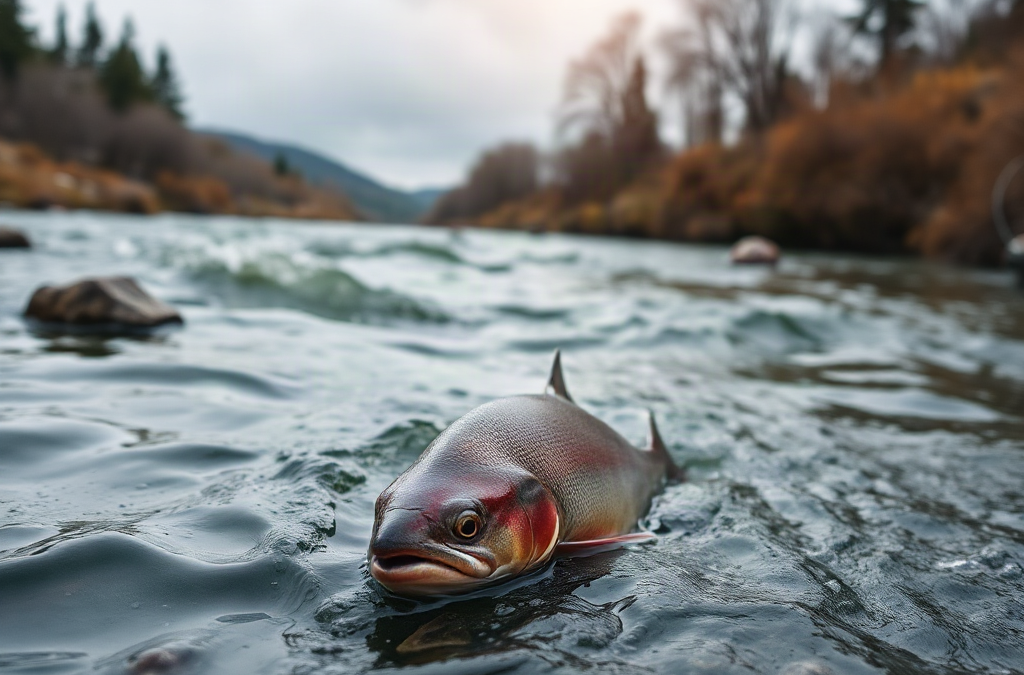
How to fish in areas with strong currents comes down to finding slower water, presenting bait or lures near the bottom, and keeping enough control to detect a strike. Look for eddies, seams, deep pockets, and current breaks behind rocks, pilings, or bends, then cast upstream and let the presentation work naturally through the target zone. Use a heavier sinker or lure only when lighter tackle cannot reach the holding depth, because excessive weight creates snags and an unnatural pull. Keep your rod tip high, maintain slight line tension, and move if the offering tumbles uncontrollably or never reaches the fish.
Read Current Before You Cast
Strong current rarely affects an entire river, channel, or tidal shoreline at the same speed. Fish usually avoid spending unnecessary energy in the fastest flow, so the most productive water is often found beside it rather than inside it. Study the surface for lines where smooth water meets broken water, circular eddies, foam trails, submerged rocks, and changes in color or texture. Those clues reveal seams, depressions, and objects that interrupt the flow.

A current seam can be especially useful because food is carried along the fast side while fish can hold in the slower side. An eddy below a bend may collect insects, injured baitfish, or other drifting food. Behind a bridge support, boulder, log, or jetty, the water may form a quiet pocket that is easier for a fish to occupy. Deep water is not automatically better; a deep section with no break from the flow may be less useful than a shallower pocket protected by structure.
Walk the bank when possible and observe before making repeated casts. If floating debris travels in a tight, fast line, your bait will experience similar pressure. If leaves circle or pause near the bank, that area may offer a practical target. A common mistake is casting directly into the strongest visible flow because it looks active. That approach often produces rapid snags, poor contact, and a presentation that races past the fish.
Begin by identifying three features: the direction of the main flow, the nearest current break, and the depth where food is likely to pass. The best starting cast is commonly upstream or across the seam so the offering enters the slower water naturally. Your goal is not simply to find moving water; it is to find a place where a fish can feed while spending relatively little energy.
Choose Rigging, Lures, and Line Control
Tackle for heavy current should be selected around control rather than maximum weight. A rod with enough backbone to lift a fish away from rocks or pilings is useful, but an overly stiff outfit can make light presentations difficult to manage. Braided line provides a direct feel and smaller diameter for its strength, while monofilament or fluorocarbon leaders can offer abrasion resistance and a less visible connection. The right choice depends on structure, target species, and local rules.
Weight must reach the feeding lane without dragging constantly. A compact sinker, jig, or weighted lure is often easier to control than a bulky option that catches the flow. In rocky water, a rig that slides or pivots may reduce hang-ups compared with a fixed weight. In softer bottom areas, a more stable weight can keep bait in place. Increase weight gradually: use the lightest setup that reaches the zone and allows you to feel bottom or maintain a controlled drift.
Hooks and connections deserve attention because current magnifies weak points. Check knots after contact with rocks, replace leaders with visible scuffs, and use a hook size suited to the bait rather than choosing a large hook merely because the water is powerful. A lure that spins, rolls, or repeatedly fouls is communicating that its profile or rigging does not suit the flow. Changing the angle of the cast may solve the problem before changing the lure.
Consider the tradeoff between natural movement and contact. A very light rig may look attractive but drift above the fish or become impossible to track. A heavy rig may stay near the bottom yet anchor unnaturally or wedge into cover. Keep the rod tip elevated, recover slack in controlled turns, and maintain enough tension to notice a pause without pulling the offering out of the strike zone. For more background on presentation choices, see how to fish in areas with strong currents alongside your local species-specific tackle guidance.
Make the Presentation Reach Holding Water
Positioning and casting angle determine how long a bait or lure stays in productive water. An upstream cast gives the current time to carry the offering toward the fish and usually produces a more natural drift. A cast directly across the river can work when you need to sweep a seam, but it creates more line belly and makes bite detection harder. A downstream presentation may be useful for covering a bank or allowing a lure to rise, although it can move too quickly if the current is powerful.
After the cast, watch the line rather than relying only on the rod. A sudden slack loop can mean the rig has entered an eddy, touched bottom, or been picked up. A hard, continuous pull may indicate that the weight is stuck rather than a fish. Lift the rod and retrieve a small amount of line to restore contact before making a larger adjustment. If the bait swings downstream in a wide arc, reduce the amount of line exposed to the flow by changing your position or casting closer to the target.
Drifting bait through a seam works best when the offering follows the same route as natural food. Cast beyond the intended holding spot, allow the rig to settle, then guide it along the edge of slower water. For lures, vary retrieve speed just enough to keep them working without letting them wash out. A soft plastic or jig may need occasional bottom contact, while a spoon or plug may be more effective when it crosses the seam at a consistent depth.
Use a simple progression instead of changing everything at once:
- Adjust your position to shorten the line angle.
- Change the cast direction to reduce belly and drag.
- Modify weight or lure size in small increments.
- Move the presentation nearer to structure, but leave room to steer a hooked fish away from it.
Signs of a workable setup include a controlled drift, intermittent bottom contact, and a line angle you can manage. Signs of failure include constant snagging, a bait that never reaches depth, or a lure that spins on every cast. Repeatedly forcing a failing presentation wastes time; a modest change in angle often matters more than a dramatic tackle change. The related discussion at how to fish in areas with strong currents is most useful when applied to the exact structure and flow in front of you.
Handle Fights and Fish Safely
Landing a fish in heavy current requires planning before the strike. Strong flow adds pressure to the line and can carry a hooked fish toward rocks, branches, boat traffic, or deep water. Identify a landing area first, keep unnecessary gear out of the way, and avoid standing where a slip would place you in the main channel. Wading safety takes priority over reaching one more cast; use a wading staff and avoid crossing water whose depth or bottom you cannot assess.

When a fish takes, keep the rod bent without locking the drag completely. A controlled side pressure can turn the fish toward calmer water, while lifting straight up may give the current more leverage. If the fish runs downstream, follow only when the bank or boat position allows it safely. Do not wrap line around your hand or attempt to stop a strong run by gripping the spool. The current can turn a manageable fight into a sudden break-off or injury.
Landing gear should match the location. A long-handled net may help from a bank, but it can be awkward in brush or on steep rocks. On a boat, the angler should communicate with the person handling the net rather than dragging the fish across the current. Keep the fish in the water when practical, wet your hands before handling it, and release it facing into gentle flow so water can pass over its gills without forcing it into the strongest current.
A frequent misconception is that heavier line solves every problem. It may provide abrasion protection, but it does not compensate for poor positioning, a weak knot, or unsafe footing. Check the leader after each contact, retrieve snagged tackle by moving to a different angle rather than pulling harder, and stop fishing if rising water, unstable rocks, lightning, or changing boat traffic makes the location unsafe.
Frequently Asked Questions
Where should I cast in strong current?
Target the slow side of a seam, an eddy, a deep pocket, or water immediately behind structure. Fish often hold near fast flow while avoiding its full force.
How much weight should I use?
Use the lightest weight that reaches the intended depth and maintains contact. Add weight gradually if the rig stays above the feeding lane, but reduce it if frequent snags or unnatural dragging develop.
Is an upstream cast better than a downstream cast?
An upstream cast often gives a bait a natural drift and improves line control. Downstream casts can cover different water, but they may speed up the presentation and create more difficult slack.
How can I tell whether I have a bite or a snag?
A bite may produce a pause, tap, or movement that changes independently of the current. A snag usually creates steady pressure with no movement; change the rod angle and retrieve carefully instead of pulling continuously.
Is wading in strong current safe?
Safety depends on depth, velocity, bottom stability, visibility, and conditions upstream. Wear suitable wading equipment, use a staff, avoid isolated crossings, and leave immediately if water rises or footing becomes uncertain.
Further Reading
Authoritative Sources
- Academy of Nutrition and Dietetics
eatright.orgProfessional nutrition guidance, healthy eating resources, and practical dietitian-reviewed advice.
- U.S. Department of Agriculture
usda.govOfficial food, nutrition, agriculture, and consumer guidance from the USDA.
- NIH Office of Dietary Supplements
ods.od.nih.govResearch-based fact sheets on nutrients, supplements, dietary intake, and safety considerations.
- International Society of Sports Nutrition
sportsnutritionsociety.orgEvidence-informed sports nutrition resources and position stands for active people and athletes.
Conclusion
Successful current fishing begins with water reading, not heavier tackle. Find the seam, eddy, depth change, or structure that lets fish feed without holding in the fastest flow, then approach it from an angle that keeps your line manageable. Tune weight and lure action in small steps, watch for the difference between a controlled drift and a rig being swept away, and plan the landing route before a fish is hooked. Strong current can improve feeding activity, but it also increases snagging, break-offs, and personal risk. Treat unstable banks and deep crossings as reasons to relocate, not challenges to overcome. With a measured presentation and disciplined safety decisions, moving water becomes a set of identifiable feeding lanes rather than an unmanageable wall of force.

