
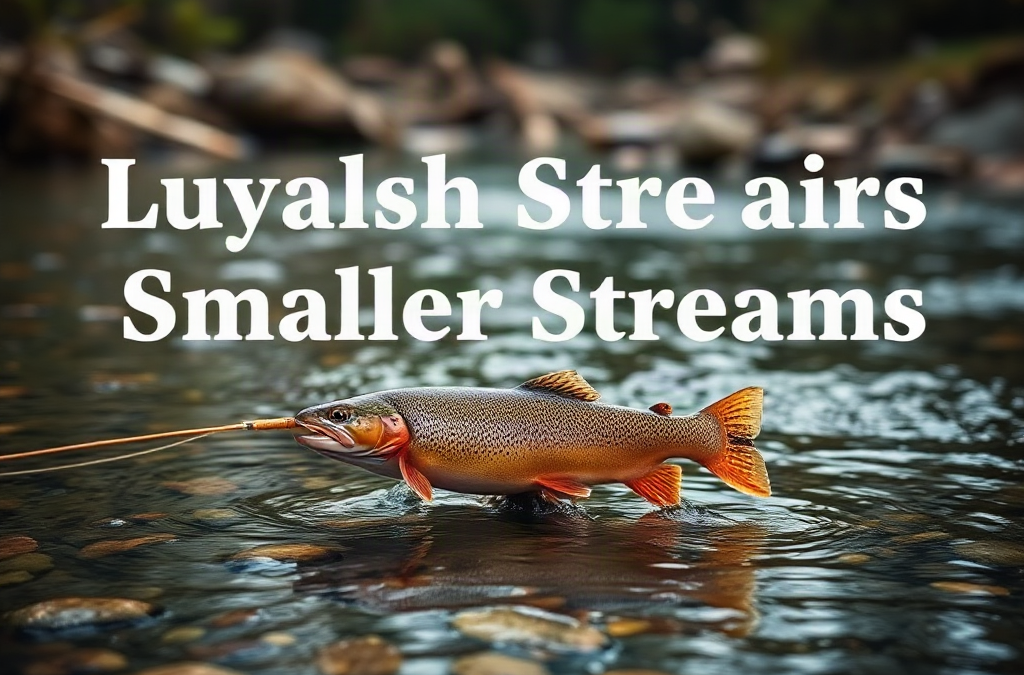
Fish smaller streams effectively by approaching quietly, reading current seams, and presenting a small natural bait or lure upstream before working deeper cover. Wear muted clothing, stay low, and cast from the bank whenever possible because shallow water and confined banks make fish unusually sensitive to movement and line flash. Begin with the nearest pocket, then progress upstream so undisturbed water remains ahead of you. Target the slower edge beside fast current, undercut banks, plunge pools, and shaded structure, adjusting weight so the offering reaches the strike zone without dragging.
Read Small-Stream Water Before You Cast
Smaller streams reward observation because their fish often have limited space, clear views, and predictable shelter. Instead of covering every inch randomly, pause at the bank and identify where food and protection meet. A trout, bass, or panfish may hold beside a fast tongue of water, behind a rock, beneath an overhanging bush, or along the quiet inside edge of a bend. The strongest-looking water is not always the best water; a shallow riffle may carry food, while the deeper pocket immediately below it provides the resting position.

Work upstream when conditions allow. Moving in that direction keeps your body and wake behind fish that have not yet been disturbed, and it lets your offering travel with the current rather than against it. Start by examining the water closest to you. Fish frequently occupy the near bank, especially where a root, fallen branch, or cut bank creates a darker lane. Casting over that zone to reach a distant target can spook the fish before you have fished the easiest opportunity.
Water level and clarity change the order of priorities. After rain, increased flow may push fish tight to banks and eddies, while unusually low water can make them avoid exposed shallows during bright periods. Clear, low water favors longer casts and a lower profile; stained water may permit a closer approach but makes scent, vibration, and recognizable food patterns more useful. Compare a shaded bank with a sunlit bank rather than assuming both will fish alike.
A practical first-pass scan should answer three questions:
- Where can a fish rest while spending little energy?
- Where would drifting insects, worms, or small baitfish enter the pool?
- Which cover offers security without blocking the fish’s view of passing food?
Do not wade immediately simply because the stream is shallow. Entering the water can send pressure waves through a small pool and eliminate the closest targets. The better sequence is to fish from shore, then move only when the reachable water has been covered. This simple choice often matters more than changing lures.
Approach Quietly and Choose Compact Tackle
Stealth is a primary technique in narrow water. Fish may see a rod tip, hear gravel shifting, or notice a shadow crossing the surface long before they respond to the offering. Keep movements deliberate, avoid standing on the skyline, and use vegetation or bank contours as visual cover. Neutral or subdued clothing is useful, but body position and movement usually matter more than color. A crouched angler who moves slowly is less conspicuous than an angler in camouflage who walks upright along the edge.
Compact tackle improves control without requiring specialized equipment. A short, light spinning outfit is convenient around brush and allows accurate casts into pockets. A longer rod can improve line management and drifting distance in open meadow streams, but it becomes awkward beneath trees. Fly tackle can place a small dry fly or nymph precisely, although roll casts or short side casts may be more practical than a full back cast. The best setup is the one that reaches the target while keeping the angler away from the pool.
Use only enough terminal weight to reach the intended depth. Excess weight causes the bait to bounce unnaturally, catches on rocks, and makes a hookset harder in tight quarters. A small hook, light leader, and compact lure often look more natural than oversized tackle. For bait, match common local food such as aquatic insects, larvae, worms, or small minnows where legal. Artificial options should remain proportionate to the stream; a tiny spinner, soft plastic, spoon, or single fly is usually easier to control than a large presentation.
Check local regulations before selecting bait, hooks, or lure types. Some streams restrict live bait, barbed hooks, or harvest, and private access rules may determine where you can enter. Carry forceps, a landing net sized for the fish, and a way to remove hooks without laying a fish on dry ground. A small pack is preferable to a heavily loaded one because it reduces noise and keeps the angler mobile.
A frequent mistake is bringing lake-fishing habits into confined water: heavy line, large casts, loud lure changes, and repeated walking through productive pools. Lighten the presentation and reduce the number of unnecessary movements. If the stream is tight and overgrown, accuracy and quiet entry are more valuable than maximum casting distance.
Present Baits and Lures Through Current Seams
Presentation works when the offering enters the fish’s viewing lane at a believable speed. Cast upstream or slightly across current, then manage slack so the bait or lure drifts through the seam without being pulled sideways by faster surface water. A seam is the boundary between two current speeds; fish often hold on the slower side and face upstream, waiting for food to arrive. Your offering should pass close enough to that position to be noticed without repeatedly striking the fish’s cover.
For a bait rig, use a light arrangement that reaches the upper part of the holding depth and moves naturally. If the float races downstream while the bait remains high, add only a small amount of weight or change the entry angle. If the rig repeatedly wedges between stones, reduce weight, shorten the drift, or target the edge instead of the deepest center. With a spinner or small spoon, begin just above the pool and retrieve through the current at a steady pace. A brief pause beside a rock can trigger a following fish, but excessive motion often looks unnatural in shallow water.
Fly anglers should watch for drag, when the current pulls the fly faster or in a different direction than nearby natural debris. Mending line, shortening the cast, or changing the angle can improve the drift. In very narrow channels, a short downstream tuck cast may be more effective than forcing a long aerial cast. The same principle applies to spinning gear: a short, controlled presentation that stays in the strike zone can outperform a distant cast that spends most of its travel outside the target water.
Cover deserves a deliberate sequence. Fish the near edge first, then the center line, then the far edge if the cast can be made without brushing branches or crossing the fish with line. In a plunge pool, place one offering beside the inflow, one along the deeper wall, and one near the downstream tailout. Allow enough time for each presentation to pass through the likely holding lane before changing tactics.
Watch for evidence rather than treating a missed bite as a random event. A flash, a stopped float, a line twitch, or a fish that follows without striking can identify the needed adjustment. Change one variable at a time—depth, speed, angle, or lure size—so you know what produced the response. More aggressive retrieval is not automatically the solution; a fish following a lure may need a slower pace or a smaller profile instead.
For additional planning ideas, use this how to fish in smaller streams effectively reference while matching the presentation to water depth and flow speed.
Adjust the Plan When the First Drifts Fail
Failure in a small pool does not prove that no fish are present. The first cast may have landed too close, crossed the holding line, or carried an unnatural speed. Before leaving, diagnose the presentation. If the water is clear and the fish appears nervous, increase distance and reduce splash. If the offering never reaches the lower part of the pool, adjust depth or weight. If it reaches the zone but moves faster than bubbles and leaves, correct line control rather than immediately changing bait.
A useful progression is to alter the least disruptive variable first. Change the casting angle, then the drift speed, then depth, and finally the offering itself. This keeps the pool from receiving a succession of noisy splashes. For example, a small trout that rises halfway toward a dry fly may be interested but cautious; a longer leader or smaller pattern may help. A bass holding beneath a root wad may ignore a fast spinner but respond when a compact soft lure is allowed to fall beside the cover. The correct adjustment depends on the observed reaction.

Timing also changes how a stream fishes. Early or late light often reduces the visibility of the angler and may bring feeding fish into shallower water. During bright midday conditions, concentrate on shade, undercut banks, deeper pools, and sections protected by overhead cover. Cold water can slow the fish’s response, making a smaller, slower presentation more appropriate. Warm, rising water may spread fish along feeding lanes, but it can also make shallow fish easier to disturb.
Do not spend twenty casts on one visible fish. Repeated casts can educate it, foul the water with line, or damage a productive spot for the next approach. After a few clean presentations, move to a nearby angle or leave the pool and return later. If several pools show no activity, check whether the stream is unusually high, low, warm, or heavily pressured. Environmental conditions may explain the result better than lure choice.
Keep a short mental record of what worked: shaded versus exposed water, shallow versus deep holding areas, and natural drift versus active retrieve. The next pool can then be tested with a reasoned change rather than a random one. This is where how to fish in smaller streams effectively becomes a repeatable process instead of a series of guesses.
Protect Fish and Finish Each Pool Carefully
Small streams can be productive while remaining ecologically sensitive. Trampling through spawning gravel, scraping algae from rocks, or disturbing undercut banks may affect the habitat that makes the water worth fishing. Use established access where available, avoid unnecessary wading, and step on stable rock rather than soft streambed. Never assume a shallow channel is harmless simply because it is easy to cross.
Handle hooked fish quickly and with wet hands. Keep the fish in the water while removing the hook, support its body, and avoid squeezing the abdomen or touching the gills. A rubberized net can reduce handling time, but a net is not a substitute for care. If a fish is deeply hooked, follow local guidance and use the least damaging legal option rather than forcing a removal that causes additional injury.
Leave a pool in better condition than you found it. Pack out line fragments, bait containers, and damaged soft plastics. Check footwear and nets for plant material before moving between waters, since aquatic hitchhikers can spread through wet equipment. These habits are practical rather than ceremonial: clean gear and restrained access help preserve small streams for future trips.
Before moving on, make one final assessment of the pool’s downstream tailout and near-bank edge. Fish may shift position after the first disturbance, and the last cast from a new angle can reveal a holding lane that was missed at the beginning. Then retreat along the bank or through already disturbed water instead of crossing the remaining untouched section. A quiet exit protects the next opportunity, whether it is later that day or on a future visit.
Keep a compact stream checklist in your pack:
- Confirm access rules, seasons, harvest limits, and legal methods.
- Observe the water before stepping into it.
- Fish near cover and current seams from the bank first.
- Change one presentation variable at a time.
- Wet hands, minimize handling, and remove line from the shoreline.
Frequently Asked Questions
Should I fish upstream or downstream in a small stream?
Upstream movement and upstream presentations often reduce disturbance because the current carries your offering naturally and fish ahead are less likely to see you.
What lure size works well in narrow streams?
Choose a compact lure that matches the available prey and fits the water's scale. Small spinners, spoons, soft plastics, and flies are easier to control than oversized offerings.
Why do fish stop biting after I enter the water?
Wading can transmit vibration, create wakes, and cast shadows across shallow holding areas. Fish the bank first and enter only after nearby water has been covered.
How many casts should I make to one pool?
Make a few controlled presentations from different useful angles, changing one factor at a time. Move on if the water shows no response rather than repeatedly splashing the same target.
Is light tackle necessary for small-stream fishing?
Light or compact tackle is not mandatory, but it usually improves accuracy, reduces splash, and fits confined banks. Select gear strong enough for local species and available cover.
Further Reading
Authoritative Sources
- Academy of Nutrition and Dietetics
eatright.orgProfessional nutrition guidance, healthy eating resources, and practical dietitian-reviewed advice.
- U.S. Department of Agriculture
usda.govOfficial food, nutrition, agriculture, and consumer guidance from the USDA.
- NIH Office of Dietary Supplements
ods.od.nih.govResearch-based fact sheets on nutrients, supplements, dietary intake, and safety considerations.
- International Society of Sports Nutrition
sportsnutritionsociety.orgEvidence-informed sports nutrition resources and position stands for active people and athletes.
Conclusion
Effective small-stream angling depends less on covering water quickly than on protecting the opportunities already in front of you. Read the current before moving, fish the nearest edge first, and let each presentation pass naturally through seams, cover, and pool tails. Compact tackle, restrained weight, and quiet footwork make accurate casts possible in tight surroundings. When a drift fails, inspect speed, depth, angle, and fish reaction before changing lures at random. Keep access rules and fish handling in the plan, especially on fragile headwaters. Your next trip should begin with a slow bank-side scan, a few low-impact casts, and a willingness to leave an unproductive pool before pressure ruins it.

