
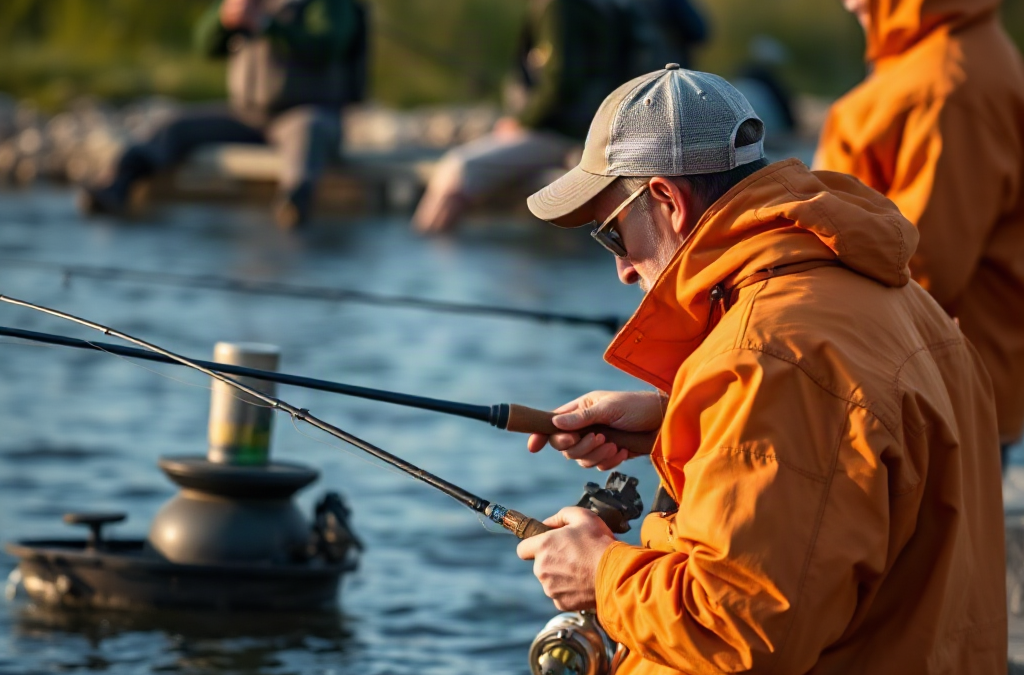
If your fishing spot gets crowded, protect your space politely, reduce disturbance, and decide quickly whether sharing or relocating gives you the better chance of success. Give nearby anglers room, avoid casting across their lines, and ask before working a shared piece of structure. Crowding often changes fish behavior through repeated casts, boat noise, and competition for limited holding water, so a quieter secondary location may outperform the famous spot. If you stay, switch to less-used edges, lighter presentations, or a different depth; if the area becomes unsafe or conflicts develop, leave and use a backup location rather than arguing.
Read The Situation Before Making A Move
A crowded fishing spot is not automatically a lost opportunity. The useful question is whether the added anglers have actually reduced your access, changed the fish behavior, or merely made the location feel less comfortable. A bank with several people may still offer productive water if each angler controls a separate casting lane. By contrast, two boats positioned over a small brush pile can make the same place effectively unavailable.

Spend a minute observing before casting. Note where lines are landing, whether anglers are moving along the bank, and whether boats are holding on the exact structure or drifting through it. Watch for repeated fish catches, bait activity, current seams, and untouched water just outside the obvious target. Crowding can concentrate pressure on the most visible feature while leaving nearby depth changes, shade lines, secondary points, or downstream seams underfished.
Noise and movement matter, but they should not be treated as a universal explanation for poor results. Fish may become harder to approach after constant casting, yet a current break or feeding window can still make a busy location productive. The mistake is abandoning good water reflexively or staying solely because the location has a reputation. Compare the likely value of the occupied area with the quality of the alternatives you can reach safely.
A simple first decision works well:
- Stay and share when casting lanes are clear and everyone is behaving predictably.
- Adjust within the area when the main feature is pressured but its edges remain open.
- Relocate when access is blocked, lines conflict, safety declines, or a backup area offers comparable habitat.
That assessment gives your next cast a purpose. Instead of reacting emotionally to a full parking area or crowded shoreline, you are comparing water access, fish behavior, safety, and the quality of your next option.
Share Water Without Creating Conflict
Good etiquette begins with distance and communication. Keep your casts inside your own lane, do not cast over another angler’s line, and avoid moving directly into a space someone is actively working. A brief greeting and a practical question such as “Are you working this bank toward the point?” can prevent misunderstandings that develop when anglers assume they know another person’s plan.
Shore anglers usually need a clear walking and casting corridor, while boat anglers need room for the boat’s movement, anchor line, and drift. A boat that appears stationary may still swing with wind or current. If you are in a boat, approach slowly, idle well away from active casts, and ask whether the area is being worked before settling in. If you are on shore, leave room for another person to land a fish and avoid placing gear where others must step to reach the water.
Sharing does not mean copying every cast. If another angler is already covering the shallow bank with a spinnerbait, your better option may be the outside edge, a deeper presentation, or a pause-oriented lure worked through a different depth. The goal is to reduce direct competition for the same water. Repeatedly casting onto the exact target may annoy the other angler and give you little new information.
Rules and local customs can affect what is acceptable. Public water may have boundaries around launch areas, swimming zones, access points, or restricted methods. Check the applicable fishing regulations and posted notices rather than relying on assumptions. Courtesy cannot override a legal closure or a designated safety area.
The most common failure is silent escalation: one person moves closer, another casts farther, and both interpret the behavior as deliberate. State your intended direction, maintain a visible buffer, and leave if the exchange becomes hostile. Catching a fish is never worth turning a crowded outing into a personal confrontation.
Make A Crowded Area Fishable Again
When you stay, change the presentation and the piece of water rather than simply casting harder. Fish exposed to repeated lures may respond better to a quieter entry, a slower retrieve, a smaller profile, or a route that approaches the structure from an overlooked angle. These adjustments are not guarantees; they are ways to avoid competing directly with the most obvious pattern.
Start at the edge of the crowd’s influence. Cast parallel to the bank instead of directly at the center of the group, probe the deeper side of a point, or work the current seam below the primary holding area. On a lake, a shaded pocket behind the main target may retain fish even after the visible feature receives constant attention. In moving water, anglers may focus on the head of a pool while the softer water along the seam remains available.
Presentation should match the amount of disturbance. If boats are repeatedly passing over shallow cover, a lure that can be worked efficiently through deeper water may be more sensible than forcing a shallow approach. If the bank is quiet but heavily fished, reduce splash and allow the lure to remain in the strike zone longer. Natural bait, where legal, may be useful when fish are refusing fast-moving artificial offerings, but it can also create more waiting time and reduce mobility.
Use short experiments instead of changing everything at once. Try one alternate casting angle for several casts, then alter depth or speed. Signs that the adjustment is working include follows, short strikes, bait movement near your line, or fish appearing on electronics away from the main cluster. Signs that it is failing include repeated snagging without contacting useful cover, no life in the area, or an inability to maintain a safe lane.
Do not crowd another angler’s untouched-looking water simply because it appears promising. Their line may be difficult to see, or they may be reserving the lane while moving along it. The productive compromise is to work water clearly outside their direction of travel or ask before shifting closer.
Know When Relocating Is The Better Choice
Relocation is sensible when access, safety, or fishable water has deteriorated enough that minor adjustments cannot compensate. A backup spot does not need to be equally famous. It needs a plausible combination of depth, cover, current, forage, shade, or wind exposure that matches the conditions you are facing.
Move when your casting lanes overlap, anglers are repeatedly crossing lines, boats are drifting into one another, or the shoreline leaves no safe place to land a fish. Leave sooner if alcohol, aggressive behavior, or dangerous boat operation creates a clear hazard. A quiet secondary point is a better decision than staying in a place where attention is divided between fishing and avoiding an accident.
Travel time is the main tradeoff. A distant location may cost the best part of a feeding period, while a nearby alternative may be less proven but immediately accessible. Before leaving, identify the next spot’s likely first cast. For example, if the crowded area is a windblown rocky point, choose a nearby wind-facing bank, channel edge, or smaller point rather than driving randomly to a sheltered cove with no comparable feature.

Relocation also works best when you carry information forward. Record the wind direction, water clarity, depth where bait appeared, and the type of cover that drew the crowd. If the original area produced a fish before becoming busy, do not assume the entire pattern is gone; search for another location with the same structure and conditions. This is more effective than treating every backup spot as unrelated.
A frequent mistake is moving repeatedly without giving any location enough time to reveal itself. Fish a new area with a defined test: cover the likely holding water at two depths and two retrieve speeds, then decide whether the evidence supports staying. A deliberate move is different from wandering.
Build A Backup Plan For Busy Fishing Days
The easiest way to handle a crowded spot is to prepare before the crowd arrives. Mark several alternatives that share a meaningful feature with your primary location, such as a secondary creek arm, a downstream eddy, a parallel shoreline, or a less accessible side of the same point. Include at least one option close enough to reach without sacrificing the most useful part of the day.
Organize the alternatives by conditions rather than by distance alone. A shallow, shaded bank may suit bright conditions; a wind-exposed point may be better when bait is pushed against it; a deeper channel edge may provide a fallback after boat traffic disturbs the surface. This gives you a reason for each move and prevents random spot-hopping.
A compact busy-day checklist can keep decisions calm:
- Check whether the crowd affects access, fish behavior, or only comfort.
- Establish a clear casting lane and communicate before repositioning.
- Test an edge, alternate depth, or quieter presentation.
- Set a time or evidence threshold for judging the adjustment.
- Move to the closest credible backup when safety or access fails.
Keep your gear ready for these changes. A rod suited to a different depth, a lure that handles cover, and a simple landing plan matter more than carrying a large collection of unused options. Crowded conditions reward efficient transitions because long tackle changes and repeated debates reduce fishing time.
Future trips can benefit from a short log. Note which spots filled first, where the crowd stopped, what presentations anglers used, and whether fish were caught on the margins. The record may reveal that a location is popular only at a particular tide, water level, or time of day. That information lets you arrive earlier, choose a different period, or bypass the congested area entirely. For related planning ideas, review what to do if your fishing spot gets crowded alongside notes on backup fishing locations and crowded-water etiquette.
Before fishing a busy public location, consult the current regulations and access notices issued by the relevant state fish and wildlife agency, park authority, or reservoir manager. These sources are the best place to verify closed areas, boat restrictions, seasons, and site-specific access rules.
Frequently Asked Questions
Should I leave immediately when other anglers arrive?
No. First check whether you still have a separate casting lane and whether the crowd is affecting fishable water. Leave if access, safety, or basic courtesy breaks down.
Can crowded water still produce fish?
Yes. Fish may remain active, especially around current, cover, shade, or forage. Work overlooked edges and different depths instead of duplicating the crowd's casts.
How much space should I give another angler?
Give enough room for their casting direction, movement, and fish landing process. Conditions vary, so communicate rather than assuming a fixed distance guarantees courtesy.
What should I do if someone casts over my line?
Stop casting briefly and address it calmly. Explain your direction of travel or casting lane, then move away if the behavior continues or the interaction becomes confrontational.
What makes a good backup fishing spot?
Choose nearby water with a comparable feature, such as a depth change, current seam, windblown bank, shade, or cover. A reasoned alternative is better than a random empty location.
Conclusion
A busy fishing spot calls for judgment rather than an automatic retreat. Assess whether the crowd has removed safe access, disrupted the fish, or simply made the obvious target more competitive. If lanes remain clear, share the water with deliberate casts, respectful communication, and a presentation that reaches a different depth or edge. If the area is unsafe or heavily conflicted, move to a nearby location chosen for comparable habitat instead of abandoning the day’s pattern. Arrive with several alternatives, give each move a defined test, and carry observations about wind, depth, cover, and bait into the next decision. The best outcome is not always the quietest shoreline; it is the location where you can fish safely, courteously, and with a realistic chance to find undisturbed water.

