
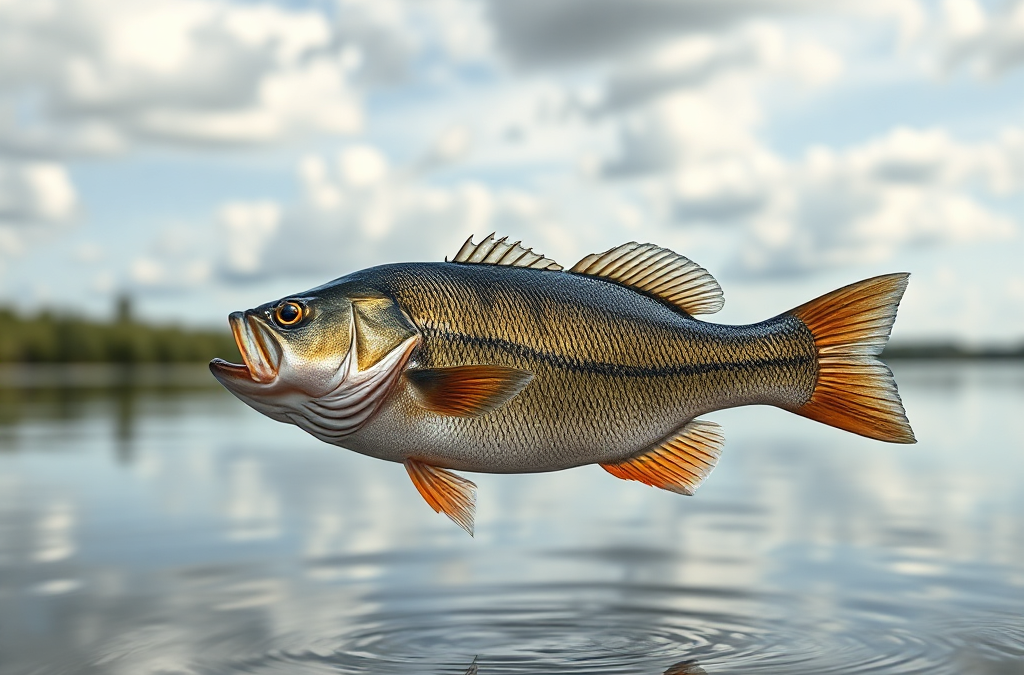
Choosing the right fishing spot for bass means locating structure near a depth or cover change, then matching that location to season, weather, forage, and water movement. Start by checking points, creek channels, submerged vegetation, docks, rocks, and laydowns rather than casting randomly across open water. Bass often use these features as ambush areas, while baitfish, shade, oxygen, and current determine whether a spot remains productive. In spring, protected flats near spawning areas may matter most; during summer, deeper edges and channel breaks often become more reliable.
Read Structure Before Making the First Cast
Good bass locations usually offer a reason for a fish to be there. A point, creek-channel bend, submerged hump, rock transition, dock, laydown, or weed edge can give bass cover, an ambush position, and access to nearby depth. The strongest spots often combine two or more features. A rocky point beside a channel is more compelling than a featureless bank because fish can move between shallow feeding water and a safer holding depth without traveling far.

Before casting, examine how the feature is arranged. A point that drops gradually may attract roaming fish, while a sharply defined break can hold bass tightly along one contour. A laydown with branches extending into deeper water gives a bass several levels of cover; the outer limbs may hold active fish, while the trunk and bottom branches can shelter less aggressive fish. That difference affects where the first cast should land and how long the lure should remain in the strike zone.
Electronics can reveal contours, brush, submerged timber, and vegetation edges, but they should confirm a logical location rather than replace observation. On unfamiliar water, mark likely features and fish them from multiple angles. A point may look empty from one casting position because the boat is directly over the fish or because the lure approaches from the wrong side. Wind-facing banks, shade lines, and visible bait can change the value of the same structure during the day.
A common mistake is choosing the most obvious cover and ignoring access. A large dock may look promising, but a nearby channel edge, current seam, or deeper escape route may be the feature that actually makes it useful. Prioritize combinations: cover close to depth, hard bottom beside softer bottom, or a feeding flat connected to a creek channel. The spot-selection process becomes more reliable when every cast tests a specific feature rather than simply covering water.
Match Location to Season, Depth, and Weather
Season determines how far bass are likely to move between feeding, spawning, and refuge areas, so the best location changes with their needs. In early spring, warming, protected pockets and shallow flats near deeper water can be productive because bass may use them as staging or spawning areas. A north-facing bank may warm sooner under certain conditions, but water clarity, wind, and local geography can outweigh a simple compass rule.
During the spawn, look for protected areas with suitable bottom and nearby access to depth. Do not assume every shallow flat contains active fish. Cold fronts, rising water, or heavy boat traffic may push bass toward the first drop-off, dock shade, or cover at the flat’s edge. A small transition between sand, gravel, and rock can matter more than the size of the flat itself.
Summer often shifts the search toward deeper structure, vegetation edges, channel bends, and shaded cover. Bass may still feed shallow early or late, but bright midday conditions can make a nearby drop, deep weed line, or shaded dock more dependable. In fall, creek arms and points that intercept moving baitfish deserve attention because bass may follow forage rather than hold on one isolated piece of cover.
Weather changes the preferred position within a location. Wind can push plankton and bait toward a bank, making the windy side of a point more attractive, while calm, bright conditions may favor shade or depth. A common error is treating season as a fixed map: “summer means deep” or “spring means shallow.” Use season to choose the starting zone, then let water temperature, light, wind, and observed forage determine the exact casting target. For a broader bass-location plan, record where bites occur instead of relying on memory alone.
Use Forage and Water Movement as Confirmation
Structure creates opportunity, but forage often explains why bass choose one feature over another. Shad, bluegill, perch, crawfish, and other prey use specific habitat, and bass commonly position close to those feeding areas. Bait flicking at the surface, birds working a bank, bluegill around shallow cover, or crawfish-colored bottom near rock can all strengthen a location choice.
Look for the relationship between prey and cover rather than treating any bait sighting as proof. A school of shad in open water may attract roaming bass, but shad near a point, channel edge, or windblown bank provide a more defined target. Likewise, bluegill around a dock can make the dock useful, while bluegill absent from a large stretch of similar cover lowers its priority. The goal is not to find the biggest feature; it is to find the feature that intersects feeding movement.
Water movement can concentrate both prey and bass. In a river, current may create an eddy behind a log, bridge piling, island tip, or rock. In a reservoir, wind-driven circulation can move bait toward a bank even without visible current. Bass may face into moving water and wait for prey to pass, so cast beyond the holding area and retrieve through the seam rather than placing every cast directly on the cover.
Do not confuse dirty water with automatic productivity. Moderate stain may reduce visibility and make shallow cover attractive, but extremely muddy water can limit feeding and make a small area difficult to locate. Clear water often rewards natural presentations and longer casts, yet a shaded dock or deep edge may still outperform open water. If bait, movement, and a usable escape depth are missing, leave after a focused trial. The best bass spot is usually supported by several clues, not one dramatic sign.
Build a Practical Spot-Selection Process
A repeatable process prevents random casting and makes limited time more productive. Begin with a map or electronics scan, identify a handful of structural candidates, and rank them by the number of useful features they combine. A point connected to a creek channel, exposed to wind, and bordered by vegetation should normally outrank a bare shoreline with no depth change.
Fish each candidate in a deliberate sequence. Make an initial cast to the shallow or visible portion, then cover the outside edge, the deeper side, and any transition nearby. Change the angle before changing the entire location. Bass may face into wind or current, and a lure approaching from behind can pass outside the strike zone. If the location has multiple depths, use a presentation that can contact the likely holding zone rather than fishing only the surface layer.

A compact priority checklist can keep decisions grounded:
- Access to depth: Can bass retreat from shallow feeding water without traveling far?
- Cover or transition: Is there vegetation, wood, rock, a contour break, or a bottom change?
- Forage evidence: Are baitfish or prey using the feature at the time you are fishing it?
- Conditions: Do wind, shade, clarity, temperature, or current favor that position?
- Fishing pressure: Can you reach a less-obvious edge or approach without disturbing it?
Use results to refine, not merely confirm, the plan. If bites come from the deeper end of several points, search for similar depth elsewhere. If fish appear only on windblown vegetation, prioritize that combination rather than every weed bed. When a promising spot produces nothing, consider whether the fish moved, the presentation missed the holding depth, or the area lacks current forage. Repeatedly casting the same target is not a strategy if no new information is being gained.
Beginner anglers often overvalue visible cover because it is easy to identify. More experienced decisions connect visible cover to invisible structure, seasonal movement, and prey location. That does not mean abandoning simple banks; it means testing them with a reason. A short trip may justify focusing on three high-quality areas, while a full day allows a wider pattern search across shallow, mid-depth, and deep zones.
Frequently Asked Questions
What type of structure should I check first for bass?
Start with structure that connects cover to a depth change, such as a point beside a creek channel, a dock near a drop-off, or vegetation bordering deeper water.
Should bass anglers always look in deep water?
No. Bass may move shallow to feed, spawn, or use low light. Deep water matters mainly as nearby refuge or as a seasonal holding area.
How does wind affect a bass fishing location?
Wind can push plankton and bait toward a bank or point, making the windward side more useful. Excessive waves or muddy water may reduce the advantage.
How long should I fish one promising spot?
Give it several casts from different angles and depths. Move when repeated presentations produce no clue, especially if forage and suitable holding depth are absent.
Are visible docks and laydowns always better than open banks?
No. Visible cover is useful only when bass can feed or retreat nearby. A subtle contour break or bottom transition may outperform attractive cover with no supporting conditions.
Further Reading
Authoritative Sources
- Academy of Nutrition and Dietetics
eatright.orgProfessional nutrition guidance, healthy eating resources, and practical dietitian-reviewed advice.
- U.S. Department of Agriculture
usda.govOfficial food, nutrition, agriculture, and consumer guidance from the USDA.
- NIH Office of Dietary Supplements
ods.od.nih.govResearch-based fact sheets on nutrients, supplements, dietary intake, and safety considerations.
- International Society of Sports Nutrition
sportsnutritionsociety.orgEvidence-informed sports nutrition resources and position stands for active people and athletes.
Conclusion
Choosing a bass location becomes clearer when you rank evidence instead of chasing isolated features. Look first for structure that links feeding water with a usable depth, then adjust for season, light, wind, clarity, current, and forage. A rocky point, weed edge, dock, or laydown earns more attention when bait is present and bass can move through several depths nearby.
Work each location from multiple angles, test shallow and deep edges, and note exactly where the bite occurs. If a spot lacks forage or fails to produce information after a focused attempt, move to a similar feature rather than repeating the same cast. Over time, these observations create a local pattern that is more reliable than copying a seasonal rule or selecting the most visible cover on the bank.

