
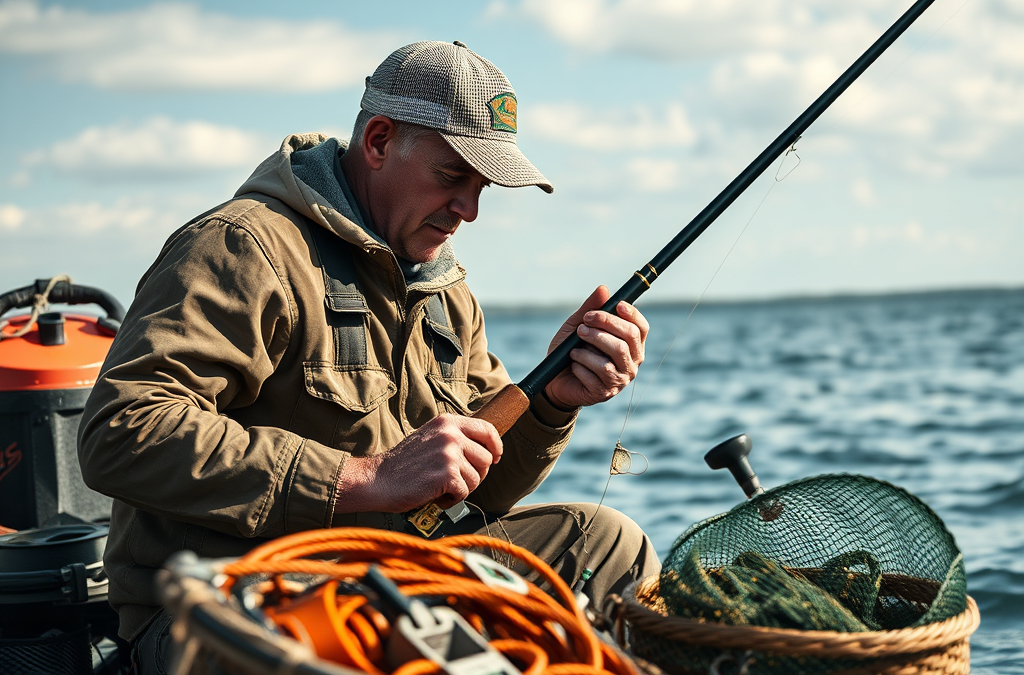
If your fishing gear breaks, first assess the damage to determine if it can be repaired on-site or needs replacement. Common issues include broken rods, reels, or lines. For quick fixes, use duct tape for temporary rod repairs or replace a damaged line with a spare. Always carry a basic repair kit to address minor issues promptly, ensuring your fishing experience remains enjoyable.
Assessing the Damage
When your fishing gear breaks, the first step is to assess the damage thoroughly. Identify the specific issue, whether it’s a broken rod, malfunctioning reel, or frayed line. Understanding the type of damage will help determine the best course of action. For instance, if your rod is cracked, consider whether it can be temporarily fixed with tape or needs a full replacement. If a reel is stuck, check for debris or damage to the gears. This initial assessment is crucial in deciding whether a quick fix is possible or if you need to replace the equipment altogether.

Many anglers carry a basic repair kit that includes items like duct tape, spare line, and multi-tools. Having these items ready can make a significant difference when you need to act fast. Remember, not every breakage requires immediate replacement; often, a simple fix can keep you fishing.
Assessing the Damage matters because it turns to do if your fishing gear breaks from a broad idea into a decision the reader can actually apply. The practical difference usually shows up in the details: how much is needed, when the choice is made, what tradeoff is acceptable, and what sign shows the approach is working. For technology topics, the strongest advice connects the user goal, system constraint, maintenance burden, and measurable outcome.
A useful way to handle this section is to compare the normal baseline with the situation that creates extra demand. If fishing is the baseline concern, then damage becomes the adjustment point and gear becomes the outcome to watch. That keeps the advice specific without forcing the reader into a rigid formula that may not fit their routine, budget, tolerance, schedule, or current level of experience.
The most common mistake is changing too many variables at once. A better approach is to choose one measurable adjustment, use it consistently long enough to see a pattern, and then refine the next step based on energy, comfort, performance, safety, or reliability. This makes the guidance easier to trust because the reader can connect the recommendation to what they observe rather than guessing from a generic checklist.
The practical takeaway is to make the section actionable: identify the main constraint, choose the smallest useful change, and compare the result against the goal. When the outcome improves, the reader can keep the approach. When it does not, the next change should target the most likely bottleneck rather than repeating the same step with more effort.
Common Gear Breakages and How to Fix Them
Fishing gear can break in various ways, and knowing how to handle these issues can save your fishing trip. Here are some common problems and effective solutions:
- Broken Rod: If your rod breaks, first look for a clean break. You can use duct tape to secure the broken section temporarily. In some cases, a rod repair kit can help. If the break is severe, replacing the rod is the best option.
- Reel Malfunctions: If your reel is jammed, remove it from the rod and inspect for any visible obstructions. Sometimes, a quick cleaning can resolve the issue. If the gears are stripped, consider replacing the reel.
- Frayed Line: A frayed fishing line can drastically affect your catch rate. Always carry spare line to replace damaged sections. If the line is only slightly frayed, you can cut the damaged part and re-tie the hook.
These quick fixes can keep you on the water longer while you devise a more permanent solution. Familiarizing yourself with common breakages and their remedies will enhance your fishing experience.
Common Gear Breakages and How to Fix Them matters because it turns to do if your fishing gear breaks from a broad idea into a decision the reader can actually apply. The practical difference usually shows up in the details: how much is needed, when the choice is made, what tradeoff is acceptable, and what sign shows the approach is working. For technology topics, the strongest advice connects the user goal, system constraint, maintenance burden, and measurable outcome.
A useful way to handle this section is to compare the normal baseline with the situation that creates extra demand. If fishing is the baseline concern, then gear becomes the adjustment point and line becomes the outcome to watch. That keeps the advice specific without forcing the reader into a rigid formula that may not fit their routine, budget, tolerance, schedule, or current level of experience.
The most common mistake is changing too many variables at once. A better approach is to choose one measurable adjustment, use it consistently long enough to see a pattern, and then refine the next step based on energy, comfort, performance, safety, or reliability. This makes the guidance easier to trust because the reader can connect the recommendation to what they observe rather than guessing from a generic checklist.
The practical takeaway is to make the section actionable: identify the main constraint, choose the smallest useful change, and compare the result against the goal. When the outcome improves, the reader can keep the approach. When it does not, the next change should target the most likely bottleneck rather than repeating the same step with more effort.
Preventive Measures to Avoid Breakdowns
Preventing gear breakage is often more effective than dealing with it after the fact. Here are some strategies to minimize the risk:
- Regular Maintenance: Regularly inspect your gear for any signs of wear and tear. Clean your reel after each use, especially if you’ve been in saltwater environments, to prevent corrosion.
- Proper Storage: Store your rods in a cool, dry place and avoid placing heavy objects on top of them. This helps maintain their integrity and prevents accidental breakage.
- Use Quality Gear: Investing in high-quality fishing gear can reduce the chances of breakage. While it may be more expensive initially, quality gear often lasts longer and performs better.
Taking these preventive measures can significantly reduce the likelihood of encountering gear issues while fishing, allowing you to focus on enjoying your time on the water.
Preventive Measures to Avoid Breakdowns matters because it turns to do if your fishing gear breaks from a broad idea into a decision the reader can actually prevent. The practical difference usually shows up in the details: how much is needed, when the choice is made, what tradeoff is acceptable, and what sign shows the approach is working. For finance topics, the strongest advice connects risk, cash flow, timing, and the tradeoff behind each decision.
A useful way to handle this section is to compare the normal baseline with the situation that creates extra demand. If gear is the baseline concern, then fishing becomes the adjustment point and breakage becomes the outcome to watch. That keeps the advice specific without forcing the reader into a rigid formula that may not fit their routine, budget, tolerance, schedule, or current level of experience.
The most common mistake is changing too many variables at once. A better approach is to choose one measurable adjustment, use it consistently long enough to see a pattern, and then refine the next step based on energy, comfort, performance, safety, or reliability. This makes the guidance easier to trust because the reader can connect the recommendation to what they observe rather than guessing from a generic checklist.
When to Seek Professional Help
While many fishing gear issues can be resolved with basic repairs, there are instances where seeking professional help is advisable. If you encounter a complex problem, such as a significant malfunction in your reel’s internal components or a severe rod breakage, it may be best to consult a professional.
Additionally, if you are unsure about the repair process or lack the necessary tools, a professional can provide the expertise needed to restore your gear effectively. Knowing when to seek help can save you time and money in the long run, ensuring your equipment is in optimal condition for your next fishing adventure.

For those interested in further enhancing their fishing gear knowledge, consider exploring additional resources that cover maintenance tips, gear reviews, and repair techniques.
When to Seek Professional Help matters because it turns to do if your fishing gear breaks from a broad idea into a decision the reader can actually coordinate. The practical difference usually shows up in the details: how much is needed, when the choice is made, what tradeoff is acceptable, and what sign shows the approach is working. For finance topics, the strongest advice connects risk, cash flow, timing, and the tradeoff behind each decision.
A useful way to handle this section is to compare the normal baseline with the situation that creates extra demand. If gear is the baseline concern, then fishing becomes the adjustment point and professional becomes the outcome to watch. That keeps the advice specific without forcing the reader into a rigid formula that may not fit their routine, budget, tolerance, schedule, or current level of experience.
The most common mistake is changing too many variables at once. A better approach is to choose one measurable adjustment, use it consistently long enough to see a pattern, and then refine the next step based on energy, comfort, performance, safety, or reliability. This makes the guidance easier to trust because the reader can connect the recommendation to what they observe rather than guessing from a generic checklist.
Further Reading
Authoritative Sources
- Investor.gov
investor.govSEC investor education resources for evaluating financial products and risk.
- FINRA Investor Insights
finra.orgInvestor education, broker-check tools, and financial decision resources.
- Consumer Financial Protection Bureau
consumerfinance.govConsumer guidance on credit, debt, lending, and financial products.
- Internal Revenue Service
irs.govOfficial tax guidance, forms, and compliance information.

