
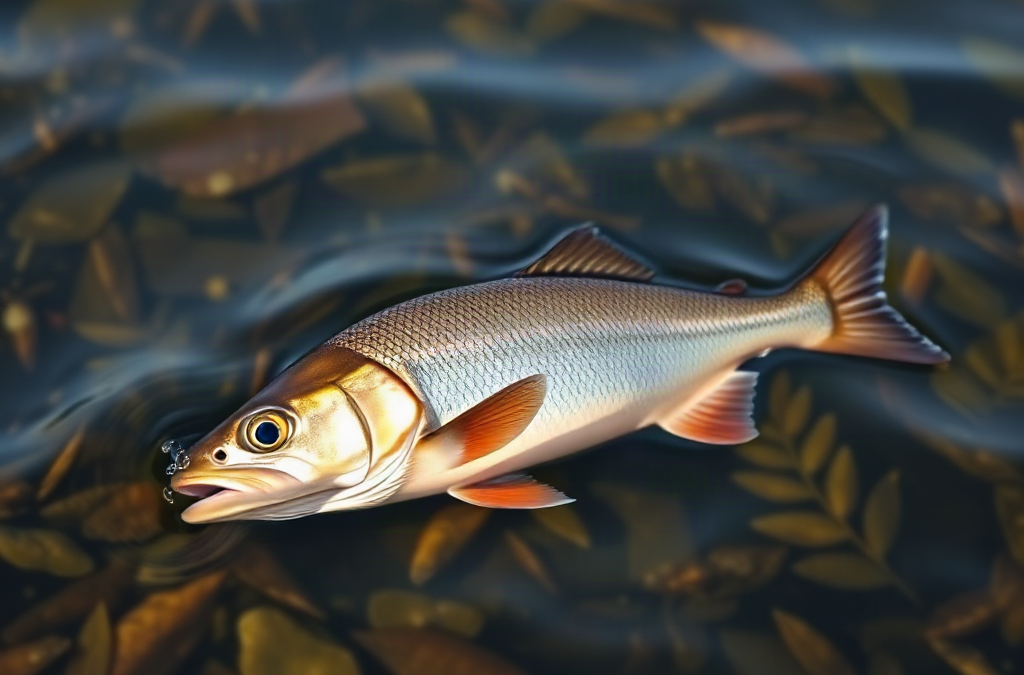
To understand fish behavior during different times of the year, track water temperature, daylight, oxygen, spawning cycles, forage movement, and recent weather rather than relying on the calendar alone. Fish commonly shift between deep winter holding water, warming spring shallows, oxygen-rich summer zones, and fall feeding routes as their energy needs and available food change. Start by checking temperature trends and identifying where comfortable water overlaps with cover and prey. Adjust depth, retrieve speed, and lure size only after observing those conditions, and avoid assuming every fish in a lake moves at the same time.
Read Conditions Instead of Relying on Calendar Dates
Seasonal fish movement is driven more accurately by changes in the water than by a date on the calendar. A warm March in a shallow southern reservoir may produce conditions that a northern lake does not reach until May. Elevation, water clarity, current, lake depth, and recent weather can also put two nearby waters on different schedules. Treat spring, summer, fall, and winter as broad behavioral phases, then use conditions at the water to identify the phase actually underway.

Water temperature affects fish metabolism, but a thermometer reading is not a complete answer. The direction and duration of the change matter. Three afternoons of warming can pull prey and game fish toward protected shallows, while a cold front may interrupt that movement. Stable temperature often creates more predictable positioning than rapidly changing temperature, even when the stable reading seems less favorable. Compare the main lake with coves, tributary mouths, shaded banks, and wind-exposed shorelines instead of accepting one surface measurement as representative of the entire fishery.
Day length influences seasonal biological rhythms, including spawning preparation, while oxygen limits where fish can remain comfortably. Forage adds the final location clue. A promising depth may hold few predators if minnows, insects, crayfish, or other prey have shifted elsewhere. Conversely, visible bait activity, feeding birds, insect hatches, or marks near structure can reveal a productive zone even when it does not fit a standard seasonal rule.
Use a short field sequence before changing lures repeatedly:
- Check the trend: Note recent warming, cooling, rain, wind, and water-level changes.
- Find seasonal routes: Look for creek channels, points, breaks, flats, vegetation edges, and protected pockets connecting deep and shallow water.
- Confirm life: Watch for prey, surface disturbance, birds, sonar marks, or follows.
- Test a depth range: Cover shallow, middle, and deeper water before deciding fish are inactive.
- Refine presentation: Change speed, profile, and color after location evidence supports the area.
The common failure is using a seasonal label as a fixed instruction—for example, “spring means shallow.” Some fish may enter a warming bay while others pause on its first drop or remain near the channel. A better approach to how to understand fish behavior during different times of the year is to treat each catch, follow, or sonar mark as evidence about depth, cover, and activity level.
Spring: Follow Warming Water and Spawning Movement
Spring generally draws fish from stable winter areas toward warmer feeding and spawning habitat, but the movement happens in stages. Early in the transition, many species use breaks, channel edges, points, or submerged cover close to deep water. As warming becomes consistent, fish may move onto flats, into coves, along emerging vegetation, or toward suitable spawning substrate. A sudden cold front can push them back to the nearest depth change without sending them all the way to their winter locations.
Protected northern shorelines often receive more sun in the Northern Hemisphere, while wind can carry warmer surface water and food toward a bank. Those influences can make one side of a cove active before the rest. In a stained reservoir after warm rain, a tributary arm may warm quickly and attract forage. In a clear natural lake, the most useful spring zone might instead be a gradual flat beside a sharp drop, allowing fish to change depth with little travel.
Presentation should match the stage of movement. During early warming or after a cold front, slower retrieves and repeated casts around staging cover can be productive because fish may not chase far. Under stable warming conditions, covering water with a moderate retrieve helps locate groups moving along banks or across flats. Lure size should resemble available prey, but speed and running depth usually deserve attention before a wholesale bait change.
Spawning behavior creates both opportunity and responsibility. Fish near nests may react defensively rather than feed, and local seasons, protected areas, size limits, or handling rules may apply. Check current regulations and minimize handling stress, especially when fish are concentrated or guarding eggs. Not every visible shallow fish is catchable, and repeated casting at a nonresponsive fish can waste time while more active fish use nearby approach routes.
A frequent mistake is moving directly to the shallowest water after one warm afternoon. Begin at the outer edge of the likely spawning area, work toward the bank, and note where bites occur. If contact comes on the first break rather than the flat, the population may still be staging. If several bites occur beside newly flooded cover, rising water may have expanded the usable habitat. The pattern is working when similar banks produce at a comparable depth; isolated success without repeatable conditions is only a clue.
Summer: Find Usable Oxygen, Shade, and Forage
Summer behavior reflects a tradeoff among temperature, dissolved oxygen, food, and security. Deep water is not automatically better simply because the surface is warm. In stratified lakes, oxygen can become limited below a boundary known as the thermocline, concentrating fish above or near it. In rivers, current continually mixes water and can create feeding lanes behind rocks, along seams, and near inflows. Shallow vegetation may also remain productive because it offers cover, prey, and oxygen during daylight.
Time of day often changes access to feeding fish. Low light may encourage predators to roam across flats or along weed tops. Bright midday conditions can concentrate them under docks, inside vegetation, beneath overhanging cover, or near deeper structure. Yet cloudy weather, wind, current generation, or a strong insect event can extend shallow activity. The practical lesson is to connect fish position to the day’s light and water movement rather than treating dawn as the only worthwhile period.
Consider a clear reservoir with fish suspended over a channel. Casting to the bottom below them may look logical on a depth finder but places the lure outside their feeding zone. A lure running at or slightly above the level of the fish is easier for them to detect and pursue. In a weedy lake, by contrast, the outside vegetation edge may outperform open deep water because small fish and aquatic insects are concentrated there. Both are summer patterns, but each depends on the intersection of comfort and food.
Warm water can increase fish activity up to species-specific limits, yet it can also increase handling stress. Use suitable tackle, land fish efficiently, keep them supported, and limit time out of the water when practicing catch and release. Extremely warm conditions may justify targeting species suited to that water or fishing during cooler periods. Never assume that a fast release corrects prolonged exhaustion.
The weak summer assumption is “go deep and slow.” That may work when fish hold on structure, but it fails when oxygen is poor at depth or prey is moving quickly near the surface. If repeated passes show marks without bites, first confirm lure depth and speed. If the area lacks forage or marks disappear, relocate rather than making endless color changes. A reliable seasonal fish behavior pattern should explain where fish are, what they are feeding on, and when they become accessible.
Fall: Track Feeding Routes as Water Cools
Cooling fall water often redistributes forage and sends predators along routes connecting feeding areas with eventual winter habitat. Shorter days, dying vegetation, turnover in some lakes, changing current, and migrating bait can make fish appear scattered. Productive areas commonly include creek arms, points, remaining green vegetation, channel swings, and flats beside deeper water. The strongest clue is not the classic shape of the spot but the presence and movement of prey.

Forage location can change within a day. Wind may push plankton and small prey toward one shoreline, while a calm period can allow bait schools to suspend over open water. Predators may attack briefly, then settle on nearby structure. When surface feeding stops, search the closest break, point, or cover at the depth where bait was traveling. Leaving immediately after visible activity ends can mean abandoning fish that have merely dropped or repositioned.
Fall presentations often benefit from covering water, but speed should reflect the actual response. A moving lure can reveal active fish along a large point or creek bank. Once a strike or follow identifies a productive stretch, slower casts may extract additional fish from a small zone. Matching the general size and depth of the forage is more useful than obsessing over an exact color. If young-of-year prey dominate, a compact profile may fit; where predators are feeding on larger baitfish, a larger offering may be easier to notice.
Turnover is commonly blamed for every difficult fall outing. The mixing of lake layers can temporarily alter oxygen, temperature, clarity, and fish distribution, but it does not occur identically across an entire waterbody at once. One arm may be unsettled while another remains fishable. Look for uniform temperature readings, changing water color or odor, suspended debris, and widely scattered sonar marks, then compare another section rather than declaring the whole lake inactive.
The fall pattern is strengthening when bait and predators repeatedly appear on similar structural routes. It is failing when attractive banks lack prey, fish contact cannot be repeated, or the lure passes beneath suspended activity. Keep notes on water temperature trend, wind direction, bait depth, and the type of route producing contact. Those observations are more transferable than recording only the lure that caught a fish.
Winter: Slow Down and Locate Stable Holding Water
Winter fish frequently favor stable water where they can conserve energy while remaining close to food. Deep basins, channel bends, steep breaks, springs, current edges, and remaining cover can all serve that purpose, depending on the species and waterbody. Cold water usually reduces sustained activity, but it does not stop feeding. Fish may bite during short windows created by light changes, modest warming, current, or prey movement.
Depth selection requires local evidence. In a reservoir, fish may hold along a creek channel near a wintering area. In a shallow pond, the deepest available pocket could be only a modest depression. In a river, reduced current behind a boulder or along an inside bend may matter more than absolute depth. Under ice, oxygen conditions can worsen in waters with heavy snow cover or decaying vegetation, so the deepest spot is not necessarily the healthiest habitat.
Slower presentations often fit reduced chase distances, but “slow” should remain controlled rather than lifeless. Keep the offering near the depth of observed fish and make deliberate changes to cadence. If fish approach but do not commit, shorten the movement or pause longer. If there are no marks, follows, or bites, moving to another piece of winter structure is usually more productive than downsizing indefinitely in empty water.
Electronics can reduce search time, but they require interpretation. A cluster of marks near bottom may be target fish, forage, or another feature; confirm it with repeated passes and fishing response. Without sonar, use a map to identify channel turns, sharp breaks, and deep water adjacent to feeding shelves. Fan-cast each depth band systematically so that a lack of bites provides meaningful information rather than random disappointment.
Winter safety overrides pattern development. Cold water can incapacitate a person quickly, and ice thickness can vary with current, springs, snow, and access traffic. Follow local guidance, use appropriate flotation and ice-safety equipment, and avoid treating another angler’s tracks as proof of safe conditions. The central mistake is remaining on a familiar winter spot after the food or oxygen conditions change. Applying how to understand fish behavior during different times of the year means verifying the habitat each trip, even when last week’s location produced well.
Frequently Asked Questions
What factor affects seasonal fish behavior most?
Water temperature trend is a strong starting point, but it should be interpreted with oxygen, daylight, forage, weather, and spawning stage. The overlap of comfortable water and available food usually provides the better location clue.
Do all fish move shallow in spring?
No. Some move onto warming flats while others stage on nearby breaks, points, channels, or cover. Species, sex, fish size, weather stability, and spawning progress can produce several depth groups at once.
Why do fish stop biting after a weather front?
A front can change light, wind, temperature, current, and prey position, causing fish to reduce their chase distance or relocate. Recheck depth and nearby cover before assuming they have stopped feeding completely.
Should lures always be retrieved slowly in cold water?
Not always. A slower cadence often suits cold fish, but moving presentations can still trigger active individuals. Let follows, strikes, and fish position determine speed rather than using temperature as an absolute rule.
How can I tell whether I found a real seasonal pattern?
A pattern becomes credible when bites or fish observations repeat around similar depth, cover, temperature, and forage conditions. One isolated catch identifies a possibility, not a dependable pattern.
Conclusion
Seasonal success comes from identifying the behavioral phase the water is actually in, then finding where temperature, oxygen, cover, and forage overlap. Check recent trends before fishing, test connected depths instead of committing immediately to shallow or deep water, and treat every catch or follow as location evidence. In spring, verify the stage of movement; in summer, avoid deep water that lacks oxygen; in fall, stay with the forage; and in winter, favor stable habitat without ignoring safety. Record conditions alongside catches so useful patterns survive beyond a single trip. On the next outing, change location and presentation in a deliberate order—depth first, then speed and profile—rather than cycling through lures where fish have not been confirmed.

