
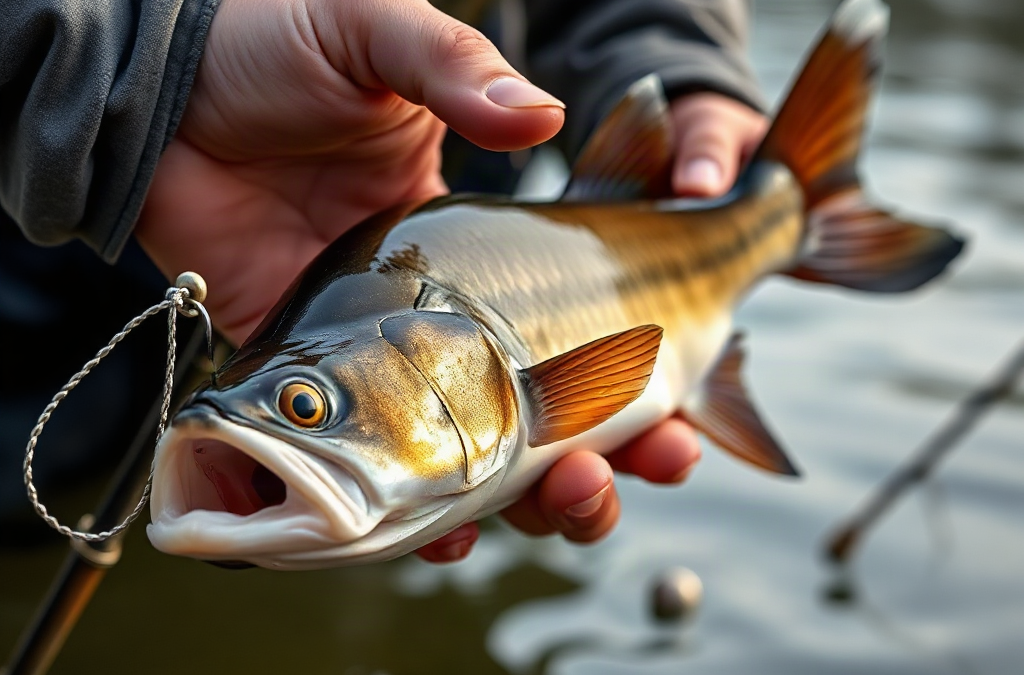
Set up a catfish rig by threading a sliding egg sinker onto the main line, adding a bead, tying on a strong swivel, and attaching a short leader with a circle hook sized to the bait and fish. The slip sinker lets a catfish pick up live or cut bait without immediately feeling the weight, while the swivel limits line twist and the leader keeps the hook near the bottom. Use heavier weight in current, lighter weight in calm water, and check that the hook point remains exposed. Avoid burying the hook in bulky bait, overtightening the drag, or placing the sinker below the hook when bottom contact is the goal.
Choose the Rig for Water and Catfish
The most useful starting point is not the hook; it is deciding how the bait should behave on the bottom. A channel catfish feeding in a quiet pond may take a small piece of cut bait on a light slip-sinker rig, while a blue catfish in a river may require a heavier sinker, a longer rod, and stronger terminal tackle. Flathead catfish often respond better to live bait, and their size and cover-oriented habits can justify a sturdier arrangement.

A basic sliding-sinker rig is a dependable choice because the sinker travels on the main line rather than being fixed directly to the hook. When a fish moves away with the bait, the line can slide through the weight. That reduced resistance may give the fish time to turn the bait, although no rig removes the need to monitor the rod and set the hook responsibly. The same concept is commonly called a Carolina-style or fish-finder rig.
Before tying anything, identify three conditions: current strength, bottom type, and likely fish size. Sand, gravel, and firm clay allow a standard egg sinker to settle cleanly. Soft mud can swallow a heavy weight and pull the bait down with it, whereas rocks may snag an elongated bank sinker less readily than a round weight. Current also changes the goal. You want enough weight to hold the bait near the target area, not so much that the presentation becomes immovable or difficult to cast.
Choose a fixed bottom rig instead when you need the bait held at a precise distance above the substrate or when a three-way arrangement is useful around flowing water. It can present bait well, but it adds more knots and potential snag points. For a beginner fishing a lake, reservoir, or moderate river edge, a sliding sinker is usually easier to inspect, retie, and troubleshoot. A useful companion resource is how to set up a fishing rig for catfish when comparing alternative terminal setups.
Assemble the Slip-Sinker Rig
A practical slip-sinker rig uses the main line, a sliding weight, an optional bead, a swivel, a leader, and a hook. The order matters because each piece has a specific job. The weight creates bottom contact, the bead cushions the knot from repeated impacts, the swivel joins different line sections, and the leader places the hook at a chosen distance from the sinker.
Thread the sinker onto the main line first, with the narrow opening facing the direction from which the line enters. Add a plastic or glass bead if the sinker repeatedly strikes the connection knot. Tie the main line to a strong barrel swivel using a reliable knot appropriate to your line. Then attach a leader to the other swivel eye and tie on the hook. Trim tag ends close enough to avoid catching debris, but leave a small margin rather than cutting directly into the knot.
A useful starting point for still water is a leader roughly 12 to 24 inches long. A shorter leader keeps the bait close to the weight and can reduce tangling during a cast. A longer leader allows more bait movement and may be useful when fish are suspended slightly above a silty bottom, but it also swings more freely and can wrap around the main line. If the bait keeps returning covered in mud, lengthen the leader or reduce the sinker size before assuming catfish are absent.
Inspect the finished rig by pulling steadily on the main line and leader separately. The swivel should rotate freely, the hook should remain exposed, and the weight should slide without catching on the knot or bead. A common mistake is tying the hook directly below a fixed weight because it seems simpler. That arrangement can pin the bait in place and transmit every movement of the sinker to the fish. Another mistake is using a swivel that is too small for the leader knot; the connection may look neat while the knot crowds the eye and weakens under pressure.
For a compact setup, use this sequence:
- Sliding egg, no-roll, or bank sinker on the main line.
- Optional bead between the weight and swivel.
- Strong swivel tied to the main line.
- Short leader matched to cover and bottom conditions.
- Circle or kahle-style hook with the point fully exposed.
Match Hooks, Leaders, Weights, and Bait
Hook size should follow the bait and the catfish you expect, not a fixed number copied from a tackle list. A small circle hook can suit a thumbnail-sized piece of shrimp or prepared bait, while a larger hook is more practical for a whole bluegill or a broad strip of cut shad where legal. The hook point must remain clear enough to catch the fish; threading bait over the entire bend and point commonly produces a heavy tug without a secure hookup.
Circle hooks are often chosen when anglers allow the fish to load the rod gradually, because the hook is designed to slide toward the corner of the mouth rather than being aggressively driven straight back. Follow local rules and responsible handling practices, especially where circle-hook requirements apply. If using a traditional J-hook, the timing and hookset style differ, so changing hooks without changing technique can create avoidable misses.
Leader material involves a tradeoff between abrasion resistance and subtle presentation. Monofilament is easy to tie, stretches under pressure, and can be forgiving when a fish surges near cover. Fluorocarbon may resist abrasion in some situations but is stiffer and can make a short bait rig behave less naturally. Heavy braided leader material offers strength and a thin diameter, yet it can be vulnerable to sharp rocks, mussels, or rough cover unless inspected frequently. Match the leader to the environment rather than choosing solely by breaking strength.
Weight selection should be tested on the actual spot. In calm water, use only enough weight to reach bottom and stay there during a modest breeze. In current, a flat or no-roll sinker may hold better than a round egg sinker. Excessive weight can bury bait in soft sediment, make the rig difficult to cast, and cause the rod tip to register false knocks as the sinker drags. Insufficient weight allows the bait to sweep away from the intended seam or hole.
Bait presentation changes the rig’s performance. Cut bait releases scent and is easy to anchor with a point exposed. Live bait needs enough leader length to move without immediately wrapping around the sinker or brush. Prepared dough or stink bait can require a treble-style holder or bait-holder hook, but soft bait may fly off during casting. If the hook returns bare, improve bait attachment; if it returns coated in silt, alter the weight, leader length, or bottom position. The related page how to set up a fishing rig for catfish can help you compare bait-specific adjustments.
Cast, Set, and Diagnose Rig Problems
Cast the rig beyond the area you want to fish, then lower the rod while maintaining enough tension to feel the sinker settle. Once the weight reaches bottom, reel in slack until the line is connected to the bait without pulling the sinker across the substrate. Set the rod in a stable holder with the drag adjusted so a strong fish can take line without immediately breaking the leader or pulling the rod into the water.
Catfish bites do not always look like a dramatic strike. A rod tip may pulse, load slowly, or move sideways as a fish carries the bait. Wind and current can create similar movement, so watch whether the line angle changes consistently. With a circle hook, resist a violent upward hookset; pick up the rod, reel until pressure builds, and allow the hook to rotate into position. A hard snap can pull the bait away or catch the fish in a poor location.
Small adjustments are more useful than replacing the entire rig after one missed bite. If the bait is repeatedly stolen, use a slightly tougher bait piece, shorten the leader, or check whether small fish are attacking it. If the rig tangles after every cast, shorten the leader, slow the cast, and ensure the bait is streamlined around the hook. If the sinker will not hold, increase weight gradually or switch to a shape designed for current rather than adding a very long leader.

Suppose a riverbank angler feels repeated taps, reels in, and finds a clean hook. The likely issue may be bait size or small bait thieves rather than a need for a larger sinker. By contrast, if the line repeatedly sweeps downstream and the bait ends up far from the target seam, the priority is bottom control. Reading the evidence from the retrieved rig prevents random tackle changes. The fishing advice at how to set up a fishing rig for catfish is most useful when applied alongside these observations.
Adapt the Setup to Real Fishing Conditions
The same rig should not be treated as a permanent formula. Lake fishing from a clean bank may call for a moderate sinker and a 12-inch leader, while a deep reservoir with wind-driven waves may require more weight and a sturdier connection. In a river, position the bait at the edge of a current seam, behind a break, or along a drop rather than assuming the deepest water always holds fish.
Cover changes the cost of every tackle choice. Heavy leader and a strong main line can turn a hooked fish away from submerged branches, but thick material may reduce bait movement and make knots bulky. Light tackle gives a more sensitive presentation and is enjoyable with smaller channel catfish, yet it leaves less margin around rocks, dock posts, and large fish. Select the lightest setup that still handles the known hazards.
Check the rig after contact with structure, after landing a fish, and whenever the line feels rough. Catfish themselves may not cut line like a toothy predator, but abrasion from rock, timber, shells, and concrete can weaken a leader. Replace damaged sections rather than trusting a visual inspection alone. Keep spare hooks, swivels, leaders, and several sinker sizes available; a quick retie is often more productive than fishing a compromised connection.
Local regulations may control hook types, baitfish use, permitted lines, or the number of rods. Verify current rules for the water you plan to fish, and handle catfish with wet hands or appropriate support to reduce damage to their protective coating and fins. A rig that catches fish but cannot be safely controlled around the bank is poorly matched to the situation. Prioritize reliable bottom contact, an exposed hook, sound knots, and manageable landing conditions before adding complexity.
For location-specific hook, bait, line, and harvest rules, consult the official fishing regulations published by the relevant state wildlife agency. Those rules can change by waterbody and season, so local documentation is more dependable than a general tackle recommendation.
Frequently Asked Questions
What is the simplest catfish rig for a beginner?
A sliding egg sinker above a swivel, a short monofilament leader, and an exposed hook is the simplest versatile option for calm water and moderate current.
How long should a catfish leader be?
Begin with about 12 to 24 inches. Shorten it when tangles or small bait thieves are a problem, and lengthen it when bait needs to sit above soft bottom.
What weight should be used for catfish?
Use the lightest weight that reaches bottom and stays near the target. Increase weight or change shape when current or wind moves the bait out of position.
Should catfish bait cover the hook?
Bait should stay secure, but the hook point and barb should remain exposed. Fully burying the point is a common cause of missed hookups.
Are circle hooks good for catfish?
Circle hooks can work well when the fish is allowed to load the rod gradually. Reel into steady pressure instead of making a sharp, forceful hookset, and follow local rules.
Further Reading
Authoritative Sources
- Academy of Nutrition and Dietetics
eatright.orgProfessional nutrition guidance, healthy eating resources, and practical dietitian-reviewed advice.
- U.S. Department of Agriculture
usda.govOfficial food, nutrition, agriculture, and consumer guidance from the USDA.
- NIH Office of Dietary Supplements
ods.od.nih.govResearch-based fact sheets on nutrients, supplements, dietary intake, and safety considerations.
- International Society of Sports Nutrition
sportsnutritionsociety.orgEvidence-informed sports nutrition resources and position stands for active people and athletes.
Conclusion
A reliable catfish rig is built around the way the bait must sit, move, and remain accessible on the bottom. Start with a sliding sinker, swivel, leader, and exposed hook, then adjust weight and leader length for current, mud, rocks, cover, and expected fish size. Treat retrieved bait and line movement as evidence: tangles call for a shorter or more streamlined presentation, drifting calls for better bottom control, and damaged leader calls for an immediate retie. Match the hook to the bait rather than forcing bulky bait onto a small point, and use a measured reel-down technique with circle hooks. Check local regulations before fishing, test the rig near shore, and make one deliberate change at a time so you know what actually improved the presentation.

