
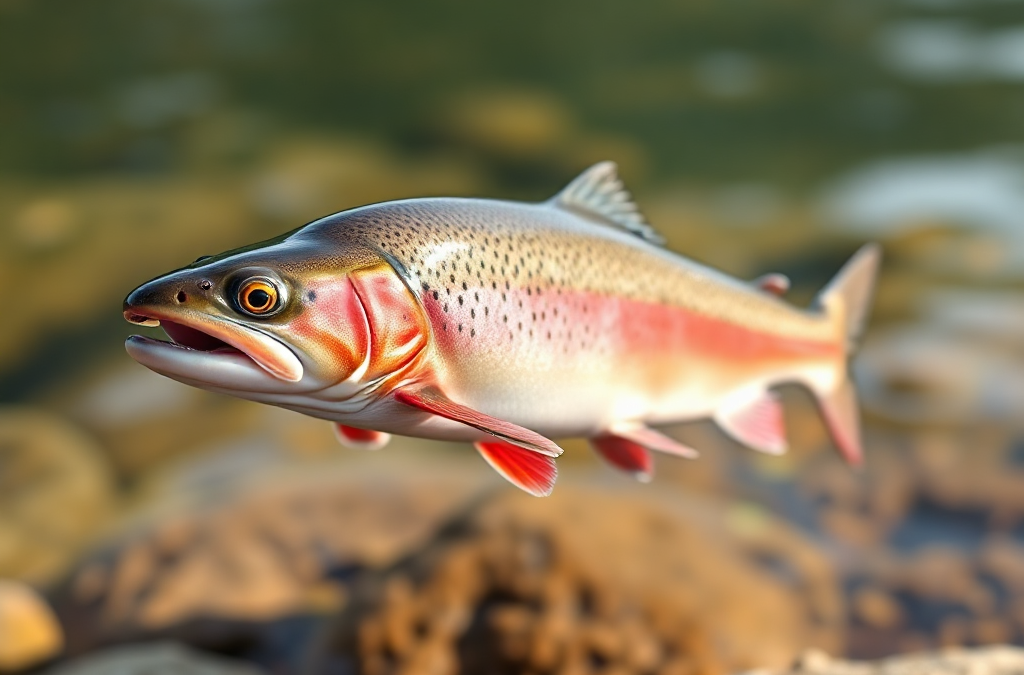
Identify the best baits for trout fishing by matching the bait to the trout’s available food, water temperature, clarity, depth, and fishing pressure. Begin by checking the shoreline and current for insects, worms, minnows, or other forage, then choose a natural bait or artificial imitation that resembles what trout can already find. Live worms may excel after rain, while insects or small minnows can be better when trout are actively feeding near the surface or cover. Adjust bait size and color as light and water clarity change, and avoid presenting too much scent or movement in heavily pressured water. Local regulations should determine which bait types are legal.
Read the Trout’s Food and Habitat First
The most reliable bait choice begins with what trout are already eating, not with a favorite product or a bright color. Trout commonly feed on aquatic insects, terrestrial insects, worms, small fish, crustaceans, and fish eggs. The available menu changes with stream flow, season, elevation, and the type of water being fished. A bait that works beside a spring creek may be poorly matched to a deep reservoir even when both hold the same trout species.

Spend a few minutes looking before making the first cast. Turn over a small rock at the edge, inspect submerged vegetation, watch the surface for rising trout, and notice whether minnows are holding near banks or current seams. After rain, earthworms and other washed-in food may become available along muddy margins. During an insect hatch, trout may ignore a bulky bottom bait while feeding selectively on small insects drifting just below the surface.
Habitat provides a second clue. Trout in fast riffles often have limited time to inspect food, so a compact bait that drifts naturally can outperform a large offering. Fish holding in a deep pool may respond better to a bait that reaches their level and remains in the strike zone. In a lake, trout may suspend over open water, follow a shoreline drop-off, or gather near a tributary. Those locations call for different bait depths and movement even when the forage is similar.
A common mistake is assuming that visible insect activity always identifies the best bait. Trout may be eating something else below the surface, especially when the water is cold or the light is low. Treat surface clues as evidence rather than proof. The practical sequence is to identify likely forage, choose a modest imitation, and change only one variable at a time. The related question of how to identify the best baits for trout fishing becomes easier when bait selection is tied to observed feeding behavior.
Match Bait Choice to Water and Weather
Water temperature, clarity, flow, light, and recent weather influence how trout find and evaluate bait. Cold water often slows trout and reduces the distance they will travel for food. A small, naturally scented bait presented close to the bottom may be more useful than a fast-moving offering. Warmer conditions can increase insect activity and trout movement, but excessive heat may push fish into deeper, cooler water where a surface-oriented bait loses value.
Water clarity changes the balance between scent, visibility, and subtle movement. In clear water, trout have more time to inspect bait, so natural size, restrained color, and a drag-free drift matter greatly. In stained water, scent and contrast may help trout locate the offering, although an oversized or unnatural bait can still look suspicious at close range. Darker silhouettes may be easier to see under cloudy skies, while muted tones often look more believable in bright, clear conditions.
Flow determines whether bait behaves like food. A worm or salmon egg that tumbles unnaturally through a strong current may trigger fewer bites than a smaller bait pinned near the bottom and carried at the same speed as debris. In slow water, excessive motion can be a liability. Trout may notice line movement, a rotating bait, or a hook that is exposed too aggressively. Adjust weight, leader length, and casting angle before concluding that the bait itself is wrong.
Weather-based assumptions can mislead anglers. Cloud cover does not automatically mean trout will attack a large bait, and sunny conditions do not make all natural bait ineffective. Compare the current conditions with the local food supply. A compact worm after a rising stream may be a sensible starting point; a small minnow imitation near a rocky lake shoreline may be better when baitfish are visible. Check local rules before using live bait, fish parts, or scented products, since regulations vary by water and season.
Compare Natural Baits With Artificial Options
Natural baits usually offer strong scent and familiar texture, while artificial baits provide cleaner handling, repeatable size, and greater control over shape and color. Nightcrawlers, redworms, mealworms, insects, and prepared dough baits can be productive where legal. They are particularly useful when trout are feeding close to the bottom or when scent helps fish locate food in mild discoloration. Their weakness is that they can become waterlogged, disintegrate, or attract unwanted species.
Artificial options include soft plastic worms, small spinners, spoons, plugs, trout beads, and fly patterns. These choices make sense when regulations prohibit bait, when repeated casting is necessary, or when anglers need to cover water efficiently. A spinner may search a pool more effectively than a stationary worm, but its flash and vibration can alarm trout in clear, pressured water. A small soft plastic may imitate a worm while staying on the hook longer, yet it may lack the scent that helps a cautious fish commit.
Use the fishing situation to decide between the two rather than treating one category as universally superior. A beginner fishing a permitted stocked pond may benefit from a simple natural bait and a controlled bottom presentation. An angler exploring a broad stream may save time with a small artificial lure that can be cast repeatedly to pockets and seams. In a heavily pressured creek, a subtle artificial fly or lightly presented natural bait may be preferable to a noisy lure that has passed many times.
Hooking method is part of the comparison. Natural bait can be effective but may be swallowed deeply if left unattended, creating a greater chance of injury during release. Keep the rod in hand, strike when appropriate for the setup, and follow local requirements for hooks and bait. Artificial lures are not automatically harmless; treble hooks and barbless regulations still require careful handling. The best bait is the one that is legal, can be presented naturally, and fits the intended harvest or release practice.
Refine the Presentation and Test the Choice
Bait selection only works when the offering reaches trout in a believable way. Begin with a presentation that matches the fish’s likely position: drift naturally through a current seam, suspend near a visible depth, or retrieve across a shoreline drop-off. Keep casts quiet and avoid repeatedly crossing the same water with an obviously dragging line. Trout often reject a good bait because it moves at the wrong speed or travels above their feeding lane.
Use a short testing plan instead of changing everything after one missed bite. Fish the first bait long enough to cover several likely holding areas, then change one element: bait type, size, depth, color, scent, or retrieve speed. If trout follow but do not strike, reduce the bait or slow the movement. If there is no sign of fish and the bait never reaches likely depth, adjust weight or rigging before switching offerings. Small changes reveal more than random substitutions.
Keep a simple record of conditions and results. Note water clarity, approximate temperature, cloud cover, stream level, time, depth, bait size, and whether bites occurred during a drift or retrieve. Patterns become useful after several trips. For example, a worm may produce during higher flows but fail in low, clear water, while a small artificial lure may work when trout are spread along active banks. Such observations are more dependable than claims that one bait is always the best.

A compact decision checklist can keep the process practical:
- Forage: What food is visible, recently washed in, or likely below the surface?
- Location: Are trout in riffles, pools, deep water, cover, or along a drop-off?
- Conditions: Is the water clear or stained, cold or warm, high or low?
- Presentation: Can the bait reach the feeding depth without unnatural drag?
- Feedback: Are trout following, bumping, rising, or showing no response?
The most common failure is abandoning a sound bait before correcting its delivery. A worm drifting several feet above bottom and a worm moving naturally beside structure are not equivalent tests. Likewise, a spinner retrieved too quickly through cold water does not fairly measure the lure’s potential. Prioritize depth and natural movement first, then fine-tune bait size and appearance. More detail on how to identify the best baits for trout fishing comes from treating each cast as a controlled observation rather than a guess.
For current bait restrictions, hook requirements, seasons, and species-specific rules, consult the official fishing regulations issued for the exact state, province, river, lake, or managed water you plan to fish. Local hatchery notices, fisheries agencies, and access-site postings may contain additional limits that general trout-fishing advice cannot replace.
Frequently Asked Questions
What is the best first bait for trout?
A legal worm or other locally available natural bait is a practical first test when trout are near the bottom. Adjust its depth and drift before changing bait.
How does water clarity affect trout bait selection?
Clear water generally favors smaller, more natural-looking baits and subtle movement. Stained water may justify added scent or contrast, but oversized offerings can still appear unnatural.
Are artificial lures better than live bait for trout?
Neither is always better. Natural bait offers scent and texture, while artificial lures cover water efficiently and may be required where bait is restricted.
Should trout bait be fished on the bottom?
Bottom presentations work when trout are holding low or feeding on drifting worms and eggs. Raise the bait when trout are suspended, rising, or feeding on insects near the surface.
How can anglers tell when a bait is failing?
No strikes, follows, or visible feeding response may indicate a poor match, but first check depth, drift, speed, and line drag. Change one factor at a time.
Further Reading
Authoritative Sources
- Academy of Nutrition and Dietetics
eatright.orgProfessional nutrition guidance, healthy eating resources, and practical dietitian-reviewed advice.
- U.S. Department of Agriculture
usda.govOfficial food, nutrition, agriculture, and consumer guidance from the USDA.
- NIH Office of Dietary Supplements
ods.od.nih.govResearch-based fact sheets on nutrients, supplements, dietary intake, and safety considerations.
- International Society of Sports Nutrition
sportsnutritionsociety.orgEvidence-informed sports nutrition resources and position stands for active people and athletes.
Conclusion
Choosing trout bait becomes more predictable when the decision follows the fish rather than a fixed list of favorites. Observe available forage, locate the likely feeding depth, and account for clarity, flow, temperature, light, and fishing pressure. Natural baits can provide scent and realism, while artificial choices offer durability, coverage, and regulatory flexibility. Neither option compensates for an unnatural drift or retrieve.
Before changing bait, check whether it is reaching the right zone and moving at the right speed. Then test a smaller or more subtle alternative and record the conditions that produced a response. Use only methods permitted on the specific water, especially when releasing trout. That combination of observation, controlled adjustments, and local rule awareness is the most dependable way to identify what works on your next outing.

