
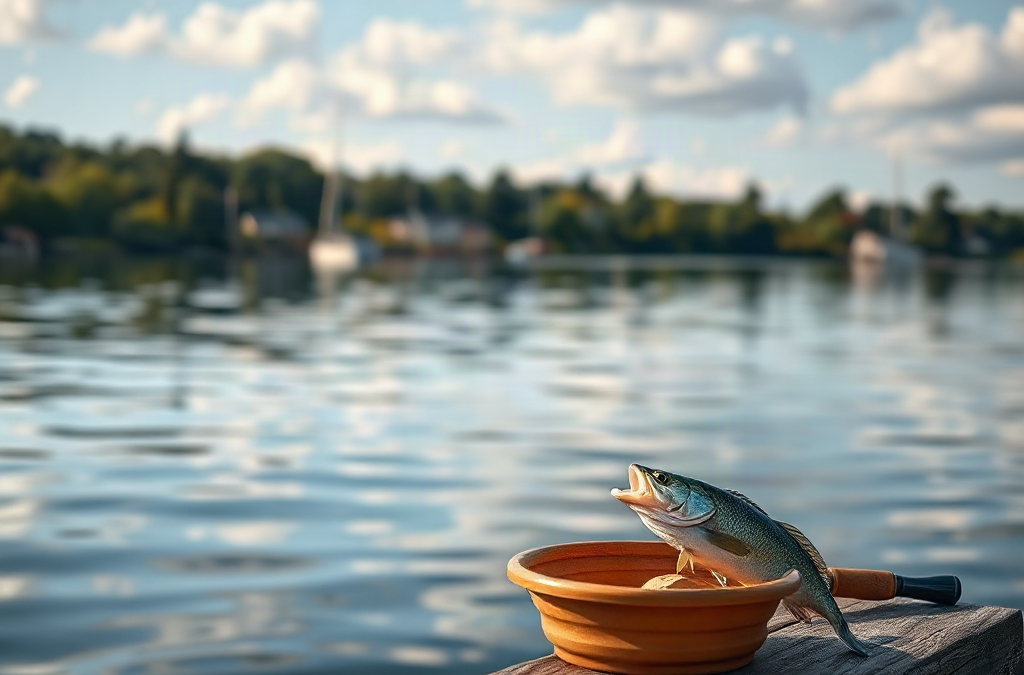
Fish successfully while on a budget by concentrating your spending on legal access, a dependable rod-and-reel setup, fresh line, and a small selection of bait or lures matched to one local species. Choose nearby public water, study access points before leaving, and fish high-percentage areas such as weed edges, drop-offs, docks, current seams, and shaded banks. Reuse terminal tackle when it remains sound, but replace weakened knots, rusty hooks, and damaged line rather than risking lost fish. A simple trip log will reveal which locations, depths, weather conditions, and presentations produce bites, allowing each later outing to cost less and become more productive.
Set a Fishing Budget That Protects the Essentials
A useful fishing budget begins with the costs that make an outing legal, safe, and functional. Check the license requirements and current rules published by the agency responsible for the water you intend to fish. License fees, species restrictions, seasons, size limits, and permitted methods vary by jurisdiction and sometimes by individual water. Money saved by ignoring those details is not a genuine saving.

Divide the remaining amount into three groups: durable equipment, consumable tackle, and trip expenses. Durable equipment includes a rod, reel, pliers, and a basic carrying bag or box. Line, hooks, sinkers, bait, and soft-plastic lures are consumables. Fuel, parking, launch fees, food, and ice belong to the trip category. This separation exposes a common budgeting error: buying inexpensive tackle repeatedly while overlooking how much each distant outing costs.
For a beginner targeting common freshwater species from shore, one medium or medium-light spinning combination is generally more economical than several specialized rods. It can handle live bait, small jigs, spoons, and many basic rigs. The limitation is that no single setup suits every situation; heavy cover, very small trout presentations, and large saltwater fish may require different equipment. Buy for the water you can visit regularly rather than for an occasional possibility.
Spend first on components whose failure ends the trip or loses fish. A smooth reel, sound line, sharp hooks, reliable knots, and suitable pliers matter more than a large lure collection. Used rods and reels can offer good value, but inspect rod guides for cracks, test the reel under light drag pressure, and check for excessive handle play. A chipped guide can damage new line, turning a bargain rod into an avoidable repair.
A practical priority order is:
- Legal access and safety: license, required flotation equipment, weather-appropriate clothing, water, and sun protection.
- Functional setup: one suitable rod and reel, fresh line, pliers, and a way to carry tackle.
- Species-specific tackle: a few correct hook sizes, weights, and proven presentations.
- Convenience purchases: extra boxes, specialty tools, duplicate lures, and upgrades.
Set a fixed replacement allowance instead of treating every lost lure as permission to shop. If repeated snags consume that allowance, change hook style, weight, casting angle, or location. Readers planning how to fish successfully while on a budget should treat tackle loss as information: it often signals that the presentation is too deep, the hook is too exposed, or the retrieve path crosses cover poorly.
Build a Small, Versatile Tackle Kit
A compact tackle kit works when every item serves a known local purpose. Begin by selecting one or two likely species and learning what they eat, where they hold, and which hook or lure sizes suit them. Buying assorted tackle without that context often produces a crowded box containing many items that are too large, too small, or poorly suited to the available water.
For general freshwater bank fishing, a restrained kit might contain a few hooks in appropriate sizes, split shot or several sinker weights, a small selection of swivels, two bobbers, a handful of jig heads, soft-plastic bodies, and one or two moving lures such as a spoon or spinner. Natural bait may be the least expensive way to confirm that fish are present, especially when presented at the correct depth. Artificial lures cost more initially but can catch multiple fish if they are not lost or damaged.
That tradeoff should shape the purchase. Worms, minnows, shrimp, or other legal local baits may produce bites with a simple rig, but they require storage and replenishment. Soft plastics and metal lures remain usable across trips, yet fishing them through rocks, timber, or dense vegetation increases losses. Where snagging is severe, use a lighter weight, a weedless hook arrangement, or a float that holds the bait above the obstruction. Never release unused live bait or transport aquatic organisms contrary to local rules.
Line deserves more attention than lure variety. Old, abraded, or badly coiled line causes break-offs and casting trouble. Match line strength and type to the cover and fish rather than automatically choosing the cheapest spool. Monofilament is economical and easy to handle for many basic applications. Braided line lasts well and transmits contact clearly, but it has a higher initial price and may require a leader. Fluorocarbon is useful in selected leader applications but is rarely necessary as an automatic upgrade for every budget setup.
Maintain inexpensive gear instead of replacing it prematurely. Rinse equipment after exposure to salt, sand, or dirty water; dry hooks before closing the box; loosen reel drag during storage; and remove line fragments from the shoreline. Sharpen or replace a dull hook, but discard one that is deeply rusted, bent, or cracked. Soft plastics can remain in their original packaging to prevent material reactions and scent leakage.
The sign of a good small kit is not that it handles every possible species. It should let you cover the surface, middle, and bottom of your chosen water with minimal duplication. If an item remains unused for several trips, remove it until a specific condition calls for it. That discipline keeps the box light, makes lure changes faster, and leaves more of the budget available for line, bait, access, and actual time on the water.
Cut Trip Costs Without Sacrificing Productive Water
Travel is often the largest recurring fishing expense, so productive nearby water usually beats a famous destination visited rarely. Search official agency maps, municipal park pages, and clearly marked public-access information for ponds, rivers, piers, reservoirs, and shoreline easements. Confirm opening hours, parking rules, fees, and access boundaries before driving. A promising bank shown on a satellite image may be private, fenced, seasonally closed, or impossible to reach safely.
Group scouting with other errands and favor locations that offer several fishable features within walking distance. A public park with a point, creek mouth, shaded bank, and weed edge gives you more options than an isolated stretch of uniform shoreline. Arriving near dawn or late afternoon may improve comfort and place you on the water during periods when some species move shallower, but timing is not universal. Water temperature, current, cloud cover, seasonal movement, and local feeding patterns can matter more than the clock.
A short reconnaissance visit can prevent repeated unproductive trips. Look for baitfish, insects, birds actively feeding, changes in water color, current seams, cover, and safe casting space. Note whether wind pushes floating material or food toward one bank. If the water is clear, observe depth changes and vegetation before making the first cast. Visible activity does not guarantee a catch, but it gives a stronger starting point than choosing a spot solely because it is convenient.
Pack food, drinking water, bait, and basic weather protection at home. Convenience-store stops quietly raise the cost of each outing, while forgotten pliers or sunscreen can shorten it. Carpooling can reduce fuel expense when fishing partners share the same schedule and access plan. For boat fishing, split fuel or launch costs clearly in advance; do not assume that owning a boat makes each trip inexpensive once maintenance, towing, and required safety equipment are considered.

Keep a simple record of location, date, fishing time, water conditions, depth, presentation, and bites. The purpose is not elaborate data collection. After several outings, the notes may show that a nearby pond produces during overcast evenings on a small jig, while a distant lake has cost more without adding opportunities. That evidence makes the next trip decision easier.
For a practical how to fish successfully while on a budget plan, calculate cost per usable fishing hour rather than cost per trip. A free location that requires a long drive and offers limited legal shoreline can be more expensive than a modest access fee close to home. The best-value water is accessible often enough for you to learn its fish movements instead of starting from zero on every outing.
Use Location and Presentation to Catch More With Less
Accurate placement and controlled presentation create more value than constantly changing lures. Fish commonly relate to edges: the boundary between shallow and deep water, vegetation and open water, fast and slow current, sunlight and shade, or hard and soft bottom. Cast along these features rather than sending every cast toward the middle. From shore, parallel casts can keep a bait in the productive zone longer than casts made straight outward.
Work a location systematically. Start near the bank before wading forward or making maximum-distance casts, because fish may be holding in surprisingly shallow cover. Make several casts at different angles, then alter depth or retrieve speed before changing the lure itself. With a jig, for example, try a steady swim, a slow lift-and-drop, and brief bottom pauses. If weeds collect on every cast, reduce depth or use a more weed-resistant rig instead of assuming the area contains no fish.
Bite detection and hook condition are inexpensive advantages. Watch the line where it enters the water, maintain enough contact to feel changes, and learn how the lure normally behaves. A sudden stop, sideways movement, or unexpected slack may indicate a fish. Check the hook point after striking rocks or timber, retie after abrasion, and adjust drag so line can leave the reel under strong pressure. Tightening the drag fully may feel decisive, but it increases break-off risk when a fish surges.
Recognize the difference between an approach that needs refinement and a location that should be abandoned. Signs of progress include baitfish activity, occasional taps, followers, fish seen near cover, or bites concentrated at a repeatable depth. Failure signs include repeated fouling, continuous snagging, no observable life, and no response after methodically covering several depths and speeds. Before moving, make one controlled change—such as a smaller profile, slower retrieve, or different depth—so you know what produced the result.
Cheap lures do not compensate for poor fit. A low-priced oversized lure may be ineffective where fish are feeding on small forage, while one carefully chosen jig can cover multiple depths. Conversely, buying an expensive lure does not make an inactive area productive. Match profile, action, and depth to what the water reveals, then keep the presentation in the strike zone.
Measure success by decisions as well as landed fish. Avoiding an unsafe bank, identifying a snag line, finding a depth change, or learning when a location becomes active improves future outings without another purchase. A trip log combined with the disciplined approach in how to fish successfully while on a budget converts those observations into repeatable choices rather than relying on luck or a larger tackle box.
Frequently Asked Questions
What fishing gear should a beginner buy first on a limited budget?
Buy one rod-and-reel combination suited to a common local species, fresh line, pliers, appropriate hooks, a few weights, and one or two simple bait or lure options. Add specialty equipment only after local conditions show a clear need.
Is live bait cheaper than using artificial lures?
Live bait may cost less at the outset and can simplify presentation, but it must be replaced and stored properly. Artificial lures can be reused, making them economical when fished where losses are unlikely.
Is used fishing equipment worth buying?
Used equipment can be worthwhile when the rod guides are undamaged and the reel turns smoothly, holds drag pressure, and has no serious corrosion. Budget for new line even when the reel comes already spooled.
How many lures are needed for a successful fishing trip?
A few presentations that cover different depths are usually more useful than dozens of similar lures. Select them for the target species, local forage, cover, and likelihood of snagging.
How can anglers lose fewer hooks and lures?
Use lighter weights around rocks, weedless rigs near vegetation or timber, and casts that run beside cover rather than directly through it. When contact changes or weeds accumulate, retrieve and reposition before the rig becomes firmly snagged.
Conclusion
Budget fishing becomes more productive when spending follows actual local conditions. Protect funds for legal access, safety, dependable line, sharp hooks, and the recurring cost of reaching the water. Build one compact kit around a nearby species, then learn to present those few options at different depths before adding equipment.
Choose accessible water with several fish-holding features, verify boundaries and regulations, and record enough detail to recognize productive locations and times. Inspect knots, line, hooks, and drag before blaming the lure when fish are lost. For the next outing, take only the tackle needed to cover the surface, middle, and bottom, fish each promising edge methodically, and note what happened. Those observations will guide future purchases more reliably than advertising, impulse buys, or an overflowing tackle box.

