
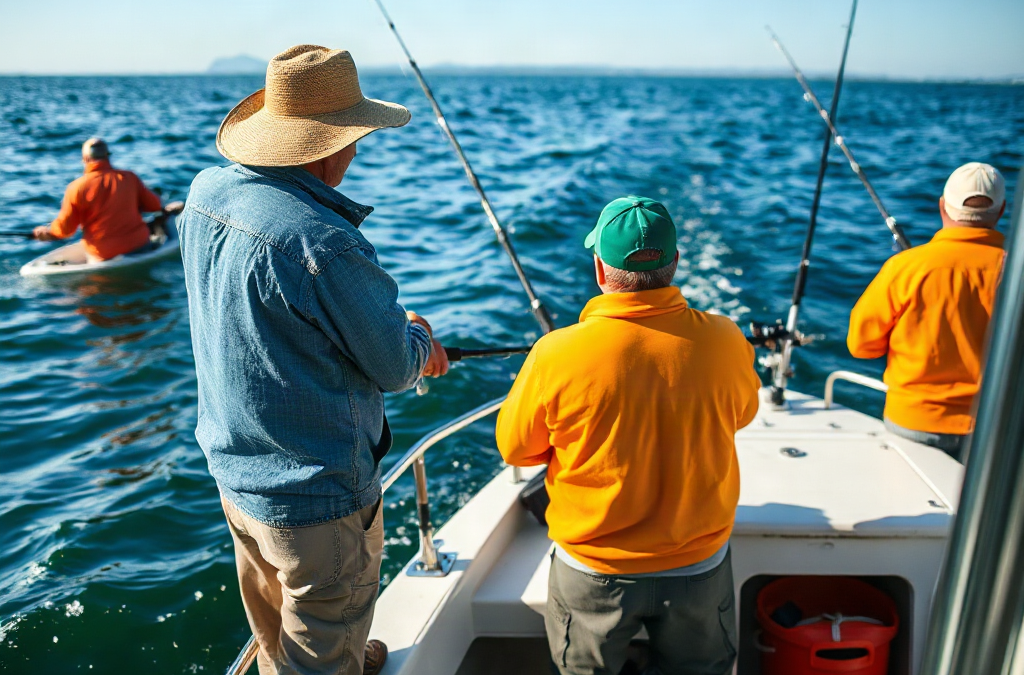
Choose Water Outside the Main Vessel Route
The safest productive water is usually adjacent to boat movement rather than directly within it. Navigation channels, marina entrances, launch ramps, bridge openings, and narrow cuts concentrate vessels into predictable paths. Casting across those paths leaves line where a propeller can catch it and gives the angler little time to react. A better position offers access to fish-holding cover while keeping the entire cast and retrieve outside the route boats are most likely to follow.
Start by watching traffic before making a cast. Note where boats turn, accelerate, come off plane, or line up to pass through a constriction. Channel markers reveal formal navigation routes, but local movement may create additional lanes between docks or around shallow points. From shore, stand back from exposed corners where passing wakes can wash over slick rocks. From a boat or kayak, remain visible and avoid stopping in a blind bend, even if sonar shows fish there.
Protected edges often provide better casting control. The inside of a marina breakwater, the back side of a point, a recessed dock pocket, or a bank set behind the channel edge may receive less wake energy while remaining close to deeper water. Fish can move between the quiet edge and the disturbed corridor without holding in the strongest turbulence. When fishing docks, cast parallel to the structure instead of throwing toward the open lane. That keeps the lure near shade and pilings longer while reducing exposure to passing vessels.
Distance alone does not guarantee safety. A long cast from a sheltered bank can still cross a channel, and an anchored boat outside the marked lane may obstruct vessels that need extra room to turn. Keep a retrieval path available and never assume an operator has seen your line, kayak, or low-profile craft. The practical rule is simple: if an approaching vessel would force an urgent retrieve on most casts, the fishing position is poorly chosen.
A useful location check includes four questions:
- Can the full cast remain outside the normal vessel path?
- Is there a protected edge connected to depth, shade, or cover?
- Can you see approaching boats early enough to react calmly?
- Can you leave the position without crossing active traffic?
These priorities apply whether you are refining how to fish in areas with a lot of boat traffic from shore, a kayak, or a powered fishing boat.
Use Boat Traffic to Predict Fish Position
Boat disturbance changes where fish can feed comfortably, but it does not make every fish leave the area. Repeated wakes push water against seawalls, stir shallow sediment, displace small forage, and alter light penetration. Engine noise and hull pressure may cause fish to slide away from an exposed flat, tuck more tightly against cover, or drop along the nearest depth change. The useful question is not whether traffic affects fish; it is where the fish can relocate without abandoning food and shelter.
Hard structure becomes especially relevant in developed waterways. Dock pilings, riprap, bridge supports, retaining walls, and moored boats create shade, current breaks, and vertical edges. After a series of wakes crosses a shallow bank, fish may settle on the deeper face of that structure rather than remain on top of the flat. A lure worked down a piling or along the first drop can then be more effective than one cast broadly through visibly churned water.

Traffic can occasionally create a short feeding opportunity. A wake striking riprap may wash insects, crustaceans, or small baitfish away from the rocks. Prop wash near a lawful, safely accessible area may briefly disturb forage, although anglers should never approach an operating vessel or fish within a hazardous maneuvering zone to exploit it. Watch for bait scattering, birds reacting, or quick surface strikes along the edge after a boat passes. Those signs matter more than the wake itself.
Water clarity should guide the next move. If boat wakes produce only brief surface turbulence over otherwise clear water, fish may resume feeding once the surface settles. If repeated wakes turn a shallow cove opaque, shift toward a deeper edge, cleaner inflow, or firmer bottom where suspended sediment is less severe. Muddy water over soft bottom can persist, whereas rock and coarse gravel often settle faster.
A common mistake is treating all passing boats as either beneficial or disastrous. Occasional traffic and nonstop traffic create different conditions. A single wake may activate an edge; continuous wake action may prevent fish from returning to the same exposed spot. Test the protected side of nearby structure, then the first deeper break. If neither produces bites or visible activity while turbulence keeps building, changing locations is usually more productive than repeatedly casting at yesterday’s position.
Adjust Timing, Lures, and Presentations
Timing often provides a larger advantage than changing tackle. Recreational traffic commonly rises after launch ramps become busy and declines before or around low-light periods, although the pattern varies by waterway, season, weather, and local activity. Arriving early can provide a quiet window in which fish roam shallow edges before wakes intensify. Weekdays may offer more stable conditions than busy weekends, but anglers should observe the specific location rather than rely on a universal schedule.
When traffic begins, make one deliberate adjustment at a time. If fish were feeding shallow but wakes cloud the bank, move the lure down the first break before abandoning the area. If visibility declines, use a presentation fish can locate through vibration, water displacement, silhouette, or close-range movement. A compact spinnerbait, vibrating jig, crankbait, paddletail, or dark soft plastic can be easier to track in stained water than a subtle, translucent offering. Species, water temperature, cover, and local rules still determine which choice is appropriate.
Quieter presentations retain value around protected docks and pockets. A lightly weighted soft plastic, jig, or bait presented close to a piling can remain in a small strike zone without racing through it. The tradeoff is control: very light tackle may be difficult to manage when cross-wakes bow the line. Slightly more weight can maintain bottom contact and shorten the time a slack line drifts toward a navigation route. Adding excessive weight, however, may cause the lure to snag or fall unnaturally.
Retrieve speed should match what the water is doing. During active wake action, a moving lure can cover relocated fish along seawalls and drop-offs. During the calm interval after several boats pass, slowing down near shade or vertical cover may reach fish that have stopped chasing. Pay attention to where bites occur relative to each traffic cycle. A repeatable bite on the protected face of a piling after the water settles is more valuable evidence than one random strike in open water.
Use a three-step adjustment sequence: change depth first, improve lure detectability second, and change location third. Anglers often reverse that order and spend the day moving without testing the nearest refuge. Those studying how to fish in areas with a lot of boat traffic should also record the time when traffic rises, the direction wakes enter, and the depth where bites resume. That local pattern can be more dependable than a fixed lure recommendation.

Control Your Casts Around Wakes and Moving Boats
Line management is the central operational skill in busy water. Monofilament, fluorocarbon, and braided line can be difficult for boat operators to see, particularly in glare or choppy conditions. Never cast toward an approaching vessel, across a channel, or behind a boat where the propeller may pass through the line. Reel in early rather than waiting until the operator’s course becomes obvious.
Shorter, accurate casts are usually preferable to maximum distance. They reduce the time needed to clear the water and make it easier to keep the lure close to a dock edge, seawall, or break. A sidearm cast can stay beneath some dock overhangs, but it should only be used when people, mooring lines, boats, and property are clear. Overhead casting may provide better hook visibility behind the angler. The safest casting style is the one that keeps both the backcast and landing zone controlled.
Passing wakes demand balance before lure presentation. Shore anglers should avoid algae-covered ramps, loose riprap, and ledges where a surge can remove footing. Kayak anglers should face larger wakes at a safe angle appropriate for their craft rather than allowing a steep wave to strike broadside. Loose tackle, rods, and landing tools should be secured. Powered-boat anglers need enough separation from docks and hard banks to avoid being pushed into them while focused on a cast.
Hook handling deserves extra caution when the platform is moving. Do not attempt a difficult unhooking job while drifting toward traffic or being rocked beside a seawall. Stabilize the craft or move to protected water first. Wearing a properly fitted life jacket is especially prudent in congested areas, and required safety equipment and navigation rules should be checked for the jurisdiction and vessel type. Local speed restrictions do not remove the angler’s duty to remain alert.
The warning sign of poor control is repeated emergency action: snapping off lures to avoid boats, stumbling when wakes arrive, drifting into docks, or shouting at operators who may not see the line. Those are not unavoidable features of urban fishing. They indicate that the casting angle, boat position, or location needs to change. Yielding a cast costs seconds; forcing the situation can cost tackle, damage equipment, or injure someone.
Recognize When the Area Is No Longer Worth Fishing
A busy location stops being worthwhile when disturbance removes both fishing control and a credible fish-holding zone. Constant wakes that muddy the entire accessible depth range, vessels passing too close for complete retrieves, or repeated displacement from a safe position all justify leaving. Catch potential does not outweigh a setting where every cast conflicts with normal navigation.
Separate temporary disruption from a deteriorating pattern. If three boats pass and the water settles within a few minutes, waiting or probing a deeper edge may be reasonable. If a steady stream of vessels keeps the shoreline surging and sediment suspended, the productive window may not return until later. Likewise, fish seen holding beneath docks do not make the spot usable if casting requires crossing occupied slips or risking contact with mooring lines.
Prepare an alternate location before the busiest period. A secondary cove, upstream no-wake reach, protected canal edge, wind-sheltered bank, or deeper point can preserve fishing time. The alternative should be evaluated for legal access, safe parking or launching, and its own vessel pattern rather than chosen only because it looks quiet on a map. Moving a short distance behind a breakwater can change wake exposure dramatically while keeping similar depth and forage nearby.
Signs that staying may still pay include settling water, bait returning to the edge, renewed surface activity, and bites repeating at a predictable depth after each disturbance. Signs of failure include worsening visibility, floating debris fouling every retrieve, no safe casting lane, and fish activity disappearing from both shallow cover and adjacent depth. Set a reasonable observation period based on how quickly conditions change, then act on those signals instead of remaining because the location produced earlier.
The most costly misconception is that persistence always beats relocation. Persistence is useful when an angler is refining depth, angle, or presentation under manageable conditions. It becomes wasted effort when the physical environment prevents accurate casts and safe retrieves. A planned move is not surrendering the spot; it is matching the fishing method to the traffic cycle. Return during a quieter period with notes about wake direction, water recovery time, and the last productive piece of cover.
Frequently Asked Questions
Do boats always scare fish away?
No. Some fish move deeper or tighter to cover, while others resume feeding after the disturbance passes. Continuous traffic is more likely than an isolated boat to keep fish away from exposed shallows.
What lure works best when boat wakes muddy the water?
Choose a lure that produces vibration, displacement, or a clear silhouette, such as a paddletail, crankbait, spinnerbait, vibrating jig, or dark soft plastic. Match the lure to the target species, cover, and local rules.
Should I cast into a boat channel after a vessel passes?
Avoid casting across active navigation routes even when they appear temporarily clear. Target the channel edge, nearby depth break, or protected side of structure instead.
Is fishing better before boat traffic starts?
Often, because quieter conditions provide better casting control and may allow fish to use shallow edges. Confirm the local pattern by tracking launch activity, wake intensity, and bite timing across several trips.
When should I leave a high-traffic fishing spot?
Move when you cannot keep casts outside vessel routes, wakes compromise footing or boat control, or suspended sediment and repeated disturbance remove the accessible feeding zone.
Conclusion
Productive fishing near heavy vessel activity comes from reading the traffic pattern as carefully as the water. Begin with a position that keeps every cast outside normal navigation, then identify the protected cover or depth change fish can use when wakes disturb exposed banks. Adjust depth before replacing every lure, and favor manageable casts that can be retrieved well before a boat arrives. Track whether water clears, bait returns, and bites repeat during calm intervals; those observations reveal whether waiting is justified. If traffic prevents safe line control or keeps the full area churned, move to a prepared alternative and return during a quieter window. No potential catch is worth crossing a vessel route, losing footing to a wake, or allowing line to reach a propeller.

