
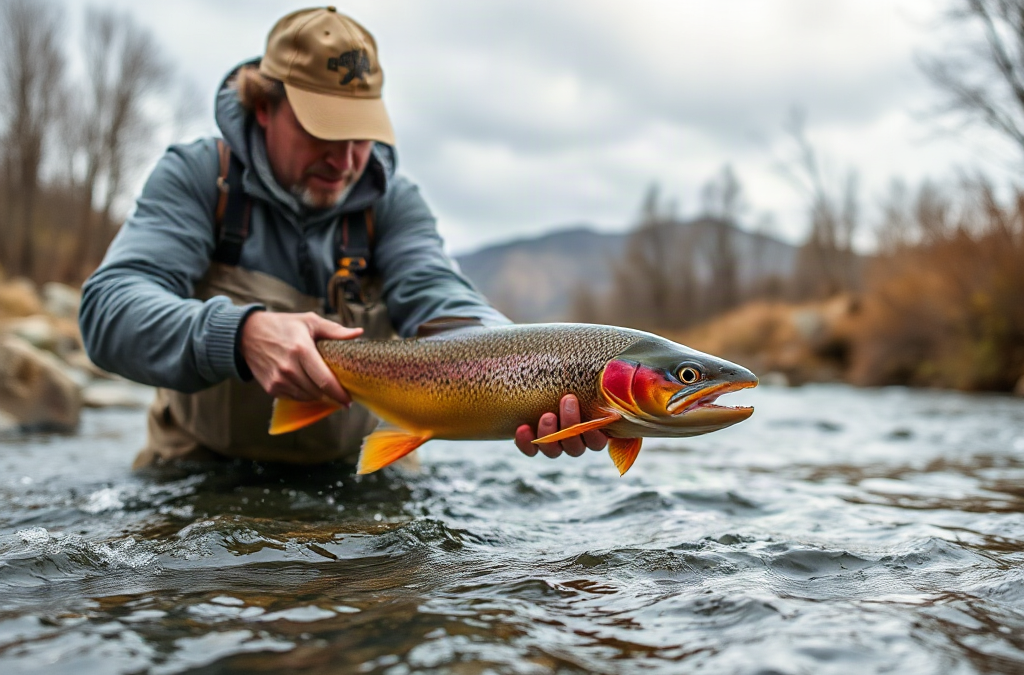
Adjust your fishing technique for different currents by changing your drift angle, sink rate, presentation speed, and position relative to seams, eddies, and current breaks. In fast water, use heavier terminal tackle or a more compact lure, cast upstream, and maintain enough line control to keep the bait near the strike zone without dragging it unnaturally. Moderate current often rewards a controlled swing or drift through the seam, while slow water calls for lighter presentations and quieter movements. Watch how the line enters the water, how quickly the lure reaches depth, and whether it passes naturally beside structure; those signals show whether to alter weight, retrieve speed, or casting position.
Read Current Speed, Direction, and Structure
Current should be treated as moving water with different lanes rather than as one uniform force. The surface may appear fast while deeper water moves more slowly, and a submerged rock can create a quiet pocket immediately beside a strong chute. Those differences determine where a lure travels, how much pressure reaches the line, and whether a fish can hold its position without spending too much energy.

Begin by identifying the main flow, the slower inside edge, and any visible seam where two speeds meet. Foam lines, drifting leaves, surface ripples, and suspended debris reveal direction, but they do not always show the speed near the bottom. A deeper seam may be the productive area even when the surface looks calm. Fish commonly use these transitions because they can face into moving water while remaining close to slower water where holding is easier.
In a fast riffle, concentrate on the downstream side of rocks, the head of a pool, and the softer edge beside the strongest push. A lure presented in the center of the chute may pass too quickly or require excessive weight. By contrast, a slow eddy may allow a lighter bait to remain in the zone, but a fast retrieve can make it look unnatural. The mistake is assuming that stronger current simply requires casting harder and adding more sinker weight. Extra weight can bury the presentation, snag bottom, and prevent you from recognizing a subtle take.
Use a few test casts to learn the water before committing to a pattern. Note how long the lure takes to reach the intended depth, whether it rolls or spins, and whether the line forms a large belly. If the lure never reaches fish-holding depth, adjust weight or angle. If it repeatedly wedges into rocks, reduce weight, lift the rod slightly, or target the seam rather than the deepest slot.
When applying how to adjust your fishing technique for different currents, structure deserves priority over current speed alone. A moderate flow beside a log, bridge piling, weed edge, or drop-off can be more valuable than a faster but featureless stretch. Current supplies food, while structure gives fish a place to intercept it with less effort.
Match Casting Angles and Line Control to Flow
Casting angle controls how long a lure remains in the strike zone and how much unwanted drag reaches the presentation. An upstream cast gives the lure time to sink before the current carries it toward you, while a cross-current cast can sweep it through a seam. A downstream cast may work for selected topwater or swinging presentations, but it often makes a lure move too quickly and gives the current control of the line.
For bottom-oriented presentations in moving water, start with an upstream or slightly upstream-quartering cast. Keep the rod tip high enough to reduce line contact with the surface, then remove slack as the lure drifts toward the target. The goal is not to hold the lure motionless; it is to let it move at a controlled rate while preserving enough contact to detect a bite. Excess slack makes the bait appear out of control and delays the hookset.
A cross-current cast is useful when you want to cover a seam from its fast side into its slower side. Cast beyond the visible transition, allow the lure to enter the chosen depth, and follow it with the rod rather than pulling it steadily across the seam. If the line cuts sharply downstream while the lure skips across the surface, the current is overpowering the presentation. A more upstream angle or a thinner line may reduce that effect.
Downstream presentations have a narrower margin for error. They can imitate prey being swept away, particularly with a floating lure or a controlled swing, but speed must be managed. Pointing the rod directly downstream often gives the current too much leverage. A side angle, intermittent pause, or slight mend can slow the lure and keep it near cover. The tradeoff is reduced direct contact, so strikes may feel softer.
Watch the line before changing lures. A large bow usually indicates that the line, not the lure, is being pushed by the current. Mend the line, reposition, or change the casting angle first. Changing to a heavier lure without correcting line control may increase bottom contact while leaving the bite difficult to detect.
Choose Weight, Lure Action, and Retrieve Speed
Terminal weight should be sufficient to reach the target depth without locking the lure to the bottom. In strong current, a compact jig, weighted soft plastic, spoon, or sinker rig generally resists displacement better than a large, highly buoyant presentation. In slow water, lighter tackle often produces a quieter entry and a more natural fall. The best choice depends on depth, current speed, wind, and the amount of line in the water.
Use the lightest weight that maintains occasional contact with the lower zone when bottom contact is the objective. Occasional taps tell you where the lure is; continuous scraping means the rig is too heavy or the angle is wrong. In a rocky run, a slightly lighter rig may catch fewer rocks and drift over holding water more cleanly. In a deep tidal channel, that same rig may never reach the fish before being swept away.
Retrieve speed should reflect how much water the lure is covering. Strong flow already creates movement, so a fast reel turn can make a spinner, crankbait, or soft plastic race past fish. Try slower turns with brief pauses near eddies and structure. In slack water, a lure may need more deliberate action, a longer pause, or a subtle rod-tip movement to appear alive.
Consider lure stability as well as weight. A spoon that tumbles in turbulent water may lose its intended flash, while a compact jig can track predictably. A floating minnow plug may be effective along a current seam because it can suspend near the edge, whereas a sinking version may dive below the fish. Changing buoyancy can be more useful than simply adding weight.
A common failure is judging success by how hard the lure pulls rather than by where it travels. Heavy resistance may mean the lure is being swept sideways or pressed into bottom. Productive movement is usually easier to describe: the lure reaches the intended depth, passes a target at a manageable speed, and remains controllable enough for a clean hookset. Test those three conditions before increasing retrieve speed.
Adjust Positioning for Rivers, Tides, and Changing Flow
Your position changes the amount of current acting on the lure and line. Standing too close to the fastest water can make even a suitable rig difficult to control, while moving to the slower bank may improve the presentation without changing tackle. Whenever possible, work from a position that lets the cast cross the target at an angle rather than forcing the lure directly against the strongest flow.
In a river, move through the water only when it is safe and necessary. A low inside bend, shallow margin, or downstream bank may provide a better casting lane than the deep center. Fish the near seam before wading farther, because reaching the opposite bank can disturb the very water you intend to cover. A cautious angler can often improve the presentation more by changing feet position than by changing rigs.
Tidal currents require attention to timing and direction. An incoming flow may push bait toward flats, creek mouths, or shoreline cover, while an outgoing flow can concentrate movement around drains and channels. The same point may fish differently when the current reverses. Cast so the lure intersects the direction prey would plausibly travel, and allow for changes in depth as the tide exposes or covers structure.

Changing water levels can make yesterday’s successful angle ineffective. Rain may increase velocity and stain the water, dam releases can alter depth quickly, and wind can push surface water against the underlying flow. Recheck the line angle and lure depth after any noticeable change. A presentation that was ideal in a gentle run may need a shorter cast, heavier contact, or a move to the edge when the flow rises.
Do not assume the strongest current always holds the most active fish. Strong water may deliver food, but fish still need an efficient holding position. Look for the boundary between force and shelter: behind a boulder, beside a piling, below a ledge, or along a back-eddy. That boundary often offers a better target than the center of the current.
Use a Practical Current-Fishing Checklist
A repeatable sequence prevents random tackle changes. Before the first serious cast, identify the direction of flow, estimate where the bottom or suspended target depth lies, and select a casting angle that gives the lure time to reach it. Then make a short exploratory cast and observe the line, lure, and bottom contact. These observations provide more useful information than immediately switching between several lures.
Use this compact decision process:
- The lure stays high: cast farther upstream, reduce line belly, or add a small amount of weight.
- The lure drags or snags repeatedly: lighten the rig, raise the rod, shorten the drift, or move to the seam edge.
- The lure crosses too quickly: cast more upstream, slow the retrieve, or choose a lure with more stability.
- Bites feel delayed or line goes slack: mend earlier, keep a controlled amount of tension, and avoid excessive downstream belly.
- No activity appears in the fast lane: test the adjacent eddy, structure shadow, and slower bank.
Judge a change by the result it produces, not by the tackle itself. A useful adjustment should improve depth control, speed, contact, or access to a likely holding position. If a heavier rig reaches bottom but becomes impossible to move cleanly, it solved one problem while creating another. Make one change at a time so you know whether the improvement came from weight, angle, retrieve, or location.
Beginners often focus on casting distance, but current fishing rewards position and control. An accurate short cast into a seam can outperform a long cast that leaves forty feet of line exposed to moving water. Experienced anglers may use advanced line mends, specialized rigs, or deliberate swings, yet the same basic test applies: the lure must pass the fish at a believable speed and depth.
Record what worked after the trip, including water height, current direction, lure weight, casting angle, and holding structure. Such notes are more valuable than a general memory that the water was “fast.” On a later outing, they help you begin near a proven depth and presentation while still allowing for changed flow.
For river and tidal safety, consult local fish-and-wildlife agencies, navigation authorities, and current-specific boating or wading guidance before entering moving water. Regulations, access conditions, and hazards vary by location, so official local information should take priority over generalized technique advice.
Frequently Asked Questions
Should I always use heavier tackle in fast current?
No. Use enough weight to reach the intended depth, then reduce it if the rig drags, snags, or loses natural movement.
What casting angle works best in a river?
An upstream or slightly upstream-quartering cast is a reliable starting point because it gives the lure time to sink and limits downstream line belly.
Where should I fish beside a strong current?
Target seams, eddies, the downstream side of rocks, structure shadows, and slower edges where fish can intercept food without holding in the fastest water.
How can I tell whether my lure is moving too fast?
If it skips across the surface, swings far outside the seam, or passes cover before reaching depth, slow the retrieve or change the casting angle.
Do tidal currents require different lure control?
Yes. Account for reversing flow, changing water depth, and bait movement around drains, points, flats, and channels; reassess the presentation when the tide changes direction.
Further Reading
Authoritative Sources
- Academy of Nutrition and Dietetics
eatright.orgProfessional nutrition guidance, healthy eating resources, and practical dietitian-reviewed advice.
- U.S. Department of Agriculture
usda.govOfficial food, nutrition, agriculture, and consumer guidance from the USDA.
- NIH Office of Dietary Supplements
ods.od.nih.govResearch-based fact sheets on nutrients, supplements, dietary intake, and safety considerations.
- International Society of Sports Nutrition
sportsnutritionsociety.orgEvidence-informed sports nutrition resources and position stands for active people and athletes.
Conclusion
Effective current fishing comes from controlling the lure’s path rather than reacting to speed with heavier equipment alone. Read the water for seams, eddies, structure shadows, and depth changes, then choose a casting angle that gives the presentation time to reach the fish. Adjust weight only as far as needed, manage line belly with rod position and mends, and slow the retrieve when the current already supplies strong movement. If the lure drags, races through the target, or becomes difficult to feel, change one variable and test again. Prioritize the edge between fast and sheltered water, where fish can feed efficiently. A few deliberate observations on each cast will reveal whether location, angle, depth, or speed needs correction.

