
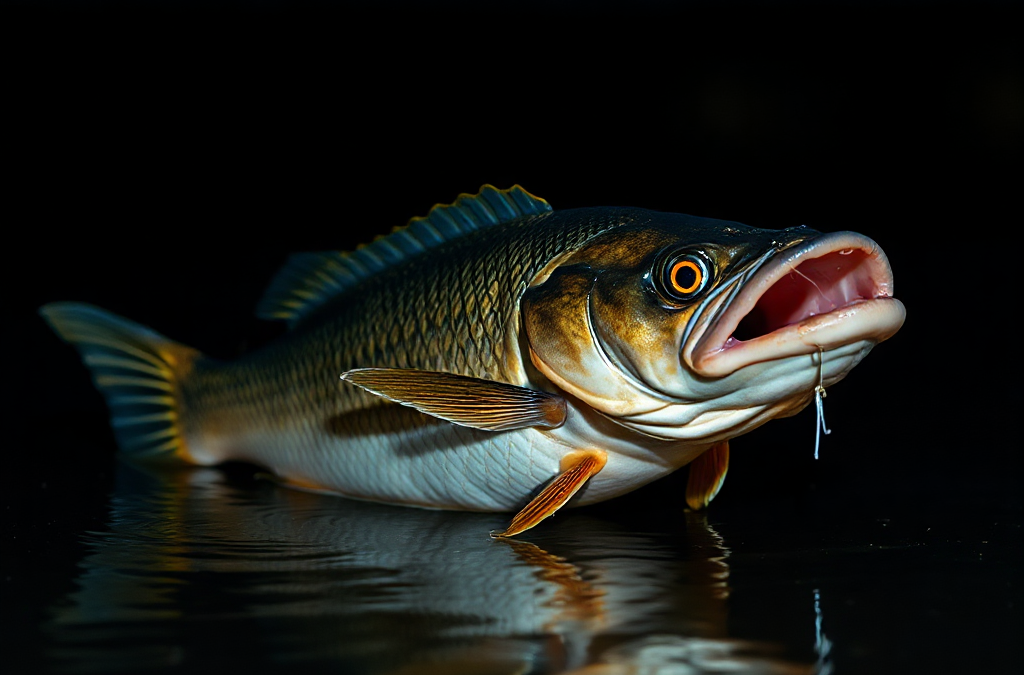
Common errors when fishing for catfish at night include choosing unproductive water, using poorly presented bait, creating too much disturbance, and failing to monitor tackle and safety conditions. Catfish may move shallow after dark, but they still respond to depth, current, cover, water temperature, and available food rather than darkness alone. Productive night anglers identify likely feeding routes, keep bait securely near the bottom, use enough weight to hold position without burying the hook, and check rods methodically instead of reacting to every tap. A quiet setup, visible bite indicators, reliable lighting, and a planned landing area reduce missed runs and prevent avoidable hazards along the bank.
Choosing Night Water Without Reading Conditions
The first major mistake is assuming darkness makes every shoreline or hole equally productive. Catfish still use depth changes, submerged cover, current seams, channel edges, and areas where food collects. Night may increase their willingness to move, but it does not erase the structure of the lake or river. A shallow flat beside a deeper drop can be excellent when baitfish or forage are active there; an empty mud bank several hundred yards away may produce very little despite being easy to reach.

Anglers often move directly to a familiar daytime location and fish it unchanged after sunset. That approach ignores how water conditions alter movement. In a river, a moderate current may push natural food against a seam, while excessive flow can make a small bait difficult for a catfish to locate and difficult for the angler to keep in place. In a lake, a windblown bank may collect food and oxygenate the surface layer, but a sudden cold front can shift fish toward a more stable depth.
Use the last daylight to study the area rather than waiting until visibility disappears. Look for a creek channel entering a reservoir, a point that drops into deeper water, a bend with slower current, or a firm bottom near cover. Mark the intended casting line and landing area before dark. A cast that crosses a productive edge is usually more useful than the longest cast available.
A simple location check can prioritize:
- Depth changes close to accessible shoreline;
- Current breaks, eddies, and seams in moving water;
- Cover that can hold forage without trapping the rig;
- Bottom conditions that allow the sinker and bait to remain detectable.
One common misconception is that catfish always move into very shallow water at night. Some do, particularly where forage is concentrated, but others remain on a nearby channel edge or suspended transition. If a shallow cast produces no signs while a deeper rod shows activity, reposition one rod rather than abandoning the entire area. The goal is to compare depths and routes systematically, not to treat one unproductive cast as proof that the fish are absent.
For more location context, review common errors when fishing for catfish at night alongside notes about water level, current, recent weather, and bottom type. Those observations explain a slow night more reliably than darkness alone.
Bait, Hook, And Rigging Errors
Night fishing exposes bait and rigging weaknesses because the angler cannot constantly watch the hook, line, and bottom. A bait that tears off during the cast, masks the hook point, or drifts away from the target area can create hours of false confidence. Strong scent may attract attention, but scent does not compensate for poor placement or a hook that cannot penetrate.
Match bait size to the catfish present and the conditions. A large cut-bait portion can be appropriate for bigger blue or flathead catfish, yet it may reduce hook exposure and make smaller fish nibble without committing. A smaller, compact piece can be easier to cast and more suitable when channel catfish are feeding actively. Live bait for flatheads also requires a rig that allows natural movement while keeping the hook positioned legally and securely; local rules should be checked before using any bait or hook arrangement.
Hook choice should follow bait thickness and fish size rather than personal habit. The hook point needs clear access to flesh when a fish takes the bait. Threading a bulky bait completely over the bend may keep it attached, but it can also leave too little point exposed. Conversely, an oversized hook in a small bait can look unnatural and reduce the usable presentation.
Rigging errors commonly involve too much weight, too little weight, or a leader that is poorly suited to the bottom. A sinker that cannot hold in current drifts the bait into snags; one that is excessively heavy may wedge into rocks and make a take feel unnatural. A sliding setup can let a catfish move off with less immediate resistance, while a fixed arrangement may be useful when holding bait precisely near a channel edge. Neither is universally correct.
Before the first cast, perform a short inspection:
- Pull the bait firmly to confirm it will survive the cast;
- Check that the hook point is exposed and sharp;
- Confirm the leader is not abraded or wrapped around the main line;
- Test whether the weight holds the selected spot without burying the bait.
A useful comparison is durability versus movement. Tough bait stays attached longer, but an overly rigid or oversized piece may present poorly. Softer bait releases juices and may be attractive, but it demands gentler casting and more frequent checks. When bites are scarce, inspect the rig after a reasonable waiting period instead of assuming the bait remains intact. A bare hook sitting on the bottom is not a patient presentation; it is an unverified failure.
Technical details matter just as much as bait type. Read common errors when fishing for catfish at night when comparing sliding and fixed presentations, especially if the chosen water has rocks, vegetation, or steady current.
Missing Bites Through Poor Rod And Line Management
Many missed catfish at night result from confusing line movement with a committed bite or from leaving too much slack between the rod tip and the bait. Wind, drifting vegetation, current, and a loose bank line can all create motion that resembles feeding activity. At the same time, an over-tight line can pull a bait out of position or make a cautious fish feel resistance before it turns away.
Set the rod at an angle that keeps the line clear of nearby obstacles and gives the tip room to show changes. The exact setup depends on current, wind, and the reel, but the line should be controlled rather than stretched aggressively. A modest bend in the rod can help reveal movement while preserving some flexibility. Bite alarms or bells are useful aids, not substitutes for observing the line and understanding the water.
Catfish do not all take bait in the same way. A channel catfish may tap or mouth a small bait repeatedly, while a larger fish may load the rod gradually. A flathead with live bait may move the line before settling into a stronger run. Striking hard at the first twitch can pull the bait away; ignoring a sustained, directional movement can allow the fish to reach cover.
Use a deliberate response sequence:
- Identify whether the movement is directional or caused by wind and current.
- Reduce unnecessary slack while keeping the rod from pulling the bait.
- Watch for continued pressure, a moving line, or a loaded rod.
- Lift smoothly and maintain steady pressure after the hook is set.
The right timing depends on hook style, bait size, and the intended species. Circle hooks generally require steady pressure rather than a forceful sweeping strike, but local regulations and the specific hook design should guide practice. J-style hooks and compact baits may call for a more deliberate set once the fish has clearly taken the offering. Practicing the motion in daylight is valuable because fumbling with a reel or headlamp during a run costs control.

Line choice introduces another tradeoff. Heavy line handles abrasion around wood and rock, yet excessive stiffness can reduce bait movement and make knots bulky. Lighter line casts more easily but leaves less margin near cover. Check the first several feet after every fish, snag, or hard pull. A night bite is not worth losing because a damaged section was hidden in the darkness.
Lighting, Noise, And Nighttime Safety Mistakes
Night fishing errors are not limited to fish-catching technique. Poor lighting, disorganized tackle, and an unplanned landing area can turn a manageable outing into a dangerous one. Bright light directed across the water may make it harder to see subtle line movement, while repeatedly shining a beam over the swim zone can disturb some fish and ruins the angler’s ability to preserve night vision.
Use a dim or red light for routine tasks when practical, then switch to a brighter beam briefly for tying knots, checking a hook, or landing a fish. Keep the light pointed at the hands or ground instead of sweeping it across other anglers or the water. A headlamp leaves both hands available, but it should not replace a separate backup light. Batteries, a phone, pliers, a landing net, and the release area should be organized before the first cast.
Noise also travels differently on a quiet bank. Dropping a tackle box, dragging a chair, or repeatedly walking into the edge can disturb shallow fish and make the session less efficient. That does not mean every sound ends the bite; rather, unnecessary disturbance should be avoided when fishing close to shore. Place gear where it will not need to be moved during a run.
Plan for the fish before it bites. A large catfish may require a net, lip-grip alternative where lawful and appropriate, or enough clear shoreline to control it without dragging the fish over rocks. Never wrap line around a hand, and do not step backward toward an unseen drop-off while fighting a fish. Wear footwear with secure traction, keep a life jacket available when fishing from a boat, and follow local access, boating, and fishing rules.
A practical pre-dark checklist is more reliable than improvisation:
- Locate the safest route between rods and the landing area;
- Place pliers, cutters, net, and measuring tools within reach;
- Test the primary and backup lights;
- Secure loose line, hooks, and bait containers;
- Tell someone where you are going when fishing alone.
The mistake to avoid is treating safety preparation as separate from fishing efficiency. A clear bank lets you respond sooner to a run, and controlled lighting makes it easier to inspect a hook or leader. If the area becomes unsafe because of rising water, storms, poor footing, or limited visibility, leaving is the correct adjustment even when fish are active.
For water-specific rules, bait restrictions, boating requirements, and access information, consult the fish and wildlife agency responsible for the lake or river. Regulations vary by location, and official guidance is more dependable than generalized night-fishing advice.
Frequently Asked Questions
Should catfish bait be placed in shallow water at night?
Not automatically. Test a shallow flat near a drop-off, but keep another presentation on deeper structure or a current edge when conditions suggest fish may hold there.
Why does my bait keep disappearing without a hookup?
Small fish, turtles, current, or an exposed bait that masks the hook may be responsible. Use a more durable piece, improve hook exposure, and inspect the rig regularly.
How much sinker weight should be used in a river?
Use only enough weight to hold the bait near the selected seam or bottom. If the rig rolls into snags, increase control or change position rather than simply adding much more weight.
Should the line be completely tight while waiting?
No. Control slack so movement is visible, but leave enough flexibility that the bait stays in place and a fish does not immediately feel a rigid pull.
What should be prepared before dark?
Mark the casting target, clear the landing route, test lights, organize pliers and a net, check knots and leaders, and confirm local fishing and access rules.
Further Reading
Authoritative Sources
- Academy of Nutrition and Dietetics
eatright.orgProfessional nutrition guidance, healthy eating resources, and practical dietitian-reviewed advice.
- U.S. Department of Agriculture
usda.govOfficial food, nutrition, agriculture, and consumer guidance from the USDA.
- NIH Office of Dietary Supplements
ods.od.nih.govResearch-based fact sheets on nutrients, supplements, dietary intake, and safety considerations.
- International Society of Sports Nutrition
sportsnutritionsociety.orgEvidence-informed sports nutrition resources and position stands for active people and athletes.
Conclusion
Successful night catfishing depends less on adding scent or casting farther than on removing avoidable errors. Read the water before darkness, compare shallow routes with deeper structure, and keep the bait securely attached with the hook point usable. Adjust sinker weight to the bottom and current rather than forcing one rig everywhere. During the wait, distinguish wind and water movement from a fish steadily taking line, then respond with controlled pressure suited to the hook. Finally, prepare lights, landing gear, footing, and tackle before the first cast. A short log of depth, weather, bait condition, bite timing, and exact location will make the next trip more informative than simply staying longer at an unproductive spot.

