
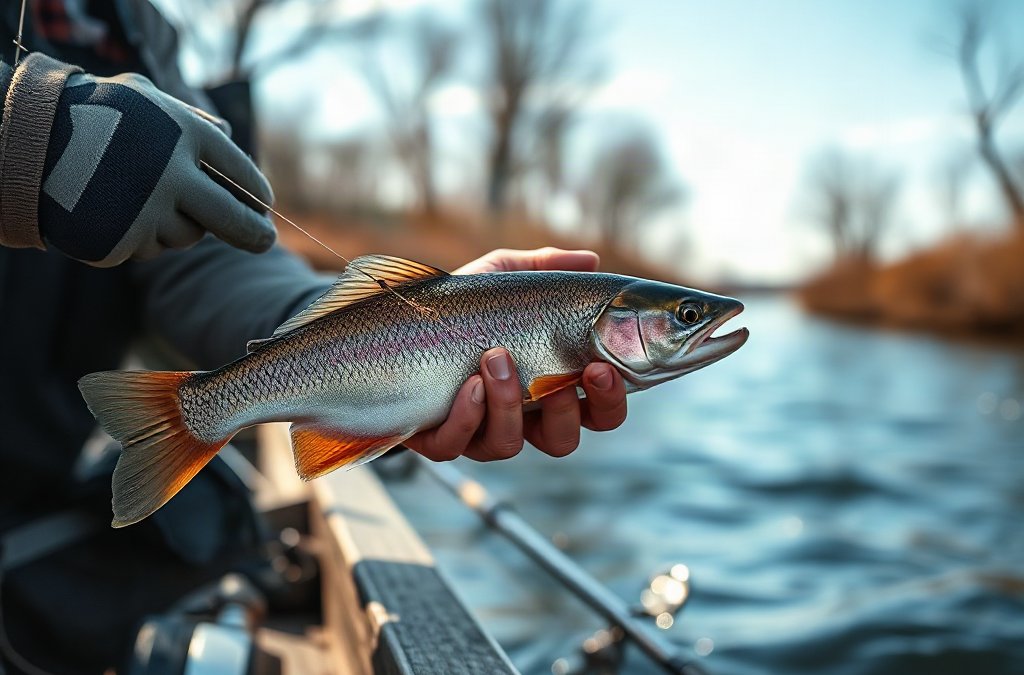
Manage fishing time effectively by dividing the session into fixed blocks for setup, active searching, focused fishing, and pack-up rather than staying indefinitely in an unproductive spot. Prepare and rig tackle before reaching the water, choose a small number of likely areas, and set a time limit for testing each one. Track bites, follows, current changes, and weather shifts so productive clues receive more time while weak patterns are abandoned. Reserve enough time for a safe return, fish handling, and cleanup, and adjust the plan when conditions or regulations require a different approach.
Build a Fishing Session Around Fixed Time Blocks
A productive session needs boundaries for arrival, setup, searching, focused fishing, and departure. Without those boundaries, small delays accumulate: ten minutes reorganizing lures, another fifteen walking to an unsuitable bank, and half an hour repeating a presentation that has produced no useful sign. Assigning time before the trip prevents one low-value activity from consuming the entire outing.

Start by working backward from the time you must leave the water. A three-hour bank session might include 15 minutes for reaching the first position and making the rod ready, 30 minutes for testing two nearby areas, roughly two hours for fishing the most promising water, and 15 minutes for packing and returning safely. These blocks are not rigid appointments. They are limits that expose when an activity is taking longer than it deserves.
Match the schedule to the kind of fishing. A mobile lure angler can test several areas quickly because each cast samples a different line through the water. An angler fishing a static bait may need longer at each position for scent, current, or fish movement to bring a fish to the rig. Fly fishing a changing hatch may justify staying when insects and rising fish are increasing, even if the earlier period was quiet. Equal time at every spot is therefore less useful than a plan based on how the chosen method produces evidence.
A compact session plan should identify four limits:
- Arrival limit: the latest time to reach the first fishable position.
- Search limit: how long to test water before requiring a promising sign.
- Decision point: a scheduled moment to stay, change presentation, or relocate.
- Hard departure: the time fishing stops, not the time the vehicle must leave.
The common mistake is treating travel, knot tying, untangling, photographs, and cleanup as though they occur outside the session. They consume real daylight and may become safety problems near darkness or changing tides. Anyone working out how to manage time effectively while fishing should place those tasks on the same clock as casting. A useful plan protects actual fishing time without pretending that necessary support tasks are free.
Prepare Tackle and Locations Before the Clock Starts
Preparation has the greatest value when it removes predictable decisions from the waterside. Check access, forecast conditions, daylight, tides where relevant, and applicable fishing regulations before leaving. Select a primary location and one practical alternative rather than building a long list of places that cannot all be evaluated. The alternative should be reachable within the available session and should respond to a specific problem, such as exposed water becoming unsafe in strong wind.
Rigging in advance can preserve a meaningful part of a short outing, but only when the tackle can be transported securely and legally. Leaders can be tied, hooks inspected, reels checked, and a limited set of lures or terminal tackle arranged by purpose. Keep the items needed for the likely method accessible. A box containing every possible option often slows decisions because each quiet spell triggers another search through gear.
For example, an angler planning a 90-minute after-work session might carry one rod, pliers, a landing net, and a small selection covering shallow, middle, and bottom presentations. That setup allows a quick depth change without unloading several bags. By contrast, an all-day trip with uncertain conditions may justify spare clothing, additional tackle, food, and backup equipment. Efficient packing does not mean stripping away safety equipment or tools required for responsible fish handling; it means separating probable needs from remote possibilities.
Location preparation should be equally specific. Identify the entry point, likely casting positions, obstacles, and the time needed to walk back. Satellite imagery and maps may help with access planning, but they cannot confirm current bank stability, water level, vegetation, closures, or private-property boundaries. Conditions observed on arrival take priority. If the planned route is blocked or unsafe, use the alternative rather than spending the session trying to force the original plan.
Preparation is working when the first useful cast happens soon after arrival and presentation changes can be made without dismantling the entire setup. It is failing when pre-trip planning becomes its own time sink, produces an overloaded pack, or assumes yesterday’s conditions will persist. The better standard is readiness for the most probable situation plus one realistic fallback. That balance preserves mobility while retaining the essentials for safety, regulations, landing fish, and releasing or retaining a catch appropriately.
Use Bite Evidence to Decide When to Stay or Move
Time on a spot should be earned by evidence rather than hope alone. A landed fish is obvious evidence, but it is not the only useful signal. Bites, follows, baitfish activity, visible feeding, repeated marks on electronics, a favorable current seam, or an improving hatch can justify staying. A location with no sign after several presentation changes deserves less time, especially when another suitable area is close.
Set the decision rule before frustration influences it. A lure angler might cover the near edge, middle water, and a deeper line with two contrasting retrieve speeds before moving. A bait angler might allow enough time for the bait to settle and work naturally, then check whether it has been stolen, fouled, or displaced. The exact interval varies with current, water temperature, target species, and method, so a universal move-every-ten-minutes rule can be counterproductive.
Separate a location problem from a presentation problem. If fish follow a lure but turn away, changing size, speed, depth, or color may be more efficient than walking to new water. If the rig repeatedly collects weed, the issue may be the fishing depth or casting line rather than an absence of fish. When there are no fish signs, no useful structure, and no environmental reason to expect activity, relocation usually offers more information than another minor tackle change.

Consider a two-hour pond session with three accessible areas. At the first, an angler sees bait scatter and gets a short strike within fifteen minutes. Those clues support testing another lure or retrieve before leaving. At the second, every cast returns covered in weed and no clear lane can be found; moving quickly protects the limited session. At the third, wind pushes surface food and discolored water against the bank, creating a reason to spend the remaining focused period there. The clock matters, but observed conditions decide how the minutes are allocated.
Record simple details after a bite: time, position, depth, presentation, wind or current direction, and whether the contact repeated. Notes do not need to interrupt fishing; a short phone entry or a few words on paper is enough. The approach described in how to manage time effectively while fishing becomes more reliable when later choices are based on recurring patterns instead of a vague memory of where a fish once appeared.
Protect Pack-Up Time and Review the Session
The end of a fishing session should be planned as carefully as its beginning. Set an alarm for the final cast and another, earlier alert if the walk back, tide, weather, or fading light creates a meaningful constraint. A hard stop leaves room to unhook and release a late fish properly, secure hooks, collect line and litter, and leave the area without rushing.
Departure time should include the slowest realistic return, not merely the quickest walk made in daylight. Mud, wet rocks, steep banks, boat ramps, and changing water can make the route longer. On tidal shores, access that was easy on arrival may narrow or disappear. Boat anglers also need time to return at a safe speed, load equipment, and complete any required ramp tasks without blocking others. No efficiency gain justifies compressing these steps into an unsafe final few minutes.
Rushing commonly creates avoidable losses. Hooks are left exposed, wet gear is sealed away, fish-handling tools disappear into the wrong bag, or a productive lure is removed without recording why it worked. A consistent packing order reduces those errors. Secure hooks first, account for tackle and personal items, remove rubbish and discarded line, stow rods, and check the immediate area before leaving. If keeping fish is permitted and intended, allow time for lawful handling and storage rather than treating catch care as an afterthought.
A brief review turns one outing into better decisions for the next. Note which session block ran over, which equipment was never used, where the first useful sign appeared, and whether the move decisions came too early or too late. A blank session is still informative if it reveals an inaccessible bank, an inefficient route, a weed-choked presentation, or a mismatch between the planned method and current conditions.
Judge time management by the quality of decisions, not only by the number of fish landed. Catch rates can remain low despite sound choices because fish activity and conditions are variable. A session is operationally successful when setup was controlled, likely water received adequate testing, changes responded to evidence, and departure remained safe. Repeated reviews will show whether the schedule needs longer observation periods, fewer location changes, or a simpler tackle selection.
Frequently Asked Questions
How long should I stay in one fishing spot?
Stay long enough to test the useful depths, casting lines, and one or two presentation changes. Remain longer when bites, follows, bait activity, favorable current, or visible fish provide evidence; move sooner when the water produces no signs and a viable alternative is nearby.
How can I save time setting up at the water?
Inspect and organize tackle at home, tie suitable leaders in advance, and keep pliers, terminal tackle, and fish-handling tools accessible. Carry a focused selection for the expected conditions rather than unloading equipment for every possible method.
Should I spend more time fishing or changing lures?
Change a lure when evidence suggests fish are present but the depth, speed, profile, or action is wrong. If there are no fish signs or useful features, moving may provide more value than cycling through many similar lures.
What is the best plan for a short fishing session?
Choose one familiar location with a nearby fallback, prepare a simple rig before arrival, set one mid-session decision point, and reserve departure time. Short sessions benefit more from fast access and focused testing than from visiting numerous distant spots.
How early should I stop fishing before leaving?
Allow enough time for a safe return, responsible fish handling, hook security, litter collection, and loading equipment. Increase that margin around darkness, tides, worsening weather, difficult terrain, or a busy boat ramp.
Conclusion
Effective fishing sessions are built around realistic limits rather than a crowded schedule. Decide when setup ends, what evidence will earn more time at a location, and when the final cast must occur. Prepare the likely tackle and a workable backup location, but avoid carrying so many options that every quiet period becomes an equipment search. On the water, distinguish between a poor presentation and an unproductive area before choosing whether to adjust or move. Protect departure time for fish care, cleanup, and a safe return, especially where darkness, tides, weather, or difficult access can alter the route. Afterward, record one or two useful observations and correct the largest source of wasted time before the next trip.

