
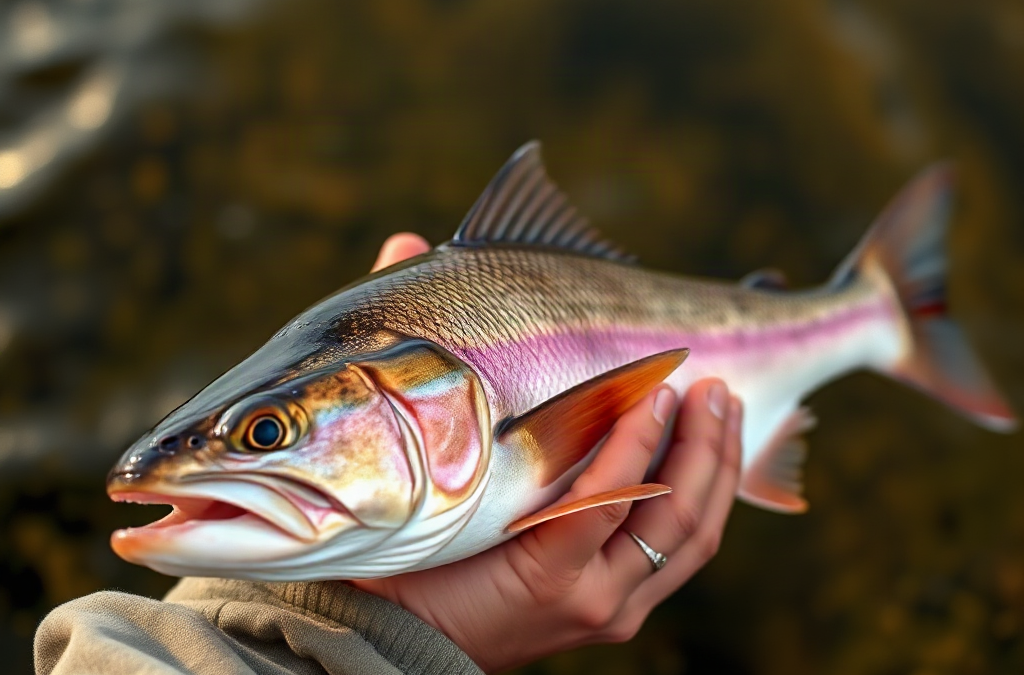
If you catch a fish that appears diseased, minimize handling, keep it away from other fish, photograph visible abnormalities, and follow local harvest or release regulations. Do not move the fish to another body of water, place it in a livewell with healthy catches, or clean it where scraps can return to the water. Wear gloves or use a barrier if the fish has open sores, then disinfect contaminated tools and wash your hands. Record the species, location, date, and symptoms for the fisheries agency responsible for that water. Because injuries, parasites, spawning changes, and disease can look similar, photographs and an official report are more useful than an angler’s diagnosis.
Recognize Suspicious Signs Without Assuming a Diagnosis
An unusual appearance is a reason to slow down and observe, not proof that a fish has an infectious disease. Anglers may encounter ulcers, bleeding patches, eroded fins, cloudy eyes, pale or darkened skin, abnormal growths, excessive mucus, exposed tissue, or clusters of external parasites. Behavior can provide additional context: a fish that swims in circles, remains at the surface, has poor balance, or reacts weakly may be stressed or ill. Record what you can see without squeezing the body, lifting the gill cover repeatedly, or scraping off tissue.

Several ordinary conditions can resemble disease. A fresh hook wound, predator bite, lamprey scar, net abrasion, or spawning injury may produce redness and missing scales. Some species naturally develop color changes, bumps, hooked jaws, or worn fins during spawning. External organisms are not all equally dangerous either; a visible parasite may affect that individual without indicating a population-wide outbreak. Warm water, low dissolved oxygen, crowding, pollution, and rough handling can also leave fish lethargic or discolored.
Look for a combination of evidence rather than one dramatic mark. Multiple lesions at different stages, widespread fin deterioration, pronounced swelling, unusual growths, or several affected fish in the same area deserve more attention than a single clean injury. A cluster of dead or distressed fish is especially useful information for local authorities because it may reflect disease, an oxygen problem, a contaminant event, or another environmental stressor requiring investigation.
A practical observation takes less than a minute. Photograph both sides of the fish, the head, and the affected area while keeping the animal supported and close to the water. Include a familiar object for scale if doing so does not delay release. Note whether other fish nearby appeared normal. The common mistake is trying to identify a pathogen from appearance alone; many conditions overlap, and confirmation may require laboratory examination.
The purpose of what to do if you catch a fish with a disease is therefore not to turn anglers into diagnosticians. It is to help them preserve useful evidence, limit unnecessary contact, and make a legally sound decision about the fish.
Handle, Release, or Retain the Fish Safely
Your first handling decision should follow the rules for that species and water. A fish may be legally required to be released, prohibited from release, subject to a harvest limit, or covered by special instructions during a disease response. Check the current fishing proclamation, posted notices, or agency guidance rather than assuming that an apparently sick fish must be killed. Regulations can differ between connected waters and can change when a disease or invasive species is detected.
If release is required or permitted, keep the fish in the water while removing the hook when practical. Wet your hands or use wet, fish-friendly gloves, support the body horizontally, and avoid contact with the eyes and gills. Do not scrub, cut, or remove a growth for closer inspection. Long air exposure and repeated posing add physiological stress to an animal that may already be compromised. If the hook cannot be removed promptly without major tissue damage, cutting the leader close to the hook may cause less harm than prolonged manipulation.
When retention is legal, isolate the questionable fish from any catch intended for food. A separate leakproof container is preferable to a shared stringer, cooler, or livewell because fluids and external organisms can transfer between fish. Do not transport a live fish to a different lake, river, bait tank, aquarium, or backyard pond. Moving it may violate regulations and can carry pathogens or parasites into water where they were not previously present.
A diseased-looking fish should not automatically be treated as edible. Cooking can control many biological hazards, but it does not make every contaminated, spoiled, or toxin-exposed fish safe, and appearance cannot establish the cause. Avoid eating fish with open sores, abnormal odors, widespread tissue breakdown, or official consumption warnings. Ask the relevant fisheries or public-health authority when the condition is unusual or several fish are affected. Never feed suspicious raw tissue to pets.
If a fish is dead or must be dispatched legally, do not throw it onto the bank or leave it where wildlife, pets, or rising water can redistribute it. Follow agency instructions for disposal or sample preservation. An official may ask you to keep the specimen chilled rather than frozen, but that request should come from the agency; unrequested storage can destroy diagnostic value or create needless exposure at home.
The frequent failure here is choosing an action based solely on appearance. Safe handling balances fish welfare, personal hygiene, biosecurity, and the law. When immediate guidance is unavailable, minimize contact, prevent movement between waters, preserve photographs and notes, and obey the applicable release or harvest rule.
Document and Report the Catch
A useful report tells fisheries staff what happened, where it happened, and how extensive the problem might be. Agencies can evaluate a detailed observation far more effectively than a message saying only that a fish looked sick. Reporting is particularly worthwhile when several fish show similar abnormalities, fish are dying, the species is managed or protected, or the condition appears uncommon for that location.
Capture the information while it is fresh. Record the fish species if known, approximate length, date and time, waterbody, general location, water conditions, observed behavior, and visible abnormalities. A map pin or coordinates can be valuable, but avoid publishing the exact location publicly if it could expose a sensitive population or conflict with agency advice. State whether the fish was released, retained, found dead, or left where it was encountered.
Use a compact field record:
- Images: both sides of the fish, close views of lesions or parasites, and the surrounding scene.
- Extent: one affected fish, several affected fish, or a broader mortality event.
- Conditions: unusual odor, discolored water, algae, low flow, recent temperature stress, or other visible clues.
- Contact details: a phone number or email in case staff need clarification or a specimen.
Send the report to the state, provincial, tribal, or national fisheries agency responsible for the water. A conservation officer, fish-health laboratory, environmental incident line, park authority, or local biologist may be the correct contact depending on the jurisdiction. For a large fish kill, chemical odor, oily sheen, or sudden distress across multiple species, use the agency’s urgent pollution or wildlife-mortality channel rather than waiting for a routine email response.

Do not collect tissue, parasites, water, or a carcass unless authorized. Samples require suitable containers, temperature control, labeling, and chain-of-custody procedures to remain diagnostically useful. Untrained collection can expose the angler, contaminate the sample, or violate possession rules. If officials request the fish, ask exactly how it should be packaged and whether it should be refrigerated, frozen, or delivered immediately.
A report should separate observation from interpretation. Write “three round red sores on the left side” rather than declaring a specific bacterial infection. That distinction keeps the record credible and allows trained staff to compare the signs with local surveillance information. Following a clear diseased-fish reporting process can help authorities decide whether the incident is isolated or needs field investigation.
Clean Gear and Avoid Spreading Aquatic Pathogens
Cleaning should begin before equipment reaches another body of water. Disease agents and parasites may travel in water, mud, vegetation, fish mucus, bait containers, livewells, nets, boots, and damp clothing. Even when the fish’s condition proves noninfectious, the same precautions reduce the chance of transporting invasive organisms. The priority is to remove visible material, drain retained water, and let equipment dry thoroughly.
At the access site, discard plant fragments and mud where they cannot wash back into the water. Drain boats, bilges, livewells, bait buckets, coolers, motors, and pumps as regulations permit. Never release bait, aquarium contents, transported water, or fish scraps into a lake or stream. Some jurisdictions require drain plugs to remain open during transport, while others specify approved cleaning stations or decontamination procedures, so posted instructions take precedence.
Wash nets, measuring boards, pliers, knives, and other contaminated surfaces away from storm drains and natural water. Hot water or an agency-approved disinfectant may be recommended for certain local threats, but concentration, contact time, material compatibility, and disposal all matter. Mixing household chemicals or improvising a strong solution can injure the user, corrode equipment, and harm aquatic life. When no official chemical protocol applies, physical cleaning followed by complete drying is safer than guessing at a disinfectant recipe.
Personal hygiene matters most when the fish has open lesions or sharp spines. Cover cuts before fishing, use disposable gloves or a clean barrier when feasible, and wash hands with soap and clean water after contact. Clean and protect any puncture or cut promptly. Seek medical advice for a worsening wound, spreading redness, swelling, drainage, fever, or severe pain, and tell the clinician that the injury involved a fish or natural water. These signs do not identify the cause, but they warrant professional assessment.
Consider a scenario in which an angler lands a scarred fish, places it in a livewell, and then launches at another lake the following morning. Releasing the fish was not the only possible transmission point; retained water, the landing net, and wet carpet could all move biological material. By contrast, isolating the catch, draining at the first site, cleaning tools, and allowing gear to dry breaks several possible pathways.
The misconception that “clear water means clean gear” causes avoidable risk. Microscopic organisms are not reliably visible, and a quick rinse can move contamination rather than remove it. A sound approach to handling a potentially diseased fish continues after the fish leaves your hands and ends only when equipment is ready for its next waterbody.
Frequently Asked Questions
Should I release a fish that looks diseased?
Follow the regulations for that species and water. If release is legal or required, minimize handling and return it promptly; do not relocate it elsewhere. Contact the local fisheries agency when special disease instructions may apply.
Can I eat a fish with sores or parasites?
Do not assume cooking resolves every hazard. Avoid fish with open sores, abnormal odor, extensive tissue damage, or signs covered by a consumption advisory, and request local agency guidance when uncertain.
Can touching a sick fish make a person ill?
Most contact does not establish that illness will occur, but open cuts and punctures increase exposure risk. Use a barrier, wash thoroughly, and seek medical care if an injury develops worsening pain, redness, swelling, or drainage.
Should I take the fish home for testing?
Only if the responsible agency requests it and provides handling instructions. Unauthorized collection may violate possession rules, expose people or pets, and produce a specimen unsuitable for diagnosis.
Who should receive a diseased-fish report?
Contact the fisheries, wildlife, environmental, tribal, or park authority responsible for the water. Use an urgent incident line for multiple deaths, affected species, chemical odors, or suspected pollution.
Conclusion
A suspicious fish calls for careful observation rather than an improvised diagnosis. Treat legal requirements as the first constraint, reduce handling, prevent contact with other catches, and never transfer the animal or retained water to another location. Clear photographs and precise notes about the species, place, behavior, and number affected give fisheries staff evidence they can evaluate. Agency instructions should also govern specimen collection, disposal, and any specialized disinfection.
Before leaving the access, remove visible debris, drain water where permitted, and separate contaminated equipment for cleaning and drying. Protect cuts and monitor any fish-related wound for signs that need medical attention. If several fish are distressed or dead, or if pollution is plausible, report the event promptly through the appropriate incident channel rather than treating it as an isolated catch.

