
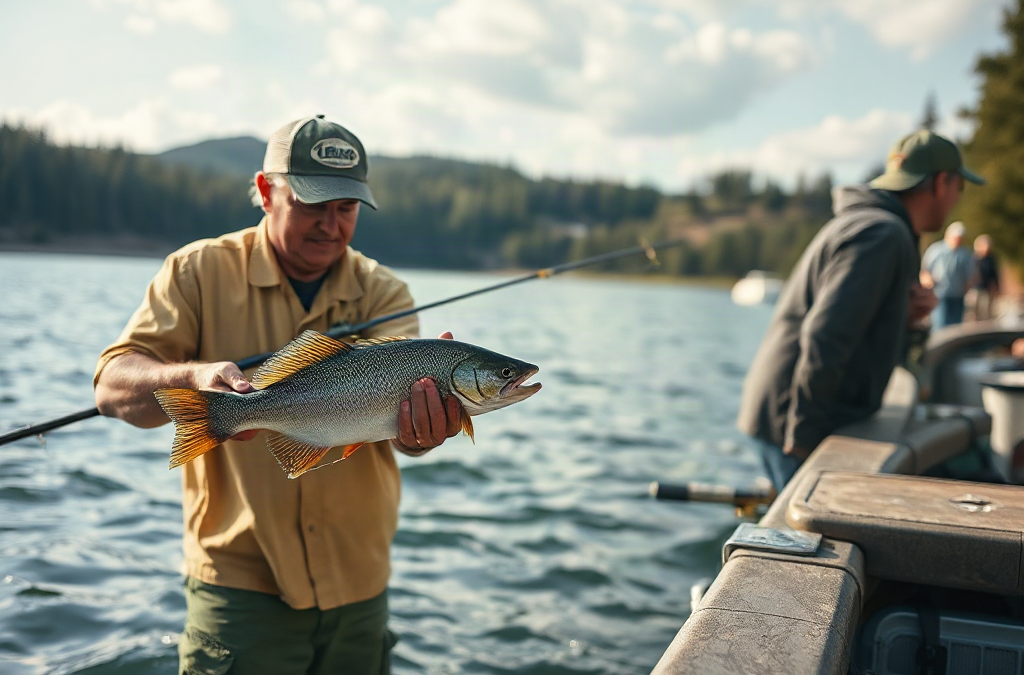
Time Your Arrival Around Angler Traffic
Weekend pressure is rarely uniform from sunrise to sunset. Parking availability, boat-launch lines, shoreline activity, recreational boating, and midday heat all shape when a popular location becomes difficult to fish. An angler who identifies those traffic cycles can spend more time presenting a lure effectively and less time waiting for access or competing for casting room.
Early arrival is useful, but “early” should be defined by access rather than sunrise alone. At a reservoir with a busy ramp, arriving while trailers are already queued may put you on the water after the first wave has worked the nearest points and coves. At a public pier, the best openings may be occupied well before daylight. Check posted opening hours, gate rules, legal parking areas, and launch procedures before the weekend, then allow time to rig away from the ramp or narrow walkway.
Another option is to fish during the crowd transition rather than racing everyone at dawn. Families and casual visitors often concentrate around late morning and afternoon, while some early anglers leave after a few hours. A late-morning arrival can work if you are prepared to fish deeper water, shaded banks, current, or wind-exposed structure instead of expecting an uninterrupted prime-time bite. Evening may offer another opening after recreational traffic declines, provided the site permits access and you have enough daylight to return safely.

Weather can shift the pattern. A warm, calm afternoon may increase paddleboard and pleasure-boat traffic, whereas light rain may reduce shore attendance while improving low-light fishing conditions. Severe weather, unsafe winds, or lightning are not opportunities to exploit; they are reasons to leave exposed water. Monitor the forecast and observe actual conditions rather than assuming fewer visitors make every situation acceptable.
A practical timing check includes three questions: When does access become congested? When does non-fishing activity peak? Which fish-holding areas remain usable during that period? If you cannot answer the third question, arriving earlier merely postpones the problem. Effective weekend fishing at popular spots pairs a traffic window with a location and presentation suited to that window.
Find Productive Water Beyond the Obvious Areas
Popular spots concentrate anglers around visible, convenient targets: the end of a dock, the first point beside a ramp, a bridge opening, a stocked-water access, or the only clear section of bank. Those places may hold fish, but repeated casts, footsteps, boat noise, and hooked fish can make the remaining fish less willing to feed in an exposed position.
Look for secondary features connected to the main attraction. If anglers line up beside a creek mouth, inspect the downstream current seam, the first depth change outside the flow, or cover that intercepts food before it reaches the mouth. On a lake point, the shallow tip may receive constant casting while the deeper side, inside turn, or transition from rock to softer bottom gets less attention. Bank anglers can often gain a better angle by walking beyond the maintained clearing, but only where access is legal and the terrain is safe.
Distance alone does not make water productive. A remote-looking bank without depth, cover, current, forage, or suitable temperature may simply be empty. Use visible clues and available mapping to identify places that offer fish a reason to pause. Wind pushing food toward a bank, shade extending from overhanging cover, a channel swing near shore, or a narrow current break can be more valuable than an isolated stretch chosen only because nobody else is there.
Recently vacated water also deserves attention. Fish do not necessarily abandon a location for the entire day after an angler leaves. Give the area a short rest, approach quietly, and cast from a different position. For example, someone may repeatedly cast straight across a point with a fast-moving bait. A later angler can work parallel to the drop with a slower presentation, reaching fish that saw the first lure only briefly or from an unnatural angle.
Do not crowd into a small productive zone merely because a fish was caught there. First determine whether you can cast and retrieve without crossing another line or interfering with a boat’s controlled drift. If not, move to the next structural feature. The mistake is treating a popular landmark as the only place fish can be caught; the better approach is identifying the depth, cover, current, or forage relationship that makes it attractive and finding that relationship elsewhere.
Adjust Presentations for Pressured Fish
Heavily worked fish often respond to a change in presentation rather than a more aggressive version of what everyone else is throwing. Noise and repeated lure exposure can push fish deeper, tighter to cover, farther into shade, or onto the less accessible side of structure. The adjustment should address that movement instead of relying on endless color changes at the same depth.
Begin by watching what nearby anglers are doing without intruding on them. If most people are retrieving bright moving lures high in the water, try a subtler bait near the bottom, a compact profile beside cover, or a controlled pause along the edge of the active zone. If live bait is permitted and appropriate for the target species, careful depth control may matter more than casting farther. Always confirm local bait, hook, tackle, season, and harvest rules through the responsible fish and wildlife agency.
Casting angle can be as important as lure selection. Fish facing current are more likely to see a presentation that travels naturally with the flow. Along a weed edge or breakline, a parallel cast keeps the offering in productive depth longer than a cast that crosses the feature at a right angle. From shore, this may require stepping back from the water, making a shorter cast, or waiting for an opening rather than launching toward the center of a crowded area.
Use a simple adjustment sequence instead of changing everything at once:
- Change angle: Reach the same cover from a direction other anglers have not used.
- Change depth: Work above, beside, or below the level receiving the most casts.
- Change speed: Add pauses or use a steadier retrieve based on fish response.
- Change profile: Move to a smaller or less intrusive offering when fish follow but refuse.
- Change location: Leave when no activity or habitat clue supports staying.
Signs that an adjustment is working include follows, taps, baitfish movement, fish repositioning near the lure, or bites occurring at a repeatable depth. Snags alone are not proof that a bottom presentation is effective, and constant lure changes can hide the pattern you need to recognize. Give each deliberate adjustment enough casts to test a specific piece of water, then record what produced a response. That disciplined approach is more useful than assuming pressured fish will only bite an unusually small or exotic lure.
Share Crowded Water Without Creating Conflict
Good spacing protects both fishing quality and safety. Crowded banks and docks combine hooks, back casts, slippery surfaces, unattended gear, and people with different experience levels. Before casting, establish where neighboring lines enter the water, how they are retrieving, and whether anyone is allowing bait to drift beyond the area directly in front of them.

Ask before occupying an uncertain opening. A short question about where someone is casting is more effective than guessing from the position of a rod. On a pier, anglers may be working lines diagonally with current. In a river, a float or lure may travel well downstream before retrieval. On a boat, another vessel may be following a contour or drift that is not obvious from a single moment of observation.
Spacing cannot be reduced to one universal distance because casting range, current, wind, local custom, and the type of water all matter. Leave enough room that ordinary casts and retrieves do not overlap. If you repeatedly need to stop your retrieve, cast over another line, or ask someone to move so you can reach a target, the opening is not truly usable. Move rather than forcing access to a small piece of structure.
Fish landing requires additional room. Once someone hooks a fish, reel in if your line could tangle with it, especially on a narrow dock or along current. Keep pliers and a landing net accessible so your own catch does not block the area longer than necessary. Handle fish according to local rules, wet your hands before touching fish intended for release, and avoid placing a catch on hot or abrasive surfaces.
Boaters should reduce wake near shore anglers, docks, paddlers, and anchored vessels while following navigation and no-wake requirements. Shore anglers should avoid casting toward a vessel already holding a safe, established position. Courtesy does not establish ownership of public water, but arriving first does not justify spreading rods and equipment across far more space than one person can actively use. The strongest rule is operational: occupy only water you can fish without disrupting another person’s normal cast, drift, retrieve, or route.
Build a Mobile Weekend Fishing Plan
A mobile plan turns crowding from a surprise into a manageable condition. Choose a primary area, at least one secondary access point, and a clear departure threshold before leaving home. This is especially valuable where parking fills quickly, shoreline access is limited, or a single boat ramp serves several recreational uses.
Keep the tackle selection narrow enough to move without repeated packing. A bank angler might carry one versatile rod, terminal tackle for two depths, a small group of confidence lures, pliers, a landing tool, water, sun protection, and any required license. A boat angler should organize frequently used items before launching so the ramp is not used as a rigging station. Compact equipment does not mean omitting safety gear; personal flotation devices, weather protection, navigation lights when required, and communication equipment take priority over extra tackle.
Set observable triggers for relocation. Move when legal parking is unavailable, the only open water would create casting conflicts, boat traffic makes control unsafe, or repeated depth and angle changes produce no signs of fish. Stay when you can identify bait, current, shade, cover, or a depth pattern that has generated follows or bites. Leaving after three arbitrary casts is too impatient, but remaining for hours because the location has a famous name is equally weak reasoning.
For example, a reservoir plan could begin at a secondary cove before the main ramp peaks, shift to a windward point after morning anglers leave, and finish near deeper shaded cover during afternoon traffic. A river plan might prioritize a walk-in access at dawn, then move away from the obvious pool toward smaller current breaks once waders gather. Each move follows fish habitat and usable space rather than crowd avoidance alone.
Check official regulations and access notices shortly before the trip because closures, seasonal restrictions, special tackle rules, and launch conditions may vary by water. Save maps where mobile service is unreliable, tell someone where you expect to be, and avoid improvised parking or trespassing when the intended access is full. A strong plan for how to fish during busy weekends at popular spots includes a lawful alternative, not just a preferred destination.
Frequently Asked Questions
What is the best time to fish a crowded public spot?
Arrive before the main access rush or target a transition period when early visitors leave. Match the time to usable water, local access hours, weather, and the target species rather than assuming dawn is automatically best.
Should I leave when other anglers have already fished an area?
Not automatically. Let the area rest, approach quietly, and try a different angle, depth, or retrieve. Leave if the habitat offers no activity and your adjustments produce no follows, bites, or other encouraging signs.
How close can I fish to another angler?
Stay far enough away that normal casts, drifts, and retrieves cannot cross. Because current, wind, and tackle change the required distance, ask the angler where the line is running when the available opening is unclear.
Do smaller lures work better in pressured water?
They can be useful when fish follow or reject larger offerings, but size is only one variable. Changing depth, casting angle, speed, or location may solve the problem more directly.
What should I do if the parking area or boat ramp is full?
Use a preselected legal alternative or return during a quieter window. Do not block roads, park outside designated areas, trespass, or prepare a boat where doing so obstructs active ramp lanes.
Conclusion
Busy weekends reward anglers who manage access, fish habitat, and shared space as carefully as tackle. Check rules and opening conditions before departure, arrive for a specific traffic window, and carry enough versatility to change depth, angle, and location without hauling unnecessary gear. At the water, identify why a feature should hold fish instead of joining the largest cluster by habit. Give other anglers room to cast and land fish, and relocate when safe, productive space disappears. Before the next trip, mark one primary access, two lawful alternatives, and the conditions that will trigger a move. That preparation preserves fishing time while reducing rushed decisions at a crowded ramp, bank, pier, or river access.

