
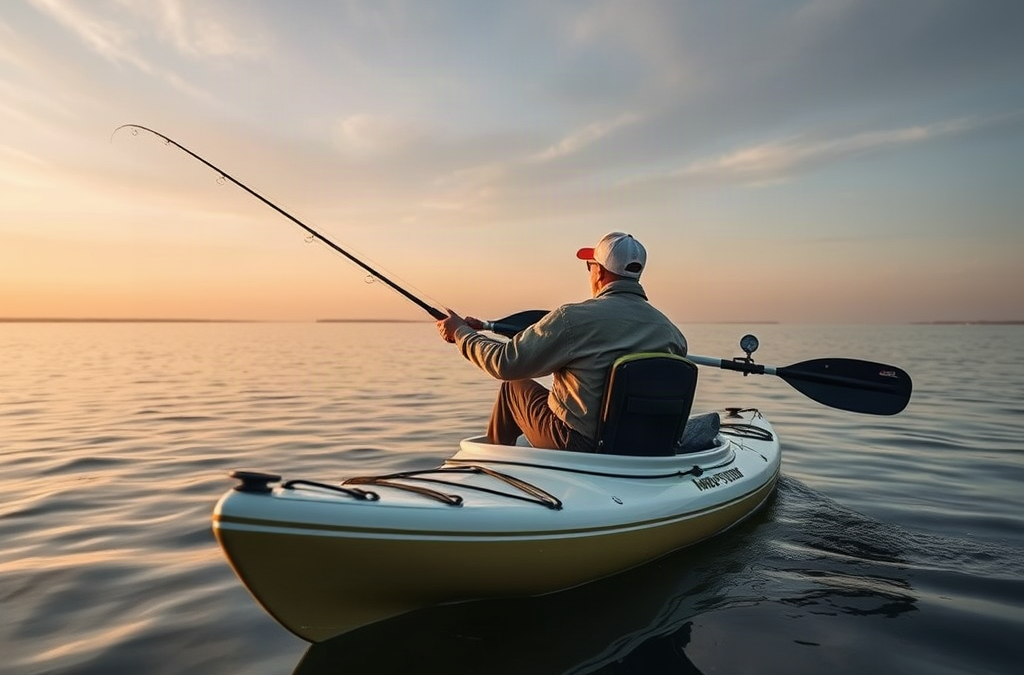
If you're not catching fish while kayak fishing, first verify that fish are present, then change only one variable at a time: location, depth, presentation, or retrieve speed. Check your position against wind, current, shoreline cover, and visible bait rather than staying over unproductive water because it feels convenient. Make a short move, fish the new area thoroughly with a slower and simpler lure, and watch whether bites, follows, or bait activity appear. Common failures include fishing too fast, covering water without pausing, and trusting a favorite spot after conditions have changed.
Diagnose the Blank Before Changing Tackle
A fishless stretch from a kayak does not automatically mean the lure is wrong. The first useful question is whether the kayak is positioned where fish can reasonably feed. Wind may push bait against one bank, a falling tide may pull activity toward an outlet, or a temperature change may shift fish away from the shallow flat that produced earlier in the week. A favorite lure cannot compensate for empty water.

Separate the problem into four observations: signs of life, water depth, fish-holding cover, and presentation. Look for bait flicking, birds working, insects, shoreline shade, submerged vegetation, laydowns, rock transitions, or a current seam. A quiet surface is not proof that fish are absent, but a long period with no bait, follows, or sonar marks should lower your confidence in the area. If the water looks promising yet you have not had a touch, the presentation deserves testing.
Before making a major change, inspect the simple failure points. Confirm the hook is sharp, the lure is running correctly, the knot has not slipped, and the bait has not been damaged or fouled with weeds. Check that your cast reaches the edge of the cover rather than landing several feet away. Kayaks often sit lower than larger boats, so a lure may travel through a different angle and depth than expected.
A common mistake is changing five things at once. If you move, switch lures, alter the retrieve, and change depth simultaneously, a later bite tells you very little. Test one meaningful variable for several casts, then make a deliberate next move. The related kayak fishing adjustment process works best when each change gives you information, not merely a different feeling.
Move the Kayak Toward Higher-Probability Water
When an area produces no evidence of feeding activity, relocate before endlessly refining the lure. Kayak anglers can cover water efficiently, but every move costs effort, battery power, and sometimes safety margin in wind or current. Choose a short relocation that tests a different condition: move from the exposed bank to the protected side, from a featureless bottom to a depth change, or from slack water to a visible current edge.
Work a new location in a controlled order. Begin on the outside edge of cover, then cast parallel to the shoreline or structure before moving directly over it. This reduces the chance of spooking fish with the kayak and lets the lure stay in the productive zone longer. In clear, calm water, increase distance and use a quieter entry. In stained water or wind, a closer approach may be practical because fish have less opportunity to inspect the kayak.
Depth deserves particular attention. A shallow lure may pass above fish that have moved only a few feet deeper after bright sunlight, falling water, or increased boat traffic. Conversely, fishing deep water all day can be unproductive when bait is visibly tight to a warm bank. Rather than guessing, fish two adjacent depths with the same lure and retrieve. If one produces a follow or bump, repeat that depth before changing colors.
For example, suppose you have made repeated casts along a calm, empty shoreline. Instead of tying on a new color, paddle to a nearby point where wind pushes water against the bank. Fish the windward side first, then the point tip and the calmer lee side. The comparison tells you whether current, bait concentration, or cover is controlling the bite. Do not paddle farther just to feel proactive; a nearby feature that tests a clear hypothesis is usually more useful than a long blind transit.
Use the same caution with sonar. A blank screen may reflect limited sensitivity, shallow water, a poor transducer angle, or fish that are not easily separated from the bottom. Treat sonar as one clue rather than permission to ignore visible habitat. The best move balances fish likelihood with a safe route back, manageable wind, and enough time to fish the new water properly.
Slow Down and Simplify the Presentation
After confirming that the area has plausible habitat, adjust the lure’s speed, depth, and pause before making the tackle more complicated. Fish may ignore a bait that moves too quickly, passes above them, or gives them no time to commit. A kayak’s stable, quiet platform makes it well suited to methodical casts, but anglers often retrieve quickly because covering water feels productive.
Start with a controlled retrieve that keeps the lure in contact with the zone where fish should be holding. For a soft plastic, let it settle fully and maintain contact with the bottom or vegetation when appropriate. For a moving bait, slow the pace enough to feel changes in resistance and add pauses near cover. A pause is not a guarantee of a bite; it is a way to keep the lure available long enough for a cautious fish to decide.
Color should usually follow action and location, not replace them. In clear water, a restrained natural color may look less intrusive, while stained water can justify stronger vibration or contrast. The tradeoff is that a highly visible lure may help fish locate it but can look unnatural in calm, clear conditions. Choose a presentation that matches visibility and forage, then give it enough casts to judge rather than abandoning it after two retrieves.
Try a compact testing sequence:
- Make several casts with the current lure at a slower speed and a longer pause.
- Change the depth while keeping lure color and retrieve similar.
- Switch to a simpler profile that can be fished through the same area.
- Return to the original lure only if the new presentation reveals a useful clue.
Watch for partial success. A short strike, trailing fish, lifted weeds, or a baitfish scattering near the lure suggests that location may be sound and the presentation needs refinement. Total silence across multiple angles points back toward location or timing. Avoid the common assumption that a bigger, louder bait is the natural answer to a slow day; pressure, clear water, or inactive fish may favor a subtle offering instead.
Rigging matters from a kayak because limited casting angles make accuracy valuable. A weedless setup may reach cover that an exposed hook cannot, while a lighter rig can glide naturally but may be harder to control in wind. Select the rig that keeps the lure fishable in the actual cover, not the one that looks most versatile in a tackle box. The best next adjustment for a slow kayak session is often a more deliberate retrieve, not another pile of lures.
Use a Kayak-Specific Adjustment Plan
A kayak changes the feedback loop of fishing. You have less deck space, a lower casting position, limited storage, and direct exposure to wind and current. Those constraints make an organized reset more valuable than carrying every possible technique. Keep one rod ready for the current presentation and one practical alternative for a different depth or speed.
Control your drift before judging a spot. Wind can carry the kayak past productive cover so quickly that the lure spends only seconds in the strike zone. A drift sock, stake system, paddle correction, or anchor may help when conditions and local rules allow, but each tool has limits. Anchoring in moving water can create a hazard, and fighting a strong wind may be less sensible than moving to a protected bank. Safety and boat control come before squeezing one more cast from a marginal position.
Approach cover from the side that preserves your next cast. If the sun is behind you and the water is clear, a shadow crossing shallow fish can end a short opportunity. Paddle quietly, avoid scraping the bottom, and use the kayak’s low profile to cast beyond the target. A stealthy approach is most useful in calm shallows; in heavy wind, natural noise may be masked, and positioning the kayak securely may matter more than perfect silence.

A practical reset can take ten minutes. Paddle to a nearby structure, orient the kayak so wind or current carries the lure along the edge, make a few casts at different angles, and note the lure’s actual running depth. If the lure repeatedly fouls, drifts out of the zone, or cannot be controlled, the setup is failing even if the location looks attractive. Choose a presentation that you can operate consistently from the seat.
Beginners often move too frequently because the kayak makes relocation easy. More experienced anglers can make the opposite error by staying put after the evidence has turned negative. Set a clear limit: after testing two angles, two depths, and a slower presentation without a sign of life, change the area or wait for a meaningful condition change. That rule prevents both random paddling and stubborn repetition.
Know When to Leave and What to Record
Leaving a spot is the correct decision when repeated tests produce no response and the surrounding conditions offer a better opportunity. A blank area should not be judged by emotion or by how well it worked on a previous outing. Light level, wind direction, water clarity, tide, boat traffic, and forage movement can alter the value of the same shoreline within hours.
Record useful details immediately rather than relying on memory. Note the approximate depth, sky and wind, water clarity, lure type, retrieve speed, cover, and whether you saw bait or other wildlife. Include the time of the last bite if you had one. A short note such as “windward point, stained water, slow bottom contact, one tap” is more valuable than “bad day.” Patterns emerge from comparable trips, not from a single empty outing.
Timing also deserves a realistic interpretation. Low light, a moving tide, a temperature transition, or a change in wind may create a better feeding window, but waiting is not automatically superior to moving. If you have safe access to a new area with clearer signs of bait, relocate. If weather is deteriorating, visibility is falling, or the return route is becoming difficult, end the session instead of chasing a speculative bite.
Use this priority order when the bite disappears:
- Confirm tackle, hooks, knots, and lure action.
- Look for bait, cover, current, and a workable depth.
- Slow the retrieve and keep the lure in the strike zone.
- Make a short move that tests a different condition.
- Log the result and reassess whether continuing is safe and worthwhile.
Fishing success should be measured by the quality of the decision process as well as the catch. A failed presentation that reveals fish are present gives you a direction for the next cast. A long session over empty water provides little information. Keep the next trip focused on testing one or two learned clues, and avoid treating a single successful lure or location as a permanent answer.
Frequently Asked Questions
Should I change lures immediately when I am not catching fish from a kayak?
Not usually. First test a slower retrieve, a different depth, and another casting angle. Change lures after those checks suggest the fish may want a different profile, vibration, or visibility.
How long should I stay in one kayak fishing spot?
Stay long enough to test several angles and depths, but leave when the area shows no bait, cover, current, or response after a deliberate presentation change. A nearby move that tests a different condition is more useful than random paddling.
Why does slowing down often help on a difficult fishing day?
A slower retrieve keeps the lure in the strike zone longer and gives inactive or cautious fish more time to inspect it. It is especially useful when fish are holding near bottom, cover, or a narrow depth band.
What should I look for before moving the kayak?
Check for bait activity, birds, current seams, shade, vegetation, rock, depth changes, and wind pushing water toward a bank. Also confirm that your lure is reaching the area you intend to fish.
Is sonar necessary when kayak fishing is slow?
No. Sonar can help identify depth and structure, but visible habitat and bait activity remain valuable clues. A blank display may reflect settings or transducer limitations, so do not treat it as proof that fish are absent.
Conclusion
A fishless kayak session becomes more productive when each adjustment answers a specific question. Check whether the area holds bait, cover, current, and a usable depth before blaming the lure. Then slow the presentation, control the kayak’s drift, and make a short relocation that tests a clearly different condition. Avoid changing tackle, location, and retrieve all at once, because that hides the reason an adjustment worked or failed. Keep safety in the decision: wind, current, visibility, and the return route can outweigh the chance of another cast. Record what you observed, including depth, conditions, and presentation, so the next outing begins with evidence rather than guesswork.
Further Reading
Authoritative Sources
- AAHA Pet Health Resources
aaha.orgPet-health guidance from the American Animal Hospital Association.
- ASPCA Pet Care
aspca.orgHumane animal care, behavior, and safety resources.
- AVMA Pet Owner Resources
avma.orgVeterinary-backed pet health, safety, and care guidance.
- Merck Veterinary Manual
merckvetmanual.comDetailed veterinary reference information for animal health and care.

