
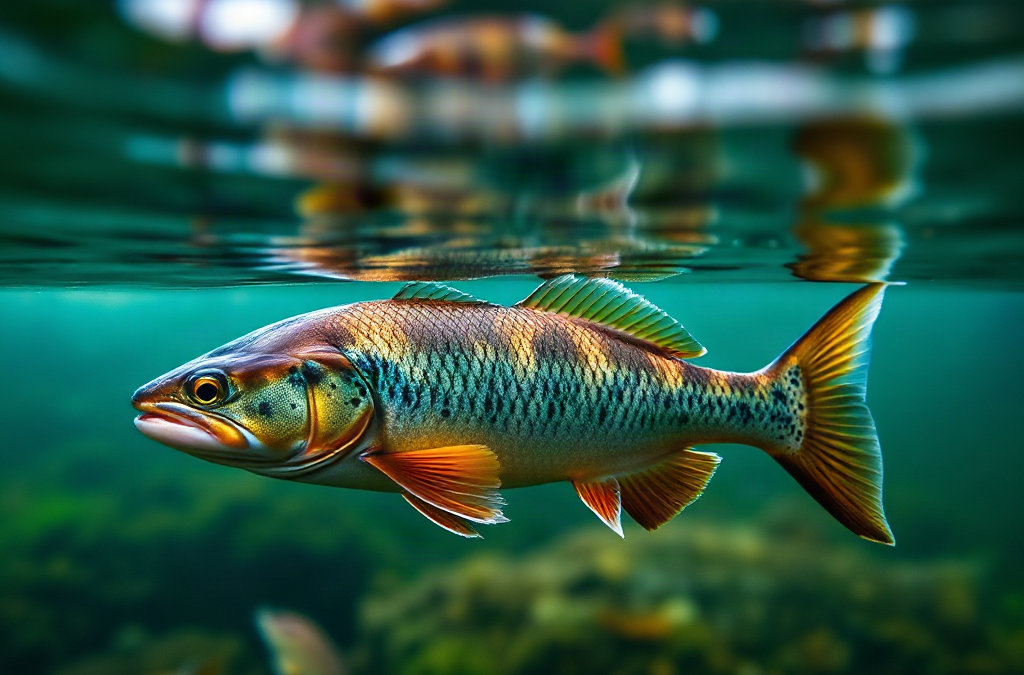
Recognize fish spawning habits by combining seasonal water-temperature changes with shallow habitat, nest activity, courtship behavior, and post-spawn movement rather than relying on one visible sign. Look for protected gravel, sand, or firm-bottom areas near cover; repeated fish movement over the same patch; cleared circular depressions; guarding behavior; and sudden changes in feeding response. Sunlight, water clarity, lake level, current, and species all affect when and where spawning occurs, so a calendar date is only a starting point. Observe from a distance, avoid disturbing visible beds, and confirm the pattern across several locations before choosing a presentation or deciding that fish are actively spawning.
The Environmental Signals That Trigger Spawning
Spawning usually follows a combination of seasonal light, water temperature, habitat condition, and flow rather than a fixed date. Temperature is useful because it reflects the biological pace of a season, but it should be treated as a clue, not a universal trigger. A cold spring may delay activity, while a protected pocket exposed to afternoon sun can become suitable before the main lake reaches the same condition.

Watch for a progression rather than a single reading. Rising temperatures may bring fish toward staging areas, a stable period can support nest building, and a sharp cold front may push them temporarily deeper or reduce visible activity. Fish may still be nearby after the weather changes, but their behavior can become less obvious. This is why a quiet shoreline does not automatically mean spawning has ended.
Water level and current add another layer. A rising level can open flooded cover and create new shallow options, while falling water may expose beds or move fish toward the remaining protected areas. In rivers, species may select low-velocity margins, backwaters, or gravel behind current breaks. A protected cove and a windblown flat can have very different conditions on the same day.
Use environmental clues to narrow the search, then verify them with habitat and behavior. Record water temperature, clarity, level, wind direction, and recent weather when you find activity. The common mistake is treating a familiar calendar window as proof. Seasonal timing predicts opportunity; local conditions determine whether a particular bank is ready.
The how to recognize fish spawning habits question becomes easier when these signals are viewed as a sequence. Staging fish may hold near a drop-off or cover, while active spawners are more likely to occupy suitable bottom in protected water. That distinction affects both location choice and how much disturbance the area can tolerate.
Where Spawning Fish Gather and What Habitat Reveals
Spawning habitat commonly combines a suitable bottom with protection from excessive wave action, current, and sudden depth changes. Depending on the species, fish may use gravel, sand, clay, firm mud, vegetation edges, woody cover, or clean patches beside structure. The exact material matters less than the contrast between usable bottom and surrounding habitat.
Look for shallow shelves, inside corners, protected pockets, creek arms, backwaters, and flats adjacent to deeper water. A shallow area is more compelling when fish can reach it quickly from a staging depth. For example, a firm-bottom flat beside a channel may attract fish sooner than a broad, featureless flat that requires a long move. Shade, submerged vegetation, and a nearby break can also provide protection for adults and young fish.
Visual clues include pale circular depressions, swept-away sediment, repeated tracks through vegetation, and clean patches surrounded by softer bottom. These marks are not conclusive by themselves. Boat traffic, wind, feeding activity, and changing water levels can disturb sediment in similar ways. A bed becomes more credible when physical evidence appears alongside repeated fish presence and defensive or territorial behavior.
Electronics can help locate depth changes and bottom composition, but they do not replace observation. A beginner may scan only the visible shoreline and miss staging fish just outside the spawning zone. A more useful comparison is between the suspected bed, the nearest deeper edge, and an undisturbed neighboring pocket. If fish appear in all three places, they may be staging or traveling rather than actively guarding a nest.
Prioritize habitat that offers both access and stability. Extremely shallow water may warm quickly but become vulnerable to waves, falling levels, or human traffic. Deeper protected water may hold fish before and after the active period. Marking these connected zones creates a better seasonal map than recording isolated beds.
Behavioral Signs That Separate Spawning From Feeding
Behavior is the strongest confirmation when it repeats in the same location. Fish actively involved in spawning may circle a small area, make short movements over firm bottom, chase intruders, or remain near a depression instead of roaming widely. Some species become conspicuous in clear water, while others show only brief flashes, mud movement, or repeated returns to cover.
Do not assume every shallow fish is spawning. Warming water can concentrate bait, insects, or vegetation activity, drawing predators into the same zone. Feeding fish usually change position more often and respond to moving prey opportunities. A guarding fish may ignore food, follow it briefly, or strike only when it enters a defended space. That difference can explain why a productive-looking area fails to produce conventional feeding bites.
Sex, species, water clarity, and fishing pressure affect what you see. Some fish build or guard visible nests; others scatter eggs over vegetation, gravel, or open water with little obvious bed structure. In turbid water, the absence of visible depressions means very little. In clear water, prolonged observation from a distance can reveal repeated routes without requiring close approaches.
A practical observation test is to watch several fish for a few minutes before presenting anything. Note whether they hold to one patch, patrol an edge, move in pairs, or travel continuously. Then compare their response to a neutral object or an unobtrusive lure passing outside the suspected nest. A defensive response is informative, but repeated harassment is not a responsible confirmation method and can disrupt the site.
Spawning behavior also changes through stages. Pre-spawn fish often feed more actively near staging structure, active spawners may become territorial, and post-spawn fish frequently leave the shallowest areas to recover near the first depth change. Treating all three stages as identical leads to poor location choices and unnecessary pressure on nesting sites.
A Low-Impact Process for Confirming Spawning Activity
Confirm spawning with a short, repeatable observation process that uses the least disturbance necessary. Begin from deeper water or a distant shoreline position and scan the transition between staging depth and shallow habitat. Check several comparable areas instead of anchoring over the first visible bed. This reduces the chance of mistaking one unusual fish for a lake-wide pattern.
Use this compact field sequence:
- Check conditions: note recent weather, water temperature trend, clarity, level, and current.
- Find connected habitat: identify shallow firm bottom near cover and a nearby depth change.
- Observe before casting: look for repeated returns, cleared patches, paired movement, or guarding.
- Compare locations: inspect a similar bank, pocket, or current seam for the same pattern.
- Adjust pressure: keep distance, limit passes, and move on when fish show stress or the evidence remains weak.
Good signs include consistent activity at several suitable sites, fish remaining tied to specific patches, and a clear relationship between shallow habitat and nearby staging water. Weak signs include one fish cruising the bank, a single pale mark, or a sudden concentration immediately after baitfish move through. The latter may indicate feeding, not reproduction.

Approach angle matters. Directly crossing a shallow flat can push fish off the area and make later observations unreliable. Positioning outside the zone lets you compare fish behavior before and after a boat pass. In clear water, polarized glasses may improve visibility, but they should not be used as permission to crowd visible beds. Regulations and local conservation guidance may restrict targeting spawning fish, so check the rules for the specific waterway.
Experienced anglers often gain more from mapping than from repeatedly fishing one nest. Mark staging edges, likely spawning bottom, and post-spawn cover separately. That map remains useful when wind changes, water rises, or visibility declines.
Species, Post-Spawn Clues, and Common Misreadings
Spawning habits vary enough that a method built around one species can mislead anglers targeting another. Largemouth bass may be associated with visible shallow beds in suitable conditions, while many panfish use colonies or vegetation and may show dense, repeated activity. Trout and other stream fish can select gravel in moving water, where redd-like disturbances must be observed carefully and left undisturbed. Coastal species may respond to tides, salinity, temperature, and migration routes rather than a simple shoreline calendar.
Species identification should come before interpretation. A shallow fish holding beside a dock may be a bass guarding a territory, a carp disturbing bottom while feeding, or a predator following prey. Body position, movement pattern, bottom disturbance, and repeated use of the same area provide more reliable evidence than color or depth alone. Local fisheries information and university extension material can clarify the normal spawning habitat for a species without replacing direct observation.
Post-spawn movement is another frequent source of confusion. Fish may leave the bed but remain nearby, especially around the first drop, shade, vegetation edge, or submerged wood. Their feeding response can improve as they recover, yet their location may shift several yards or more depending on cover and forage. If shallow activity disappears after a weather change, check adjacent depth rather than concluding that the season is over.
Several assumptions deserve correction: every nest is visible, every shallow fish is spawning, and the first warm afternoon starts the entire lake at once. None is dependable. Spawning can occur in waves across different arms, elevations, substrates, and exposure levels. Anglers who force a single explanation often fish too shallow, overlook staging water, or repeatedly disturb a site that contained no nest.
Use the evidence proportionally. If habitat, conditions, and behavior agree, treat the area as a likely spawning zone and fish or observe with restraint. If only one clue appears, keep searching for a connected alternative. That approach produces better decisions while reducing unnecessary contact with vulnerable fish and their nesting areas.
Frequently Asked Questions
What is the clearest sign that fish are actively spawning?
Repeated use of a specific patch combined with a cleared depression, territorial movement, or guarding behavior is stronger evidence than shallow location alone.
Does water temperature predict the exact spawning date?
No. Temperature helps indicate seasonal readiness, but sunlight, substrate, water level, weather, species, and local exposure can shift activity.
Can fish be spawning if no nest is visible?
Yes. Turbid water, vegetation, deeper habitat, scattered eggs, and species-specific behavior can hide or eliminate obvious bed marks.
How can anglers observe spawning fish without disturbing them?
Stay outside the shallow zone, watch before casting, limit passes, avoid contacting visible beds, and follow local rules governing seasonal fishing activity.
Where do fish go after spawning?
Many move toward the first depth change, shade, vegetation, wood, current breaks, or nearby feeding areas while they recover from the spawning effort.
Further Reading
Authoritative Sources
- Academy of Nutrition and Dietetics
eatright.orgProfessional nutrition guidance, healthy eating resources, and practical dietitian-reviewed advice.
- U.S. Department of Agriculture
usda.govOfficial food, nutrition, agriculture, and consumer guidance from the USDA.
- NIH Office of Dietary Supplements
ods.od.nih.govResearch-based fact sheets on nutrients, supplements, dietary intake, and safety considerations.
- International Society of Sports Nutrition
sportsnutritionsociety.orgEvidence-informed sports nutrition resources and position stands for active people and athletes.
Conclusion
Recognizing spawning habits is a process of matching conditions, habitat, and repeated behavior. Start by tracking the direction of seasonal change rather than trusting a fixed date, then inspect protected bottom near a practical staging depth. Confirm the pattern with multiple clues: cleared substrate, repeated returns, territorial movement, and species-appropriate habitat. Keep alternative explanations in view because shallow fish may be feeding, traveling, or reacting to baitfish instead of spawning. Once activity is credible, reduce boat passes and pressure around visible beds, and record nearby staging and post-spawn cover for the next change in weather. Responsible observation produces a more accurate seasonal picture and often reveals where fish will move before and after the shallow spawning period.

