
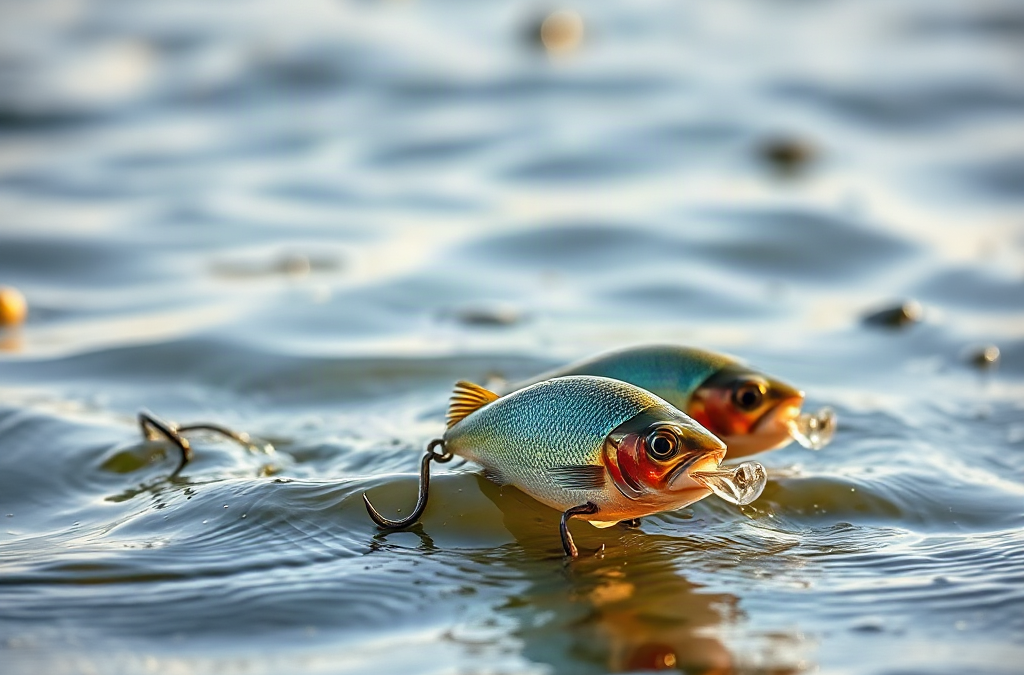
Identifying the best lures for specific fishing conditions means matching lure visibility, running depth, movement, and profile to water clarity, light, current, structure, and fish activity. Use natural colors and subtle action in clear water, stronger vibration or contrast in stained water, and choose a lure that reaches the fish’s actual depth rather than simply casting farther. Wind, current, vegetation, rocks, and suspended bait may change the best choice even within the same lake or river. A common mistake is changing lures randomly; adjust one variable at a time, watch how fish respond, and switch presentation speed or depth before abandoning a productive pattern.
Read the Water Before Choosing a Lure
Water conditions determine how easily a predator can locate, track, and strike a lure. Before tying on a favorite hard bait or soft plastic, examine clarity, surface movement, light level, temperature trend, visible forage, and the amount of cover available. These observations narrow the choice more effectively than species labels alone. A bass, walleye, or pike may respond to entirely different presentations in open, clear water than in a wind-blown shoreline with reduced visibility.

Water clarity is a useful first filter. In clear water, fish can inspect a lure for longer, so a realistic profile, restrained flash, and natural movement often make sense. Stained or muddy water reduces sight distance, increasing the value of vibration, displacement, contrast, and a profile that remains easy to track. That does not mean a noisy lure is automatically better in dirty water. Fish may still be shallow, inactive, or tightly buried in cover, where a compact jig or weedless soft bait reaches them more effectively.
Light changes the visual balance. Bright sun may make excessive flash look unnatural in shallow, clear water, while overcast skies can make moderate flash useful around rock or open flats. Wind creates surface chop that conceals line and lure movement, but it also pushes plankton and baitfish toward windward areas. A spinnerbait, bladed jig, or crankbait may become more useful there than a quietly presented worm, provided the lure can pass through the available cover.
Use a short observation routine before making the first cast:
- Look for baitfish size, surface activity, and whether forage is shallow or suspended.
- Estimate the depth where fish are likely to hold, not merely the depth visible from shore.
- Identify the dominant cover: grass, wood, rocks, docks, current seams, or open water.
- Note whether wind, waves, or current will move the lure naturally or force a faster retrieve.
The common mistake is treating weather as the entire pattern. “Cloudy means use a moving lure” is too broad to guide a difficult day. Cloud cover may improve feeding, but cold water, sparse forage, or heavy vegetation can still favor a slow presentation. The better approach is to combine conditions: clear water plus bright sun plus visible fish may call for a subtle lure, whereas stained water plus wind plus shallow bait may justify more vibration and a faster search.
Match Lure Type to Depth, Cover, and Current
Lure selection becomes more precise when running depth and path are treated as separate decisions. A lure that looks perfect but remains above the fish is poorly matched to the situation. Conversely, a deep-diving crankbait dragged through shallow rock may snag repeatedly and waste productive casts. Choose a lure that can stay in the strike zone while maintaining enough control to detect cover and contact.
For shallow flats, a topwater plug, jerkbait, spinnerbait, shallow crankbait, or lightly weighted soft plastic may cover water without burying in weeds or bottom debris. A suspending jerkbait can be valuable when fish follow but refuse a continuously moving lure; pauses hold the bait in view and allow the angler to test whether the fish wants a reaction or a slower target. A weightless soft plastic is often preferable around shallow grass when a treble-hooked bait collects vegetation on every cast.
Deeper fish require a presentation that reaches them efficiently. Deep-diving crankbaits, football jigs, Carolina rigs, blade baits, spoons, and weighted swimbaits each occupy different parts of the water column. A jig excels when fish are relating to bottom structure and the angler needs precise contact. A blade bait or spoon may cover suspended fish more quickly, but it can be harder to keep at a consistent depth without monitoring retrieve speed and line angle.
Cover changes the hook and hardware equation. Treble hooks can produce excellent hookups in open water, yet they are vulnerable to grass, brush, and timber. Weedless hooks, Texas-rigged plastics, compact jigs, and single-hook moving lures generally offer better access in snag-prone areas. The tradeoff is that a weedless rig may expose less hook point and require a deliberate, firm hook-set, while an exposed treble hook can catch fish efficiently when it remains clear of obstruction.
Current adds another layer. In a river, cast upstream or across a seam when the lure works best with the flow, but avoid choosing a bait so light that it lifts out of the target lane. A heavier jig may stay near bottom, while a minnow-shaped plug can imitate forage moving along the edge of current. The failure mode is selecting by lure appearance alone. If the bait sweeps over the fish, spins unnaturally, or repeatedly wedges into bottom structure, change weight, buoyancy, or running depth before assuming fish are absent. The internal reference identifying the best lures for specific fishing conditions is most useful when these physical constraints are considered together.
Select Color and Action for Light and Clarity
Color affects visibility, while action affects how a fish detects and interprets the lure. Neither should be chosen in isolation. A bright chartreuse bait may stand out in stained water, but a fast, aggressive retrieve can make it pass too quickly for fish holding close to cover. A natural green pumpkin soft plastic may look convincing in clear water, yet it can disappear at distance when sediment or heavy shadow reduces contrast.
Natural patterns are sensible when fish have time to inspect the lure and the available forage is easy to identify. Shad, perch, bluegill, minnow, and crawfish patterns can all be useful, but matching the dominant prey is more valuable than collecting every printed color. Profile and size often matter more than an exact pattern. A small baitfish imitation can outperform a larger one when fish are feeding on young-of-year forage, while a bulky silhouette may be easier to detect when predators are targeting larger prey.
Contrast becomes more useful as visibility falls. Dark colors can create a strong silhouette against a bright surface, while vivid colors may remain visible in muddy water. Flash is valuable when it resembles a fleeing baitfish, but too much flash may appear unnatural in calm, clear conditions. Soft plastics with salt or a compact jig trailer can produce a slower fall; that fall rate may matter more than color when fish are watching the bait descend beside a dock or laydown.
Action should reflect fish activity rather than a fixed weather rule. Active fish may chase a lipless crankbait, spinnerbait, or swimbait covering a broad area. Neutral or pressured fish may respond better to a suspending jerkbait, ned-style plastic, jig, or lightly moved worm. In cold water, a hard bait with a tight action and longer pauses may be easier for fish to track than a wide-wobbling lure retrieved quickly. In warm, oxygenated water with bait moving near the surface, a faster presentation may locate fish sooner.
A useful comparison is search lure versus decision lure. A search lure is designed to trigger or locate fish across water, while a decision lure is presented slowly after a fish follows, swipes, or misses. Continuing to cast the search bait after repeated follows wastes information. Switch to a smaller profile, slower cadence, different pause, or more natural color and test whether the fish objected to speed, size, or visibility. Keep changes controlled so the response teaches you something instead of creating a series of guesses.
A Practical Lure-Selection Process on the Water
Effective lure selection is a sequence of small tests, not a random rotation through a tackle box. Begin with the highest-probability combination of depth and cover, then choose a lure that can stay there. If fish are suspected along a rocky bank at six to ten feet, a medium-diving crankbait or jig gives more useful information than a surface plug. If the same bank is covered with thick grass, a weedless plastic or swim jig may reach fish with fewer fouled casts.
Run each lure long enough to judge its behavior. Check whether it reaches the intended depth, deflects cleanly from cover, maintains action at the planned speed, and comes through vegetation without collecting debris. A lure that repeatedly returns covered in grass is not necessarily unattractive; it is simply being used in the wrong lane or at the wrong angle. Change the cast direction, retrieve height, or hook style before discarding the entire pattern.

Use this compact decision sequence when conditions are uncertain:
- Locate the likely zone: identify depth, structure, current edge, or vegetation where prey and predators can overlap.
- Choose the needed movement: select a fast search bait for active fish or a slower presentation for neutral fish and pressured water.
- Match visibility: use natural detail in clear water and stronger silhouette, flash, or vibration when visibility is limited.
- Verify contact: confirm the lure is running at the right depth and interacting with cover without becoming unusable.
- Change one variable: adjust speed, size, color, depth, or action separately so each result has meaning.
Suppose a cloudy afternoon produces short follows on a spinnerbait near wind-blown grass. Replacing it immediately with a completely unrelated bait removes useful evidence. A smaller spinnerbait, slower retrieve, trailer change, or suspending jerkbait can reveal whether fish wanted less speed, a narrower profile, or more pause. If fish strike only when the lure deflects from grass, focus on angle and contact rather than repeatedly changing color.
Signs of a productive match include consistent depth, clean lure action, follows or strikes from the same type of location, and fish reacting at a repeatable part of the retrieve. Signs of a poor match include constant fouling, missed depth, unnatural movement in current, or strikes that stop whenever the bait leaves one narrow speed range. Record those details mentally or in a note. The next decision should respond to the failed element, which may be presentation rather than lure category.
Many anglers carry too many options but lack a testing order. A smaller selection covering surface, shallow, mid-depth, bottom, open water, and heavy cover is often more useful than dozens of nearly identical colors. The related resource identifying the best lures for specific fishing conditions should guide a condition-based system, while identifying the best lures for specific fishing conditions can serve as a reminder to evaluate depth and presentation before buying another lure.
For local depth, seasonal movement, and legal equipment details, consult state wildlife agency publications, fisheries-management pages, and regional university extension resources. These sources can add context that a general lure recommendation cannot, especially where water type, forage, and regulations vary.
Frequently Asked Questions
Which lure should be used first when water clarity is unknown?
Use a versatile lure that reveals depth and cover, such as a spinnerbait, medium crankbait, or soft plastic, then adjust color and action after observing follows, fouling, or bottom contact.
Are bright colors always better in muddy water?
No. Contrast, vibration, silhouette, and retrieve speed also matter. A dark lure may create a clearer outline against a bright surface, while a bright pattern may stand out better in heavily stained water.
How should lure choice change in strong current?
Choose a lure that reaches and stays in the target lane without tumbling. Added weight, a tighter action, or a cast that enters upstream of the holding area may improve control.
What is the best lure for fishing around heavy vegetation?
Weedless soft plastics, swim jigs, and selected single-hook lures usually move through vegetation more reliably than exposed treble-hook baits. The choice still depends on depth and the thickness of the plants.
Should lure speed be changed before changing lures?
Often, yes. If fish follow or strike intermittently, alter cadence, pause length, or retrieve speed first. A response can show whether fish rejected the lure itself or only its presentation.
Further Reading
Authoritative Sources
- Academy of Nutrition and Dietetics
eatright.orgProfessional nutrition guidance, healthy eating resources, and practical dietitian-reviewed advice.
- U.S. Department of Agriculture
usda.govOfficial food, nutrition, agriculture, and consumer guidance from the USDA.
- NIH Office of Dietary Supplements
ods.od.nih.govResearch-based fact sheets on nutrients, supplements, dietary intake, and safety considerations.
- International Society of Sports Nutrition
sportsnutritionsociety.orgEvidence-informed sports nutrition resources and position stands for active people and athletes.
Conclusion
Choosing a productive lure begins with the water fish are actually using. Prioritize depth and cover, then refine the selection through clarity, light, forage profile, current, and activity level. A lure that reaches the zone, maintains believable movement, and stays functional around the available structure is usually more valuable than a theoretically perfect color that never reaches the fish.
Test deliberately: begin with a search presentation when the location is uncertain, slow down after follows or short strikes, and change one feature at a time. Watch for repeatable signals such as consistent depth, clean contact, and reactions from similar cover. That process turns changing conditions into useful information and keeps lure changes tied to observable behavior rather than guesswork.

