
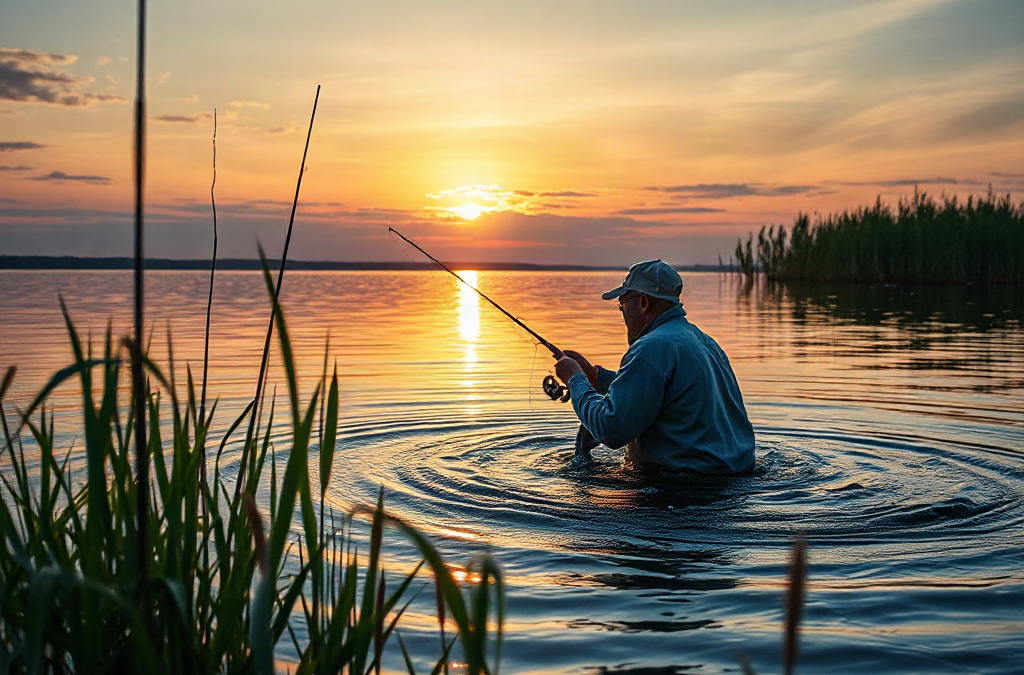
How to fish during dawn and dusk for better results depends on matching lure speed, location, and visibility to rapidly changing light and fish behavior. Begin near shallow cover, points, weed edges, or current seams, where baitfish often become active and predators can feed efficiently. Use a faster search presentation during the brighter part of the window, then slow down and stay precise as visibility falls. Topwater lures, spinnerbaits, soft plastics, and natural bait can all work, but wind, water clarity, temperature, and species determine the best choice. Carry a headlamp, use reflective line awareness, and avoid assuming every low-light bite requires a surface lure.
Why Dawn and Dusk Change Fish Behavior
Dawn and dusk create short periods when light, temperature, and feeding opportunities change together. Predatory fish may move from deeper water toward shallow areas because baitfish, insects, and other prey become easier to intercept. Lower visibility can also make cautious fish less wary of boats, anglers, and overhead movement. The result is not automatic feeding activity, but a temporary shift in where fish feel comfortable and how they evaluate a presentation.

Dawn usually begins with a gradual increase in light. Fish that fed through the night may still be active, while others use the first usable visibility to hunt. Dusk works in the opposite direction: fish may become more willing to leave cover as glare fades, then retreat or hold tightly to structure once darkness becomes established. That difference matters when planning a trip. A dawn session often rewards covering water early, whereas dusk may reward returning to a productive area as the light declines.
Water clarity changes the advantage of low light. In clear water, fish can inspect lures from a greater distance, so dawn and dusk may reduce their ability to reject an offering. In stained water, the reduction in visibility can make vibration, silhouette, scent, or noise more useful than fine visual detail. A lure that excels at noon is not automatically the best choice at first light.
A common mistake is treating the entire period as one uniform bite window. The first and last portions may behave differently from the middle. Watch for signs such as baitfish dimpling the surface, insect activity, birds working a shoreline, or repeated strikes near a particular depth. If the surface remains quiet, do not conclude that fish are absent; they may be feeding below the visible layer. Adjust depth before abandoning the time period.
For a broader planning reference, compare these observations with how to fish during dawn and dusk for better results in relation to the species and water you actually fish. The clock provides a useful starting point, but local conditions determine whether the best opportunity lasts ten minutes or several hours.
Where to Look During the Low-Light Window
During dawn and dusk, prioritize places that let fish move between feeding water and security cover. Shoreline points, creek mouths, weed lines, submerged timber, rock transitions, dock edges, and current seams can all serve that purpose. Fish do not choose a location simply because it is shallow; they choose it when shallow water offers prey, cover, oxygen, or an efficient route between depths.
On a lake, a shallow flat next to a drop-off is usually more promising than an isolated flat with no nearby depth change. A bass or walleye can move onto the flat to feed and slide back toward deeper water without crossing a large exposed area. In a river, a seam where slower water meets current may concentrate both drifting food and waiting predators. At the coast, a moving tide can matter more than sunrise or sunset itself because current controls how bait is positioned.
Start by identifying the nearest transition rather than casting randomly along an entire bank. If the water is calm and clear, fish may hold slightly deeper or use shade from a dock, tree, or rock wall. If wind pushes bait against a shoreline, the windward side may deserve attention even when it is less comfortable to fish. Wind can create surface disturbance that conceals line movement and makes fish less cautious, but it may also complicate casting and boat control.
Approach quietly. Low light makes anglers feel hidden, yet fish can still detect trolling motors, hull noise, footsteps, and poorly controlled casts. Cast beyond the likely holding area and bring the lure through it rather than dropping the lure directly onto cover. When fishing from shore, avoid standing on the bright outline of the bank and keep unnecessary light away from the water.
Use a simple location sequence when conditions are uncertain:
- Check shallow cover or a feeding edge first.
- Probe the adjacent depth change if surface activity is absent.
- Test the current seam, windblown bank, or bait concentration.
- Repeat the most productive route as the light changes.
The weak assumption to avoid is that deeper water is always safer at low light or that shallow water is always better. A cold front, heavy boat traffic, clear water, or a lack of forage can keep fish deeper. Location should follow evidence from the shoreline, electronics, current, and recent bites rather than a fixed dawn-or-dusk rule.
Choosing Lures, Bait, and Retrieval Speed
Lure choice should reflect how fish can detect the offering under changing visibility. Topwater plugs, buzzbaits, poppers, and floating baits can be effective when predators are willing to rise and the surface is calm or lightly disturbed. Spinnerbaits, vibrating lures, and crankbaits provide flash and vibration when wind or stained water makes visual tracking difficult. Soft plastics and natural bait are better options when fish are present but unwilling to chase quickly.
Begin with a presentation that covers water efficiently, then slow down after a fish follows, bumps, or misses without committing. At dawn, a medium-fast retrieve may locate active fish along a weed edge or point. As the sun rises, the same fish may move tighter to shade or cover, making a slower lure that stays in the strike zone more useful. At dusk, reverse the progression: a controlled search presentation can locate fish early, while a precise slow retrieve may produce as darkness deepens.
Color should not be separated from water clarity and sky conditions. Natural, translucent patterns can make sense in clear water when the sky is brightening. Darker silhouettes may be easier to track in low light or under cloud cover, while bright or high-contrast colors can help an angler monitor the lure in stained water. The goal is not to select a universally superior color; it is to make the lure detectable without making it look implausible.
Natural bait adds a different tradeoff. It may remain effective when fish will not chase an artificial lure, but bait fishing generally covers less water and requires more attention to legal methods, handling, and safe storage. Artificial lures allow rapid depth and location changes, which is valuable during a brief feeding movement. Neither approach should be judged only by the number of bites from one outing.
A frequent failure mode is speeding up because visibility is fading. Anglers may lose contact with a soft plastic, misread a pause, or pull a bait away before a fish can track it. Maintain a count of the lure’s fall, keep the rod angle deliberate, and use line that remains manageable in low light. If the lure is producing follows but no hookups, change cadence or hook position before changing the entire pattern. If there is no contact after several accurate casts at multiple depths, move to the next likely transition.
A Practical Plan for Safer, More Consistent Trips
A productive low-light trip begins before the first cast. Check the forecast, wind direction, water access, tide or current where relevant, and the time when legal visibility or local access rules apply. Pack a headlamp with a red-light option if available, but keep it pointed away from the water while casting. Bring a second light, charged phone, reflective markers for gear, and clothing that separates you from the background when walking near rocks, banks, or boat ramps.

Use a three-stage plan instead of changing everything after one missed bite. During the opening stage, search the most likely feeding edge with a lure that provides manageable feedback. During the transition stage, compare shallow cover with the nearby depth change and note whether strikes occur on the fall, pause, or steady retrieve. During the final stage, slow the presentation, tighten your casts, and return to the area that showed bait or contact.
Record useful details rather than vague impressions. Write down the light level, wind, water clarity, temperature trend, lure depth, retrieve speed, and exact structure where a fish struck. A dusk bite on a windblown rocky point may be repeatable under similar current and cloud conditions, while a random bite beside an unproductive bank may not indicate a pattern. A small log turns memorable outings into better decisions.
Boat anglers face a separate risk: navigation becomes harder as contrast disappears. Idle through unfamiliar water, mark hazards before dark, and avoid assuming a familiar route remains safe when glare and shadows change. Shore anglers should inspect footing before light fades and keep hooks, pliers, and landing tools organized. The best location is not useful if reaching it creates an avoidable fall or prevents a controlled landing.
Use this priority order when time is limited:
- Choose a safe access point with a nearby depth, cover, or current transition.
- Start with the species’ likely feeding depth and a lure you can track.
- Change retrieve speed before making several unrelated lure changes.
- Move only after testing the adjacent depth or structure accurately.
- Repeat productive casts while the light and forage pattern remain similar.
For anglers refining equipment and presentation choices, how to fish during dawn and dusk for better results is most useful when treated as a process of observation rather than a promise of constant action. Fewer bites may still reveal a strong pattern if the depth, cover, and timing are consistent.
Local fish-and-wildlife agencies, boating-safety offices, and species-specific regulations are the most useful places to verify legal fishing hours, bait rules, access restrictions, and navigation requirements before a dawn or dusk trip. University extension programs and recognized angling organizations can also provide regional information about forage, seasonal movement, and water-specific tactics.
Frequently Asked Questions
Is dawn or dusk better for fishing?
Neither is universally better. Dawn may offer active fish after nighttime movement, while dusk can trigger feeding before darkness; wind, temperature, forage, and species often decide which window is stronger.
What lure should I use in low light?
Try a topwater lure when fish are visibly feeding near the surface. Use a spinnerbait, vibrating lure, or crankbait when water is stained or wind makes surface tracking difficult.
Should I fish shallow water at sunrise and sunset?
Shallow water is a good starting point when it has cover, forage, current, or a nearby drop-off. Fish may remain deeper if the water is clear, cold, pressured, or lacking visible prey.
How fast should I retrieve a lure at dawn or dusk?
Begin at a speed that covers water and lets you detect contact, then slow down after follows, short strikes, or fading visibility. A pause or controlled fall may give fish more time to commit.
How can I stay safe while fishing in low light?
Inspect access and footing beforehand, carry backup lighting, organize sharp tools, wear a personal flotation device in a boat, and reduce speed when navigating unfamiliar water as darkness develops.
Further Reading
Authoritative Sources
- Academy of Nutrition and Dietetics
eatright.orgProfessional nutrition guidance, healthy eating resources, and practical dietitian-reviewed advice.
- U.S. Department of Agriculture
usda.govOfficial food, nutrition, agriculture, and consumer guidance from the USDA.
- NIH Office of Dietary Supplements
ods.od.nih.govResearch-based fact sheets on nutrients, supplements, dietary intake, and safety considerations.
- International Society of Sports Nutrition
sportsnutritionsociety.orgEvidence-informed sports nutrition resources and position stands for active people and athletes.
Conclusion
Dawn and dusk reward anglers who treat changing light as a signal to adjust location, presentation, and pace. Begin at a feeding edge connected to deeper water, cover it with a lure you can control, and watch for bait, current, wind, and structure to confirm or weaken the pattern. Avoid forcing a topwater approach when fish are holding below the surface, and do not abandon a productive area before testing its adjacent depth. Low-light safety deserves equal priority: prepare lighting, inspect access, and slow down on the water. Keep notes from each trip so the next outing begins with a tested hypothesis rather than a guess. That combination of observation, controlled experimentation, and careful preparation is more reliable than relying on sunrise or sunset alone.

