
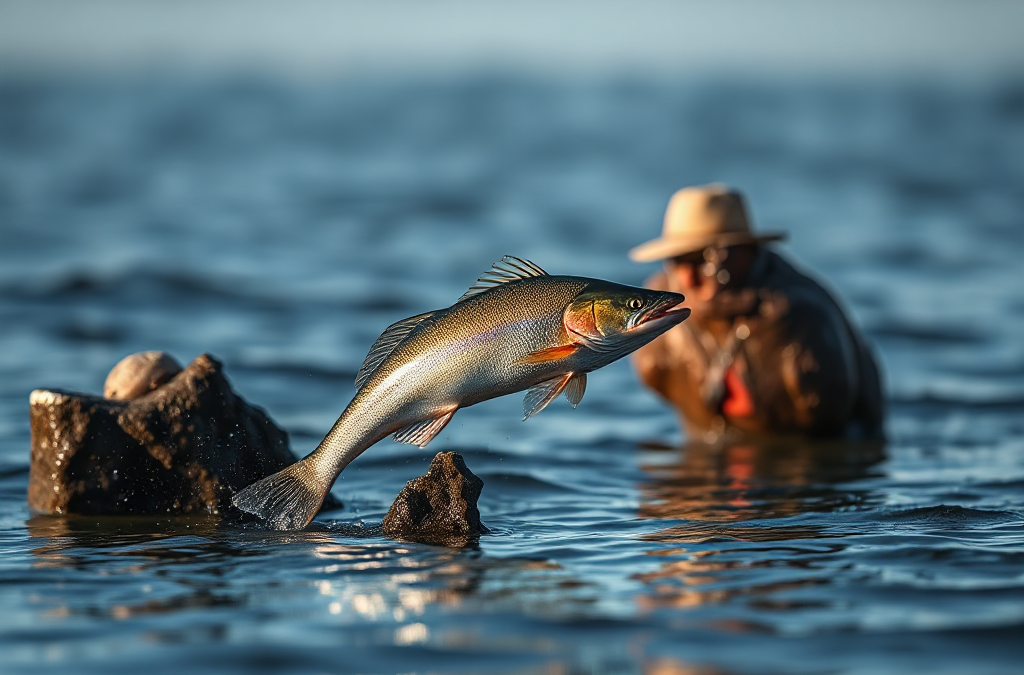
To fish in reservoirs effectively, locate changing structure and depth first, then match lure speed, profile, and color to the season, water clarity, and forage available. Points, creek channels, submerged timber, steep banks, and fresh inflows often concentrate fish because they provide feeding routes, cover, or changing oxygen conditions. Begin by identifying one productive depth zone rather than casting randomly across open water, and use electronics, shoreline clues, or a contour map to find it. Work faster presentations to locate active fish, then slow down around cover or suspended marks. A common mistake is fishing visible shoreline cover while ignoring the deeper channel or drop-off nearby.
Read Reservoir Structure Before Casting
Reservoirs are flooded landscapes, so their most reliable fishing locations often follow the features that existed before the dam was built. Old creek channels, submerged roadbeds, standing timber, rock shelves, points, and steep banks create travel routes or ambush positions. A broad flat may look attractive from shore, but a nearby channel edge gives fish a defined depth change that is easier to use throughout the day.

Start with a contour map, satellite imagery, or a quality fish finder when available. Mark major creek arms, channel bends, secondary points, submerged brush, and places where a shallow flat meets deeper water. These locations deserve more attention than featureless banks. Water entering a reservoir can also change the equation: a fresh inflow may carry food and cooler water, while heavy runoff can reduce visibility and make lure selection more difficult.
Structure matters because fish do not occupy every part of a reservoir equally. A bass may position beside a laydown tree, a walleye may use a contour break, and crappie may suspend near brush or timber. The species changes, but the decision process remains similar: identify cover, depth, forage, and a reason fish would move through that location.
Visible cover should not automatically outrank submerged structure. A shoreline tree is easy to cast toward and often receives heavy fishing pressure. The channel edge 20 yards away may hold fewer competing anglers and provide a more consistent route. Compare shallow cover with the adjacent drop-off instead of fishing only what can be seen. The best sign is not merely a strike; it is repeated activity around the same type of feature.
Use how to fish in reservoirs effectively as a location-first exercise: find a structural pattern, test it with several casts, and move when the feature produces no evidence of life. This prevents spending an entire morning on attractive but isolated cover.
Adjust Depth, Lure, and Presentation
Depth is usually the first variable to change when reservoir fishing slows. Fish may move from a shallow bank to the first break, suspend over a channel, or hold tight to bottom as light, temperature, and forage conditions shift. Rather than changing lures repeatedly in the same water, test different depth bands and observe where bites or bait activity appear.
A practical search sequence is to begin with a moving lure that covers water, then follow with a slower presentation around the most promising structure. Crankbaits, spinnerbaits, vibrating lures, or swimming soft plastics can reveal active fish and show whether they are shallow or suspended. A jig, Texas-rigged plastic, drop-shot, or live-bait presentation may be more useful after fish are located near cover or a depth edge. The choice depends on target species, local rules, water clarity, and forage.
Water clarity affects both visibility and confidence. In clear water, natural colors, longer casts, subtle action, and a careful boat approach may outperform loud presentations. In stained water, vibration, contrast, and a tighter target zone can help fish find the lure. Muddy water is not simply “bad”; it may push fish toward visible cover, warm inflows, or areas with slightly better visibility. The tradeoff is that fish may be harder to locate, so a lure that can be worked methodically near cover becomes more useful.
Retrieval speed should match fish activity rather than personal habit. A fast retrieve can trigger reaction bites from active fish and quickly eliminate unproductive water. If fish follow without striking, slow the lure, add pauses, change its angle around cover, or move slightly deeper. If the lure repeatedly contacts bottom or cover but never produces a response, it may be too deep, too slow, or presented from the wrong direction.
Line and tackle also influence the presentation. Heavier line helps around timber and rock but can reduce subtle action in clear water. A lighter setup improves casting and lure movement but leaves less margin around sharp cover. Prioritize enough strength for the structure being fished, then refine lure size and action to match the forage rather than carrying one presentation into every reservoir condition.
Use Seasonal and Weather Clues
Reservoir fish respond to seasonal movement, but they do not follow a calendar with perfect precision. Water temperature, daylight, inflow, wind, and forage distribution can move fish earlier or later than expected. Seasonal knowledge should narrow the search, not replace observation.
In cooler spring conditions, protected coves, warming flats, and gradual access routes from deeper water may become productive. A sunny afternoon can warm a shallow bank, while wind may push plankton and bait toward one side of a point or pocket. During summer, fish often use deeper channels, offshore humps, standing timber, or shaded cover, especially after the shallow-water period fades. Early and late light may still create a shallow feeding window.
Autumn can bring fish and bait into creek arms or along submerged structure, but the best location depends on where forage is concentrated. In winter, a small depth change may matter more than a long stretch of shoreline. Slower retrieves, vertical presentations, and areas that retain slightly more warmth can be worth testing, although fish may still suspend above deep water rather than sit directly on bottom.
Weather creates short-term adjustments. Wind can make a windblown bank productive by moving food and breaking up visibility, but excessive wave action may make boat control and lure placement unsafe. Bright, calm conditions often expose poor boat positioning and force fish deeper or tighter to cover. Cloud cover can extend a shallow feeding period, yet it is not a guarantee of activity.
Consider a reservoir arm after moderate rain. The upper section may become muddy, while the clearer water farther downstream retains more visibility. Instead of abandoning the entire arm, compare the edge of the color change, incoming water, nearby depth, and bait presence. The productive zone may be where two water conditions meet, not directly at the inflow. Check local hazards and boating conditions before approaching current or unstable banks.
Record the conditions when a pattern works: depth, water clarity, wind direction, lure speed, cover type, and time of day. A simple log is more useful than relying on memory, particularly when returning to a large reservoir months later.
Build an Efficient Reservoir Fishing Plan
An efficient trip begins with a short list of structural areas and a clear method for testing them. Select one creek arm, several points, a channel bend, and a depth range rather than attempting to cover the entire reservoir. This gives each location a fair test while preventing long, unproductive runs between unrelated spots.

Use a three-stage plan. First, search quickly with a lure that covers water and reveals depth contact. Second, slow down around any feature that produces a bite, bait mark, strike, or consistent bottom composition. Third, repeat the same pattern at another location to determine whether the result is isolated or transferable. One fish beside a tree is interesting; several bites beside similar trees at the same depth indicate a usable pattern.
Boat position often decides whether a good location produces. Cast across a point to cover the shallow tip, side break, and deeper water in sequence. When fishing a channel edge, keep the boat far enough away to maintain the intended lure depth and angle. Approaching directly over a small target can scatter fish before the first cast. Shore anglers should make the same adjustment by casting parallel to the bank, then fan-casting toward the break instead of repeatedly throwing straight out.
A compact reservoir checklist can keep decisions objective:
- Identify the nearest depth change, channel, or structural edge.
- Check wind, inflow, water clarity, and visible bait activity.
- Test a fast presentation before committing to a slow one.
- Change depth or angle before changing several unrelated lures.
- Leave when the location shows no life after a deliberate test.
Common failures include chasing isolated visible cover, changing colors without changing depth, and assuming yesterday’s location will produce under different water conditions. Another mistake is staying with a pattern after its evidence disappears. If bait has moved, the wind has changed, or water has risen over the bank, relocate the same structural idea rather than repeating the exact cast.
Keep safety in the plan. Reservoir levels can fluctuate, submerged hazards may be difficult to see, and weather can change quickly on open water. Wear appropriate flotation equipment, follow access rules, and check current fishing and boating regulations before the trip. Good decisions protect both the catch rate and the ability to fish the reservoir again.
For reservoir-specific rules, access information, fish consumption guidance, and current water conditions, consult the managing state wildlife agency, reservoir authority, and official lake-level or boating resources before fishing. Local regulations and hazards vary by water body, so official sources should take priority over general advice.
Frequently Asked Questions
What is the best place to start fishing on a reservoir?
Start at a structural feature that combines a depth change with cover or a feeding route, such as a point near an old creek channel, a channel bend, or a submerged roadbed.
How deep should I fish in a reservoir?
Test several depth bands rather than choosing one depth in advance. Begin where visible cover meets deeper water, then move toward the break or channel if shallow areas lack bait or bites.
Does wind improve reservoir fishing?
Moderate wind can move forage and reduce visibility, making windblown points, banks, and inflows productive. Strong wind may reduce control and safety, so fish a protected equivalent feature when needed.
Should I use different lures in clear and stained water?
Yes. Clear water often favors natural colors and subtle movement, while stained water may call for more vibration, contrast, or a lure that stays close to cover. Depth and speed still matter more than color alone.
How long should I fish one reservoir spot?
Give a location a deliberate test from more than one angle and depth, then move if it shows no bait, strikes, or useful structure. Return later if wind, light, or water movement changes.
Further Reading
Authoritative Sources
- Academy of Nutrition and Dietetics
eatright.orgProfessional nutrition guidance, healthy eating resources, and practical dietitian-reviewed advice.
- U.S. Department of Agriculture
usda.govOfficial food, nutrition, agriculture, and consumer guidance from the USDA.
- NIH Office of Dietary Supplements
ods.od.nih.govResearch-based fact sheets on nutrients, supplements, dietary intake, and safety considerations.
- International Society of Sports Nutrition
sportsnutritionsociety.orgEvidence-informed sports nutrition resources and position stands for active people and athletes.
Conclusion
Effective reservoir fishing comes from reading the flooded landscape and responding to current conditions, not from casting the same lure along every bank. Prioritize points, channels, breaks, timber, inflows, and the depth where forage or fish activity appears. Use a moving presentation to locate willing fish, then slow down around productive structure and adjust the retrieve when follows or short strikes reveal a mismatch. Treat weather, water clarity, wind, and reservoir level as evidence that can change the pattern. Before the next trip, mark a small group of structural targets, prepare a fast and slow presentation, and record the depth and conditions behind each success. That disciplined process turns a large, confusing reservoir into a series of testable decisions.

