
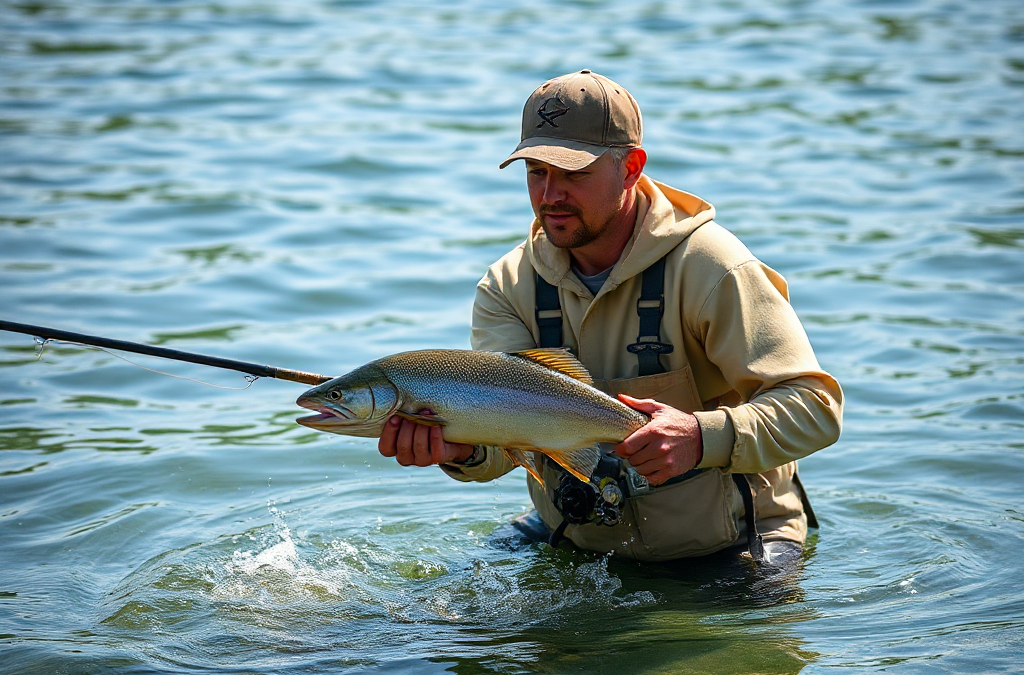
To adjust your fishing technique for different water clarity, consider the visibility level and adapt your approach accordingly. In clear water, use lighter lines and natural bait to avoid spooking fish. Conversely, in murky water, opt for brighter lures and heavier gear to enhance visibility. Understanding how light penetration affects fish behavior is crucial for selecting the right techniques and strategies.
Understanding Water Clarity and Its Impact on Fishing
Water clarity plays a significant role in fishing success, influencing fish behavior, feeding patterns, and the effectiveness of various fishing techniques. Clarity is determined by factors such as sediment, algae, and organic matter, affecting how light penetrates the water. In clear water, fish are more cautious and can easily spot unnatural movements, whereas murky water can provide cover, allowing fish to be more aggressive.

Understanding these dynamics is essential for anglers, as adjusting your fishing technique based on water clarity can significantly improve your catch rates. For instance, selecting the right bait color and size, as well as the type of fishing line, can make a substantial difference in attracting fish under varying visibility conditions.
Techniques for Clear Water Fishing
When fishing in clear water, fish tend to be more wary of their surroundings due to increased visibility. As a result, employing subtle techniques can lead to better results. One effective strategy is to use lighter fishing lines, as they are less visible to fish. A fluorocarbon line, for example, is often preferred in clear conditions due to its low visibility.
Additionally, using natural bait or lures that mimic the local forage can increase your chances of success. Soft plastics, jigs, and small crankbaits in natural colors can be particularly effective. Another technique is to fish at dawn or dusk when fish are more active and less cautious due to lower light levels.
When casting, aim for areas where fish are likely to hide, such as near vegetation or submerged structures. This approach not only increases your chances of encountering fish but also allows for a more stealthy presentation.
Strategies for Murky Water Fishing
In murky water, fish rely less on sight and more on their other senses, such as smell and lateral line detection. This means that using bright, noisy lures can be more effective. Consider using spinnerbaits, crankbaits, or topwater lures in vibrant colors to attract fish in these conditions.
Another effective strategy is to increase your bait’s size and visibility. Larger lures can create more vibrations and attract attention from fish that may be lurking in the shadows. Additionally, using scents or attractants can further enhance your chances, as fish can detect these cues even in low visibility.
When fishing in murky waters, it’s also beneficial to focus on shallow areas where fish may be more active. Casting near structures, such as fallen trees or rocks, can yield better results, as these spots often serve as ambush points for predatory fish.
Common Mistakes to Avoid
One of the most common mistakes anglers make is using the same techniques regardless of water clarity. Failing to adjust your approach can lead to frustration and decreased catch rates. For example, using light lines in murky water can result in lost lures and missed opportunities.
Another mistake is overlooking the importance of presentation. In clear water, a slow and steady retrieve can be more effective, while in murky water, a faster, erratic retrieve may be necessary to attract fish. Not paying attention to the time of day and weather conditions can also impact fishing success.

Lastly, always be mindful of local regulations regarding fishing techniques and bait usage, as they can vary significantly based on the water body and species targeted.
Frequently Asked Questions
What is the best line to use in clear water?
Fluorocarbon lines are often recommended for clear water due to their low visibility.
How can I attract fish in murky water?
Use bright lures and add scents to your bait to enhance attraction in murky conditions.
What time of day is best for fishing in clear water?
Dawn and dusk are typically the best times due to reduced visibility and increased fish activity.
Can fish see colors in murky water?
Fish rely more on vibrations and scents in murky water, so color visibility is less critical.
What are some common mistakes in fishing?
Not adjusting techniques based on water clarity and overlooking the importance of presentation are common errors.
Further Reading
Authoritative Sources
- Library of Congress Research Guides
guides.loc.govResearch guides that help readers locate reliable background sources on a wide range of subjects
- USA.gov Official Information and Services
usa.govOfficial U.S. government information and public resources for practical reference
- Google Scholar
scholar.google.comAcademic search resource for finding research literature and source material
Conclusion
Adjusting your fishing technique for different water clarity is crucial for improving your success on the water. By understanding how clarity affects fish behavior and employing the right strategies, you can enhance your chances of a successful catch. Prioritize using appropriate gear, selecting the right lures, and being mindful of environmental factors to optimize your fishing experience.

