
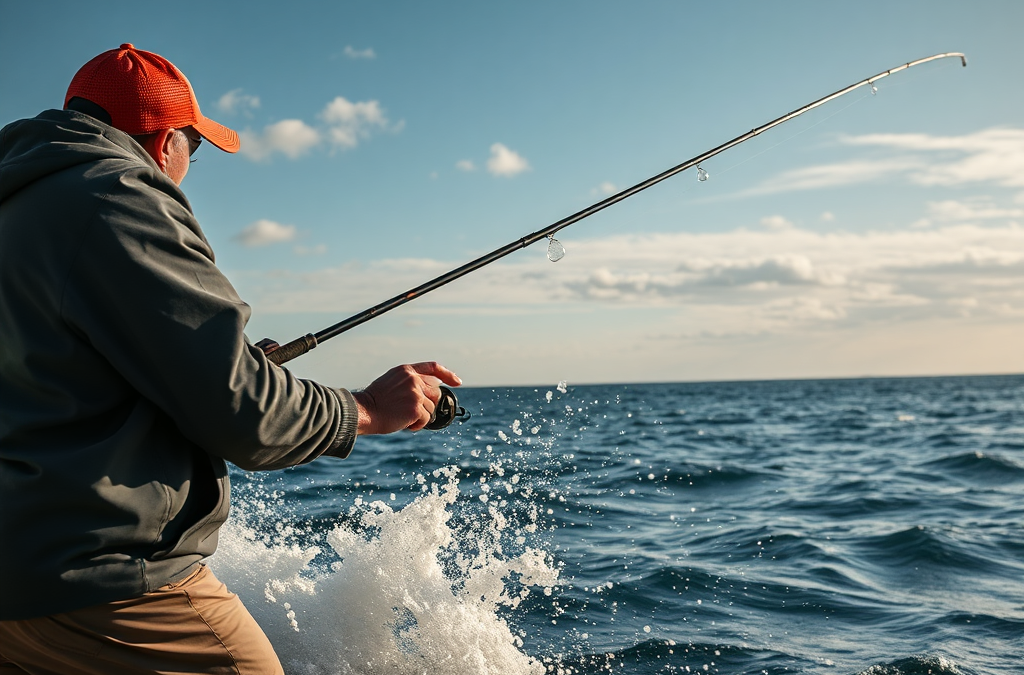
To fish in strong winds without losing gear, use heavier weights to keep your line submerged and opt for wind-resistant lures like jigs or spoons that can maintain their action in turbulent conditions. Position yourself in sheltered areas to minimize the wind's impact and consider utilizing a drift sock for better boat stability. Additionally, managing your line effectively is essential; avoid tangles by keeping your line taut and being mindful of how wind can affect your casting accuracy. This approach will help you maintain control and increase your chances of a successful fishing trip despite challenging weather conditions.
Understanding Wind Impact on Fishing
Fishing in strong winds poses unique challenges that can affect your gear and overall success. Wind can create rough water conditions, making it harder to control your boat and maintain precision in your casts. Additionally, strong winds can push fish into certain areas, changing their behavior and feeding patterns. Understanding these dynamics is crucial for adapting your fishing strategy effectively.

For instance, wind can cause surface disturbances that may either scare fish away or entice them to feed actively, depending on the species and conditions. Recognizing how wind influences fish behavior allows you to adjust your approach for better results.
Selecting the Right Gear for Windy Conditions
Choosing appropriate gear is essential when fishing in windy conditions. Heavier tackle and weights can help keep your line submerged and reduce the likelihood of losing gear due to strong gusts. For instance, using weights between 1/2 oz to 1 oz can provide stability against wind forces, especially when casting into the wind.
Your choice of lures also matters. Opt for wind-resistant lures like spoons or heavier jigs that can cut through the wind and maintain their action in turbulent waters. Additionally, consider using braided line, which offers less wind resistance compared to monofilament, helping to keep your bait in the strike zone longer.
Techniques for Casting and Retrieving
Effective casting and retrieving techniques are vital when fishing in strong winds. To minimize gear loss, practice low-angle casts that keep your line closer to the water’s surface, reducing the chance of wind interference. When retrieving, maintain a steady pace to ensure your lure stays in the optimal zone while avoiding tangles.
Using a side-arm cast can be beneficial, as it allows for greater control and accuracy. Additionally, consider using a slower retrieve to accommodate for wind-induced turbulence, which can help keep your bait in front of fish longer. This approach can help you adapt your technique to the conditions while maximizing your chances of a successful catch.
Choosing the Best Locations
Location selection is crucial for successful fishing in windy conditions. Seek out areas that provide some windbreaks, such as rocks, trees, or other natural structures that can shield your fishing spot from direct wind. These sheltered areas often harbor fish seeking refuge from strong currents and rough waters.
Furthermore, consider fishing on the leeward side of structures where fish are likely to congregate. Observing where the wind pushes baitfish can also give insight into where predatory fish may be feeding. Understanding these location dynamics allows you to make informed decisions that enhance your fishing success.
Frequently Asked Questions
What type of fishing gear is best for windy conditions?
Using heavier tackle with wind-resistant lures helps maintain control and reduces gear loss.
How does wind affect fish behavior?
Wind can push fish into sheltered areas or change their feeding patterns, making it essential to adapt your strategy accordingly.
What casting techniques work best in strong winds?
Low-angle and side-arm casts can help maintain accuracy and reduce line interference from the wind.
Are there specific locations to target in windy conditions?
Look for sheltered areas like behind rocks or trees, where fish may seek refuge from strong currents.
What should I avoid when fishing in the wind?
Avoid using light tackle and lures that are easily blown off course, as they increase the risk of losing gear.
Further Reading
Authoritative Sources
- Library of Congress Research Guides
guides.loc.govResearch guides that help readers locate reliable background sources on a wide range of subjects
- USA.gov Official Information and Services
usa.govOfficial U.S. government information and public resources for practical reference
- Google Scholar
scholar.google.comAcademic search resource for finding research literature and source material
Conclusion
Successfully fishing in strong winds requires understanding how wind impacts both your gear and fish behavior. By selecting appropriate equipment, employing effective casting techniques, and choosing well-sheltered locations, you can significantly enhance your chances of a productive fishing trip. Adaptability and awareness of the conditions will ultimately lead to better fishing outcomes, allowing you to enjoy your time on the water even in challenging weather.

