
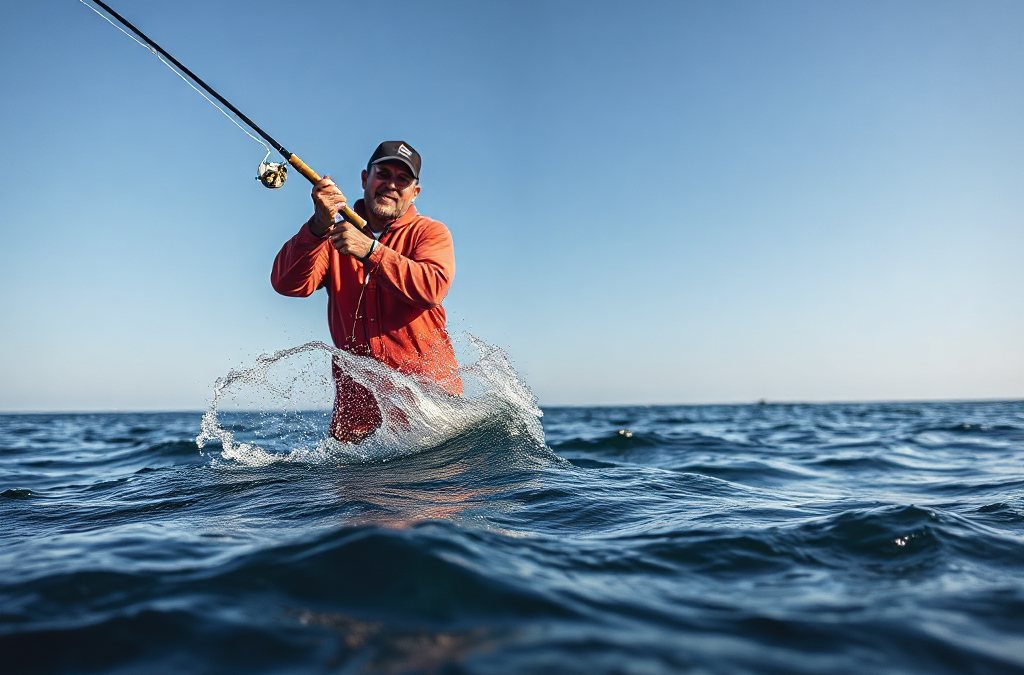
To adjust your fishing strategy for windy days, focus on using heavier lures to counteract wind resistance and target sheltered areas where fish may seek cover. Wind can create currents that affect fish behavior, so consider the wind direction when choosing your fishing spot. Additionally, use more visible or noisy lures, as the wind can reduce visibility underwater. Recognizing how wind alters water conditions is key to improving your catch rate.
Understanding Wind Effects on Water
The wind has a significant influence on fishing conditions, affecting both water surface dynamics and fish behavior. When winds blow across the water, they can create surface currents and waves, which may drive baitfish into certain areas, attracting predatory species. Understanding how these dynamics work is crucial for any angler looking to adapt their strategy on windy days.

Wind can alter temperature stratification in the water, leading to changes in fish locations. For instance, warmer water can be pushed to one side of a lake, drawing fish to that area where they feel more comfortable. Additionally, wind can create a more turbulent environment, which might encourage fish to feed more aggressively. This means that while fishing can be more challenging, it can also present unique opportunities if you know how to respond effectively.
Adjusting Your Equipment and Lures
On windy days, it’s essential to modify your fishing gear to counteract the challenges posed by the weather. Start by opting for heavier lures that can cut through the wind more effectively. Lures that weigh more can maintain their depth and visibility in choppy waters, making them more attractive to fish.
Consider using lures that create more noise or vibration, such as rattle traps or spinnerbaits, as these can capture the attention of fish even in reduced visibility conditions. Additionally, the use of bright colors can help your lures stand out against the churning water surface.
Don’t forget to check your line as well; a heavier line can help maintain control over your lure in windy conditions, while a more sensitive line can provide better feedback when a fish strikes. Choosing the right rod and reel combination that can handle the wind is also crucial for maintaining control and sensitivity.
Optimal Locations for Windy Conditions
Finding the right fishing location on a windy day can make all the difference. Fish often seek shelter from the wind, which means that areas with natural barriers, such as rocks, vegetation, or docks, can be prime spots. These locations provide cover and can concentrate fish that are looking to avoid the turbulent open water.
Pay attention to the wind direction as well; fishing on the downwind side of a point or structure can often yield better results. The wind can push food into these areas, creating a feeding frenzy as fish capitalize on the easy meal. Look for eddies or calmer pockets where fish may gather to rest and feed.
Moreover, shallow areas can warm up quickly and may attract fish as they seek warmer water. Wind can help oxygenate these areas, making them even more appealing.
Techniques for Casting and Retrieval
Adjusting your casting and retrieval techniques is crucial when fishing in windy conditions. First, aim to cast into the wind to maintain better control over your lure. This will help you avoid tangles and ensure that your lure lands where you intend. When retrieving, consider varying your speed and incorporating erratic movements to mimic struggling prey, which can trigger strikes even when fish are skittish.
Additionally, consider using a sidearm cast to keep your line low and minimize wind interference. This technique can help you maintain better accuracy and reduce the chances of your line being blown off course.

Finally, be patient and observant. Wind can change conditions rapidly, so be ready to adapt your strategy based on how fish are reacting. Keep an eye on surface activity and adjust your lure type or retrieval speed accordingly.
Frequently Asked Questions
What type of lures work best on windy days?
Heavier lures that create noise or vibration, such as spinnerbaits or rattle traps, are effective on windy days as they can attract fish in turbulent water.
How does wind affect fish behavior?
Wind can create currents that push baitfish into certain areas, prompting predators to feed more aggressively, especially in sheltered spots.
Where should I fish on a windy day?
Look for sheltered areas such as behind rocks, docks, or vegetation, and consider fishing on the downwind side where fish may gather to feed.
What rod and reel setup is best for windy conditions?
A medium to heavy action rod paired with a sensitive line will help maintain control and sensitivity in windy conditions.
How can I improve my casting accuracy in the wind?
Use a sidearm cast to keep your line low and minimize wind interference, and aim to cast into the wind for better control.
Further Reading
Authoritative Sources
- Library of Congress Research Guides
guides.loc.govResearch guides that help readers locate reliable background sources on a wide range of subjects
- USA.gov Official Information and Services
usa.govOfficial U.S. government information and public resources for practical reference
- Google Scholar
scholar.google.comAcademic search resource for finding research literature and source material
Conclusion
Adjusting your fishing strategy for windy days involves understanding the effects of wind on water dynamics and fish behavior. By selecting the right equipment, targeting optimal locations, and employing effective casting techniques, you can enhance your fishing experience. Remember to stay adaptable and observant, as conditions can change rapidly. With the right approach, windy days can lead to successful fishing outings.

