
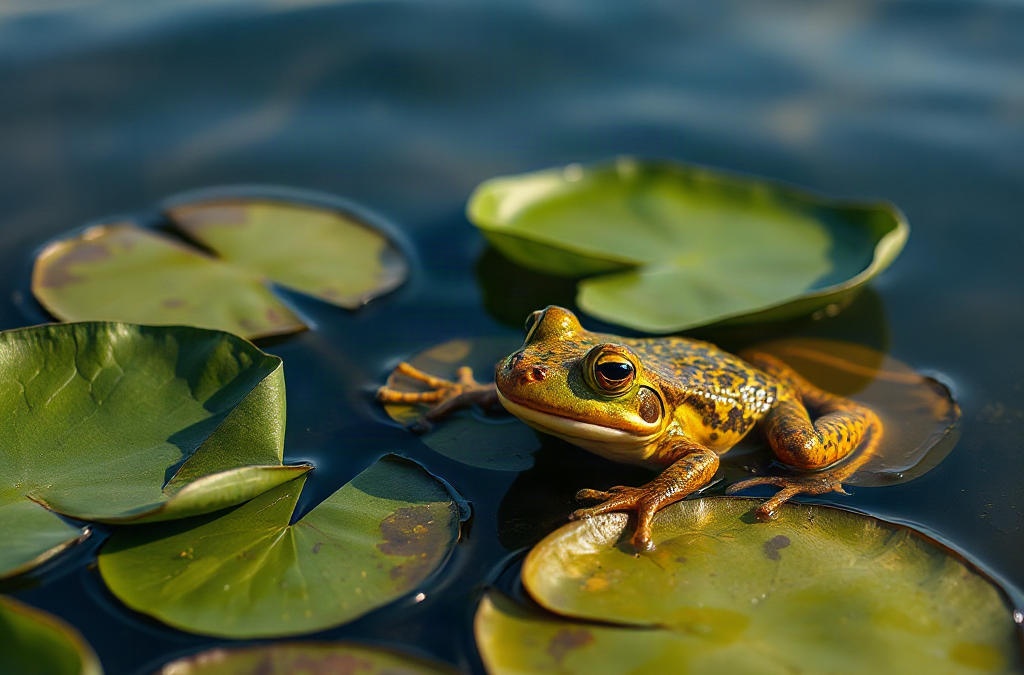
Topwater bass fishing lures produce surface strikes most reliably when their action, hook layout, and retrieve match the cover and water texture. Use a hollow-body frog over matted vegetation, a walking bait beside open edges, a popper around isolated targets, and a buzzbait when you need to search scattered cover. Calm water usually favors restrained movement and longer pauses, while wind or stained water may call for more splash, vibration, or displacement. Prioritize accurate casts and keep the lure in the strike zone; pulling it too quickly from promising cover and reacting before the bass loads the rod are common causes of missed fish.
What you’ll learn
This guide covers the following practical points:
- Matching Lure Style to Cover — Cover determines whether a topwater lure can reach bass cleanly and remain fishable through the highest-percentage part of a cast.
- Choosing Action for Water Conditions — Surface disturbance should be noticeable without overwhelming the conditions.
- Retrieves That Trigger and Convert Strikes — Retrieve cadence controls both the lure's signal and the time bass have to attack it.
- Topwater Tackle and Rigging — Tackle should provide casting control, clean lure action, and enough authority for the cover.
Matching Lure Style to Cover
Cover determines whether a topwater lure can reach bass cleanly and remain fishable through the highest-percentage part of a cast. Open-hook baits excel around clear lanes, points, seawalls, and sparse vegetation, but they collect grass or snag when pulled through pads, reeds, and surface mats. Weedless designs sacrifice some hookup efficiency in exchange for access to places where exposed trebles cannot travel.
A hollow-body frog is the practical choice for duckweed, lily pads, topped-out grass, and overhanging limbs. Its upward-facing hooks slide across cover, while its soft body compresses when a bass bites. Work it through openings and pause at mat edges, holes, or isolated clumps. A common failure is retrieving continuously across every feature; brief stops let the lure remain above fish using openings as ambush points.
Walking baits and poppers fit open pockets, outside weed edges, docks, laydowns, and shade lines. A walking bait covers a long edge efficiently, whereas a popper can be held beside a stump or dock post with repeated twitches and pauses. Buzzbaits are useful for searching broad banks, flooded bushes, and scattered grass because they move quickly while producing steady surface disturbance.

| Cover or Target | Useful Lure Style | Primary Advantage |
|---|---|---|
| Thick mats and pads | Hollow-body frog | Crosses vegetation with fewer snags |
| Open weed edges | Walking bait | Covers water while changing direction |
| Docks and isolated wood | Popper | Stays near a small target |
| Scattered shallow cover | Buzzbait | Searches water at a steady pace |
Choosing Action for Water Conditions
Surface disturbance should be noticeable without overwhelming the conditions. On calm, clear water, bass can track subtle movement from a distance, so a small walking bait, quiet prop bait, or softly worked popper often looks more natural. Long pauses can be especially productive near shade, grass points, and the ends of laydowns where a stationary lure remains visible.
Wind breaks up the surface and reduces the visual definition of a quiet lure. A larger walking bait, cupped popper, plopper-style bait, or buzzbait creates enough sound and displacement to remain detectable. Cast across or slightly with the wind when possible so line control does not erase the intended cadence. Excessive slack allows wind to bow the line and makes both lure control and strike detection less precise.
Water clarity changes how much bass rely on silhouette, vibration, and sound. Natural or translucent finishes suit clear water and bright conditions, while a strong silhouette can be easier to track in stained water, low light, or beneath heavy vegetation. Color is secondary to location and action: a perfectly matched finish moving outside the feeding lane is less useful than a plainly colored lure passing close to cover.
Forage also matters. Choose a narrow walking bait when bass are chasing small baitfish, a compact popper when prey is concentrated near a target, or a frog profile where bluegill and amphibians move across vegetation. Do not assume loud action is automatically better during aggressive feeding; if fish follow without committing, reduce speed, downsize, or add a pause before changing locations.
Retrieves That Trigger and Convert Strikes
Retrieve cadence controls both the lure’s signal and the time bass have to attack it. Begin with a repeatable pattern, then change one element at a time. For a walking bait, use short rod-tip movements while reeling only enough to collect slack. For a popper, alternate small twitches with pauses. Frogs can be walked in openings, crawled across mats, or held still beside a hole.
Place the cast beyond the target whenever room allows. Landing directly on a bass may scatter shallow fish, while approaching from several feet away lets the lure settle into its action before reaching the strike zone. Around a dock corner, for example, cast past the corner, work the bait alongside it, pause in the shade, and continue several feet before retrieving for another presentation.
Use the fish’s response to diagnose the next move:

- Short strikes: slow down, pause longer, or try a smaller profile.
- Followers: change direction or cadence before changing color.
- No visible interest: cover water faster or move closer to shade and cover.
- Repeated missed hookups: delay the hookset and inspect hook sharpness.
A surface explosion encourages an immediate reaction, but pulling at the first splash often removes the lure before the bass closes its mouth. Wait until the rod begins to load or the lure’s weight is clearly felt, then sweep firmly. With a frog, that brief delay is particularly useful because the body must compress before the hooks gain purchase. Waiting too long, however, can allow a fish to turn into dense cover, so the goal is confirmation rather than a prolonged count.
Topwater Tackle and Rigging
Tackle should provide casting control, clean lure action, and enough authority for the cover. A medium-power casting or spinning rod can handle smaller poppers and light walking baits in open water. Larger walkers, buzzbaits, and frogs generally benefit from a medium-heavy or heavy rod, particularly when vegetation must be cleared quickly. A rod with some tip flex helps cast accurately, while a stronger lower section drives hooks and controls fish.
Line selection changes both presentation and landing power. Braided line floats, transmits movement well, and cuts through vegetation, making it a common match for frogs and heavy grass. Monofilament also floats and adds stretch, which can reduce the tendency to pull treble hooks free. Fluorocarbon sinks and may drag the nose of some surface lures downward, so it is usually a poor default for topwater presentations.
Match line strength to cover rather than lure size alone. Heavy vegetation demands more strength than an open point, even if the same lure is used. With treble-hook baits, avoid overpowering fish with an excessively stiff setup; limited stretch and a rigid rod can widen hook holes during a close-range surge.
Inspect the lure before each productive stretch. Confirm that hooks are sharp, split rings are closed, frog bodies drain properly, and skirts or propellers move freely. On walking baits, a loop knot or small snap may permit freer side-to-side motion, but bulky hardware can collect vegetation or alter balance. The rig is working when the lure starts cleanly, tracks predictably, and returns without fouling; repeated leaning, spinning, or grass buildup calls for an adjustment before the next cast.
Frequently Asked Questions
Which topwater lure is easiest for a beginner to use?
A buzzbait is easy to operate because a steady retrieve keeps it working. A popper is another manageable option when bass are holding beside docks, wood, or small openings.
When should I use a frog instead of a walking bait?
Choose a frog when pads, mats, or surface grass would foul exposed treble hooks. Use a walking bait along open edges and clear lanes where its wider action can develop without snagging.
Why do bass miss topwater lures?
A bass may strike behind the lure, slap it, or fail to take it fully. Excessive speed, a large profile, dull hooks, and an immediate hookset can turn those reactions into missed fish.
Are topwater lures only useful early and late in the day?
No. Low light often supports surface activity, but shade, wind, cloud cover, shallow cover, and active forage can extend a topwater bite into brighter periods.
Should I stop a topwater lure after a bass misses it?
Pause briefly if the lure remains in place, then resume with a restrained movement. If the fish does not return, cast back from a different angle before switching presentations.
Conclusion
Select the lure by access first: frogs for covered water, treble-hook baits for open lanes, poppers for precise targets, and buzzbaits for searching. Then tune noise and speed to surface texture, clarity, and fish response. Accurate placement, controlled slack, sharp hooks, and a hookset made after the rod loads will convert more opportunities than constant lure changes. Start with a dependable presentation, observe each follow or miss, and adjust only one variable at a time.

