
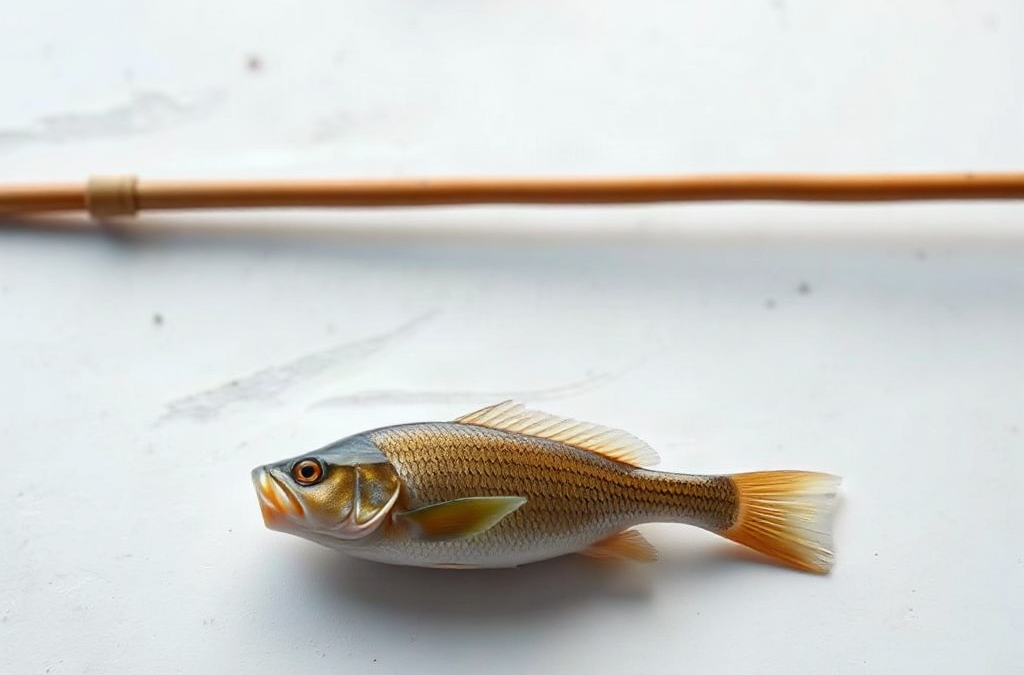
Improve catch rates with specific bait types by matching the bait to the target species, its feeding depth, and the forage present rather than choosing solely by popularity. Use lively worms or minnows when movement matters, cut bait when scent must travel through stained water, insects for surface-feeding fish, and dough baits for species that respond to a concentrated food odor. Keep hook size proportional to the bait, expose the point, and control sinker weight so the offering moves naturally. If bites stop, change presentation speed or depth before abandoning a bait that already matches the fish’s likely food.
Match Bait to Species and Feeding Zone
Bait selection becomes more reliable when it begins with the fish’s feeding behavior. A bait that resembles local forage can still fail if it is placed above a bottom-feeding fish, buried in weeds, or moving faster than the fish can comfortably pursue. Identify the target species, likely holding depth, water clarity, and dominant food source before deciding what belongs on the hook.
For example, a lively minnow suspended near the edge of submerged cover may appeal to bass or crappie watching for vulnerable baitfish. The same minnow dragged motionless through soft bottom can lose its advantage and collect debris. A worm presented near the lakebed is often easier for bottom-oriented fish to locate, while a grasshopper or cricket may be more convincing near overhanging vegetation where insects naturally enter the water.
Feeding zones shift during a session. Fish may move shallow in low light, hold deeper under bright sun, or position where current carries food past a break. Watch where bites occur rather than assuming the first productive depth remains correct. If a float rig produces at dawn but stops later, lowering the bait or moving to shaded cover may be more productive than immediately switching bait types.
Water clarity changes how fish find an offering. In clear water, natural appearance, subtle movement, and light terminal tackle often matter more because fish can inspect the bait. In stained water, scent and vibration become more useful. Fresh cut bait, a wriggling worm, or a lively minnow may create a stronger detection trail than a small, motionless offering. This does not mean larger and smellier is automatically better; oversized pieces can discourage smaller target fish or cause short strikes.
A practical bait choice should answer four questions:
- What does the target commonly eat? Match the broad category—fish, insect, worm, crustacean, or prepared food.
- Where is it feeding? Place the bait at the surface, in midwater, near cover, or on the bottom accordingly.
- How is forage behaving? Use drift, movement, or stillness that resembles an easy meal.
- Can the fish take the hook cleanly? Reduce bait and hook size when bites do not become hookups.
The common mistake is treating a proven bait as universally effective. Nightcrawlers catch many species, but they are not automatically the strongest choice when predators are focused on a concentrated school of small baitfish. Start with a bait that fits the species and feeding zone, then let bite location, stolen bait, and hookup quality refine the choice.
Which Bait Types Work in Different Conditions?
Each bait type creates a different combination of appearance, scent, movement, and durability. Choosing among them is easier when those traits are compared with the conditions instead of reduced to a single list of “best” baits.
| Bait type | Useful situation | Primary strength | Common limitation |
|---|---|---|---|
| Worms | Bottom rigs, floats, mixed-species fishing | Natural movement and broad appeal | Small fish may strip them quickly |
| Live minnows | Predators near cover or suspended forage | Movement, profile, and distress signals | Require careful handling and may face local restrictions |
| Cut bait | Stained water, current, scent-oriented species | Strong scent trail and stays near the target zone | Can twist, wash out, or attract unwanted scavengers |
| Insects | Shallow water and surface activity | Closely resembles seasonal natural forage | Delicate and difficult to cast hard |
| Dough or prepared bait | Stocked fish and scent-responsive bottom fishing | Consistent odor and easy portion control | May fall off during long casts or strong current |
Worms are a strong diagnostic bait because many freshwater fish will sample them. Threading an entire worm into a thick bundle, however, can hide the hook and produce repeated taps without solid hookups. For smaller fish, a short section that leaves the hook point clear often performs better. For larger targets, a whole worm can be allowed to move naturally, provided it does not wrap around the leader.
Live minnows are most useful when predators are already keyed to baitfish. Their condition matters: a weak minnow that spins or hangs motionless may look less convincing than a properly worked artificial lure. Hook placement should preserve movement without damaging the bait more than necessary. Local rules may restrict which baitfish can be used, transported, or released, so anglers should check the regulations for the water being fished.
Cut bait trades visual realism for scent and station-keeping. In flowing water, a firm piece with skin attached usually remains on the hook better than soft flesh alone. Position it where current carries odor toward likely holding water, such as the downstream edge of a channel break. Too much weight can pin the rig unnaturally, while too little may let it roll into snags.
Insects are situational rather than universal. A cricket beneath a small float can be effective beside reeds or overhanging branches, especially when fish are visibly taking food near the surface. Dough baits serve a different role: they can concentrate scent around a compact hook bait but require gentle casting and periodic checks. The smart choice is the bait whose strongest trait—movement, scent, profile, or durability—solves the problem presented by the water.
How Do Rigging and Freshness Affect Bites?
Rigging determines whether an appropriate bait still looks and behaves like food. A hook that is too large stiffens a small worm or insect, while a hook buried inside a thick piece of bait may never reach the fish’s mouth. The hook gap should remain open, and the point should be exposed unless snag pressure makes a lightly concealed point necessary.
Match the amount of weight to depth, current, and casting distance rather than adding sinkers simply to cast farther. A light float rig lets a worm or insect move through shallow water with minimal resistance. A slip sinker rig can allow a bottom-feeding fish to take bait without immediately feeling a fixed weight. In stronger current, enough weight is needed to hold the intended seam, but the rig should not become so heavy that every touch feels rigid.
Leader length also changes the bait’s action. A short leader keeps cut bait close to the bottom and provides control in current. A longer leader allows more movement but can tangle around cover or drift outside the productive lane. If fish are present but hesitant, reducing line visibility, hook size, or sinker resistance may help. If the bait repeatedly tangles or reaches the wrong depth, greater control is more valuable than maximum delicacy.
Freshness matters differently across bait categories. Live bait should be active and kept at a suitable water temperature with adequate oxygen. Dead or stressed minnows lose the movement that justifies using them, although they may still function as scent bait where legal. Worms should remain firm and lively rather than limp or damaged. Cut bait should retain a clean, recognizable profile; pieces that have washed pale and soft usually release less scent and hold poorly.

Prepared baits need attention because casting and soaking gradually break them down. Mold a compact amount around an appropriate hook or bait holder, then inspect it after a missed bite or an unproductive soak. Casting an empty hook for another fifteen minutes wastes more time than checking it. Conversely, retrieving every minute prevents the bait from working and repeatedly disturbs the area.
Use the condition of the returning rig as evidence. A clean hook suggests the bait is being stolen, falling off, or removed by the cast. Crushed or scaled bait may indicate contact with small fish. An untouched offering can mean the fish are absent, the depth is wrong, or the bait is outside the feeding lane. The frequent mistake is blaming bait choice before checking whether the hook still carries a usable, naturally presented offering.
When Should You Change Bait or Presentation?
Change one variable at a time so the fish’s response reveals what was wrong. Replacing the bait, moving spots, changing depth, adding weight, and switching hook size simultaneously may eventually produce a bite, but it does not show which adjustment worked. A controlled sequence builds a repeatable pattern for the rest of the session.
Start by confirming that the bait is intact and positioned where fish are likely holding. Next, adjust depth or casting angle. A bottom rig sitting behind a current break may need to move only a few feet into the seam. A suspended minnow may need to be lowered to the top of cover rather than dropped into branches. When the location appears correct, alter movement: slow the drift, reduce float travel, or refresh a motionless live bait.
Bite behavior points toward the next change. Rapid taps followed by a bare hook usually call for a smaller, tougher piece of bait or a faster hook-set appropriate to the species. Firm pulls without hookups may indicate that the hook is obscured or the bait is too bulky. No contact at all suggests checking depth, location, and fish activity before cycling through every bait in the container.
A useful troubleshooting order is:
- Inspect bait condition and clear weeds or debris from the rig.
- Place the bait at a different depth or along a nearby cover edge.
- Modify sinker weight, leader length, drift speed, or float position.
- Reduce bait size and confirm that the hook point and gap are usable.
- Switch bait category when the current option does not match observed forage or feeding behavior.
Consider a pond where fish repeatedly swirl beneath overhanging trees but ignore a worm on the bottom. Moving that same worm beneath a float tests feeding depth first. If the activity continues without bites, changing to a cricket tests whether the fish are focused on falling insects. The sequence uses visible evidence instead of random rotation.
Signs of improvement include bites occurring sooner, bait returning with clear tooth or mouth marks, and more taps becoming steady pulls or hookups. A failing adjustment produces repeated fouling, damaged bait without hook contact, or no response despite confirmed fish activity. Avoid changing after every cast; give a well-positioned bait enough time to enter the feeding window. At the same time, do not leave damaged bait soaking simply because that bait worked on a previous trip.
Frequently Asked Questions
Should bait match the exact size of local forage?
Close size matching is useful when fish are visibly feeding on one forage class, but exact duplication is unnecessary. Begin near the observed size, then downsize if fish inspect the bait or strike without taking it.
Is live bait always more effective than prepared bait?
No. Live bait provides natural movement, while prepared bait may hold a concentrated scent in one area and is often easier to portion. The better option depends on species, regulations, water movement, and feeding behavior.
Why do fish keep stealing worms without getting hooked?
The worm may be too long, the hook point may be covered, or small fish may be pulling loose ends. Use a shorter piece, expose the point, and consider a smaller hook that still has an open gap.
How often should bait be checked?
Check after a missed bite, contact with weeds, a hard cast, or enough soaking time for the bait to weaken. Active live bait can remain longer, while soft dough and washed-out cut bait need more frequent inspection.
Does adding more scent improve every bait?
Not necessarily. Added scent may help fish locate an offering in stained water, but it cannot correct poor depth, an obstructed hook, or unnatural movement. First make sure the presentation reaches feeding fish cleanly.
Conclusion
Productive bait fishing comes from connecting bait characteristics with fish behavior. Identify the likely food source and feeding zone, then choose whether movement, scent, profile, or durability matters most under the conditions. Rig the offering so the hook remains functional, use only enough weight to control it, and inspect its condition after missed bites or contact with cover.
When results are poor, test depth and presentation before making a wholesale bait change. Stolen bait points toward smaller portions or better hook exposure, while untouched bait often calls for a location or depth adjustment. Carrying a few distinct options—such as worms, a legal baitfish option, cut bait, insects, or prepared bait—provides more useful choices than carrying many versions of the same presentation. Record which bait, depth, and rig produce clean hookups so successful decisions can be repeated under similar conditions.

