
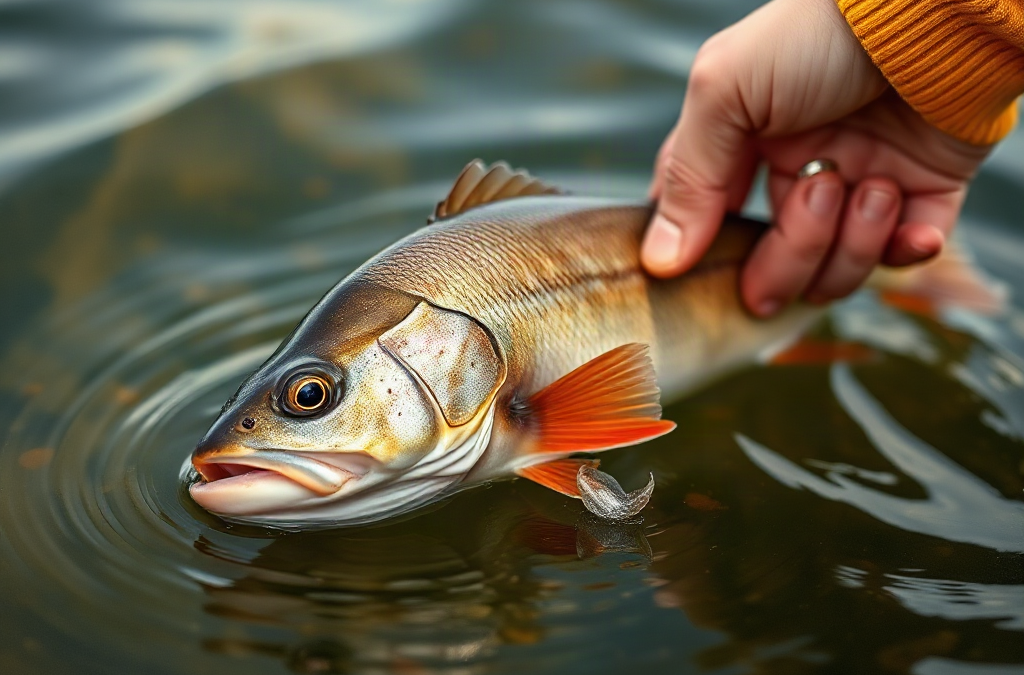
If fish are biting on the wrong bait, keep the successful bait in the water long enough to identify its size, color, action, depth, and retrieve speed, then adjust your intended lure or natural bait to match those traits. Check whether the bites are coming from the target species or incidental fish before changing tackle. Make one controlled change at a time—such as downsizing the hook, slowing the retrieve, or moving shallower—so you know what triggered the response. Do not reject an unexpected bait merely because it conflicts with your plan; active fish provide stronger evidence than assumptions about what they should eat.
What you’ll learn
This guide covers the following practical points:
- Confirm What the Fish Are Actually Responding To — An unexpected bait choice is useful evidence, but the bait itself may not be the only reason fish are striking.
- Decide Whether the Unexpected Bites Serve Your Goal — A bait is only “wrong” in relation to an objective.
- Transfer the Productive Traits to Your Preferred Bait — Matching the successful traits is more reliable than copying the unexpected bait without analysis.
- Use a Controlled Bait-Adjustment Checklist — A controlled adjustment sequence protects a working bite while allowing you to move toward the species, size, or technique you intended to fish.
Confirm What the Fish Are Actually Responding To
An unexpected bait choice is useful evidence, but the bait itself may not be the only reason fish are striking. Its depth, fall rate, silhouette, vibration, scent, or position relative to cover may be doing more work than its label or intended species. A small soft plastic intended for panfish, for example, might catch bass because it falls slowly beside dock posts. Switching immediately to a larger bass lure could remove the precise feature producing bites.
Observe the complete presentation before changing anything. Note where each strike occurs, including the approximate depth, distance from cover, stage of the retrieve, and amount of line tension. A bite during the initial drop points toward fall rate or vertical movement. Repeated strikes after the bait touches bottom suggest bottom contact, pauses, or disturbed sediment. Fish following a moving lure and striking only when it stops are responding to a different cue than fish hitting it during a fast retrieve.
Several catches provide better information than one isolated strike. A single fish may be opportunistic, while repeated bites in the same zone reveal a pattern. If possible, repeat the cast from the same angle and use the same retrieve. Consistent contact shows that the result is reproducible. If the bite disappears immediately, consider whether the fish moved, the light changed, or the first catch disturbed the spot before concluding that the bait stopped working.
Inspect the bait after a strike as well. Torn soft plastic, missing appendages, stripped natural bait, tooth marks, or slime can help distinguish a solid take from a short strike. Small fish pecking at the tail of a worm require a different response than a larger fish engulfing it. Downsizing might convert pecks into hookups, but it may also attract more small fish and move you farther from your original objective.

The common mistake is assigning success to bait color alone. Color is easy to notice, yet profile, speed, and depth often change at the same time when anglers switch lures. Treat the productive presentation as a bundle of characteristics. The aim at this stage is not to explain every bite with certainty; it is to preserve the repeatable parts of the presentation before experimentation erases them.
Decide Whether the Unexpected Bites Serve Your Goal
A bait is only “wrong” in relation to an objective. If the goal is simply to catch active fish, the productive bait is currently the correct choice. If the goal is to catch a particular species, avoid undersized fish, comply with bait restrictions, or practice a specific technique, unexpected action may justify a deliberate change. Making that distinction prevents an angler from abandoning a strong bite merely because it did not match the original plan.
Identify the fish producing the action whenever you can do so safely. Frequent taps without hookups could come from small panfish, baitfish, or fish grabbing only the end of the offering. Landed fish offer clearer evidence: species, mouth size, hook position, and condition of the bait all help. Deeply swallowed hooks are a reason to alter hook size, rigging, or bait choice, especially during catch-and-release fishing. Check local regulations before continuing with an unintended species because seasons, possession rules, hook restrictions, and permitted baits vary by location.
Consider a common shoreline scenario: an angler targeting larger bass with a bulky lure notices constant bites on a small worm used by a companion. Copying the worm may produce immediate action, but the catch size could remain small. A better choice depends on the day’s priority. For steady bites, use the smaller profile. For a chance at a larger fish, retain some of the successful traits—perhaps the natural color and slow fall—while increasing the profile modestly rather than jumping back to the original bulky lure.
Incidental catches can also reveal location rather than preference. Perch or small bass caught along the outer edge of vegetation may indicate concentrated forage. A predatory target species could be nearby but positioned deeper, tighter to cover, or slightly down-current. Instead of replacing the productive bait, work it through adjacent depth bands or use a related presentation capable of reaching the less accessible water.
Do not let tackle inconvenience dictate the interpretation. Anglers sometimes call a bait wrong because it is tied to a light rod, has a fragile hook, or cannot be cast efficiently in wind. Those are operational limits, not proof that fish prefer something else. The practical response may be to reproduce the bait’s profile and action on tackle suited to the cover. For more context on evaluating an unexpected pattern, see what to do if fish are biting on the wrong bait while keeping species, regulations, and fish-handling consequences central to the decision.
Transfer the Productive Traits to Your Preferred Bait
Matching the successful traits is more reliable than copying the unexpected bait without analysis. Start with the feature most clearly connected to the strikes. If every bite occurs close to the bottom, preserve running depth before worrying about color. If fish attack a bait only during long pauses, duplicate the suspension or slow fall. If the action is limited to wind-blown banks, location and forage concentration may matter more than lure design.
Change one variable per short test whenever conditions allow. Switching size, color, weight, hook, and retrieve simultaneously may catch a fish, but it will not show which adjustment worked. Begin with the easiest high-impact variable: retrieve speed, depth, or profile. Give the revised presentation several casts through the same productive water. Compare strike location and bite quality rather than judging solely by total catches.
Suppose trout are taking a tiny natural-colored lure while ignoring the brighter, heavier lure selected for longer casts. The small lure might resemble available forage, but it also may remain higher in the current and move more naturally. A useful test is a similarly sized lure with enough weight to cast while retaining a subdued finish and controlled drift. If the heavier substitute sinks below the feeding lane, added casting distance has solved the angler’s problem while creating a presentation problem.
Natural bait requires the same disciplined approach. Fish taking a small piece of worm but ignoring a larger offering may prefer the smaller meal, or the small piece may expose the hook better and move without spinning. Trim the intended bait, reduce hook size if it remains appropriate for the target, and check that the rig drifts or rests naturally. More scent or a larger portion is not automatically better; excess bait can mask the hook point, twist line, or allow fish to steal the end without being hooked.

Use broad matching categories rather than chasing an exact replica:
- Profile: shorter, slimmer, bulkier, or more compact.
- Movement: steady, erratic, gliding, vibrating, or nearly still.
- Water level: surface, suspended, near cover, or bottom-oriented.
- Pace: fast retrieve, slow crawl, controlled drift, or extended pause.
- Visibility: natural contrast, bright contrast, flash, or a muted finish.
The failure sign is a substitute that looks similar in the tackle box but behaves differently in the water. Test it beside the bank or boat when visibility permits. If its fall, roll, track, or pause differs sharply from the productive bait, appearance alone will not preserve the pattern. A related explanation of what to do if fish are biting on the wrong bait should therefore focus on presentation mechanics, not merely lure names.
Use a Controlled Bait-Adjustment Checklist
A controlled adjustment sequence protects a working bite while allowing you to move toward the species, size, or technique you intended to fish. Keep the productive setup available rather than cutting it off immediately. If you have a second rod and local rules permit its use, prepare the test bait separately. Otherwise, photograph or record the successful rig, including weight placement and leader length, so it can be rebuilt accurately.
Follow a short sequence instead of making random changes:
- Repeat the successful presentation. Confirm that another strike can be produced in the same depth or cover zone.
- Identify the likely trigger. Choose one leading factor, such as small profile, slow fall, bottom contact, flash, or scent.
- Define the reason for changing. Target a different species or size, reduce deep hooking, reach farther, handle heavier cover, or meet a bait rule.
- Alter one characteristic. Preserve the likely trigger while changing only what the goal requires.
- Compare several equivalent casts. Use the same area and angle, then evaluate follows, taps, hookups, and landed fish.
A successful adjustment does not need to produce more strikes immediately. It succeeds if it improves the result that matters. A slightly larger hook may reduce the number of small fish landed while producing cleaner hookups on the intended size. A heavier lure may generate fewer bites but let you reach fish holding beyond the original bait’s casting range. Conversely, repeated follows without contact indicate that the substitute has retained enough appeal to attract fish but may be moving too quickly, riding at the wrong depth, or presenting too large a profile.
Set a practical limit for testing. During a short feeding window, spending twenty minutes cycling through colors can waste the most productive part of the session. Return to the known bait after a few fair casts if a change produces no signs of interest. When fish are active for a longer period, test more carefully and record the conditions. Water clarity, current, cloud cover, wind, temperature changes, and fishing pressure can alter the pattern later, so yesterday’s successful conversion may not remain valid.
Avoid treating lure changes as a progression from inferior to superior. The original bait, the accidental producer, and the adjusted substitute each solve different constraints. The first may suit the target, the second reveals current fish behavior, and the third attempts to combine both. That distinction makes what to do if fish are biting on the wrong bait a decision about evidence and objectives rather than brand loyalty or rigid bait categories.
Frequently Asked Questions
Should I keep using a bait intended for another species?
Yes, if it is legal, handles the fish safely, and produces the kind of catch you want. Change it if incidental fish, deep hooking, unsuitable tackle, or species-specific restrictions create a problem.
How many bites confirm that the unexpected bait is working?
There is no fixed number, but repeated strikes from the same type of water are stronger evidence than one isolated bite. Recreate the cast, depth, and retrieve before changing the setup.
Which bait feature should I copy first?
Copy the feature most closely tied to the strike location or timing. Depth and speed usually deserve attention before fine color changes, especially when bites occur during a fall, pause, or bottom contact.
Why do fish tap the bait without getting hooked?
Small fish may be grabbing an exposed tail, or the bait may be too bulky for a clean take. Inspect bite marks, confirm the hook point is clear, and consider a shorter bait or appropriately smaller hook.
When should I stop experimenting and return to the working bait?
Return after several comparable casts produce no follows, taps, or hookups, particularly during a brief feeding period. Save longer tests for times when the bite is stable and repeatable.
Conclusion
Unexpected bites are field information, not a reason to discard the day’s objective or follow the accidental pattern blindly. First determine whether fish are reacting to profile, depth, motion, scent, location, or a combination of those factors. Then decide whether the catches match your target species, desired size, handling priorities, tackle limits, and local rules.
Preserve the productive setup while testing a substitute, change only one meaningful variable, and compare casts through equivalent water. If the revised bait draws follows but no strikes, refine its speed, depth, or size. If it produces no response, return to the known presentation before the feeding window closes. The strongest next move is the one that retains the fish-confirmed trigger while solving a clearly defined problem.

