
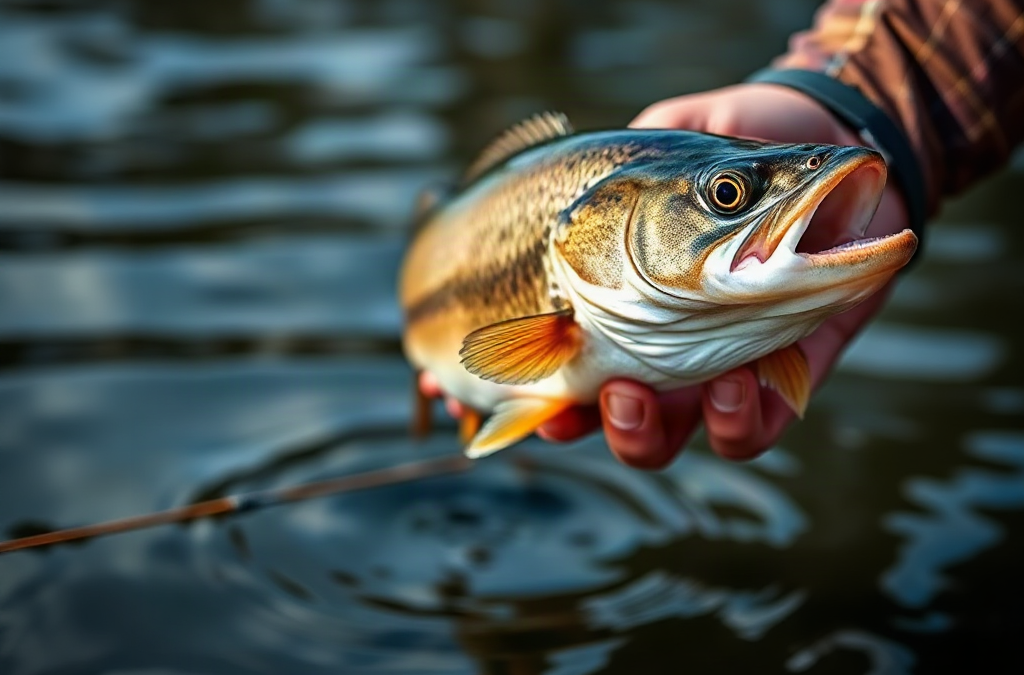
Determine the best fishing times for each species by matching its feeding behavior to water temperature, light level, tide or current, season, and local forage activity. Bass often feed around low-light periods and changing cover conditions, while trout may respond strongly to cool water, insect hatches, and seasonal flows. Saltwater species require an added look at tide direction, bait movement, and current speed. Use local catch logs and weather data to test a short window rather than assuming sunrise is always best, and adjust when water temperature, wind, cloud cover, or forage changes. A productive time for one species may be unproductive for another because each fish has different comfort and feeding triggers.
What you’ll learn
This guide covers the following practical points:
- Match Fish Biology to Daily Feeding Windows — The best fishing time begins with the target species’ comfort range and feeding pattern, not with a universal clock time.
- Use Water, Light, Weather, and Seasonal Clues — Water temperature is one of the most practical timing signals because it affects metabolism, prey activity, and where fish can remain comfortably.
- Adjust Timing for Freshwater and Saltwater Species — Freshwater timing is often organized around temperature, structure, current, and forage.
- Build and Test a Species-Specific Fishing Schedule — A reliable schedule comes from repeated observation rather than a single successful trip.
Match Fish Biology to Daily Feeding Windows
The best fishing time begins with the target species’ comfort range and feeding pattern, not with a universal clock time. Predatory fish usually become easier to catch when prey is exposed, concentrated, or moving through a place where the predator can feed efficiently. That may happen at dawn, dusk, during a tide change, after a front, or when a hatch brings insects to the surface.
Species that rely on sight often use low-light periods to ambush prey. Largemouth bass may move toward shallow cover during dawn or evening, particularly when baitfish are active near grass, docks, or shoreline structure. Walleye are also commonly associated with dim conditions because their eyes are suited to feeding when bright light gives smaller prey less protection. Bright midday conditions do not make these species inactive; they may simply move deeper, suspend near cover, or feed along shaded edges.
Trout require a different interpretation. Cool, oxygenated water and available aquatic insects can matter more than the first hour after sunrise. A morning insect emergence may create a brief surface opportunity, while an evening hatch can shift feeding activity later. In a cold mountain stream, the best window may occur after the water warms slightly. During hot weather, the safest and most productive period may be early morning before water temperatures climb.
Catfish often tolerate lower visibility and may feed effectively after dark, especially where scent-based baits can be found along channels, flats, or current seams. Crappie may feed around brush, vegetation, and suspended bait at several points during the day, with timing influenced by water temperature and spawning movement rather than a fixed sunrise rule. These differences explain why copying another angler’s schedule can produce poor results.

A useful first question is: when does this species need to move to find food without spending excessive energy? That question points toward current seams for river fish, shade for warmwater predators, tide-driven bait movement for coastal species, and temperature transitions for trout or salmon. The common mistake is treating “low light” as a guarantee. It is a strong clue, but only when food and suitable habitat are present at the same time.
Use Water, Light, Weather, and Seasonal Clues
Water temperature is one of the most practical timing signals because it affects metabolism, prey activity, and where fish can remain comfortably. A small change can move fish from a deep basin toward a shallow flat, or from slack water into a current edge. Anglers should track the temperature at the depth being fished rather than relying only on an air-temperature forecast.
Light level changes how predators hunt and how prey uses cover. Overcast skies may extend a shallow bite for bass or pike, while bright sun can push them beneath vegetation, docks, or overhanging trees. Wind can improve a feeding window by disturbing the surface, moving plankton, and pushing baitfish toward a bank. Too much wind, however, may make boat control and lure presentation difficult. The productive choice is often a wind-protected area with enough surface movement to conceal a predator’s approach.
Barometric pressure deserves caution. Anglers frequently attribute every change in success to pressure, but pressure alone does not identify a reliable fishing hour. A passing front can bring wind, cloud cover, falling temperature, and changing bait behavior at once. Those combined conditions may alter the bite, whereas the pressure reading by itself offers limited direction.
Season changes the meaning of the same daily period. During spring, warming shallows can attract bait and stimulate movement, so late morning may outperform dawn. In summer, early morning, evening, and deeper daytime locations often become more practical. Autumn can produce feeding activity throughout the day as fish respond to cooling water and seasonal forage. Winter fish may have narrow windows tied to modest warming, stable weather, or afternoon light.
Use a simple priority order when conditions conflict:
- Safety and legal access: Check regulations, closures, daylight limits, and weather hazards before choosing a window.
- Water conditions: Identify temperature, clarity, oxygenated current, and the depth where fish can remain comfortable.
- Forage movement: Look for insects, baitfish, crayfish activity, birds, surface disturbances, or fresh feeding signs.
- Light and weather: Use cloud, wind, shade, and precipitation to refine the period rather than dictate it alone.
The mistake to avoid is changing everything at once. If an early session fails, record the water temperature, sky, wind, location, and presentation before moving to a different time. That creates useful evidence for how to determine the best fishing times for each species instead of producing a vague impression that the fish “were not biting.”
Adjust Timing for Freshwater and Saltwater Species
Freshwater timing is often organized around temperature, structure, current, and forage. Rivers add flow, which can make a short period around changing discharge or rising water especially useful. Fish may position behind rocks, below current breaks, or at the mouths of feeder streams where food is delivered. A river angler who fishes only at dawn may miss the better period if water level and insect activity become favorable later.
Lakes require more attention to daily movement. Bass may use shallow cover at first light, then relocate to weed edges, points, channels, or offshore structure as sunlight increases. A midday period with wind can become better than a calm dawn because the moving surface hides the lure and pushes prey toward a bank. Crappie can shift vertically during the day, so the timing decision must include depth rather than just arrival time.
Saltwater species add tide direction and current strength to the calculation. An incoming tide may carry bait into an estuary, while an outgoing tide can pull forage past points, creek mouths, oyster edges, or channel drains. The named tide stage is less useful than the actual water movement at the chosen location. Slack water may be a poor period for a species that depends on current, but it can help an angler work a lure precisely around structure.
Consider striped bass, redfish, or snook as examples of species whose timing may depend on moving water and bait concentration. A tide chart can identify when water should move, but local wind can delay, accelerate, or reshape that movement. Dirty runoff may also change salinity and visibility, causing fish to relocate. A spot that is excellent on a clean outgoing tide may be unproductive after heavy rain.
Freshwater and saltwater schedules should therefore be compared by mechanism:
- Lake or pond: Prioritize light, temperature, wind, cover, and depth changes.
- River: Prioritize flow, current seams, water clarity, temperature, and food delivery.
- Estuary or coast: Prioritize tide direction, current speed, bait movement, salinity shifts, and wind.
Do not assume a tide time or sunrise time is transferable between locations. A species may feed near a structure before the current peaks, not at the exact peak itself. Compare the forecast with visible bait activity and the fish-holding features on site. That practical check is more dependable than following a printed timetable without considering local conditions.
Build and Test a Species-Specific Fishing Schedule
A reliable schedule comes from repeated observation rather than a single successful trip. Choose one species, one general habitat type, and a small set of timing variables. Record arrival time, first contact, water temperature, cloud cover, wind, water level or tide, depth, forage signs, and the presentation used. The purpose is not to create a perfect scientific study; it is to separate recurring patterns from memorable coincidence.
Start with a broad window, such as the first three hours after daylight, the final two hours before dark, or a specific moving-tide period. If action repeatedly occurs during only part of that window, narrow the next trips around that period. A bass angler might discover that the first hour is slow in clear water but the second hour becomes productive when wind reaches a shallow point. A trout angler may find that the best surface activity begins after the stream warms and a hatch starts, even when the morning began quietly.

Use a decision sequence before leaving:
- Identify the species and its likely seasonal behavior.
- Check water temperature, flow, tide, weather, and legal fishing hours.
- Estimate when forage should become available in the target habitat.
- Choose a primary window and a backup period if conditions shift.
- Fish the first location long enough to test the timing, then change depth or structure before abandoning the day.
When an approach fails, diagnose the failure carefully. No bites at dawn may mean the fish were deeper, the water was too cold, the forage was absent, or the location lacked usable cover. Surface activity without strikes may indicate small prey, wary fish, or an unsuitable presentation rather than the wrong time. Repeated catches during a particular tide or temperature range are stronger evidence than one unusually good trip.
Keep the schedule flexible enough to account for access and safety. A nighttime catfish trip may fit the species but not the angler’s shoreline visibility or navigation limits. A late-afternoon trout session may offer better water temperature but become unsafe if storms are approaching. The best timing decision balances fish behavior with conditions the angler can manage confidently.
Review the log after several outings and rank signals by usefulness. If forage and water temperature repeatedly coincide with catches, give them priority over a general solunar prediction. Solunar tables can be treated as an optional planning reference, but they should not override poor water quality, unfavorable flow, absent bait, or unsafe weather. The most useful result is a species-specific pattern that tells you when to go, where to begin, and what evidence should trigger a change. For related planning, use how to determine the best fishing times for each species as a repeatable record-keeping task rather than a one-time lookup.
Common Timing Mistakes That Waste Productive Hours
The most common mistake is treating sunrise as universally superior. Dawn can be excellent for shallow predators, but clear, cold water may keep fish inactive until later, and a strong overnight temperature drop can delay movement. The opposite error is assuming midday never works. Shade, wind, current, deep structure, or a warming trend can make the middle of the day more productive than a calm early morning.
Another problem is using a forecast without verifying conditions on the water. A predicted wind direction may not match the wind inside a cove. A tide chart may not reflect a delayed current at a narrow inlet. A weather app may show comfortable air temperatures while the water remains unsuitable for the target species. Treat forecasts as planning inputs, then confirm them with surface activity, water clarity, temperature, current, and bait.
Anglers also abandon a time window too quickly after choosing the wrong depth or location. If a species should be active but there are no signs of forage, relocate. If bait is present but fish are not striking, test depth, speed, or presentation before declaring the period unproductive. Timing and location interact; a correct hour at an empty flat still produces nothing.
Finally, avoid changing species, location, lure, and schedule simultaneously. That creates no clear lesson. Change one major variable at a time when practical, and write down the result. Over several trips, this process reveals whether a species responds to low light, warming water, moving tide, cloud cover, or a particular forage event. Those observations make how to determine the best fishing times for each species more accurate for the water you actually fish.
For location-specific timing, consult your state wildlife agency, local fisheries department, tide station, water-level service, and reputable university extension publications. Official sources are especially useful for seasonal regulations, closures, flow information, and species-specific habitat details; combine them with your own catch log because local conditions can change the practical fishing window.
Frequently Asked Questions
Is sunrise always the best time to fish?
No. Sunrise often helps low-light predators, but water temperature, forage, wind, depth, current, and season may make a later period more productive.
How does water temperature affect fishing time?
Temperature affects metabolism, comfort, and prey activity. Fish may move shallow during a warming period or seek deeper, cooler, more oxygenated water during heat.
How should tide timing be used for saltwater fishing?
Use tide predictions to identify moving-water periods, then check how current reaches the specific point, inlet, flat, or channel. Bait concentration matters more than the tide label alone.
What should I record to find a repeatable bite window?
Record species, date, time, water temperature, depth, weather, wind, clarity, flow or tide, forage signs, location, and the presentation that produced contact.
Do solunar tables accurately predict the best fishing time?
They may provide an optional planning clue, but they should not outweigh water conditions, forage activity, seasonal behavior, access, or safety.
Additional Resources
Authoritative Sources
- Academy of Nutrition and Dietetics
eatright.orgProfessional nutrition guidance, healthy eating resources, and practical dietitian-reviewed advice.
- U.S. Department of Agriculture
usda.govOfficial food, nutrition, agriculture, and consumer guidance from the USDA.
- NIH Office of Dietary Supplements
ods.od.nih.govResearch-based fact sheets on nutrients, supplements, dietary intake, and safety considerations.
Conclusion
Species-specific fishing times become easier to predict when the clock is treated as only one part of the decision. Give priority to the conditions that control fish behavior: water temperature, available forage, light, current, tide, depth, and seasonal movement. Then test a defined time window and record what happened instead of relying on memory or a universal sunrise rule. Bass, trout, catfish, crappie, and coastal predators may all use different triggers, and the same species may shift its schedule as weather and water change. Before the next trip, choose one target, identify its likely feeding habitat, check the relevant environmental signals, and prepare a backup window. That process produces a useful local pattern and makes each future outing more deliberate.

