
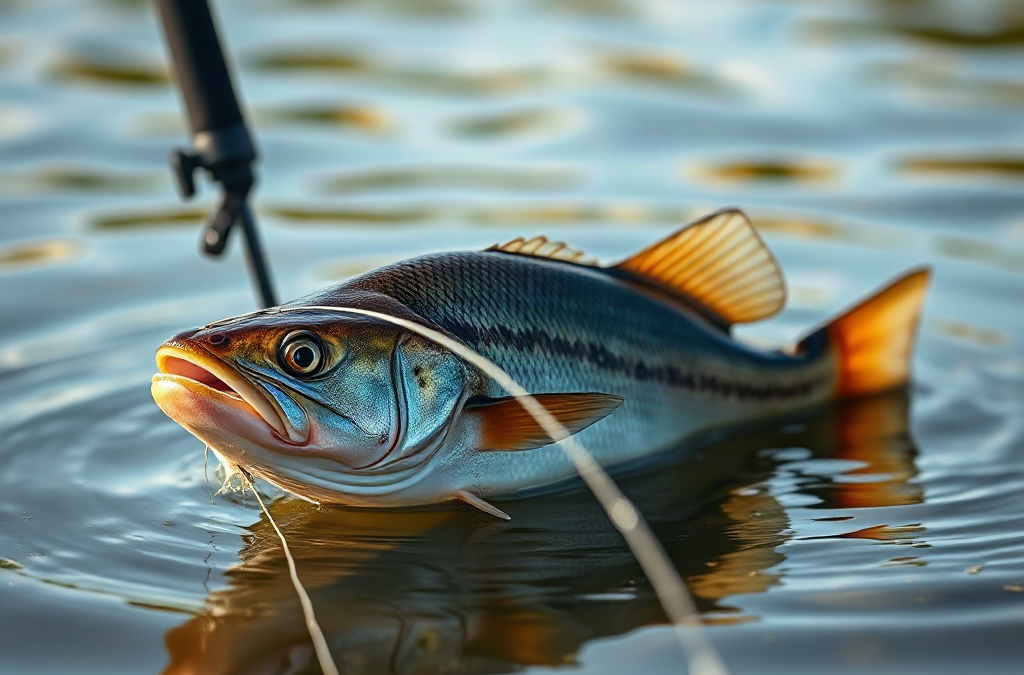
If fish are biting but not keeping, first determine whether they are missing the hook, dropping the bait, or coming unhooked during the fight. Downsize the hook and bait for light taps, expose the hook point, remove slack before setting, and match the hookset to the presentation rather than striking harder. If hookups occur but fish escape, inspect the hook point, maintain steady line tension, loosen an overly tight drag, and avoid forcing fish toward the bank or boat. Change one variable at a time so the next bite reveals whether hook placement, timing, tackle, or landing pressure caused the problem.
Identify Where the Hookup Is Failing
A bite that does not produce a landed fish can fail at three distinct points: the fish may touch the bait without taking the hook, take it and spit it out before the hookset, or become hooked and escape during the fight. Treating every failure as a weak hookset often makes the problem worse. A hard strike cannot fix a hook hidden inside bulky bait, and it can pull a small lure away from a fish that has not fully taken it.

Watch what the rod, float, line, or lure does immediately before contact is lost. Repeated taps without sustained weight usually indicate pecking fish, small fish, or a bait that is too large for the mouth making contact. A float that dips and immediately returns may mean the fish grabbed an exposed end rather than the section containing the hook. With moving lures, a bump followed by visible slack can mean the fish struck toward the angler and created loose line.
A fish that stays on for several seconds presents a different diagnosis. If it escapes when it jumps, changes direction, reaches the surface, or nears the net, hook penetration probably occurred. The likely problems are slack line, excessive drag pressure, a dull or damaged point, poor hook placement, or an attempt to land the fish too quickly. Finding a straightened hook after the loss confirms that tackle strength or drag pressure needs attention. Finding an intact hook does not automatically prove the hookset was weak; the point may have caught only a thin edge of tissue.
Use the next three bites as a short diagnostic sample rather than rebuilding the entire rig after one miss. Note whether contact occurs at the same part of the retrieve, whether bait returns torn or shortened, and how long any hooked fish stays connected. When following advice about what to do if fish are biting but not keeping, this distinction matters more than making several random tackle changes.
A compact failure check keeps the diagnosis focused:
- No weight after a tap: inspect bait size, hook exposure, and the presence of small bait-stealers.
- Weight disappears before the strike: reduce slack and adjust the delay before setting.
- Fish escapes during the fight: inspect the point, drag, rod angle, knots, and line tension.
The common mistake is assuming visible activity means fish are feeding aggressively. Fish may nip defensively, inspect unfamiliar bait, or strike only the trailing portion of a lure. The useful evidence is not the number of taps; it is what happens between the first contact and the moment the connection fails.
Correct Hook, Bait, and Rig Problems
Hook access should be checked before changing locations or buying different tackle. The point must be sharp, unobstructed, and positioned where a fish taking the bait is likely to encounter it. Worms threaded over the point, thick pieces of cut bait, accumulated weeds, bent soft plastics, and scales from previous catches can all prevent penetration even when the bite feels strong.
Test sharpness carefully by drawing the point lightly across a fingernail; a sharp point should catch rather than slide freely. Replace or sharpen a dull hook, and discard one that is bent, corroded, or damaged at the barb. Check the knot and hook eye at the same time. A knot that has slipped around the eye or a soft plastic that has rotated can make an otherwise suitable rig track incorrectly.
Scale bait and hook size to the actual bite rather than the hoped-for fish. If a full worm returns with only its tail missing, shorten the bait and place it closer to the hook bend. If small pieces are repeatedly stolen, a smaller hook with a compact offering may put the point farther into the fish’s mouth. Downsizing has limits: a hook that is too small may provide poor purchase in a large fish, while a very light wire hook can open under heavy pressure. Choose the smallest hook that still suits the expected species, bait, line, and cover.
Lure hooks require a similar inspection. A short-striking fish may contact the rear of a crankbait, spoon, or spinner without reaching the hook. A shorter lure or a model with a properly positioned trailing hook may convert more strikes, provided that configuration is legal where you fish. Do not add hooks indiscriminately. Extra hardware can damage fish, collect vegetation, unbalance a lure, and violate local rules.
Rig resistance also affects whether a fish retains a bait. An oversized sinker, a float with excessive resistance, or a stiff leader can cause a cautious fish to release its grip. Lighter terminal tackle may produce a more natural presentation, but it also reduces control in current, wind, deep water, or heavy cover. Make the smallest adjustment that preserves depth and contact. For example, reducing sinker weight is sensible in a calm pond, while maintaining enough weight to hold bottom may be more important in moving water.
Change only one component before testing again. Start with clearing or replacing the hook, then reduce bait bulk, and only then alter weight, leader, or lure profile. Simultaneous changes may produce a fish, but they do not reveal which correction worked. That makes the same missed-bite pattern difficult to solve on the next trip.
Match Hookset Timing to the Bite
Hookset timing depends on how the fish takes the presentation. Setting immediately is appropriate for some moving lures and visible strikes, but bait fishing often requires enough time for the fish to take the hook rather than merely pinch an exposed end. Waiting too long creates its own problem: the fish may swallow the hook deeply, making release more difficult and potentially increasing injury.
With a float rig, distinguish a brief peck from committed movement. A float that travels sideways, remains submerged, or steadily moves away usually provides stronger evidence that the fish has the bait. Reel or lift until the line is controlled, then use a smooth, firm sweep. A dramatic overhead strike can tear the hook free, break light line, or launch a small fish from the water.
For jigs, worms, and other contact presentations, remove slack without dragging the lure away. If the line jumps, moves against the current, or feels heavier than the surrounding bottom, reel down and set with controlled force. Braided line transfers movement quickly and stretches very little, so it generally requires less sweeping distance than stretchy monofilament. A stiff rod and braid paired with a violent hookset can enlarge the hook hole or overload light tackle.
Moving lures often reward continued retrieval. When a fish bumps a crankbait or spinner, stopping instantly can create slack or make the lure behave unnaturally. Keep the rod loaded and allow the fish’s weight to bend it before applying more pressure. With topwater lures, reacting to the splash rather than the felt weight is a classic cause of missed strikes. A short pause until the rod begins to load is usually more reliable than striking at the visual explosion.

Circle hooks need different handling from conventional J-style hooks. Rather than jerking, steadily reel until the line tightens and the rod loads; the hook is designed to move toward the corner of the mouth under sustained pressure. Hook rules and bait regulations vary, so verify which styles are allowed for the water and species being targeted.
A useful timing experiment is to adjust by fractions rather than extremes. After an immediate strike misses, allow the next bite a brief moment of sustained weight. If fish then return bait stripped or deeply taken, shorten the delay. The goal is not a universal count but a repeatable cue: controlled line, definite weight, and a hookset suited to the hook and presentation. A longer discussion of what to do if fish are biting but not keeping should always separate hookset timing from hookset force; more force cannot compensate for poor timing.
Keep the Fish Hooked Through the Fight
Steady tension keeps a penetrated hook seated while allowing the rod and drag to absorb sudden movement. Slack is especially costly when a fish turns toward the angler, jumps, or rises quickly from deep water. Reel promptly as the fish approaches, but do not reel against a drag that is actively slipping. That twists line and adds little control.
Set the drag before the next bite rather than adjusting it during the most chaotic part of the fight. It should yield under firm pressure before the line, knot, leader, or hook is overloaded. A drag locked down tightly may seem to provide control, yet it transfers every surge directly to the weakest connection. A drag that is too loose creates a different failure: the hook may never penetrate fully, and the fish may reach cover before the angler can turn it.
Rod position changes with the fish’s behavior. Keep a moderate bend in the rod and avoid pointing the tip directly down the line, which removes the rod’s shock absorption. If a fish jumps, lowering the rod toward the water can help preserve tension without pulling upward against the airborne fish. If it runs toward submerged branches or vegetation, side pressure may guide it away more effectively than simply raising the rod. Heavy cover sometimes requires stronger tackle and more immediate control; finesse gear that works in open water may not provide enough authority there.
Many fish are lost within reach because the angler increases pressure at the worst moment. Short line offers less stretch, and a fish seeing the bank, boat, or net may make one final surge. Keep the drag functional, lead the fish rather than dragging it, and avoid lifting a sizeable fish by the line. Use an appropriate net where legal and suitable, placing it in the water ahead of the fish. Guide the fish headfirst over the rim instead of chasing it from behind.
After any escape, inspect the complete connection before casting again. Feel the leader for abrasion, confirm the knot has not shifted, examine the hook gap, and check whether the lure hardware has opened. If multiple fish escape at the same moment in the fight, the repeated pattern is useful evidence. Losses during jumps point toward slack or rod angle; losses beside the net suggest rushed landing pressure; break-offs near cover indicate abrasion, line strength, or delayed steering.
No adjustment will convert every contact. Small fish may strike a large offering, fish can be hooked lightly, and obstacles sometimes favor the fish. Progress should appear as more bites producing sustained weight and fewer escapes occurring at the same stage. That is a more meaningful measure than expecting every tap to become a landed catch.
Frequently Asked Questions
Why do fish bite the bait without getting hooked?
The fish may be grabbing an exposed end, the bait may be too bulky, or the hook point may be dull or covered. Shorten the bait, expose the point, and inspect hook sharpness before changing the entire rig.
Should I set the hook harder after several missed bites?
Not automatically. First remove slack and confirm sustained weight. Excessive force can pull the bait away, tear a lightly placed hook free, or break light line.
Does a smaller hook improve hookups?
A smaller hook may help when fish are pecking at compact bait, but it still needs enough gap and strength for the expected fish. Match it to the bait, target size, line, and surrounding cover.
Why do hooked fish escape near the bank or boat?
Short line reduces cushioning, and fish often surge when they see the angler or net. Maintain a bent rod, keep the drag working, and guide the fish headfirst into the net without lifting by the line.
How can I tell whether hookset timing is the problem?
Repeated taps followed by untouched weight suggest an early strike, while stripped or deeply taken bait can indicate excessive delay. Adjust timing slightly and use definite line movement or sustained pressure as the cue.
Conclusion
Missed bites become easier to correct when you identify the exact point of failure. Begin with the evidence left by the bite: damaged bait, a buried hook point, momentary weight, several seconds of connection, or a loss during the final landing attempt. Inspect the hook and rig before changing presentations, then adjust bait size, resistance, and hookset timing one variable at a time.
Once a fish is connected, controlled tension matters more than brute force. Keep the rod loaded, let a correctly set drag absorb surges, recover slack quickly, and avoid rushing the fish on short line. On the next bite, focus on whether the adjustment extends contact or moves the failure to a different stage. That observation will tell you far more than repeatedly striking harder or replacing the entire setup without a clear reason.

