
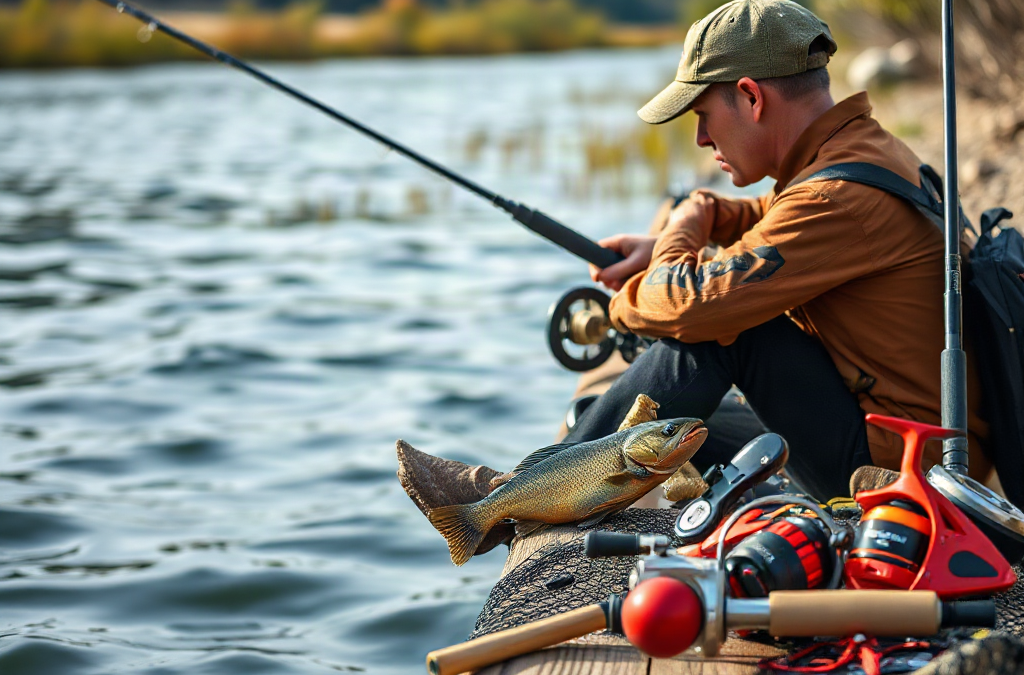
Choose fishing accessories by matching them to the water, target species, fishing method, weather, and trip duration before considering convenience items. Confirm that hooks, leaders, weights, floats, tools, and spare tackle work with your rod, reel, line strength, and intended bait or lure presentation. Give priority to safety equipment, legal measuring and release tools, sun or rain protection, and secure storage appropriate to a bank, boat, kayak, or wading trip. Avoid packing every accessory you own; a compact, compatible selection is easier to carry, faster to use, and less likely to leave an important gap.
Match Accessories to the Water and Target Fish
The destination determines which accessories will earn space in your tackle bag. A sheltered pond, rocky river, offshore boat, and surf beach expose tackle to different depths, currents, cover, fish sizes, and handling demands. Before packing, identify the water type, likely fishing depth, expected bottom composition, target species, and permitted fishing methods. Those details narrow the accessory list more effectively than choosing products by popularity.

Current and depth have an immediate effect on terminal tackle. A light split shot may hold a bait at the desired level in a quiet pond but drift uncontrollably in a fast river. Heavier sinkers can maintain bottom contact in current, although excess weight may reduce bite sensitivity or make a natural presentation harder. Around weeds or submerged timber, streamlined weights and weed-resistant hook arrangements tend to pass through cover more cleanly than exposed, bulky rigs. Rocky bottoms create a different problem: tackle that wedges into cracks may produce repeated break-offs, so carrying spare weights and leaders becomes more useful than bringing many lure colors.
Target species affect hook dimensions, leader material, landing equipment, and storage needs. Small panfish generally call for smaller hooks and compact forceps, while fish with abrasive mouths, sharp teeth, or powerful runs may justify stronger leaders and more substantial pliers. The accessory still has to match the fishing method. A large landing net designed for a boat can be awkward on a long bank walk, whereas a folding or short-handled net may be easier to carry. Conversely, an undersized net on a boat can complicate landing a larger fish beside the hull.
Check local rules before treating any item as optional. Depending on the location and species, anglers may need a measuring device, approved release equipment, particular hook types, or tackle that complies with bait and gear restrictions. Regulations can change by season or specific body of water, so use the responsible fish and wildlife agency’s current information rather than relying on an old tackle-box label or another angler’s memory.
A practical destination check should answer five questions: Where will the rig fish in the water column? How strong is the current? What cover or bottom will it contact? How large and powerful might the fish be? What equipment is legally or operationally necessary? If those answers are uncertain, the most useful approach to how to choose the right fishing accessories for your trip is to pack a small range around the likely conditions rather than one highly specialized setup.
Build a Compatible Terminal-Tackle Selection
Terminal tackle should function as one system rather than a collection of unrelated pieces. Rod power, reel capacity, main-line strength, leader rating, hook size, lure weight, and sinker weight all affect how the rig casts and performs. A mismatch can cause poor presentations, tangles, equipment damage, or break-offs even when every individual component is well made.
Begin with the rod’s recommended lure range and the line already installed on the reel. Select floats, sinkers, rigs, and lures that fall within the outfit’s practical capacity. A light spinning outfit can cast small floats and modest lures effectively, but loading it with a heavy sinker intended for surf fishing may overload the rod and make casting unsafe. A heavy outfit presents the opposite compromise: it can control larger tackle but may lack sensitivity with tiny baits and lightweight rigs.
Hooks should match the bait or lure and the expected fish, not merely the line’s breaking strength. An oversized hook can overwhelm a small natural bait, while a very fine hook may straighten under pressure from a strong fish or heavy cover. Carrying a limited progression of adjacent sizes is usually more useful than packing numerous disconnected styles. The same principle applies to swivels, snaps, and leaders. Hardware should be strong enough for the application without becoming so large that it interferes with lure action or creates an unnecessarily conspicuous connection.
Leader choice involves a deliberate tradeoff. A thinner leader may produce a subtler presentation and allow some baits to move naturally, but it offers less resistance to abrasion. A thicker or more abrasion-resistant leader can be valuable around shell, rocks, structure, or toothy fish, although it may alter action and visibility. Inspect the final section of leader after snags and landed fish. Roughness, flattening, discoloration, or a damaged knot signals that replacement is more sensible than testing the weakened section on the next bite.
Use a compact compatibility checklist while packing:
- Connection: Verify that hook eyes, snaps, swivels, and leader diameters work together.
- Capacity: Keep total rig or lure weight within the rod’s intended range.
- Presentation: Choose enough weight or float capacity to control depth without making the rig unnecessarily heavy.
- Spare parts: Duplicate the pieces most likely to be lost, including leaders, hooks, sinkers, and productive lures.
- Rigging test: Tie and inspect one complete setup at home rather than discovering incompatibility at the water.
The common failure is buying an accessory because it suits the species while ignoring the existing outfit. A lure may target the right fish yet still be too heavy for the rod or too deep-running for the location. Testing complete combinations makes how to choose the right fishing accessories for your trip a compatibility decision, not a shopping exercise.
Prioritize Tools, Safety Equipment, and Fish Care
Tools and protective equipment deserve priority over optional tackle variations because they address problems that cannot always wait. A fish with a deeply positioned hook, line wrapped around equipment, sudden rain, or an injury from a sharp hook requires an immediate response. Extra lures will not substitute for suitable pliers, line cutters, weather protection, or a basic first-aid kit.
At minimum, carry a cutting tool that cleanly handles the line and leader material in use. Small scissors may work well with some monofilament, while braided line often cuts more reliably with a purpose-made cutter. Pliers or forceps should reach the hooks you expect to use and resist the environment. Saltwater accelerates corrosion, so rinse and dry appropriate tools after the trip and inspect hinges and cutters before the next one. A hook sharpener can restore a lightly dulled point, but a bent, corroded, or badly damaged hook should be replaced.
Fish-handling accessories should fit both the species and the intended outcome. A rubberized or knotless net may reduce tangling and can support controlled landing when sized correctly. A wet measuring mat or suitable ruler allows a fish to be checked without placing it on hot, abrasive ground. If fish will be released, organize pliers and other release tools where they can be reached with one hand. Searching through a packed box while the fish remains out of the water wastes time and increases handling.
Personal safety requirements change sharply with the fishing platform. Boat and kayak anglers should use legally required flotation and safety equipment appropriate to the vessel and local rules. Wading anglers need traction suited to the bottom, awareness of current and depth changes, and a secure way to carry tools without loose cords becoming entanglement hazards. Bank anglers may face unstable edges, steep approaches, insects, intense sun, or long walks away from shelter. A headlamp is valuable around dawn and dusk, but it should be checked before departure and backed by spare power or another light source.

Sun protection, drinking water, rainwear, and seasonally appropriate layers are functional accessories rather than comfort-only extras. Cold wind across wet clothing can change a routine outing into a safety problem, while heat and direct sun can shorten the usable fishing window. Pack for exposure at the fishing location, not the temperature beside the parked vehicle.
A common mistake is placing safety items at the bottom of the largest bag. Keep a cutter, release tool, first-aid supplies, communication device, and weather layer accessible. An accessory is only useful if it works, can be reached promptly, and suits the actual hazard.
Pack for the Fishing Platform, Weather, and Trip Length
Storage should make essential accessories easy to reach without burdening the trip. Walking anglers benefit from a lighter, tightly edited load, while a boat can carry more equipment but still requires secure organization. Kayaks impose the strictest combination of limited space, exposure to water, and the possibility that unsecured gear will be lost overboard.
Divide equipment by function rather than putting everything into one undifferentiated box. Terminal tackle can occupy small labeled compartments, while wet tools should have a ventilated or corrosion-conscious storage location. Keep electronics, licenses where applicable, keys, and dry clothing in suitable water-resistant protection. Waterproof claims vary by product and closure condition, so do not assume a loosely closed container will protect valuable items during immersion or heavy spray.
Trip duration changes the quantity of consumables more than it changes the core categories. A two-hour pond session may need one prepared outfit, a few replacement rigs, cutters, pliers, and basic personal protection. A full day on a remote shoreline justifies more drinking water, food, weather layers, spare line or leaders, backup lighting, and replacements for high-loss tackle. The answer is not to duplicate everything. Duplicate components whose failure or loss would end the trip, such as a critical leader, a productive terminal rig, or power for a required light.
Weather affects both fishing presentation and accessory reliability. Wind may call for heavier floats or weights to maintain control, but heavier tackle still must remain compatible with the rod. Rain calls for dry storage and a jacket that permits safe movement. Bright conditions increase the value of sun protection and polarized eyewear; polarization can reduce surface glare and help reveal shallow hazards, but glasses do not replace careful footing or safe boat operation. Cold weather may require gloves, yet bulky gloves can make knots and hook handling difficult, so test dexterity before relying on them.
Lay out the proposed kit and remove anything that lacks a specific job under the expected conditions. Then simulate the sequence of use: rigging, changing a lure, cutting line, landing a fish, measuring it if necessary, releasing or retaining it lawfully, and responding to weather. If a frequently used item requires unpacking several containers, move it. If the bag is uncomfortable during a short test walk, it will not improve after hours on the bank.
Signs that the packing plan works include quick access, few duplicated items, complete backup for likely tackle losses, and enough free space to return used gear without forcing it into compartments. Repeated searching, tangled tools, overloaded straps, rusting hardware, and unopened accessories carried trip after trip indicate that the kit needs editing. Thoughtful selection favors readiness and mobility over the largest possible inventory.
Frequently Asked Questions
What fishing accessories should a beginner buy first?
Start with line cutters, pliers or forceps, a small selection of compatible hooks and weights, spare leaders, a suitable landing tool, and personal safety gear. Add specialized accessories only after choosing the water, species, and fishing method.
How much spare tackle should I bring?
Carry several replacements for components commonly lost to snags or damaged by fish. Remote trips justify more redundancy, but duplicate critical parts rather than every lure and accessory in the tackle box.
Do I need different accessories for freshwater and saltwater?
Often, yes. Saltwater, larger fish, stronger current, and abrasive structure may require more corrosion-resistant tools, stronger leaders, heavier terminal tackle, and more substantial landing equipment. Rinse suitable gear after saltwater exposure.
Is a tackle backpack better than a tackle box?
A backpack is usually easier for long bank walks and can distribute weight more evenly. A hard box offers rigid organization and may suit boats or short-access locations, provided it can be secured and kept out of the way.
Which accessories should remain immediately accessible?
Keep cutters, hook-removal tools, a landing or fish-care tool, first-aid supplies, weather protection, and required safety equipment within quick reach. Emergency and release tasks should not require emptying the entire bag.
Conclusion
A well-chosen accessory kit reflects the destination rather than the size of an angler’s collection. Confirm the expected depth, current, cover, species, fishing platform, weather, and applicable rules. Then test the terminal tackle as a complete system with the rod, reel, and line instead of evaluating each item alone.
Protect space for reliable cutters, hook-removal tools, appropriate fish-handling equipment, weather protection, and safety gear before adding optional lure variations. Duplicate components that are likely to break or disappear, but remove items that have no defined role. Before leaving, rig one setup, inspect knots and leaders, operate every tool, check lights or electronics, and carry the loaded bag briefly. That final rehearsal exposes excessive weight, poor access, and missing connections while they are still easy to correct.

