
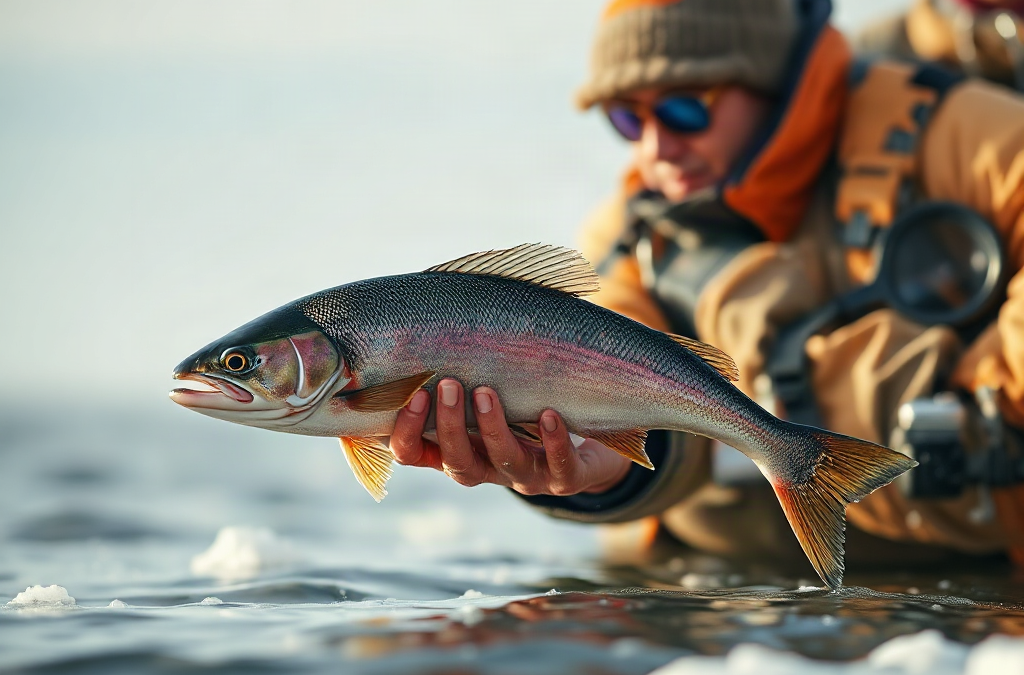
Prepare for fishing in extreme temperatures by matching clothing, hydration, shelter, and trip timing to the expected heat or cold before selecting tackle. In hot weather, carry ample drinking water, seek shade, protect exposed skin, and avoid the period of greatest heat when possible. In freezing conditions, use layered insulation beneath a windproof outer shell, keep spare dry clothing sealed, and wear flotation suited to cold-water exposure. Check the hourly forecast, water temperature, wind, access route, and emergency exit points before leaving. Shorten or cancel the trip if confusion, loss of coordination, uncontrollable shivering, dizziness, or worsening weather appears.
Assess the Weather, Water, and Trip Location
Air temperature alone does not describe the exposure an angler will face. Wind can strip heat from damp clothing, direct sun can make an open shoreline much hotter than the forecast suggests, and cold water can turn a minor slip into an immediate emergency. Review the hourly forecast rather than relying on a daily high or low. Note wind speed and direction, precipitation, thunderstorm timing, humidity, overnight temperature changes, and any advisories affecting the route or waterbody.

Water temperature deserves separate attention because immersion risk may remain severe even on a mild day. Early spring is a common example: sunshine may make the bank comfortable while recently thawed water remains dangerously cold. A person who falls from a boat or wades into an unexpected drop-off can experience an involuntary gasp, rapid breathing, and impaired movement. A personal flotation device should therefore be chosen according to the water and activity, not merely the apparent warmth of the air.
Study the location with exposure in mind. A shaded stream corridor, an open reservoir, and a tidal flat create different temperature problems. Identify nearby shelter, safe landing points, vehicle access, reliable phone coverage, and the distance back from the farthest intended spot. On a boat, consider whether rising wind would make the return run harder than the outbound trip. From shore, check whether heat, ice, mud, or changing water levels could make the exit route less usable later.
A compact pre-trip review keeps these decisions practical:
- Forecast: Check hourly temperature, wind, precipitation, lightning risk, and advisories.
- Water: Consider temperature, current, waves, ice, and the consequences of immersion.
- Access: Confirm launch status, road conditions, shade or shelter, and at least one exit route.
- Communication: Give a trusted person the location, party members, vehicle details, and return time.
- Limits: Set a turnaround time and weather threshold before the first cast.
The weak approach is to pack for the forecast at home and assume conditions will remain stable. A better approach adds margin for the exposed fishing site and the return journey. That distinction is central to how to prepare for fishing in extreme temperatures, especially when the location is remote or a rapid retreat would be difficult.
Dress for Heat, Cold, Wind, and Water Exposure
Clothing should control moisture and exposure while allowing normal casting, walking, and boat movement. In extreme heat, lightweight, breathable garments with good skin coverage reduce direct sun exposure without trapping as much heat as heavy fabric. A brimmed hat, sunglasses, and sunscreen for uncovered skin address reflected light from the water as well as overhead sun. Sunscreen still needs to be used according to its label; clothing is often more dependable for areas that would otherwise be repeatedly missed or rubbed.
Cold-weather clothing works best as an adjustable system. A moisture-managing base layer moves perspiration away from the skin, an insulating middle layer retains warmth, and a windproof or waterproof outer layer limits heat loss. Cotton becomes a poor choice near cold water because it holds moisture and loses insulating value when wet. Pack spare socks, gloves, and a warm layer in a sealed dry bag even if the clothing worn at launch seems sufficient.
Footwear must match both temperature and footing. Insulated boots may protect against cold ground or a chilled boat deck, but excessive insulation can cause sweating during a long hike. In hot weather, sandals may feel comfortable yet offer little defense against hooks, sharp rocks, hot metal, or slippery surfaces. Choose footwear with reliable traction and enough toe protection for the route. If wading, use equipment appropriate to the substrate and current, and do not treat waders as flotation.
Cold-water anglers also need to account for the difference between rain protection and immersion protection. A rain jacket blocks precipitation but does not make a person safe after falling into frigid water. On boats, kayaks, or exposed banks, wear a properly fitted personal flotation device rather than storing it out of reach. Specialized cold-water clothing may be appropriate for higher-risk settings, but it must fit, function, and allow safe movement.
Test the complete outfit before traveling. Cast, crouch, operate zippers, and reach safety equipment while wearing every intended layer. Clothing that restricts movement, causes heavy sweating, or prevents quick access to a flotation-device buckle is failing before the trip begins. The goal is not maximum insulation or minimum fabric; it is controlled comfort with enough reserve for a weather shift or delayed return.
Pack a Temperature-Specific Safety Kit
An extreme-temperature kit should address exposure first and fishing convenience second. Water, shelter, dry clothing, communication, and first-aid supplies deserve space before extra lure boxes. Keep critical items where they can be reached quickly rather than buried beneath tackle. On a small craft, distribute weight carefully and secure gear so a wave or capsize does not separate the angler from essential supplies.
For hot conditions, carry more drinking water than the planned outing appears to require, particularly where no verified refill source exists. Use an insulated container or shaded storage area when practical. Food should be simple to handle and appropriate for the trip length. Electrolyte products may be useful during prolonged sweating, but they do not replace water, shade, pacing, or cooling. Alcohol is a poor heat-management tool because it can impair judgment and hydration decisions.
Cold-weather additions include sealed spare layers, extra gloves, a warm hat, emergency shelter, and a safe means of obtaining warmth. Chemical hand warmers can improve comfort but should not be treated as a substitute for dry insulation. Open flames and fuel-burning heaters introduce fire, carbon monoxide, and stability hazards; use any device only as directed and never in an enclosed space that lacks the ventilation specified by its manufacturer.
A practical loadout may include a first-aid kit, signaling device, waterproof light, charged phone in a protective case, backup power, navigation aid, personal flotation device, and emergency contact information. Remote water may justify a satellite communication device, but ownership does not guarantee rescue or correct use. Test communication equipment, understand its limitations, and keep the trip plan conservative.
Organize the kit around likely events. If a cold-weather angler slips while landing a fish, dry clothing should be reachable without unpacking the entire boat. If a summer shore angler develops a headache and dizziness, water and a shade source should already be available rather than waiting in a distant vehicle. A useful packing method separates items into three groups: worn continuously, reachable within seconds, and reserve supplies stored dry. Reviewing how to prepare for fishing in extreme temperatures as a safety problem—not a tackle problem—usually produces a lighter but more capable load.
Adjust Timing, Effort, and Fishing Methods
Trip timing can reduce exposure more effectively than adding equipment. During severe heat, early morning or evening sessions often avoid the strongest sun and highest air temperatures. During deep cold, a shorter outing near the warmest part of the day may provide safer footing, better dexterity, and easier travel. These windows are not universal: thunderstorms, fog, tides, current releases, local access hours, and species regulations can override a temperature-based plan.
Match physical effort to the environment. Long hikes, repeated wading, heavy paddling, and constant repositioning generate heat and sweat. That can accelerate dehydration in summer and leave inner layers damp in winter. Slow the pace, schedule breaks before fatigue develops, and avoid traveling so far from shelter that the return requires maximum effort. Beginners benefit from fishing close to the access point; experienced anglers should not mistake familiarity for protection against exposure.
Tackle choices can also reduce unnecessary handling. In cold weather, larger controls, pre-tied leaders, and organized terminal tackle limit the time spent removing gloves. In heat, keeping tools ready shortens fish handling and lets the angler return to shade sooner. Barbless hooks may be useful where appropriate and permitted because they can simplify release, though hook choice must still suit the target species and local rules.

Fish welfare deserves additional attention when water temperatures are extreme. Warm water may hold less dissolved oxygen, and some fish can be less resilient after a prolonged fight. Cold air can also expose wet tissue to damaging conditions when a fish is held out of the water. Use tackle capable of bringing the target fish in without an unnecessarily extended struggle, prepare the camera and release tools beforehand, and minimize air exposure. If fish appear unable to recover promptly, reconsider the method, target, or continuation of the trip.
Success should be measured against the environmental cost of staying. A slower bite does not justify extending a hot afternoon beyond the water supply or continuing through freezing spray. The better decision may be a short session with fewer location changes. Planning around a manageable fishing window is often safer than trying to make a full-day itinerary work in conditions that punish small delays.
Recognize When Conditions Require an Early Exit
Leaving early is the correct response when exposure begins affecting judgment, movement, or the route home. Heat-related warning signs can include headache, nausea, weakness, dizziness, unusual irritability, confusion, or poor coordination. Cold stress may show as persistent shivering, fumbling hands, slurred speech, apathy, or confused decisions. Symptoms can progress, and the affected person may not assess the situation accurately. Stop fishing, move toward appropriate shelter, and seek emergency assistance when symptoms are severe, worsening, or include altered consciousness.
Environmental triggers matter even before physical symptoms appear. Lightning, rapidly building waves, freezing rain, ice accumulation, wildfire smoke, a failed heater, damaged flotation equipment, or an unexpectedly low water supply should force a new decision. Do not wait for the situation to become personally uncomfortable. A safe departure made early usually offers more route options than a delayed departure made under pressure.
Partners should agree in advance that either person can end the outing without debate. Solo anglers need firmer limits because no companion is available to notice confusion or assist after a fall. Establish check-in times and a missed-return response with someone ashore. A vague statement such as “back tonight” is less useful than a specific location, parking area, route, and time at which the contact should take action.
Watch for signs that the plan is working: clothing remains reasonably dry, drinking water is lasting at the expected rate, hands can operate knots and safety gear, and the return route remains accessible. Signs of failure include repeated stumbling, soaked insulation, dwindling supplies, deteriorating visibility, or slower decisions. Those signals are more meaningful than whether fish are still biting.
The common mistake is treating a planned end time as a commitment to stay rather than the latest acceptable return. Build an earlier review point into the outing and reassess wind, temperature, supplies, and every person’s condition. Good preparation preserves the option to leave while departure is still straightforward.
Frequently Asked Questions
What temperature is too extreme for fishing?
No single cutoff applies to every outing. Water temperature, wind, humidity, sun, precipitation, distance from shelter, personal health, and clothing can make the same air temperature manageable or dangerous. Follow official advisories and cancel when exposure cannot be controlled.
How much water should I take when fishing in high heat?
Carry enough for the planned duration plus delays, using current public-health guidance and your personal needs to plan the amount. Increase the reserve for remote locations, heavy exertion, or no reliable refill point; do not depend on untreated surface water.
Are waders enough protection for cold-water fishing?
No. Waders provide environmental protection but are not a substitute for a properly fitted personal flotation device. Use insulation suited to the conditions, tighten any wading belt correctly, and avoid water whose depth or current exceeds your ability.
Should I fish alone in extreme temperatures?
A partner provides valuable assistance and can identify symptoms you may miss. If fishing alone, stay near accessible shelter, use firm turnaround limits, carry dependable communication, and leave a precise trip plan with a trusted contact.
How can I protect fish during very hot or cold weather?
Use suitable tackle to avoid an unnecessarily long fight, prepare release tools before landing the fish, minimize air exposure, and follow local rules. Stop targeting fish that repeatedly show poor recovery or when conditions make responsible handling impractical.
Further Reading
Authoritative Sources
- National Weather Service Heat Safety
weather.govExplains heat hazards, warning signs, and practical precautions relevant to exposed summer outings
- National Weather Service Cold Safety
weather.govProvides cold-weather safety information for recognizing and reducing exposure risks
- U.S. Coast Guard Life Jacket Wear
uscgboating.orgOffers official guidance on life-jacket use for recreational boating and cold-water environments
- CDC/NIOSH Heat Stress
cdc.govDescribes heat stress, symptoms, and protective measures that can inform strenuous outdoor activity
Conclusion
Extreme-temperature preparation begins with an honest assessment of exposure, not an oversized tackle bag. Compare the hourly forecast with water conditions, wind, travel distance, and available shelter; then choose clothing and supplies that still work if the trip runs late or something gets wet. Keep flotation, communication, water, dry layers, and an exit route ahead of fishing convenience.
Before departure, test the clothing system, organize emergency gear for immediate access, share a detailed trip plan, and establish non-negotiable turnaround triggers. During the outing, monitor coordination, judgment, clothing moisture, water consumption, and the condition of the return route. If those controls begin to fail, stop casting and leave while movement remains safe. The strongest plan is one that protects both the angler and the fish without depending on perfect weather or a trouble-free return.

