
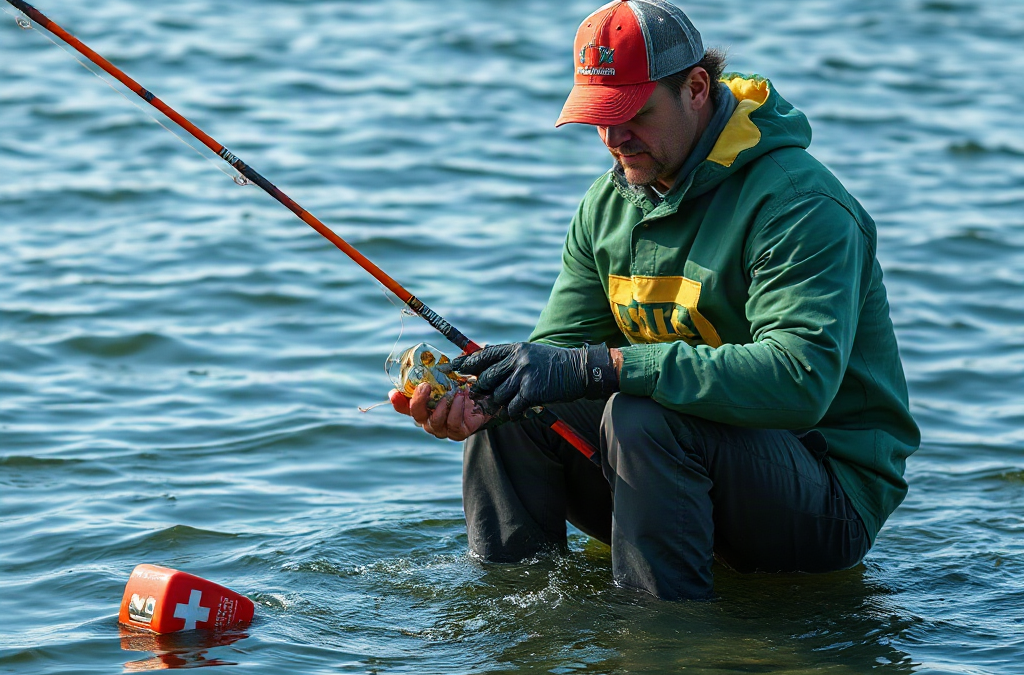
Deal with fishing-related injuries by stopping the activity, moving away from hooks, water, or unstable footing, and checking first for severe bleeding, breathing trouble, head trauma, or loss of consciousness. Control bleeding with firm direct pressure, rinse minor wounds with clean running water, cover them with a sterile dressing, and immobilize embedded hooks rather than pulling them out blindly. Call emergency services for uncontrolled bleeding, deep or facial hook injuries, serious falls, chest pain, confusion, or severe allergic reactions. Because punctures and fish-spine wounds can trap contamination, obtain medical advice when a wound is deep, increasingly painful, swollen, numb, or exposed to questionable water.
Assess the Injury and Control Immediate Danger
The first priority is preventing a second injury. Put down rods, secure loose hooks, stop the boat if conditions allow, and move the injured person away from surf, slippery rocks, traffic, or an unstable bank. A small puncture can wait briefly; a person at risk of falling into the water cannot. Wear a personal flotation device during any response on a boat, dock, or swift shoreline rather than removing it to work more comfortably.

Check responsiveness, breathing, and major bleeding before concentrating on the most visible wound. Call emergency services immediately if the person is unresponsive, has trouble breathing, develops swelling of the face or tongue, shows signs of a serious head or neck injury, or is bleeding heavily despite firm pressure. If there is no normal breathing, begin CPR if trained and follow instructions from the emergency dispatcher. Remote anglers should contact local rescue services early because access delays may be substantial.
For external bleeding, place clean gauze or cloth directly over the wound and maintain steady pressure. If blood soaks through, add material on top rather than repeatedly lifting the original pad to inspect the cut. A deeply embedded object should generally remain in place; pad around it and seek medical help. A tourniquet is intended for life-threatening limb bleeding that cannot be controlled with direct pressure, not for routine hook wounds or minor cuts. Use one only if the situation demands it and follow the device instructions or emergency-dispatch guidance.
A quick head-to-toe check may reveal injuries masked by excitement or cold. Ask about neck pain, dizziness, numbness, weakness, chest discomfort, and the ability to move fingers or toes. Note the time, the injury mechanism, the type of water involved, and any first aid provided. These details are useful if symptoms worsen or a clinician needs to assess contamination, blood loss, or possible structural damage.
The common mistake is treating the obvious hook or cut while ignoring the fall, allergic reaction, or dangerous location that accompanied it. Sound fishing injury first aid begins with scene safety and urgent threats, then moves to wound care.
Handle Embedded Fishhooks Without Making the Wound Worse
An embedded hook should be stabilized before anyone considers removal. Stop the lure, line, or rod from pulling on it, and cut the line if that can be done without moving the hook. Remove dangling lures or extra treble-hook points with appropriate cutters only when doing so will not twist the embedded point. Cover exposed hook points so helpers are not injured during transport.
Do not attempt field removal when a hook is in or near an eye, eyelid, face, neck, major blood vessel, tendon, joint, bone, genital area, or deeply penetrated tissue. The same caution applies when sensation or movement is reduced, bleeding is substantial, the hook cannot be clearly seen, or the injured person takes anticoagulant medication or has a condition that impairs healing. Protect an injured eye without pressing on it, avoid food or drink in case a procedure is needed, and obtain urgent medical care.
A small, single-barbed hook superficially caught in ordinary skin may look simple, but removal can still enlarge the puncture or leave part of the hook behind. Multi-pronged treble hooks, rusty hooks, barbs buried beneath the skin, and hooks contaminated by bait or water are less suitable for improvisation. Medical professionals can select an approach based on hook shape, depth, nearby anatomy, pain control, and wound contamination. Cutting or pushing a hook without accounting for those factors may turn a limited puncture into a larger tissue injury.
After a hook has been removed safely, rinse the wound under clean running water, gently wash the surrounding skin with soap, and apply a clean dressing. Avoid pouring harsh chemicals deep into the puncture because they may irritate tissue without removing embedded debris. Check whether a tetanus booster or other medical follow-up is appropriate; a clinician or public health service can advise based on the wound and the person’s vaccination history.
Seek prompt evaluation if a hook fragment may remain, pain is disproportionate, the wound crosses a joint, or redness and swelling increase. The poor assumption is that a tiny entry hole means a minor injury. A hook’s path, barb, contamination, and location matter more than the diameter of the visible puncture.
Clean Cuts, Punctures, Bites, and Spine Wounds
Fishing wounds are frequently contaminated by water, fish slime, bait, soil, or equipment residue. Once dangerous bleeding is controlled, rinse cuts and punctures generously with potable running water. Remove loose, visible dirt with clean tweezers, but do not dig for deeply embedded material. Wash around the wound with soap, pat it dry, and cover it with a sterile nonstick dressing. Replace a wet or dirty dressing promptly.
Saltwater and freshwater exposures deserve more caution than a clean kitchen cut because aquatic organisms may enter damaged skin. Risk varies with wound depth, water quality, circulation, immune status, and underlying conditions. Deep punctures, crushing injuries, bites, wounds over joints, and injuries in people with diabetes, liver disease, poor circulation, or weakened immunity warrant earlier professional advice. A clinician may need to assess whether closure, imaging, medication, or tetanus protection is appropriate.
Fish spines and teeth can create narrow wounds that close at the surface while retaining fragments or contamination. Catfish, rays, and other spined species may also produce severe pain or tissue injury. Get out of the water, control bleeding, and do not blindly probe the wound or break off a protruding spine. If venomous marine life may be involved, contact emergency services, a regional poison center, or local marine-safety personnel for species-appropriate instructions. Heat, cold, pressure, and wound treatment are not interchangeable across species, so a generic home remedy may worsen the injury.
Monitor the site during the following days. Marking the edge of redness and noting the time can help show whether inflammation is expanding. Seek medical care for increasing warmth, swelling, drainage, red streaks, fever, worsening pain, loss of sensation, reduced movement, or skin discoloration. Severe pain, rapidly spreading swelling, blistering, confusion, or systemic illness requires urgent assessment rather than watchful waiting.
Closing a contaminated puncture with household glue or tight adhesive strips can trap material beneath the skin. A loose protective dressing is usually more appropriate until a professional determines whether closure is suitable. Anyone reviewing how to deal with fishing-related injuries should treat water exposure and retained fragments as meaningful decision factors, not minor details.
Respond to Falls, Strains, Heat Illness, and Other Hazards
Not every serious fishing injury involves a hook. Slippery ramps, moving decks, uneven banks, waves, and heavy gear can cause sprains, fractures, head injuries, and immersion. After a fall, keep the person still if neck or back injury is possible. Do not straighten an obviously deformed limb. Support it in the position found, check circulation beyond the injury, and arrange medical evaluation. Numbness, pale or blue fingers or toes, exposed bone, severe swelling, or inability to bear weight raises the urgency.

For a mild strain without deformity or neurological symptoms, stop using the injured area, protect it from further loading, and apply a wrapped cold pack for short intervals if comfortable. Avoid placing ice directly on skin. Elevation may reduce swelling when it does not increase pain. Continuing to cast, climb, or carry equipment can convert a manageable strain into a harder evacuation, especially where the return route crosses rocks or steep ground.
A blow to the head requires observation even when the person initially appears alert. Repeated vomiting, worsening headache, confusion, unusual behavior, seizure, unequal pupils, weakness, or increasing drowsiness calls for emergency care. Do not let a person with suspected concussion drive the boat or vehicle. Alcohol can obscure neurological changes and should not be used for pain relief or warmth.
Heat illness may begin with heavy sweating, weakness, cramps, nausea, or headache. Move the person to shade, remove excess clothing, cool the skin, and provide small amounts of cool fluid if the person is fully alert and not vomiting. Confusion, collapse, seizure, very hot skin, or altered consciousness may indicate heat stroke and requires emergency services and rapid cooling. By contrast, an immersed or rain-soaked angler may become dangerously cold even in moderate air temperatures. Replace wet clothing, shelter from wind, insulate the person, and handle severe hypothermia gently.
Lightning, carbon monoxide, and drowning hazards require evacuation rather than improvised treatment. Leave exposed water when thunder is heard, never run combustion equipment in enclosed or poorly ventilated areas, and have anyone who experienced nonfatal submersion medically assessed if coughing, breathing difficulty, chest pain, or unusual fatigue develops.
Build a Fishing-Specific First Aid Kit and Emergency Plan
A useful first aid kit must match the fishing location and the time required to reach help. A small bank-fishing kit may fit in a waterproof pouch, while offshore, ice, or backcountry trips justify more supplies, redundant communication, and insulation. Store the kit where it can be reached without opening a buried tackle compartment, and inspect it after wet trips. Sterile packaging, adhesive, medications, and batteries degrade when repeatedly exposed to moisture and heat.
A practical kit can include sterile gauze, nonstick dressings, roller bandages, medical tape, disposable gloves, antiseptic wipes for surrounding skin, clean tweezers, trauma shears, a cold pack, an emergency blanket, and potable water reserved for irrigation. Heavy-duty cutters may help separate a lure or line during a hook incident, but carrying cutters is not permission to remove every embedded hook. Personal medicines, an epinephrine auto-injector prescribed for the user, sunscreen, and oral rehydration supplies may also be appropriate.
Before departure, record the launch point, shoreline access, vehicle location, expected return time, and local emergency number. Download offline maps where service is unreliable and tell a responsible person when to raise an alarm. On a boat, know how to give the vessel’s position and identify the nearest safe landing point. A satellite communicator or emergency beacon may be more valuable than extra wound supplies in a remote area because definitive care cannot help someone rescuers cannot locate.
Use this short pre-trip check:
- Communication: charged phone, waterproof protection, backup power, and remote-area signaling if needed.
- Location: coordinates, access points, weather, tide or river conditions, and evacuation route.
- Medical needs: allergies, prescriptions, tetanus status, and relevant health conditions.
- Hazard control: eye protection, footwear with suitable grip, personal flotation devices, and covered hooks during transport.
The frequent failure is owning a well-stocked kit without knowing how to use it. A recognized first aid and CPR course provides more value than unfamiliar supplies, particularly for severe bleeding, breathing emergencies, and remote evacuation. Review how to deal with fishing-related injuries with regular fishing partners so that equipment, communication, and responsibilities are clear before an emergency.
Frequently Asked Questions
Should I pull out a fishhook immediately?
No. Stabilize it and seek medical help if it is deep, barbed, near an eye or joint, causing numbness, or attached to a multi-hook lure. Blind removal can damage tissue or leave fragments behind.
When does a fishing cut need medical attention?
Prompt assessment is appropriate for deep, gaping, crushed, heavily contaminated, or water-exposed wounds, especially when bleeding persists or movement and sensation are affected.
What are warning signs of infection after fishing?
Increasing redness, warmth, swelling, drainage, worsening pain, fever, red streaks, numbness, or reduced movement should be medically evaluated. Rapid progression or systemic illness is urgent.
Can I keep fishing after a minor puncture?
Stop long enough to clean, dry, and cover it properly. Continuing with a wet or dirty dressing increases contamination, and pain or bleeding that returns is a reason to end the outing.
What should I do after someone falls into the water?
Remove the person from danger without becoming another victim, check breathing, replace wet clothing, and begin warming. Call emergency services for breathing trouble, confusion, severe cold, injury, or loss of consciousness.
Conclusion
Effective fishing first aid is built around priorities rather than the appearance of the wound. Secure the scene, identify breathing problems or major bleeding, and avoid pulling embedded hooks or probing spine injuries. Clean minor wounds with potable running water, protect them from further contamination, and watch closely for spreading redness, worsening pain, drainage, fever, numbness, or impaired movement. Falls, immersion, heat illness, and head impacts may be more dangerous than the cut that first attracts attention.
Before the next outing, place a waterproof first aid kit where it is immediately accessible, confirm communication and evacuation options, and review relevant medical needs with the group. When injury depth, anatomy, water exposure, or symptoms create doubt, professional assessment is safer than aggressive field treatment.

