
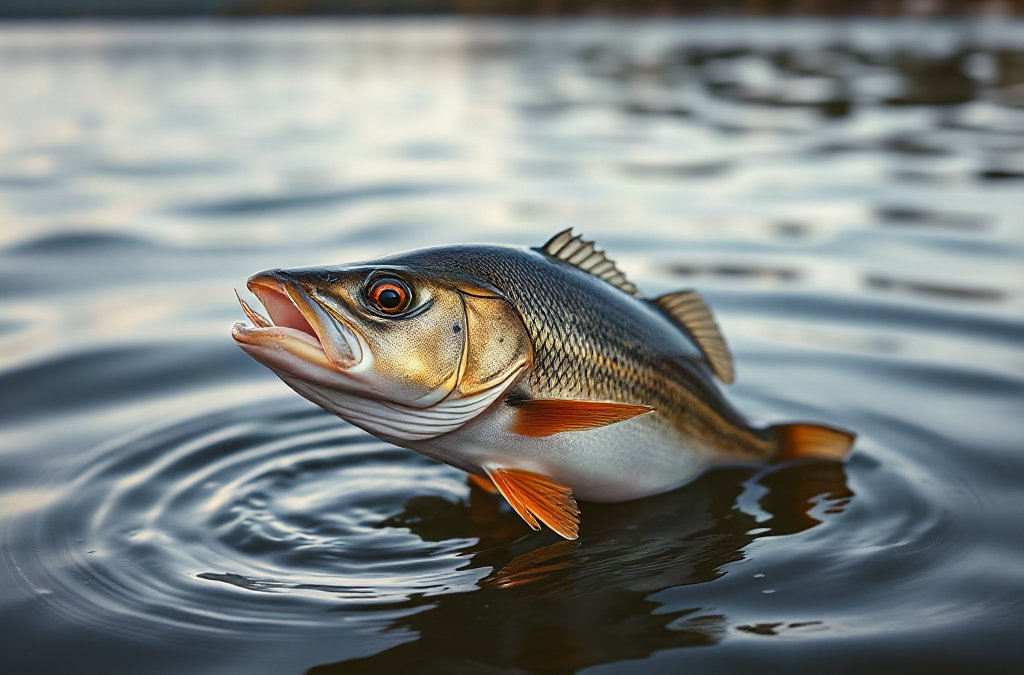
Fish effectively in lakes with high fishing pressure by locating less-disturbed structure, presenting smaller or more natural baits, and changing speed, depth, and timing before changing lures repeatedly. Angling pressure makes fish wary because frequent boat traffic, repeated casts, and familiar presentations condition them to avoid obvious offerings. Begin with quiet edges, secondary points, deep weed lines, or overlooked transition areas, then make long, accurate casts with light line and subtle movement. Fish during low-light periods or weather changes when cautious fish are more willing to move, and leave an area when it stops producing rather than exhausting it with more casts.
Read Pressure Before Choosing a Lure
Fishing pressure changes fish behavior, not just the number of fish available. Bass, crappie, trout, and other lake species may still feed, but repeated boat approaches, trolling motors, casts, and familiar lures can make them hold tighter to cover, suspend farther from obvious structure, or feed during shorter windows. A productive response begins with identifying how the lake has been pressured rather than immediately tying on a different color.

Heavy pressure is often visible. Busy ramps, multiple boats working the same bank, freshly disturbed vegetation, and anglers repeatedly casting to prominent docks all suggest that obvious targets have received attention. Fish on those targets are not necessarily gone. They may simply react better to a bait that enters quietly, moves less, or arrives from a different angle. A dock that produces on a fast-moving crankbait early in the season may require a weightless soft plastic or a slowly dragged jig after several days of intense activity.
Water clarity also affects the response. Clear water gives fish more time to inspect line, hooks, lure profiles, and unnatural movement, so subtle presentations and longer casts become more valuable. In stained water, vibration and positioning may matter more than microscopic lure details. The tradeoff is that an ultra-small bait can be difficult for fish to locate in dirty water, while a large noisy lure may be rejected in clear water that receives constant angling.
Use the first part of the outing as a diagnostic period. Make a few casts with a proven search bait, observe follows or short strikes, and note whether fish are shallow, suspended, or attached to cover. If fish track the lure without committing, reduce speed or profile before abandoning the area. If there is no sign of activity after covering several depths and angles, move rather than assuming the fish merely need more persistence. The how to fish effectively in lakes with high fishing pressure decision usually improves when pressure is treated as behavioral information.
Find Water Other Anglers Ignore
Less-pressured water does not have to mean a remote arm of the lake. It often means a secondary feature that is close to popular structure but less obvious from a moving boat. Look for the inside edge of a point, a small depth change beside a flat, isolated grass separated from a larger weed bed, or the first drop outside a shallow spawning area. Fish use these places because they offer a nearby change in depth, cover, current, or feeding opportunity, while anglers commonly pass them on the way to more recognizable targets.
Map contours, electronics, and careful visual observation work together. A depth map can reveal a subtle shelf that does not show above the surface. Sonar may identify a hard-bottom patch or a small group of fish, but it does not automatically tell you whether those fish will bite. Treat electronics as a way to understand location and depth, then test the area with a presentation suited to the cover. In shallow water, polarized glasses can reveal lanes, holes, and isolated objects that are easy to miss when the sun angle changes.
Boat positioning is as important as the target itself. Instead of placing the boat directly over a productive brush pile or weed edge, hold off and cast past it whenever depth and cover allow. The lure can cross the fish before the boat reaches them, reducing the disturbance caused by the hull and trolling motor. In a shallow, clear cove, this difference can determine whether fish stay near the cover or slide away before the first cast.
Do not assume that the most isolated location is automatically best. A quiet pocket with no food, depth change, or protective cover may be peaceful but unproductive. Compare a low-profile feature with a famous target nearby. For example, a heavily fished main-lake point may attract bait and predators, while a smaller adjacent turn gives fish a place to rest between feeding movements. Check both, but begin with the overlooked turn and reserve the crowded point for a low-light or changing-weather period when fish may roam more freely.
Make the Presentation Look Unthreatening
Pressure-lake presentations work when they reduce the cues fish associate with danger while still reaching the feeding zone. That may mean a smaller lure, a thinner leader, a natural color, a slower fall, or a more precise cast. None of these changes is universally superior. A subtle bait is useful when fish inspect offerings closely, but it can be ineffective if it cannot reach the required depth or remain visible in wind and stained water.
Start with presentation control rather than an enormous tackle change. Cast beyond the target, let the bait settle, and make deliberate movements separated by pauses. A Texas-rigged soft plastic can be crawled through sparse cover with occasional slack-line pauses. A small swimbait may work better when retrieved steadily along the outside edge instead of burned across the top. For suspended fish, count the lure down consistently and repeat the retrieve at the depth where fish appear on sonar.
Line, terminal tackle, and landing pressure create practical compromises. Light line may improve natural movement and reduce visibility, but it also gives less abrasion resistance around wood, rocks, and dense vegetation. A finesse hook can preserve a compact profile, yet it may not be appropriate for forcing a large fish from heavy cover. Match the lightest reliable setup to the environment rather than choosing delicate tackle simply because the lake is clear.
A frequent mistake is changing lure color after every missed bite while leaving the retrieve, angle, and depth unchanged. Fish may reject a bait because it is moving too quickly, passing above them, or approaching from the wrong direction. Change one variable at a time when possible: first slow the retrieve, then alter depth, then adjust size or color. If a fish follows repeatedly, pause beside cover or switch to a bait with a slower fall. If the lure produces no contact across a well-defined zone, a location change is usually more useful than endless refinements.
Quiet equipment handling matters as well. Close compartments gently, avoid dragging anchors across hard bottom, and keep unnecessary movement off the deck in shallow water. These details are not magic, but they reduce avoidable disturbance when fish are already conditioned to boats. A natural lure cannot compensate for a boat that arrives directly over a visible school and remains there while the angler repeatedly casts.
Build a Pressure-Lake Fishing Plan
An effective plan combines location rotation, timing, and a clear rule for interpreting failure. Begin by selecting three types of water rather than three individual spots: a shallow feeding area, a nearby transition or secondary feature, and a deeper refuge. This prevents the outing from becoming a contest to catch fish from one famous target. It also gives you a way to follow fish if light, wind, or boat activity changes their position.
Low-light periods often make pressured fish more willing to move because reduced visibility lowers the risk of exposing themselves. Dawn is a useful time to test shallow edges and topwater or moving presentations, but do not abandon the area when the initial window ends. Fish may retreat to the first depth break, shade line, or weed edge as the sun rises. Wind can create another opportunity by breaking the surface and pushing food toward a bank, although strong wind may require heavier lures and safer boat positioning.
Use a simple rotation instead of staying too long. Fish a new area thoroughly with a search presentation, then return with a slower option if you see bait, follows, light strikes, or fish positioned in cover. If the first pass creates no evidence of life, move to a different depth or feature. Repeatedly casting at a visible object can make the angler feel active while producing no new information. A move should answer a question: are fish shallower, deeper, tighter to cover, or responding to a quieter lure?
A compact priority list can keep decisions practical:

- Check depth, cover, and bait before worrying about small color differences.
- Approach from outside the likely strike zone and cast past the target.
- Change retrieve speed or depth before cycling through many similar lures.
- Leave a spot when pressure, disturbance, or lack of life makes another area more promising.
Keep notes on water level, wind direction, cloud cover, lure depth, and the exact feature that produced. A pressured lake often rewards pattern recognition across several trips more than a single lucky adjustment. If a small inside turn produces fish after boat traffic clears, that observation may be more valuable than the lure used. The fishing approach should evolve from repeatable clues, not from constantly replacing tackle.
Responsible handling also protects future opportunities. Use suitable tackle for the species and cover, land fish efficiently, wet hands before handling, and release them promptly when regulations and personal objectives call for release. High fishing pressure is a shared condition; careless handling and unnecessary prolonged fights add stress to fish already exposed to frequent capture.
Recognize What Is Working and What Is Failing
Success on a pressured lake is not limited to immediate catches. A follow, a short strike, bait scattering, a fish marking at one depth, or a lure being deflected by cover can identify the next adjustment. Treat those signals differently. A follow suggests the fish noticed the bait but may dislike its speed, size, or angle. A solid cover contact without a strike may indicate that the lure is reaching the right zone but needs a pause. No signs at all usually point toward location or depth before lure color.
Compare a slow, precise method with a fast search method according to the information available. A spinnerbait or crankbait can efficiently locate active fish across a broad flat, while a compact worm or jig can test whether inactive fish are holding on a specific object. Using the slow bait everywhere wastes time; using the search bait on one heavily worked target may produce only follows. The strongest adjustment is often to search widely first, then slow down only where the lake provides evidence.
Expect pressure to vary during the day. A spot that fails under a bright, calm sky may become productive when wind, shade, or boat traffic changes. Conversely, an area that produced at first light may become difficult once every angler has seen it. Avoid declaring a location permanently dead from one unproductive pass. Record the condition, leave it, and return when the environmental advantage changes.
Before ending the day, identify the specific combination that created the best opportunity: feature, depth, approach angle, retrieve, and condition. That record is more transferable than simply writing down a lure name. The next trip can begin with a tested hypothesis while still allowing for changed water level, clarity, temperature, and traffic. For additional location and presentation ideas, review how to fish effectively in lakes with high fishing pressure alongside your own trip notes.
For lake-specific depth maps, access information, species guidance, and current regulations, consult the responsible state or provincial fisheries agency and official lake-management publications. These sources can provide local context that a general lure recommendation cannot, especially when seasonal closures, harvest rules, or habitat changes affect how pressured fish use the lake.
Frequently Asked Questions
Should I always use smaller lures in a heavily pressured lake?
No. Smaller lures may look less threatening in clear water, but a larger bait can be more effective when wind, stained water, or active feeding makes visibility and vibration more important.
How close should I get to a likely fishing spot?
Stay far enough away to cast beyond the target when possible. Reaching the area before the boat and trolling motor disturb it is especially useful in shallow, clear water.
What should I change after a fish follows without striking?
First try a slower retrieve, a pause, or a slightly different depth. If the fish continues to follow, then test a smaller or more natural presentation rather than changing only color.
Are quiet areas always better than popular spots?
No. Popular locations may concentrate bait and cover. Less-obvious nearby features are worth testing first, but return to famous areas when low light, wind, or changing conditions make fish more willing to roam.
When should I leave a spot?
Leave when several casts at useful angles and depths produce no signs of life, or when boat disturbance has made the area less approachable. Return later if conditions change or your observations suggest fish should be nearby.
Conclusion
Pressure changes the odds, but it does not make a lake unfishable. Prioritize overlooked depth changes, isolated cover, and feeding areas near—rather than directly inside—the locations receiving constant attention. Approach quietly, cast beyond the target, and adjust retrieve speed or depth before assuming the lure itself is wrong. Use low light, wind, and changing conditions to revisit areas that become difficult under bright, calm skies. Most importantly, treat every follow, strike, sonar mark, and empty pass as evidence that narrows the next decision. A patient rotation between shallow water, transitions, and deeper refuge will usually outperform repeated casts to the same famous target. Keep records of the feature and conditions that produced, then return with a specific hypothesis on the next outing.

