
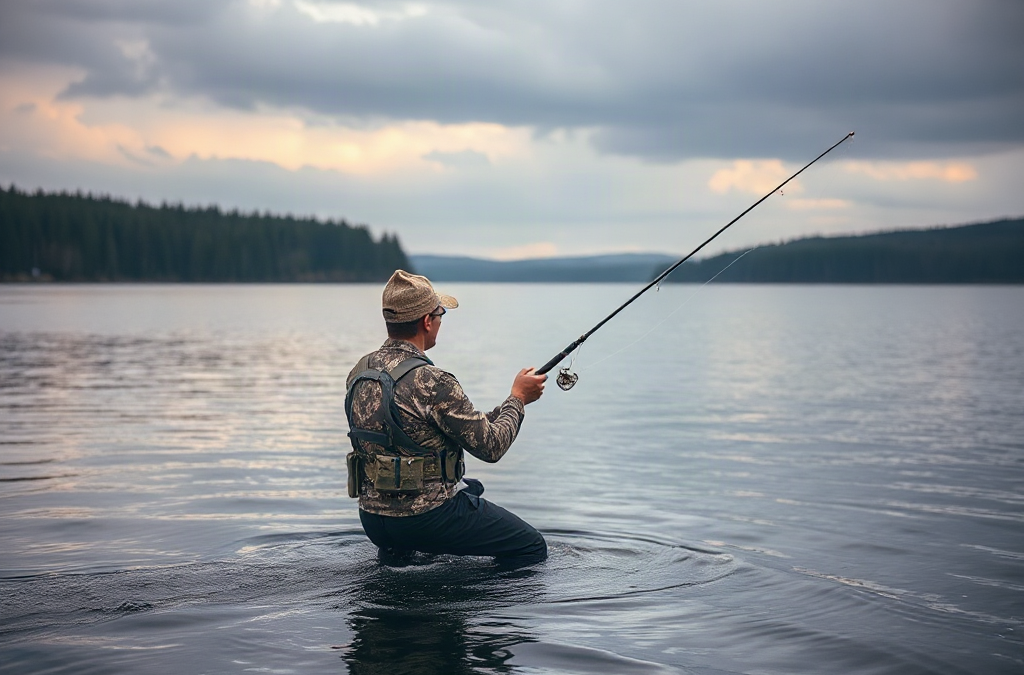
Fish during the off season by locating stable water, slowing your presentation, and concentrating on short feeding windows rather than covering water at peak-season speed. Use water temperature, depth changes, current, sunlight, and recent weather to decide where fish are likely to hold. Begin with compact lures or natural bait presented close to the bottom, then adjust depth before changing colors or lure styles. Watch for subtle bites, keep notes on productive conditions, and avoid assuming inactive fish have left the area.
What Does Off-Season Fishing Mean on Your Water?
Off-season fishing describes a period of reduced angling pressure or lower fish activity, not necessarily a complete shutdown of feeding. The timing varies by location and species. A northern lake may enter its off season after rapid autumn cooling, while a warm coastal fishery may become quiet because of migration patterns, storms, or seasonal closures. Before choosing tackle, identify what has actually changed: water temperature, forage location, current, daylight, access, or fish distribution.
Fish respond to seasonal conditions by balancing energy gained from food against energy spent finding it. When cold water slows the metabolism of many species, fish may feed less often and travel shorter distances. That does not mean they never eat. It means an offering often has to pass closer to a holding fish and remain available longer. In warmer off-season fisheries, the limiting factor may instead be low dissolved oxygen, unusually clear water, or prey moving away from familiar shoreline areas.
Recent conditions matter more than the date printed on a calendar. Three stable days can produce a more predictable bite than the first day after a strong front, even if both occur in the same month. Check safe public information such as weather history, water-level reports, tide predictions where relevant, and current access notices. At the water, look for temperature differences, moving water, baitfish, bird activity, and changes in clarity.
A useful comparison is seasonal pattern versus daily opportunity. The seasonal pattern tells you the general zone fish may occupy; the daily opportunity tells you when they may feed. A cold, sunny afternoon might warm a shallow, dark-bottomed bay enough to attract prey, while a deep reservoir may offer its better activity around submerged structure at a consistent depth. Treat these as working hypotheses rather than rules.
The common mistake is fishing a favorite peak-season spot with the same speed and expecting the same response. If bites disappear, do not immediately conclude that no fish are present. First verify depth, bottom contact, and presentation speed. A seasonal adjustment should begin with observed conditions, not merely smaller tackle or longer waiting.
Where Do Fish Hold During the Off Season?
Off-season fish frequently gather where they can conserve energy while remaining close to food and tolerable water conditions. Productive locations often combine two features: a stable holding zone and a nearby feeding route. Examples include a channel edge beside a flat, the downstream side of current-breaking structure, a deep point near a creek arm, or a sun-warmed bank next to deeper water.
Depth is only part of the location decision. Bottom composition, cover, current speed, oxygen, light penetration, and access to prey can make one section of a depth contour productive while an apparently identical section remains empty. On a reservoir, a steep bank may let fish move between depths without traveling far. In a river, a slow seam beside stronger flow allows fish to hold with less effort and intercept food. In a pond, remaining vegetation or a drop near the deepest basin may concentrate both prey and predators.
Begin by searching transitions rather than uniform areas. A transition may be a gravel-to-mud boundary, the outside edge of vegetation, the end of a dock line, a current seam, or the point where a flat falls into deeper water. Shore anglers can use casting angle to trace these changes. Boat anglers can combine electronics with a few verification casts, but marks on a screen are not proof that fish will bite. Confirm the depth and position with repeatable contact.
Conditions determine whether to remain mobile. If wind, current, or warming sunlight is creating a clear feeding opportunity, checking several similar transitions can locate an active group. During stable cold conditions, repeatedly refining casts around one promising edge may outperform rapid spot-hopping. For example, a lure passing two feet above bottom may receive no attention, while the same lure moved slowly through the lower foot of the water column produces a bite.
Signs that a location deserves more time include repeated light taps, visible forage, several fish observed at a consistent depth, or bites occurring along the same casting line. Signs to move include no evidence of prey, no useful structural change, and no response after testing multiple depths and speeds. The main failure is staying because a place was productive months earlier. Seasonal success comes from finding where usable habitat and food overlap now.
Match Your Presentation to Fish Activity
Presentation should reflect how far fish are willing to move, not simply how cold or quiet the day feels. Less active fish often respond to controlled speed, accurate depth, and a compact profile, but an occasional faster retrieve can still trigger a reaction. Start conservatively, then test one change at a time so the fish—not habit—determine the approach.
For many bottom-oriented situations, a jig, soft plastic, spoon, or natural bait rig can remain in the strike zone without traveling far. Use enough weight to maintain control, especially in current or wind, but avoid excessive weight that makes a subtle presentation look abrupt. A float can suspend bait at a measured depth, while a slow-moving crankbait or suspending lure may be better when fish are holding off bottom. Fly anglers can use weighted nymphs or slowly retrieved streamers where regulations and conditions allow.
Depth should usually be adjusted before color. If a lure is passing above inactive fish, changing from natural to bright paint may not solve the placement problem. Work downward in controlled increments or alter casting angle until the offering follows the holding zone. Once depth and speed are repeatable, compare profile, vibration, and color. Clear water often rewards less intrusive presentations, whereas stained water may require enough contrast or vibration for fish to locate the offering.
Detecting the bite also changes. A strike may appear as added weight, a line that stops falling early, or a slight movement to one side. Keep unnecessary slack out of the system, use a rod position that permits a controlled hookset, and check bait or soft plastics after uncertain contact. Gloves, wind, and heavy line can reduce sensitivity, so visual line watching becomes more valuable.

Use this adjustment order to avoid random lure changes:
- Confirm location: Put the offering beside cover, structure, current breaks, or observed fish.
- Control depth: Count the lure down, maintain bottom contact, or set a float precisely.
- Reduce or vary speed: Add pauses before replacing the lure.
- Refine profile and action: Choose a smaller, quieter option when fish follow but refuse.
- Change color last: Use it to improve visibility or match local forage after placement is correct.
A slow presentation is failing if it repeatedly snags, loses contact in current, or never reaches the depth where activity appears. In those cases, additional weight, a different angle, or a controlled moving lure is more useful than simply slowing further. Precision matters more than committing to any single off-season lure category.
Build an Efficient Off-Season Session Plan
A productive off-season session should test a small number of high-value places during the strongest available window. Limited daylight, difficult access, cold exposure, and fewer feeding periods make unfocused exploration costly. Decide before leaving which conditions would support shallow fish, deep fish, or current-oriented fish, then choose locations that let you test those possibilities efficiently.
Plan around changes rather than a fixed clock whenever possible. Warming sunlight, an incoming or outgoing tide, increased current, cloud cover, or a modest wind shift can change prey movement and fish positioning. On a cold lake, late morning through afternoon may offer better shallow opportunities after the sun has affected protected water. In tidal water, current strength and safe access may matter more than air temperature. No single timing rule applies across all fisheries, so compare each trip with the conditions that preceded it.
Use a simple rotation. Spend the opening portion of the session checking the highest-confidence holding area with one bottom presentation and one suspended or moving option. If you find contact, narrow the casting lane and repeat it. If there is no evidence of fish after testing meaningful depth and speed changes, move to a location with a different structural feature rather than an almost identical bank.
| Observed Condition | First Place to Check | Initial Presentation | Reason to Adjust |
|---|---|---|---|
| Stable cold water | Deep edge near a flat | Slow bottom-oriented offering | No contact at several controlled depths |
| Sunny, warming afternoon | Protected shallow cover near depth | Compact moving bait or suspended bait | Water remains cold or forage is absent |
| Noticeable river current | Seam or downstream current break | Weighted drift near the slower edge | Rig sweeps past without control |
| Clear, calm water | Shade, depth, or subtle structure | Quiet natural-profile presentation | Fish follow without committing |
Record enough detail to recognize patterns: water conditions, weather trend, productive depth, cover type, presentation speed, and time of each bite. A note such as “fish caught on green lure” has little predictive value. “Two bites near the base of a rocky drop after two sunny afternoons” provides a testable pattern for the next trip.
Safety and legality set the boundaries of the plan. Verify current seasons, species rules, access hours, ice conditions, weather hazards, and boating requirements through the responsible local authority. Dress for immersion risk rather than air temperature alone, and avoid treating uncertain ice or hazardous surf as an acceptable tradeoff for reduced fishing pressure. The worst planning mistake is allowing the desire for an off-season advantage to override changing conditions or posted restrictions.
Frequently Asked Questions
What is the best time of day for off-season fishing?
During cold periods, late morning and afternoon may benefit from modest warming, but tides, current, cloud cover, and recent weather can matter more. Track when bites occur under comparable conditions instead of relying on a universal hour.
Should I always use smaller lures in the off season?
No. A compact lure can suit reluctant fish, but depth, speed, and placement usually deserve attention first. Larger prey may remain appropriate when local forage is large or fish need an efficient meal.
How slowly should I retrieve a lure?
Retrieve slowly enough to keep the lure in the productive zone while retaining control. If it drifts above fish, continually snags, or loses action, change weight, angle, or lure type rather than slowing without limit.
Is live bait better than artificial lures during the off season?
Natural bait can remain appealing at low speed, while artificial lures make it easier to search water and adjust action. The better choice depends on local regulations, target species, fish position, and whether you need coverage or prolonged placement.
How long should I stay at one off-season spot?
Stay long enough to test the relevant depths, casting angles, and at least two presentation styles. Move when the location lacks forage, useful structure, or any response—not simply because the first few casts are quiet.
Conclusion
Better off-season results come from replacing seasonal habit with careful observation. Identify the environmental change affecting the fishery, locate stable habitat beside a feeding route, and make controlled adjustments to depth and speed before cycling through tackle. Give promising water enough time to reveal a pattern, but leave when the structure, forage, and fish response do not support your original assumption.
For the next trip, select two or three locations that represent different possibilities, carry a small set of presentations you can control precisely, and record the conditions surrounding every contact. Compare those notes across similar weather, water levels, or tides. That process will not make every quiet period productive, but it will separate useful seasonal patterns from guesswork while keeping safety, access, and current fishing regulations ahead of the catch.

